

Companion Planting Guide: 17 Vegetable Pairings That Work (and the Science Behind Them)
Companion Planting Chart: 10 Combinations That Work
Peer-reviewed vegetable pairings you can put in the ground this weekend. Full 17-vegetable breakdown further down the page.
- Tomato + basil — basil repels aphids and hornworms; tomatoes shade the basil.
- Carrot + onion — onion aroma masks carrot flies; carrots break the soil for onion roots.
- Corn + beans + squash (Three Sisters) — nitrogen fixation, natural trellis, weed suppression.
- Brassicas + thyme — thyme aroma repels cabbage moths (University of Minnesota Extension).
- Cucumber + nasturtium — nasturtium traps aphids and attracts pollinators.
- Lettuce + radish — radish deters flea beetles; harvest radish before lettuce fills the row.
- Pepper + basil — same aphid and thrip protection as with tomato; shared moisture load.
- Squash + buckwheat — buckwheat attracts syrphid flies that eat squash-bug eggs.
- Potato + horseradish — horseradish along the border repels Colorado potato beetle.
- Onion + strawberry — onions mask strawberry scent from slugs and thrips.
Grow-With / Keep-Away Quick Chart
| Plant | Grow With | Keep Away From |
|---|---|---|
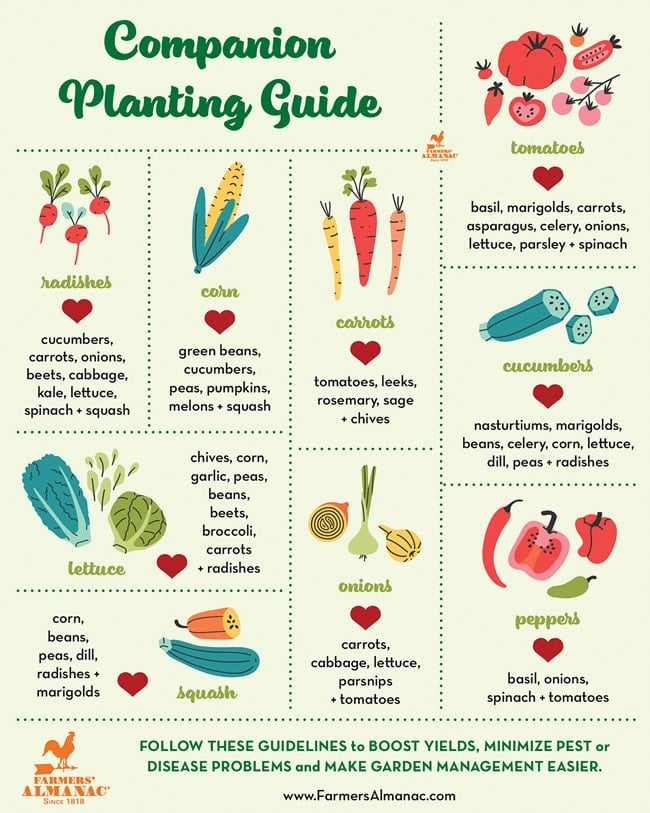
| Tomato | Basil, carrot, marigold, onion, parsley | Cabbage, corn, potato, fennel |
| Pepper | Basil, onion, spinach, tomato | Fennel, kohlrabi |
| Cucumber | Nasturtium, radish, corn, bean, dill | Sage, potato, aromatic herbs |
| Bean (bush & pole) | Corn, squash, cucumber, radish | Onion, garlic, leek, chive |
| Corn | Bean, squash, cucumber, sunflower | Tomato |
| Squash / Zucchini | Corn, bean, nasturtium, buckwheat | Potato |
| Carrot | Onion, leek, rosemary, sage, tomato | Dill, parsnip |
| Onion / Garlic | Beet, carrot, lettuce, strawberry, tomato | Bean, pea |
| Lettuce | Radish, carrot, chive, cucumber | — |
| Brassica (broccoli, cabbage, kale) | Thyme, sage, dill, beet, chard | Tomato, strawberry, bean |
| Potato | Bean, corn, horseradish, marigold | Cucumber, tomato, squash |
| Radish | Cucumber, lettuce, spinach, pea | Hyssop |
Quick Reference: Companion Planting
- What it is: growing plants near each other so each one benefits from its neighbor (deter pests, fix nitrogen, attract pollinators, share space).
- Best season to plan: February to April for spring planting; July to August for fall planting.
- Top science-supported pairings: tomatoes + basil, brassicas + thyme, squash + nasturtium, sweet corn + buckwheat (per University of Minnesota Extension research).
- Top folklore pairing that does NOT work: marigolds + potatoes against Colorado potato beetles (multiple studies disprove).
- Tool: the Almanac’s Best Days planting calendar for moon-aligned sowing dates.
On this page
Related Almanac guides
Companion planting is the practice of growing two or more plant species together for mutual benefit, from pest control to pollinator attraction to nitrogen fixation. It is one of the oldest gardening techniques on record (the Indigenous Three Sisters system is at least 1,000 years old) and one of the most actively researched today. This guide covers 17 vegetable pairings the Farmers’ Almanac has used for years, plus the modern scientific evidence for which ones work and why.
The Science of Companion Planting: What Research Actually Supports
University extension research has identified four mechanisms that explain why companion planting works when it works. Each one is supported by repeatable greenhouse and field studies.
- Nitrogen fixation. Legumes (peas, beans, clover) host root bacteria that pull atmospheric nitrogen into the soil. Most of the nitrogen stays in the bean biomass and benefits the next season’s crop, not the current neighbor. Isotopic-tracer studies show only 2 to 8 percent transfers to neighbouring plants within the same growing season.
- Pest confusion. Diverse plantings with varying heights, colors, and aromas overwhelm the visual and olfactory navigation of insect pests, making the target crop harder to locate. This is the strongest reason why mixed plantings outperform monoculture rows.
- Trap crops. Spicier brassicas (arugula, mustard, napa cabbage) draw flea beetles away from vulnerable crops. UMN research finds three or more trap species together work better than a single trap crop.
- Beneficial-insect attraction. Flowering plants like buckwheat and sweet alyssum attract syrphid flies, parasitoid wasps, and lacewings, all of which prey on garden pests.
Allelopathy (plants releasing chemicals that suppress neighbors) is real but rarely useful in the home garden. The exception, documented by Penn State Extension, is the black walnut tree, which produces juglone and prevents many vegetables from growing within its drip line.
Three Sisters: The Indigenous Companion Planting System
The Three Sisters system, used by Iroquois, Cherokee, Hopi, and many other Indigenous nations for at least 1,000 years, plants corn, beans, and squash together in the same mound. It remains the most elegant high-yield companion arrangement ever documented.
- Corn grows tall first, providing a living pole for the beans to climb (no trellis needed).
- Beans climb the corn stalk and fix atmospheric nitrogen in the soil for the following season’s corn crop.
- Squash spreads at ground level, its large prickly leaves shading out weeds, retaining soil moisture, and deterring raccoons and other small animals from the corn.
USDA documentation of Three Sisters mounds shows yields per square foot well above any of the three crops planted alone, even though each individual plant grows more slowly in the polyculture. The system is the clearest real-world evidence that companion planting outperforms monoculture for nutrient cycling and pest pressure.
Companion Planting by Vegetable: 17 Pairings That Work
Below are 17 vegetable-by-vegetable companion planting recommendations. Each lists what to plant with and what to avoid. Use this with the Best Days planting calendar for the strongest results.
1. Tomato Companion Plants
The tomato, as we know it today, has come a long way from the time it grew wild in South America. Indigenous people cultivated them and slowly brought them north, experimenting with hybrids along the way. As a result, we have more than 10,000 kinds of tomatoes to enjoy today. It’s now one of the most popular vegetables in the United States, and a favorite for home gardeners to grow.
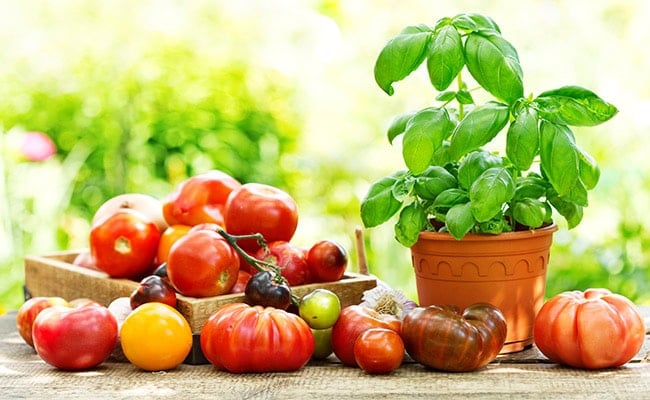
Friends: The best companion plants for tomatoes are also ones that complement them in recipes. Basil and tomatoes were made to go together, not only in sauces but in the garden, too. This herb helps tomatoes produce greater yields and it repels both flies and mosquitoes. Marigolds are another good companion, repelling nematodes and other garden pests. Other friends to tomatoes include asparagus, carrots, celery, the onion family, lettuce, parsley, and spinach.
Foes: Poor tomato companion plants include cabbage, beets, peas, fennel, dill, and rosemary. Corn and tomatoes both suffer from the corn earworm, and tomatoes and potatoes are affected by the same blight, so keep these plants separate to prevent the spread of pests or disease.
2. Companion Plants for Peppers
Although peppers were originally native to tropical areas, home gardeners can enjoy growing this vegetable throughout most of North America by purchasing transplants that have been started in greenhouses. and are particularly important in the cuisines of tropical Asia and equatorial America.
Friends: Excellent pepper companion plants include basil, which helps repel aphids, spider mites, mosquitoes, and flies and even potentially improves the pepper’s flavor. Other good companions include onions, spinach, and tomatoes.
Foes: Poor companion plants for peppers include pole beans as vines can get tangled among the pepper plants. Garden favorites from the brassica family, such as broccoli, cauliflower, and cabbage, are not good companion plants for peppers because they take similar nutrients from the soil and tend to attract pests such that may damage pepper plants.
3. Green Bean Companion Plants
Did you know the original green bean had primarily ornamental value? That’s because it took years to breed the natural stringy-ness out of green beans to make them more palatable for human consumption. Today, we enjoy hundreds of varieties of green beans, albeit, some of them are purple and red on the outside.
Friends: One of the best companion plants for green beans is corn because they make natural trellises, allowing beans to literally grow up with the corn. Beans also fix nitrogen in the soil, which is good for the corn. Marigolds, nasturtiums, rosemary, and summer savory repel bean beetles, and summer savory improves its growth rate and flavor. Other companions include broccoli, Brussels sprouts, and other members of the cabbage family along with cucumbers, peas, potatoes, and radishes.
Foes: Beets or anything from the onion family make poor green bean companions. Onions, in particular, impede the growth of bean plants.
Any questions? Contact [email protected]
4. Cucumber Companion Plants
Cucumbers, which are known for pickles, relish, and raw eating, originated in India where a great deal of genetic diversity exists. Over thousands of years, the cucumber has been cultivated throughout the world.
Friends: Excellent companion plants for cucumbers include marigolds and nasturtiums, which repel aphids and beetles. Beans, celery, corn, lettuce, dill, peas, and radishes are also good cucumber companion plants.
Foes: Aromatic herbs such as sage and rosemary make poor cucumber companion plants as they tend to stunt the growth of cucumbers. Broccoli, cabbage, and cauliflower can compete for similar soil nutrients.
5. Companion Plants for Onions
Although many people believe onions originated in central Asia, some research shows that onions may have been started in Iran and West Pakistan. Wild onions were likely used around the world for years before onions were formally planted and cultivated.
Friends: Carrots make good onion companion plants because onions will repel the carrot fly and chase away the aphids. Other good friends of onions include beets, cabbage, carrots, lettuce, parsnips (which also suffer from carrot fly), tomatoes, and spices like marjoram, savory, and rosemary.
Foes: Asparagus, beans, sage, and peas make more companion plants for onions. Onions may stunt their growth and negatively affect their flavor.

6. Lettuce Companion Plants
Interestingly, lettuce may have been cultivated by ancient Egyptians. However, it’s not clear that they ate the leaves as we do today, but instead may have used lettuce for oil production or as a religious sacrifice.
Friends: One of the best companion plants for lettuce is mint, which keeps away the slugs that feed on lettuce leaves. Chives and garlic help repel aphids, and marigolds attract aphid-eating ladybugs. Beets, broccoli, carrots, corn, peas, and radishes also work as good lettuce companion plants. And, finally, you may also want to plant a trellis of pole beans nearby as a wall of beans can provide shade as the weather grows warmer. Keeping lettuce plants cooler and well-watered can keep them from going to seed and becoming bitter.
Foes: Parsley, which tends to be bushy, can crowd your lettuce plants. Brassicas can compete with lettuces for the same nutrients.
7. Summer Squash or Zucchini Companion Plants
Zucchini may be known as one of the most prolific garden vegetables in our country. Some evidence exists that the first zucchini plants may have been grown 10,000 years ago as archeologists have discovered seeds in Mexican caves.
Friends: The best companion plants for zucchini are beans, peas, radishes, peppermint, dill, parsley, oregano and marigolds. Ideally, they should be grown with other plants that require regular watering but don’t require a great deal of space.
Foes: Potatoes make a poor zucchini companion plant, as both are prone to blight. Cucumbers and pumpkins should also be planted further away as they attract the same diseases and pests as zucchini.
8. Companion Plants for Carrots
Carrots are a staple vegetable for many gardeners, and the fact that they can be left in the ground during the winter makes them extra convenient.
Friends: Since carrots are heat sensitive, tomato plants that can provide them a bit of shade are excellent companions. Tomatoes are also known to produce solanine, which is a natural insecticide that targets pests affecting carrot plants. Since tomatoes benefit as well, they make perfect companion plants for carrots. Carrots aerate the soil around the roots of the tomato plants, allowing more air and water to reach the roots. Leeks and carrots are also good companion plants since leeks repel carrot flies and carrots repel leek moths and onion flies. Rosemary, sage, and chive also help repel carrot flies.
Foes: Both coriander and dill produce compounds that can harm carrot plants, and parsnips suffer from the same diseases and pests as carrots, so keep them apart to minimize a potential infestation.

9. Radish Companion Plants
Although radishes likely originated in Asia, they have probably been grown in western Europe since the mid-sixteenth century. Since they can be ready to eat in only four weeks, they are one of the fastest crops in a home garden.
Friends: Cucumbers make good companion plants for radishes as they distract cucumber beetles that like to feed on the radishes. They also do well among carrots because they are harvested before the carrots and they loosen the soil as the carrots start to take off. Onions, beets, cabbage, kale, lettuce, spinach, and squash are also good friends for radishes.
Foes: Hyssop makes a poor radish companion plant because it can inhibit growth. Since radishes belong to the brassica family, they may have a difficult time germinating near broccoli, cabbage, cauliflower, turnip, and mustard.
10. Companion Plants of Sweet Corn
A mutation in regular field corn, which led to the sweet corn that we know today, was originally discovered in Pennsylvania in the mid-1700s. Sweet corn is typically harvested before the corn is completely mature so we can enjoy the higher sugar content.
Friends: Corn loves veggies that fix nitrogen in the soil, like green beans. Cornstalks also make a great trellis for vining or trailing plants including beans, cucumbers, peas, pumpkins, and melons. Zucchini is a good sweet corn companion plant when planted among corn.
Foes: Tomatoes make poor companion plants of sweet corn, as both are attacked by corn earworms. Plant these two far apart to minimize the spread of these pests.
11. Potato Companion Plants
Potatoes are believed to have originated in the highlands of the Andes in western South America. In fact, researchers believe people started growing potatoes in that region as early as 8,000 to 5,000 BC.
Friends: Potato companion plants include beans, cabbage, peas, and corn. Marigolds planted near potato patches help deter beetles and horseradish will provide overall protection to potatoes.
Foes: Tomatoes as they are prone to blight, which can also affect potatoes, so they make poor companions for potatoes.
12. Companion Plants for Peas
Peas may have been one of the oldest cultivated crops with wild plants being native to the Mediterranean area. The oldest pea was 3,000 years old and found in Thailand.
Friends: Peas love to be planted by beans, carrots, corn, cucumbers, radish, and turnip. If you plant mint near peas, they should be healthier and tastier. Chives planted near peas also help deter aphids, making them excellent pea plant companions.
Foes: Don’t plant peas near garlic or onions as it will stunt their growth.
13. Companion Plants for Brassicas
Brassica vegetables include broccoli, cauliflower, and cabbage. Primitive varieties originated around the Horn of Africa (East Africa).
Friends: The best companion plants for broccoli and other brassicas include celery, beans, beets, dill, onions, and lettuce.
Foes: Try not to plant tomatoes, eggplant, beans, peppers, or squash nearby.
14. Asparagus Companion Plants
Asparagus are hearty and prolific in early spring.
Friends: Tomatoes among the top companions for asparagus due to the mutually beneficial relationship they share. They emit solanine, which naturally deters the asparagus beetle. Basil’s strong scent also confuses these beetles while attracting beneficial insects such as bees and butterflies.
Foes: Poor asparagus companions are onions, garlic, and potatoes, which can all inhibit growth.
15. Companion Plants for Beets
Sea beets, beet’s wild ancestors, were originally found near the Mediterranean Sea. People grew them for their leaves.
Friends: Good friends of beets include brassicas, lettuce, kohlrabi, and bush beans.
Foes: Don’t plant beets near others from the same family including spinach and chard as they may attract the same diseases and pests.
16. Companion Plants for Winter Squash
Winter squash such as butternut and acorn or pumpkins are a staple of autumn.
Friends: The best companion plants for winter squash include corn, beans, sunflowers, and spices like marjoram and dill.
Foes: Since winter squash tend to grow quickly and all over its bed, be sure to keep root crops like radishes or smaller plants far away to keep from being overgrown.
17. Companion Plants for Spinach
Chalk full of nutrients, spinach originated in what is now Iran.
Friends: The best companion plants for spinach include lettuce, mustard greens, chard, kale, and other leafy greens. Later, the same bed can be used for brassicas.
Foes: Potatoes, corn, and peppers are poor companions to spinach.
Follow these companion planting guidelines to boost yields, minimize pest or disease problems and make garden management easier!


Companion Planting Myths the Research Does Not Support
Several long-standing folklore pairings have been tested and failed. The Almanac believes in folklore, but only when the evidence holds up.
- Marigolds against Colorado potato beetles. Multiple controlled field studies, summarised by University of Minnesota Extension, show marigolds do not reduce Colorado potato beetle damage on potatoes.
- Marigolds against flea beetles in brassicas. Little supporting research, and some studies contradict the claim.
- Borage against tomato hornworm. Often repeated, no controlled study supports it.
- “Plant garlic everywhere.” Garlic is mildly aphid-deterrent but no evidence supports it as a universal companion. Onions and chives are similarly limited.
- “Sunflowers feed bees while corn grows.” Partially true (sunflowers do attract bees), but they compete heavily with corn for water and nitrogen and reduce corn yields.
5 Companion Planting Mistakes to Avoid
- Mistake 1: planting heavy feeders together. Tomatoes, peppers, corn, and squash are all heavy feeders. Group them with light feeders (lettuce, herbs) or nitrogen-fixers (beans, peas), not with each other.
- Mistake 2: forgetting allelopathy. Black walnut, sunflower roots, and brassica-family residues can suppress neighbors. Plan accordingly.
- Mistake 3: ignoring height. Tall plants (corn, sunflowers, trellised tomatoes) shade out low growers (lettuce, spinach). Use intentionally for cool-season crops; avoid for sun-lovers.
- Mistake 4: planting only one of each. Pest confusion requires diversity. Aim for at least 3 species in each garden bed.
- Mistake 5: skipping rotation. Companion planting and crop rotation work together. Move heavy-feeder beds each year.
How to Lay Out a Companion Planting Garden
- Start with a paper sketch of your bed. Mark where the sun hits each part across the day.
- Place tall heavy feeders (corn, tomatoes) on the north side so they do not shade shorter crops.
- Add a nitrogen-fixer (beans or peas) within 3 feet of each heavy feeder.
- Border the bed with flowering plants (calendula, alyssum, nasturtium, buckwheat) to draw beneficial insects.
- Insert 2 to 3 herbs (basil, thyme, sage, dill) among the vegetables for pest deterrence.
- Leave 12 inches between species groups; companion planting still requires airflow.

Companion Planting FAQ
What is companion planting?
Companion planting is growing two or more plant species together so each one benefits from its neighbor. The benefits include pest deterrence, nitrogen fixation, pollinator attraction, weed suppression, and shade. It is one of the oldest documented gardening practices and one of the most actively researched modern techniques.
Does companion planting actually work?
Yes, for the mechanisms that research supports: pest confusion, trap crops, beneficial-insect attraction, and (over multiple seasons) nitrogen fixation. The University of Minnesota Extension publishes evidence-backed pairings. Many folklore pairings are myth and have been contradicted by controlled studies.
What plants grow well together?
The most reliable pairings are tomatoes with basil and marigolds, brassicas with thyme or sage, squash with nasturtium, sweet corn with buckwheat, peas or beans with most non-allium crops, and carrots with onions or rosemary. The 17-vegetable section above lists each in detail.
What plants should not be planted together?
Avoid pairing onions with beans or peas (onions inhibit legume growth), tomatoes with brassicas (compete for the same heavy nutrients), fennel near most vegetables (allelopathic), and sunflowers with potatoes or corn (compete heavily for water and nitrogen). Black walnut trees should be at least 50 feet from any vegetable bed.
Is the Three Sisters system real companion planting?
Yes, and it is the best-documented historical example. Iroquois, Cherokee, Hopi, and many other Indigenous nations grew corn, beans, and squash together for over 1,000 years. USDA research confirms the polyculture yields more per square foot than any of the three crops grown alone.
Does companion planting reduce the need for pesticides?
It can. Diverse plantings with at least 3 species per bed reduce pest pressure measurably (per UMN field trials). It is rarely a complete substitute for pest management, but it is a strong first line of defense and works well alongside row covers, hand-picking, and beneficial-insect attraction.
When is the best time to start a companion planting garden?
Plan in February or March using your USDA hardiness zone last-frost date. Sow cool-season companions (peas, lettuce, brassicas, alyssum) 2 to 4 weeks before last frost. Sow warm-season companions (tomatoes, peppers, squash, basil, nasturtium) after the last frost. Use the Almanac’s Best Days calendar for moon-aligned sowing windows.
For more gardening reading: natural garden fertilizers, what is diatomaceous earth, why garden by the moon, seed-starting basics, Best Days planting calendar.


Pam Malinoski
Pam, her husband Peter, and their seven children have a 5-acre family homestead. Besides a family dairy cow, a few Katahdin sheep, some kune kune pigs, and a flock of chickens, they also periodically raise ducks and turkeys. They have a small vineyard and orchard along with a large garden. In the spring, they tap their maple trees for syrup.

FRIEND & FOE OF CROCUS SATIVUS PLANT?
Hi, so glad to be a part of the group. Have a question. Can I plant a tabasco hot pepper in the same pot with a green bell pepper plant?
What about okra?
Hi
i agree with this message
In companion planting, what distance, between plants, are we looking at. For example: Tomatoes and green beans should not be companion planted. How far apart is considered safe for these two plants.
I could be wrong but doesnt it deal with how the plants effect the soil?
I have two raised beds, 4X8 feet and 1 ft deep (each). The beds are next to each other, separated by about a foot. Both are open at the bottom. Not an experienced gardener, so I wanted to double check my planting plans:
Bed one: left side – carrots and peas, right side – cherry tomatoes and watermelon. Bed two: left side – spear onions and lettuce, right side – pumpkin and eggplant.
The carrots and lettuce are going in later than I intended – I got behind in the prep work (they were supposed to be planted in March). I am also doing something risky because I do not have a greenhouse or space in the house for indoor sewing. I am direct sewing the tomatoes, eggplants, and onions. Those will probably get planted in late May-June, depending on the weather. I am in zone 7b in southwest Virginia.
Any tips or corrections for my current plan?
Thank you for your help!
When do I plant potatoes? 🥔 Please and thank you
What do you plant with melons. Watermelons and muskmelons.
Thanks for all this great info! I haven’t done any gardening since I was a teenager still at home. Feeling a little overwhelmed, but this helps. Also, in case English isn’t your first language, the phrase is “chock full,” not “chalk full.” 😉