

What Is Diatomaceous Earth? How It Kills Bugs Safely, Plus Garden, Pet, and Home Uses
Got roaches? Fleas? Grab the diatomaceous earth! This white powder has no odor, is all-natural, and a must-have because bugs hate it! Find out why.
Quick Reference: Diatomaceous Earth (DE)
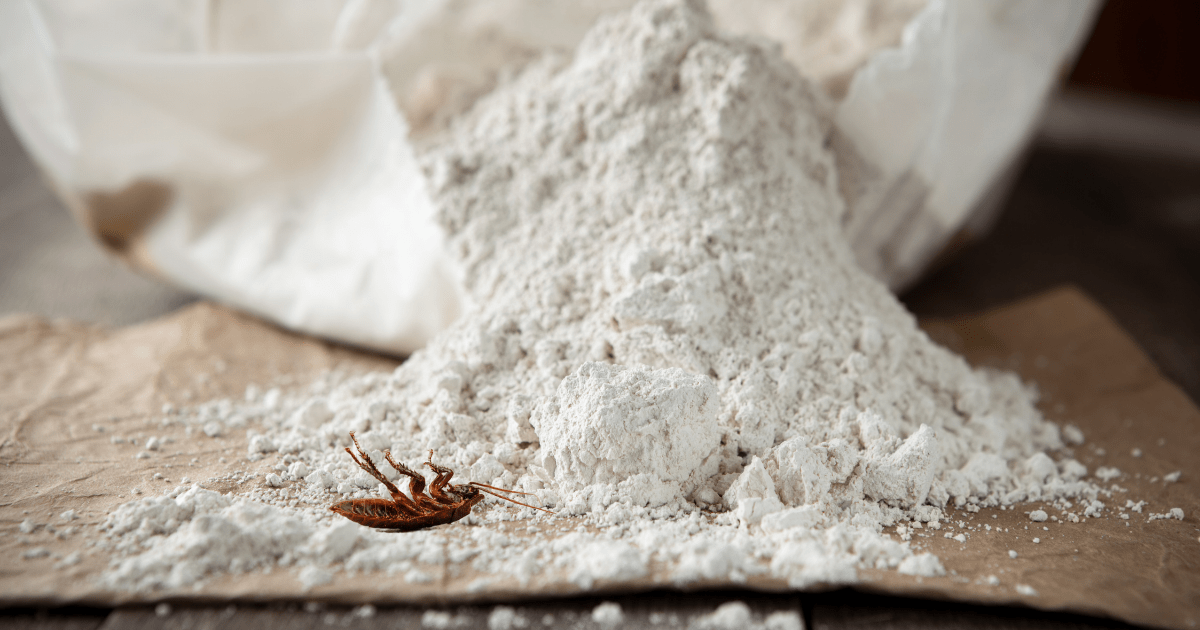
- What it is: a fine off-white powder made of fossilized diatom shells (microscopic algae) milled to a sharp microcrystalline dust.
- How it kills bugs: mechanically (not chemically). The sharp dust abrades insect exoskeletons and absorbs their protective waxes, causing dehydration in 1 to 3 days.
- Two grades: food-grade (safe for garden, pet, home, livestock) vs pool/filter-grade (heat-treated, contains crystalline silica, NOT safe for any application other than swimming-pool filtration).
- Targets: roaches, fleas, bed bugs, ants, earwigs, slugs, flea beetles, aphids on contact when dry.
- Limitation: only works when dry. Reapply after rain or watering.
On this page
Related Almanac guides
Diatomaceous earth (DE) is the most-recommended natural pesticide on the planet for one reason: it kills insects mechanically, not chemically, so target pests cannot evolve resistance the way they can to synthetic insecticides. This guide is what DE actually is, how it works on the cellular level, the food-grade vs pool-grade difference (critical safety distinction), and the EPA + extension-research-backed application protocols for garden, pet, and indoor use.
How Diatomaceous Earth Actually Works (the Mechanical Mechanism)
Per the US EPA ingredient fact sheet, DE is registered as a mechanical insecticide, not a chemical one. The kill mechanism is purely physical.
- Step 1: contact. The pest walks through DE or has it dusted on its body.
- Step 2: cuticular abrasion. The microscopic diatom edges (sharp as broken glass at insect-scale) score the insect’s waxy exoskeleton.
- Step 3: absorption. The porous diatom shells absorb the lipids and waxes that waterproof the insect.
- Step 4: dehydration. Without its waxy seal, the insect loses water faster than it can replace it. Death typically follows in 1 to 3 days.
- Why resistance does not develop: insects cannot evolve away from a mechanical kill the way they can from a chemical one. DE works the same on a 1900s flea as on a 2026 flea.
Food-Grade vs Pool-Grade DE: a Critical Safety Distinction
The single biggest DE safety mistake is using the wrong grade. Per the National Pesticide Information Center, the two grades are chemically and biologically different products.
- Food-grade DE. Contains less than 1 percent crystalline silica. Registered by FDA as GRAS (generally recognized as safe) for use in stored grain and animal feed. Safe for garden, pet bedding, indoor cracks-and-crevices, and (per some traditions) livestock dewormer applications.
- Pool/filter-grade DE. Heat-treated (calcined) for use in swimming-pool filters. Contains 60 to 70 percent crystalline silica, a confirmed carcinogen by inhalation. NEVER use for pest control, in any setting.
- How to check the label: packaging that specifies “food-grade” or cites FDA GRAS status is safe. Anything labelled “swimming pool” or “filter-aid” is not.
- Color is not a reliable test: both grades are off-white to grey. Read the label.
Diatomaceous Earth: How It Works, How to Apply, and Safety (Detail)
Below are the original detail sections covering the mechanism, roach and flea treatment protocols, garden use, and safety considerations.
What is Diatomaceous Earth?
It’s useful, but what the heck is it, exactly? The short answer is fossils! Diatomaceous earth (pronounced “dia-toMAY-shus” earth) is ground fossilized remains of a type of phytoplankton called diatoms, which have existed on earth for millions of years. Of course, to look at diatomaceous earth, it doesn’t look like fossils, it is more of an off-white powder that looks similar to talc and has no odor. In order to see the fossilized diatoms, one must put DE under a microscope. If you are wondering what the fossilized diatoms look like, they generally come in two shapes. The long stick-shaped diatoms are called pennates, and the round, cylindrical diatoms are centric diatoms.
Important: Be sure to use diatomaceous earth marked “food grade.”
How Does Diatomaceous Earth Work?
The reason why DE is recommended for killing bugs is pretty simple. The dust is scratchy, so when critters with exoskeletons (hard shells on the outside) are exposed to diatomaceous earth, it cuts through that protective layer, and the bugs eventually dehydrate and die. That scratchiness, caused by the microscopic edges of the fossilized diatoms, is also why DE irritates the skin and eyes. It is recommended that you wear a mask if you are applying it in large amounts.
How To Use Diatomaceous Earth To Treat Roaches
Courtesy of DiatomaceousEarth.com
Step 1: Give your home a thorough cleaning. Sweep, mop, put away food, and vacuum thoroughly. Maintaining cleanliness is usually the best defense against cockroaches.
Step 2: Dry up any damp areas to prepare for your diatomaceous earth application. Any kind of entrance for a cockroach should be sealed up with caulk.
Step 3: Apply DE anywhere you have seen cockroaches, including around the house along the foundation. Dust lightly, since cockroaches won’t step on diatomaceous earth if the dusting is too heavy. Apply DE anywhere cockroaches can hide, enter your home, and where food is commonly dropped. Don’t apply DE to any area that is consistently damp or wet, since wet diatomaceous earth will not kill insects.
Step 4: Leave DE applied as long as the cockroach infestation continues. Reapply if the DE gets washed away. Once the cockroaches are gone, you can vacuum up the diatomaceous earth but you can also leave it down as a preventative measure against future infestations.
How To Use Diatomaceous Earth To Treat Fleas
Diatomaceous earth has been used for years as an insecticide to control fleas.
Step 1: Be sure the areas you are treating are completely dry, and that the room is well ventilated and free of family or pets during the treatment process.
Step 2: Dust the affected areas (pet beds, blankets, surfaces of cat condos, etc.) with the diatomaceous earth using an applicator, or sock filled with the product.
Step 3: Let the DE penetrate the areas for an hour or more (if possible) then vacuum it up. Vacuum daily for maximum flea control. Treat small areas at a time as you will be vacuuming up the DE and you don’t want to burn out your vacuum’s motor. Shop vacuums work well.

While DE is considered non-toxic to humans and animals; it can be drying to skin, as well as irritate eyes and nasal passages. Please talk to your veterinarian about whether DE is right for treating your pet’s skin and fur.
Using It In the Garden
DE is also an effective organic pest control method in the garden for a wide range of garden pests, even those that don’t have hard exoskeletons, like slugs and tomato hornworms. Sprinkle it at the base of plants, or use it to create a barrier they won’t cross.
To protect against beetles you can dust the leaves of any plants that have visible signs of damage.
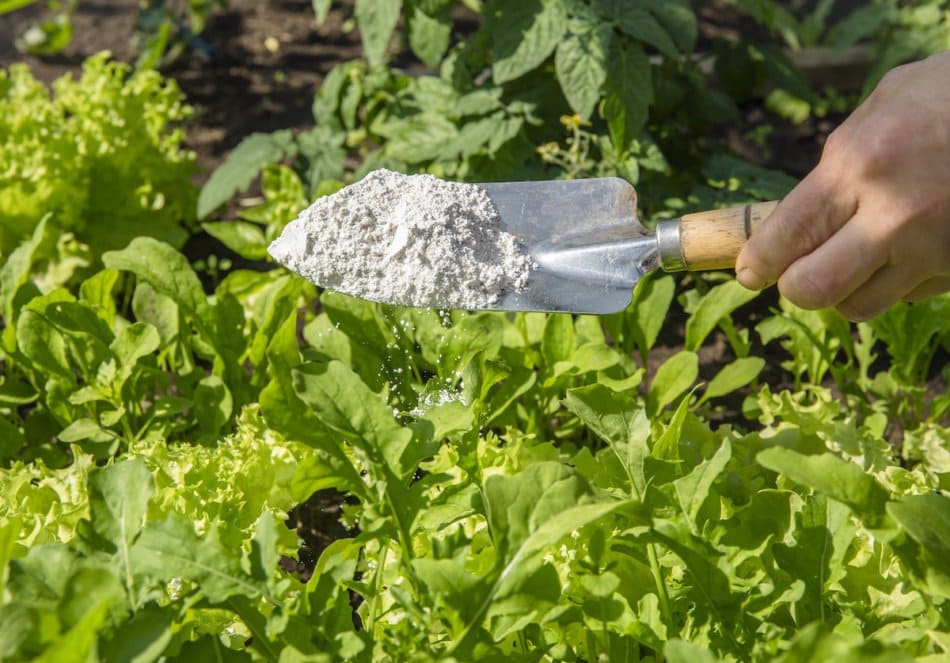
If it rains, you’ll have to reapply.
Unfortunately, DE will kill all insects with exoskeletons, even the beneficial ones, so be extra cautious when applying and really focus on single plants that show signs of pest damage.
Is DE Safe?
Even though diatomaceous earth is a chemical-free alternative to bug sprays, it is a fine powder and can be irritating for those with asthma or any sort of lung issues. Use caution when applying.
We don’t normally think of fossils as being useful to have around the house, even if they are interesting. In the case of diatomaceous earth, however, a small bag can work wonders on pest problems around the home and in your garden!

Safe Application Protocols (Garden, Pet, Home)
DE only works when dry, so timing and re-application are everything.
- Garden: dust dry foliage and soil around target plants in early morning before pollinators are active. Avoid open flowers (DE will kill bees on contact). Reapply after any rainfall.
- Slugs and earwigs: sprinkle a 2-inch DE barrier around vulnerable seedlings.
- Indoor (roaches, ants, bed bugs): dust into wall voids, behind appliances, along baseboards, and at entry points. A thin even layer works better than a thick pile.
- Pet bedding (fleas): sprinkle on pet bedding, work in lightly, leave 24 to 48 hours, vacuum thoroughly. Repeat weekly for 3 weeks to break the flea life cycle.
- Personal protection: wear a dust mask when applying. DE is non-toxic but mechanically irritating to lungs at high exposure.

Diatomaceous Earth FAQ
Is diatomaceous earth safe for pets and children?
Food-grade DE is widely considered safe around pets and children once it has settled, though the dust can mechanically irritate eyes and lungs during application. Keep pets and children out of the room while applying, allow dust to settle 30 to 60 minutes, then resume normal use. Pool-grade DE is NEVER safe in any setting outside a pool filter.
Does diatomaceous earth kill bed bugs?
Yes, but slowly. DE kills bed bugs by abrading their cuticle, which takes 3 to 7 days of exposure. Apply along mattress seams, in wall voids, and at every entry point. Combine with mattress encasements, hot-water laundering, and a steamer for the fastest knock-down.
How long does diatomaceous earth take to kill bugs?
Roaches: 24 to 72 hours after contact. Fleas: 24 to 48 hours on a pet, 4 to 14 days to break the population cycle. Bed bugs: 3 to 7 days. Slugs and earwigs: hours when the barrier is intact and dry.
Will diatomaceous earth kill beneficial insects?
Yes. DE kills any insect with an exoskeleton, including bees, ladybugs, and pollinators. Apply only to plant foliage and soil, never to open flowers. Apply early morning before pollinators are active. Avoid in flowering hedgerows and pollinator strips.
Can you eat food-grade diatomaceous earth?
FDA classifies food-grade DE as GRAS for use in stored-grain dust prevention, meaning trace amounts in food are recognized as safe. Some folk-medicine traditions use 1 teaspoon stirred into water as a daily supplement; mainstream medicine does not support that practice and there is no convincing clinical evidence.
How often should you reapply diatomaceous earth?
Outdoors: every time it rains or you water. Indoors: every 2 to 4 weeks until you see no more target pests, then monthly as preventive.
What pests does diatomaceous earth NOT work on?
DE is largely ineffective against pests that do not crawl across it (flying mosquitoes mid-flight, soft-bodied larvae deep in soil) and against ticks (which have a heavier cuticle that resists abrasion). Combine with other IPM strategies for those.


Amber Kanuckel
Amber Kanuckel is a freelance writer from rural Ohio who loves all things outdoors. She specializes in home, garden, environmental, and green living topics.
- Amber Kanuckel

- Amber Kanuckel

- Amber Kanuckel
- Amber Kanuckel





does it work with asian jumping worms
Can this be used around stray cats and kittens outside when lightly dusting perimeter areas where bugs are getting into my home??
Hi Aim, “Food grade” diatomaceous earth (DE) is considered to be safe for animals and humans. Sometimes DE is used in swimming pool filters, but you don’t want that one! Specifically look for the words “food grade” when purchasing. Let us know if you have any other questions! Best wishes from all of us at FA.
Is this a danger for bees? We are afraid to use it because it will kill bees?
Please, check with your vet before feeding DE to your pet and check with your doctor before taking DE internally. What is good for one pet/person might be bad for another pet/person!
DE has also been used on farms for years to keep animals worm-free. It’s put on their food. I used it to treat one of my cats for worms and it works well. But it isn’t always white. The feed stores carry it in bulk and it’s all a light gray. I believe they process it to make it white and it’s for aesthetic purposes. When used correctly, it is fantastic stuff!
Just wondering if it would be good to use on Asian beetles, shake it on them and hope for the best?
Will DE work on spiders and ants?
Yes, for ants. I do not have experience with spiders.
Will the diat
lI have a nat infestation suddenly. What will get rid of nats?
I do not know about diazinon Earth for gnats. But I often have a nap problem and I control them with homemade gnat traps. Cut a water bottle or 2 liter bottle just below the curvature of the top. Then invert it with the lid off. Put banana peels rotten fruit whatever the gnats seem to be attracted to inside the bottle. If the bottle has no openings where the two pieces meet the gnats should be trapped inside. Then simply throw it away.
I make the same trap, but I find Apple Cider vinegar, a spoon full of sugar and a drop of soap
i have a yardfull of small dogs and a mini pig would this be safe to use in the yard around the pig? for fleas?