

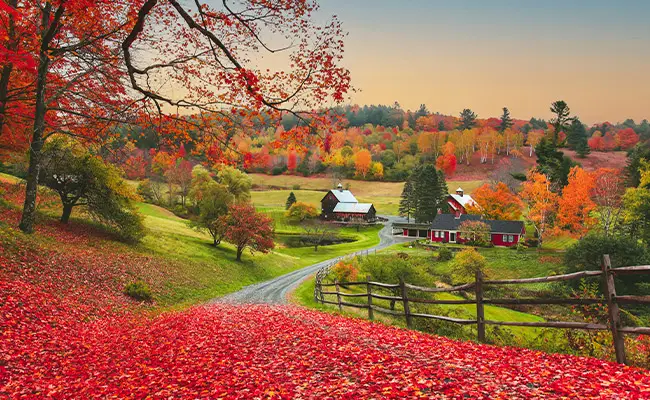
Quick Reference: Fall Equinox 2026
- First day of fall 2026: Tuesday, September 22, 2026 at 8:05 p.m. EDT (5:05 p.m. PDT, 00:05 UTC on September 23)
- Also called: Autumnal equinox, September equinox
- The rule: The Sun crosses the celestial equator heading south
- What it means: Day and night sit roughly equal across the globe
- Word origin: Latin aequus (equal) plus nox (night)
- Next milestone: Winter solstice on Monday, December 21, 2026
The fall equinox arrives on Tuesday, September 22, 2026 at 8:05 p.m. EDT (5:05 p.m. PDT, 00:05 UTC on September 23). That is the precise moment the Sun crosses the celestial equator heading south, and the Northern Hemisphere swings from longer days to longer nights. Late summer still has the afternoons, but the evenings are already drawing in, and the date itself has been locked in since long before the first leaf turned. If you would rather skim to the dates, jump to the five-year date table below. If you want the why behind the rule, the equinox explainer is one section down. And if you are here for the folklore, scroll to the traditions around the world and our autumn weather lore.
When Is the Fall Equinox 2026?
The 2026 fall equinox lands on Tuesday, September 22, 2026 at 8:05 p.m. EDT. In other US and Canadian zones that is 7:05 p.m. CDT, 6:05 p.m. MDT, 5:05 p.m. PDT, 9:05 p.m. ADT (Atlantic Canada), and 2:05 p.m. HST. In Coordinated Universal Time the equinox falls at 00:05 UTC on Wednesday, September 23, which is why some international tables list the September equinox under the 23rd rather than the 22nd.
This is the start of astronomical fall. It is different from meteorological fall, which always begins on September 1 and lines up with the calendar months climatologists use to compare seasonal weather. The astronomical version follows the Sun and the Earth’s tilt; the meteorological version follows the calendar. Both are useful, neither is wrong, and the two are usually about three weeks apart.
Regardless of whether your part of the country has been crisp for weeks or is still hanging on to summer, the equinox is the official handover. For exact sunrise and sunset times in your town on equinox day, the U.S. Naval Observatory’s Earth’s Seasons and Apsides table is the authoritative reference.
How Many Days Until Fall 2026?
Astronomical fall begins at 8:05 p.m. EDT on Tuesday, September 22, 2026. Count from whichever day you are reading this and the answer falls out of the table below.
| Counting from | Days until the fall equinox |
|---|---|
| Saturday, August 1, 2026 | 52 days |
| Saturday, August 15, 2026 | 38 days |
| Tuesday, September 1, 2026 | 21 days |
| Tuesday, September 15, 2026 | 7 days |
Meteorological fall is a different answer, and a shorter wait. Weather agencies split the year into four tidy three month blocks so the records stay comparable, which puts the first day of fall on September 1 every year. If someone tells you fall starts on the first and someone else says the twenty second, they are both right, they are simply using different calendars.
The leaves keep their own schedule regardless. Peak color runs from late September in the far north and the high country to early November along the Gulf, so the equinox is closer to the opening bell than to the main event. Our fall foliage map and peak dates break it down region by region.
Fall Equinox Dates for the Next Five Years
The September equinox drifts within a 36-hour window each year because the calendar year and the orbital year are not perfectly matched. Leap years pull the moment back a bit; common years nudge it forward. Here is the rolling preview, in Eastern Time and UTC, drawn from published astronomical tables.
| Year | Date (Eastern Time) | UTC |
|---|---|---|
| 2026 | Tuesday, September 22 at 8:05 p.m. EDT | September 23, 00:05 |
| 2027 | Thursday, September 23 at 2:02 a.m. EDT | September 23, 06:02 |
| 2028 | Wednesday, September 22 at 7:45 a.m. EDT | September 22, 11:45 |
| 2029 | Saturday, September 22 at 1:37 p.m. EDT | September 22, 17:37 |
| 2030 | Sunday, September 22 at 7:27 p.m. EDT | September 22, 23:27 |
What Is the Fall Equinox?
In mid-September each year, the Northern Hemisphere greets the fall season at the arrival of the fall equinox, also known as the autumnal equinox or the September equinox. It is the moment when the Sun, on its yearly drift across our sky, crosses the celestial equator heading south. From that point forward, those of us north of the equator see more darkness than daylight, and the trend will continue until the winter solstice in late December.
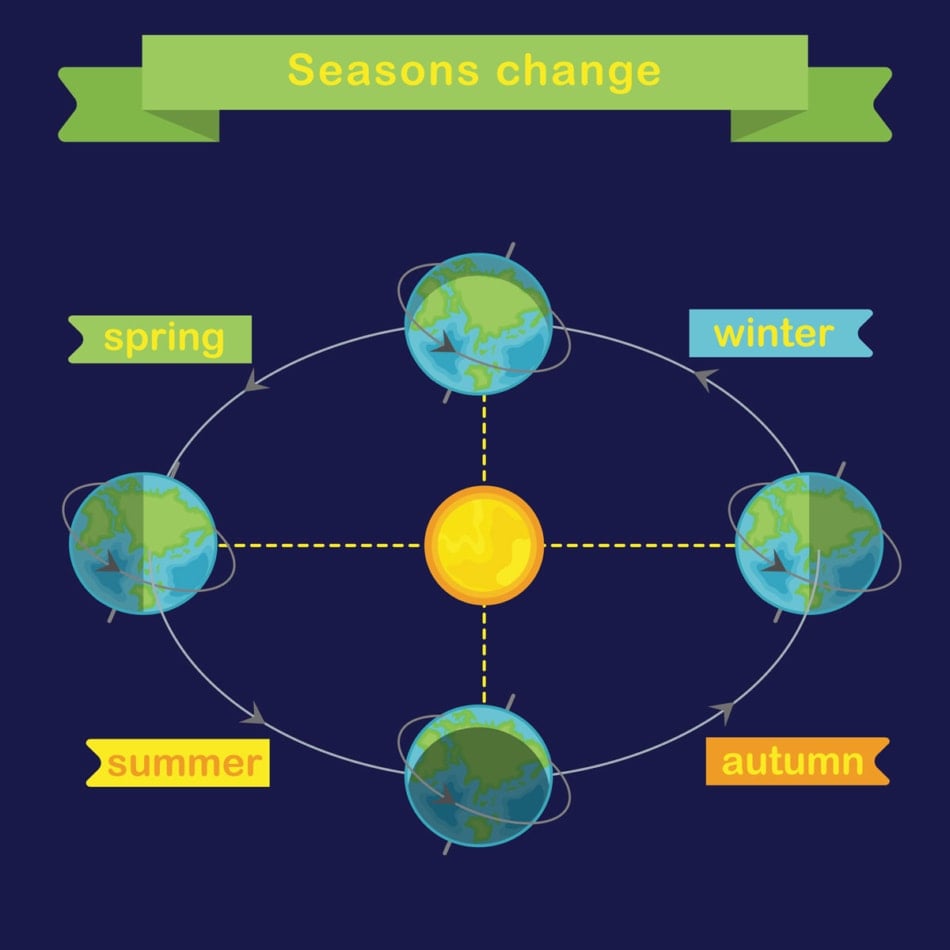
At the moment of equinox, the Earth’s tilt steps away from its lean toward the Sun. The Sun’s rays are aimed directly at the equator, not at either pole. The name equinox comes from the Latin aequus, meaning equal, paired with nox, meaning night. An equinox happens twice a year. The September equinox marks the start of fall north of the equator and the start of spring south of it; the March or vernal equinox flips the pattern six months later.
Fun fact: Ancient astronomical texts note that the Sun once aligned with the zodiac constellation Libra at the September equinox. Libra’s symbol, a pair of scales, represented the balance of day and night at this moment of the year. Because of the slow wobble in Earth’s axis (the precession of the equinoxes), the Sun now actually sits in front of Virgo at the September equinox, not Libra. The folklore name stuck even after the sky moved.
RELATED: What’s the difference between equinox and solstice?
Equilux vs Equinox: When Day and Night Are Truly Equal
The Latin root says “equal night,” but the day of the equinox is not actually the day day and night come out exactly even at most places. That day is the equilux, and in the Northern Hemisphere it falls a few days after the September equinox. Two effects pull the dates apart: the Sun is a disc, not a point, so sunrise begins the moment the top edge clears the horizon, and Earth’s atmosphere bends sunlight, letting us see the Sun slightly before it rises and slightly after it sets.
Together those effects add several minutes of daylight to the equinox day. For most of the continental United States, the equilux in 2026 lands between September 25 and 27, with northern states reaching equal day and night a day or two earlier than southern ones. After that, the night side runs ahead, and the days shorten in earnest.
The Astronomy Behind the Equinox
Earth tilts 23.4 degrees from the plane of its orbit, and it holds that tilt in the same direction year-round. As the planet travels around the Sun, the Northern Hemisphere is tipped toward the Sun in June (longest days, summer solstice), away from the Sun in December (shortest days, winter solstice), and balanced sideways in March and September. The two balanced moments are the equinoxes. Take a look at NASA’s overview of the Sun for a deeper look at how the Sun’s apparent path across our sky shifts through the year.
The equinox is also the only time of year sunrise and sunset point essentially due east and due west across most of the globe. After September 22, sunrise creeps a little farther south of east each day, and sunset a little farther south of west, until the winter solstice catches the Sun at its southernmost point.
Changes Are Coming
Everywhere you look in late September, nature is preparing for winter: birds flying south, temperatures cooling, leaves changing color, and animals growing in their thicker coats. The most significant change is the one we feel least directly, the steady loss of daylight. Hours of sunshine between sunrise and sunset have been shrinking a few minutes a day since the summer solstice in June, and they will keep shrinking for another three months.
In mid-December we reach the winter solstice, the shortest day of the year. After that, the swing reverses. Days begin to grow longer again, and it takes another three months until the vernal equinox in March before daylight and darkness reach equilibrium once more. From the spring equinox, days keep growing until we are back at the summer solstice, and the whole cycle begins again. The Almanac has been printing those four turning points every year since 1818.
Fall Equinox Traditions Around the World
All over the world, and all through history, you find traditions and celebrations marking autumn and the harvest. Oktoberfest is the famous one. Here are four others that have stood up to centuries of practice, each tied to the September equinox itself.
Mabon, the Pagan Thanksgiving
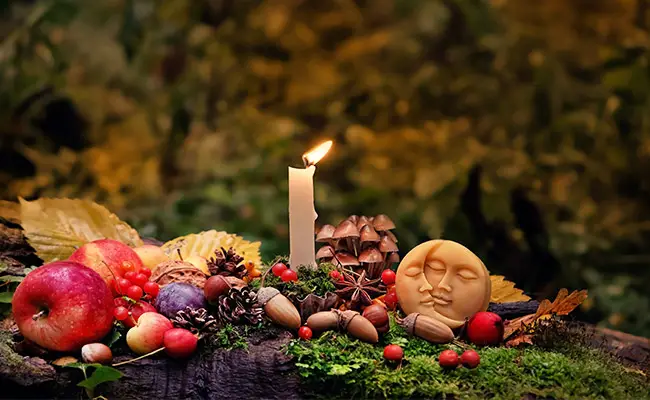
Mabon is the second of three harvest festivals on the pagan “Wheel of the Year.” The “Second Harvest” is the moment farmers gathered the late-summer crops: gourds, pumpkins, grapes, and apples. It is a time to give thanks for the summer and to acknowledge the coming dark half of the year. Sometimes called the “Pagan Thanksgiving,” Mabon is marked by gathering friends and family for a feast, decorating the home with autumn colors, and going apple picking. The cornucopia (the horn of plenty) and the pinecone are its most recognizable symbols.
The Snake of Sunlight at Chichen Itza, Mexico
The Mayan pyramid at Chichen Itza in Mexico, known as El Castillo, is dedicated to the feathered serpent god Kukulkan. On the afternoon of the fall and spring equinoxes, the angle of the late-day sun throws a sequence of triangular shadows down the northwest staircase. To the crowds gathered below, it looks as if a snake of sunlight slithers down the temple steps to meet the carved serpent head at the base. The effect lasts about 45 minutes and only happens at the equinoxes. Mayan astronomers built the alignment into the architecture roughly a thousand years ago.
Mooncakes and the Mid-Autumn Festival in China

Across China, Vietnam, and much of East and Southeast Asia, the autumn equinox is celebrated as the Mid-Autumn Festival, also called the Moon Festival or Mooncake Festival. The festival traditionally falls on the 15th day of the 8th month of the lunar calendar, which puts it on or very close to the September full Moon, the Harvest Moon. Families gather to give thanks for the harvest and to give round pastries called mooncakes to friends and neighbors. Each cake is filled with lotus seed paste, red bean, salted egg yolk, or any of dozens of regional fillings. Learn more about mooncakes and how they got their shape.
Higan, the Buddhist Equinox in Japan
In Japan, the Buddhist observance known as Higan or Higan-e runs through the week of both the spring and fall equinoxes. The word higan means “the other shore,” a reference to the crossing from this world to the next. The equinox itself matters because on this day the Sun sets exactly due west, and Japanese Buddhists hold that the afterlife lies to the west. To honor the dead, families visit ancestral graves, clean the headstones, leave fresh flowers, and offer prayers. Higan is also a traditional time to visit elderly relatives and to spend a quiet hour in meditation.
The Fall Equinox and the Harvest Moon
The full Moon that falls closest to the September equinox is the Harvest Moon, the only Moon name on the Farmers’ Almanac list that is tied to an astronomical event rather than a calendar month. In 2026, the Harvest Moon rises on Friday, September 25, three nights after the equinox. The lining-up matters because at this time of year the Moon’s orbit makes a shallow angle with the eastern horizon, so the Moon rises only about 25 to 30 minutes later each evening instead of the usual 50. Farmers historically used those few extra evenings of bright light to bring in the late harvest after sundown. Read more about how to celebrate the Harvest Moon if you want to make a night of it.
Ways to Celebrate the Autumnal Equinox
You can always take a trip to Stonehenge or Chichen Itza to watch the sunrise on the equinox, but if you would rather stay closer to home, plenty of smaller rituals mark the day well. Watch the sunrise from your own backyard. Take a cue from other cultures by making mooncakes or visiting the graves of loved ones. Or pick one of these:
- Host a harvest potluck and ask gardening friends to bring something fresh from their backyards.
- Practice meditation or do yoga at sunrise to mark the day and start with a clean slate.
- Clean your home, but not as a chore. Do the work mindfully, as if you are restoring balance and order to your living spaces before winter.
- Go for a walk and reconnect with nature. A wooded trail at golden hour does most of the work for you.
- Go foraging. The first weeks of fall are good for wild berries, late flowers, cattails, interesting greenery, and seed heads worth saving for next year.
RELATED: How to Cook with Cattails
Whatever you do for the equinox, it can be as simple or as elaborate as you like. Many readers prefer the small acts: taking a moment outside to notice the angle of the light, or sitting on the porch with a cup of cider and watching the sun drop a little earlier than it did the week before. That, too, is a way to mark the change of seasons.
Autumn Weather Lore
Farmers and almanac readers have been reading the September sky for forecast clues for hundreds of years. The Almanac collects these sayings without overclaiming them. Direct scientific evidence for any single piece of weather lore is limited, but a fair number of them have proven useful over generations of practice. Have you heard any of these?
A pleasant autumn and a mild winter will cause the leaves to fall next September.
As the wind and weather is at the time of the equinox, so will be the wind and weather generally during the following three months.
The second saying is one to test this year. Note the wind direction and the general feel of the day on Tuesday, September 22, and check back at the December solstice to see how it tracked. The Almanac’s own long-range fall forecast for 2026 will publish in August; the lore version is free and runs on whatever the equinox day delivers.
Mark the Day Your Own Way
The fall equinox is one of four turning points the Almanac has been printing every year since 1818, and the 2026 turning point lands on Tuesday, September 22, at 8:05 p.m. EDT. Set a quiet alarm. Step outside if the weather lets you. Notice the angle of the light, count the birds heading south, and pick one thing for the coming season: a row of garlic to plant, a window to seal, a recipe to try with the late harvest. The Almanac gives you the date; you decide what to do with it.
Keep Learning
- Fall Foliage Destinations map and peak-color dates by region
- 6 More Places to See Fall Leaves Change Color
- How to Celebrate the Full Harvest Moon
- Equinox vs Solstice: What’s the Difference?

Frequently Asked Questions
How many days until the first day of fall 2026?
Astronomical fall begins on Tuesday, September 22, 2026 at 8:05 p.m. EDT. Counting from September 1 that is 21 days, and from September 15 it is 7 days. If you go by the meteorological calendar instead, fall starts on September 1, 2026, three weeks earlier than the equinox.
Is the first day of fall September 22 or September 23?
Both dates are correct, depending on where you are. The equinox happens at one single instant worldwide: 00:05 UTC on September 23, 2026. In every United States time zone that instant falls on the evening of Tuesday, September 22, which is why American tables say the 22nd. In the United Kingdom, Europe and anywhere else east of UTC it is already September 23, so international tables list the 23rd.
When is the fall equinox 2026?
The fall equinox 2026 falls on Tuesday, September 22, 2026 at 8:05 p.m. EDT (5:05 p.m. PDT, 00:05 UTC on September 23). That is the precise moment the Sun crosses the celestial equator heading south, marking the start of astronomical fall in the Northern Hemisphere and astronomical spring in the Southern Hemisphere.
What is the first day of fall 2026?
The first day of astronomical fall is Tuesday, September 22, 2026. The first day of meteorological fall, which climatologists use, is always September 1. Most calendars and almanac references go by the astronomical version, which tracks the Sun and the Earth’s tilt.
Why does the fall equinox date change each year?
A calendar year is 365 days, but Earth’s orbit around the Sun takes about 365.25 days. The extra quarter-day pushes the equinox roughly six hours later each year, until a leap year resets the clock. As a result the September equinox always falls on September 22 or 23, with September 21 and September 24 possible at the long edges.
Are day and night really equal on the equinox?
Not exactly. The equinox is the moment the Sun crosses the celestial equator, but the day day and night are actually equal at your location is called the equilux and falls a few days later in the Northern Hemisphere. Atmospheric refraction and the apparent size of the Sun’s disc add a few extra minutes of daylight on either end of equinox day.
When is the Harvest Moon in 2026?
The 2026 Harvest Moon, the full Moon closest to the September equinox, rises on Friday, September 25, 2026, three nights after the equinox. Because the Moon’s orbit makes a shallow angle with the eastern horizon at this time of year, moonrise runs only 25 to 30 minutes later each evening, giving farmers a useful run of bright nights for the late harvest.
What does the word equinox mean?
Equinox comes from the Latin aequus, meaning equal, paired with nox, meaning night. The name refers to the rough balance of daylight and darkness near the equinox, when the Sun’s path lines up over the equator.
How do people celebrate the fall equinox?
Pagan traditions mark Mabon, the Second Harvest, with a feast, apple picking, and home decoration in autumn colors. Mayan-influenced communities in Mexico gather at Chichen Itza to watch the snake of sunlight slide down El Castillo. Chinese and East Asian cultures hold the Mid-Autumn or Mooncake Festival around the Harvest Moon. Japanese Buddhists observe Higan and visit ancestral graves. Closer to home, a quiet sunrise walk or a harvest potluck does the job just as well.
Join the Discussion
How do you celebrate the autumnal equinox?
What is your favorite thing about fall?
Let us know in the comments below.
Reading the Signs: What Nature Says About the Season Ahead
Long before weather satellites and numerical forecast models, farmers read the natural world for winter clues. These nature-based indicators have been gathered in almanac tradition for centuries. Modern meteorology cannot confirm every one of them, but several have held up to informal observation across enough seasons to stay in the almanac canon. Here are the signs to look for each autumn.
The Woolly Bear Caterpillar
No autumn weather sign is more beloved in North American folklore than the woolly bear caterpillar, the larva of the Isabella tiger moth (Pyrrharctia isabella). The caterpillar has 13 body segments total — which tradition says correspond to the 13 weeks of winter. Each segment is either rusty brown or black.
The traditional reading: a wider brown middle band predicts a milder winter, while more black on either end predicts a longer, harsher one. If the caterpillar is mostly black, brace for an early and severe winter; if mostly brown, expect a mild one. The state of Ohio takes this so seriously that Vermilion holds an annual Woollybear Festival each October to crown the season’s most prophetic caterpillar.
The science behind the lore is indirect. Woolly bears that have fed well during a mild late summer and fall tend to be larger and browner. The caterpillar’s color reflects the conditions it experienced, not a forecast of conditions ahead — but in a stable climate pattern, a well-fed caterpillar can be a trailing indicator of the same conditions that often persist into winter.
The Persimmon Seed
Slice a ripe American persimmon seed in half lengthwise and look at the white kernel inside. According to Ozark and Appalachian tradition, the shape of the kernel predicts the winter ahead:
- Fork shape: a mild winter, with light, powdery snow
- Spoon shape: heavy, wet snows — good digging weather
- Knife shape: bitter cold winds that will “cut like a knife”
American persimmons (Diospyros virginiana) are native across the eastern half of North America and fruit in September and October, making them naturally available at the equinox season when this reading is traditionally performed.
The Acorn Mast
When oak trees produce an unusually heavy crop of acorns — called a mast year — old-time observers took it as a signal that the trees were preparing for a hard winter, front-loading their seed production before a lean season. A thin acorn crop was read as a sign of a mild winter ahead.
Wildlife ecologists have studied mast years extensively. Oak trees do synchronize heavy production across large areas, but the trigger appears to be a combination of weather in the previous spring, not a forecast of the coming winter. Heavy acorn years are real and observable — their predictive value for winter is debated.
Onion Skin Thickness
One of the oldest weather-lore sayings in the almanac tradition: Onion skin very thin, mild winter coming in; onion skin thick and tough, coming winter cold and rough. The reasoning is that onions, like trees, respond to late-season growing conditions by producing more protective layers when stress signals (cold nights, dry soil) are present during the growing season. Thick skins mean the plant was stressed; thin skins mean it was comfortable.
August Fog and October Frost
The old saying holds that the number of fogs in August predicts the number of snows in the coming winter. A related piece of lore: For every fog in August, there will be a snowfall in winter. This one comes from the Appalachian region and has been passed down through farming families for at least two hundred years. Like most weather lore, it works in some years and not in others — but it is a useful prompt to start watching and counting in late summer.
For the Almanac’s own long-range forecast, which uses a blend of solar patterns, atmospheric cycles, and historical data rather than folklore indicators, see our 2026 fall weather forecast.

Loved the article! Blessing and safety to everyone at Farmer’s Almanac creating content and the readers!
Thanks so much, Kim! We appreciate you. 🧡
I so enjoy the Autumnal Equanox as it prepares me for the joy of the upcoming holiday season, regardless, of religious beliefs. Think of it as Nature’s way of preparing we humans to adjust to the temperature, weather and light (Fall back) changes to come.
Hi Mary,
What a lovely sentiment. Here’s to a warm and wonderful holiday season ahead.
It is good time to see fall come here springville Indiana the leaves changing colors and to see the harvest moon
How interesting! Never too old to learn something new:) Thanks for this article about my favorite time of the year???
Glad you enjoyed it, Lena!
hi I love fall
Is the Farmers Almanac going woke too? No mention of Thanksgiving, thanking Christ, God? Just pagan worship?
The title is “Equinox Traditions And Celebrations You Probably Didn’t Know About”. Thanksgiving is a couple months away, and most readers already know about Thanksgiving. More importantly, it does not make me any less a Child of God to learn about other people and cultural traditions.
On the entire Farmers’ Almanac website, there’s 1 mention of Mabon, 1 mention of El Castillo, and 1 mention of Higan. And they’re all in this 1 post about unfamiliar equinox traditions.
There’s 78 posts on Thanksgiving, plus 21 that mention Jesus. And you ask, “Where’s Thanksgiving?”
That’s like going to an exotic flower show and being miffed that there’s no turkeys.
Christianity has had a stranglehold on the poor souls of this earth long enough. All Christian high holy days were stolen from the old religions. Give them back!.
Tim, do a search on our website and check our many stories about Thanksgiving, Christian holidays, Christmas, the many Saints holidays (St. Lucy, Ember Days, etc). It’s all there! This particular story is about the equinox and we’re simply reporting on celebrations associated with it.
I do love this time of the year….love the Fall colors! Here in Tennessee we can always count on a good color if we’ve had lots of rain & this year it seems we have……I’ve seen past years where all the leaves just dry up & that’s not a pretty sight. Where I live there are lots of barns that smoke cure their crop of tobacco……which I used to love to smell until it started irritating me. Now I just pray for a good wind to blow this smoke away. Loved this article & the beautiful photos….Thank you!
I don’t celebrate or worship idols I medicate on God and his Son Jesus!!
Oye
MEDICATE, I’ve no doubt
With God all things are possible
I love fall and wintertime it is so very cool