

The Great Solar Eclipse of 2024: A Complete Recap
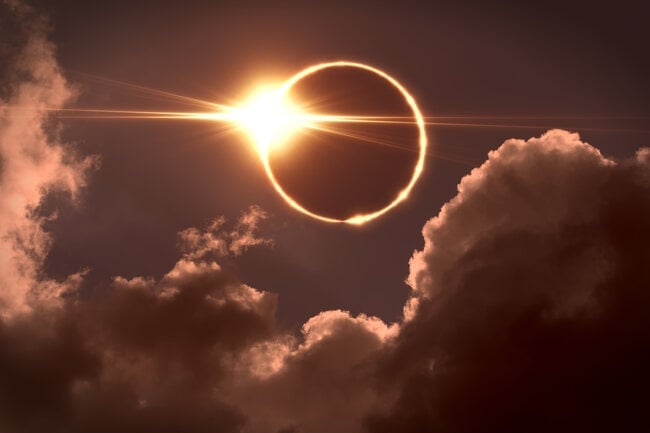
Quick Reference: April 8, 2024 Total Solar Eclipse
- Date: Monday, April 8, 2024.
- Path width: 115 miles, from Mazatlan, Mexico through 15 US states to eastern Canada.
- Maximum totality: 4 minutes 28 seconds near Torreon, Mexico.
- People in path: 31 million Americans plus tens of millions more who traveled.
- Next US total eclipse: August 23, 2044.
- Special: Devil Comet visible during totality.
The April 8, 2024 total solar eclipse was a generation-defining event. The path of totality crossed 15 US states from Texas to Maine, eastern Canada, and northern Mexico. An estimated 31 million Americans lived in the path; tens of millions more traveled to see it. Here is a complete recap of the eclipse, the science of what happened, and what made it special.
The Path
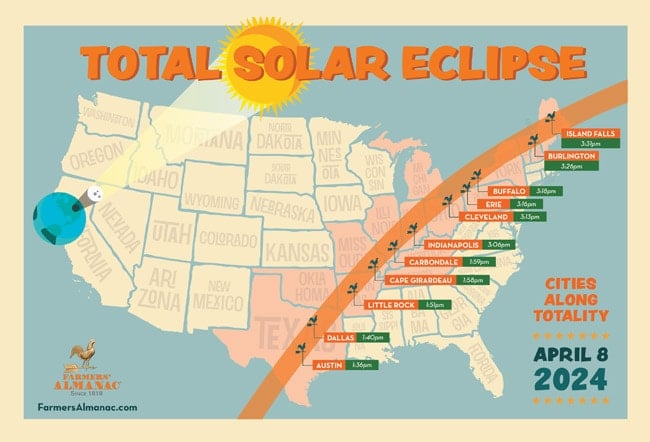
Totality began over the Pacific Ocean off Mexico’s west coast at 11:07 a.m. local time, swept inland across Mazatlan, Durango, and Coahuila, then crossed into Texas at 1:27 p.m. CT. From there the shadow moved northeast across Oklahoma, Arkansas, Missouri, Illinois, Indiana, Ohio, Pennsylvania, New York, Vermont, New Hampshire, and Maine, exiting over Newfoundland at 5:16 p.m. local time.
Major cities in the path included Mazatlan, Dallas, Indianapolis, Cleveland, Buffalo, Rochester, Burlington, and Montreal.
What Viewers Saw
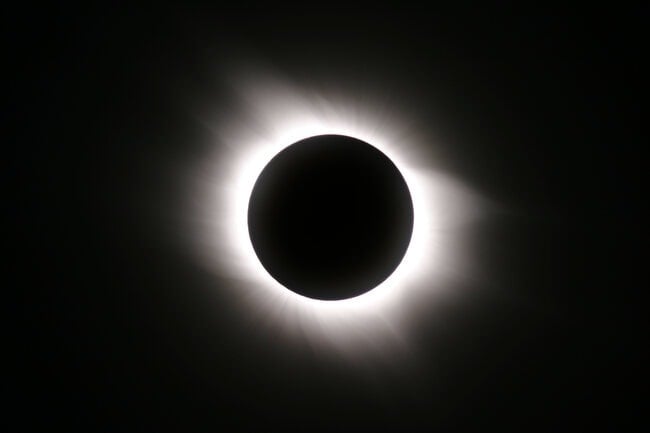
During totality, the sun’s bright disc was completely covered by the moon, revealing the corona, the sun’s outer atmosphere normally invisible from Earth. The corona appeared as a delicate silvery halo extending several solar diameters from the dark moon.
Stars and bright planets became visible during totality, especially Venus and Jupiter. The temperature dropped roughly 10 degrees F across most viewing sites. Birds went silent. Streetlights came on. The horizon glowed all 360 degrees, a ‘sunset in every direction’ effect from sunlight scattering around the moon’s shadow.
What Made This Eclipse Special
The 2024 eclipse was unusually wide (115 miles versus 71 miles for the 2017 American eclipse), unusually long (4+ minutes versus 2 minutes 40 seconds in 2017), and crossed more major US cities than any total solar eclipse in modern memory.
- Comet 12P/Pons-Brooks (the Devil Comet) was visible during totality, near the eclipsed sun.
- Jupiter and Venus were both prominent during totality, with Saturn and Mars also detectable.
- Dallas was the largest city in the central path, with 1.3 million residents in totality.
- Niagara Falls saw totality, producing some of the year’s most-photographed eclipse images.

Frequently Asked Questions
How wide was the path of totality?
About 115 miles wide. Anyone outside the path saw a partial eclipse, but only those in the path saw totality.
When is the next total solar eclipse in the US?
August 23, 2044, crossing Montana, North Dakota, and South Dakota.
What’s the difference between a partial and total eclipse?
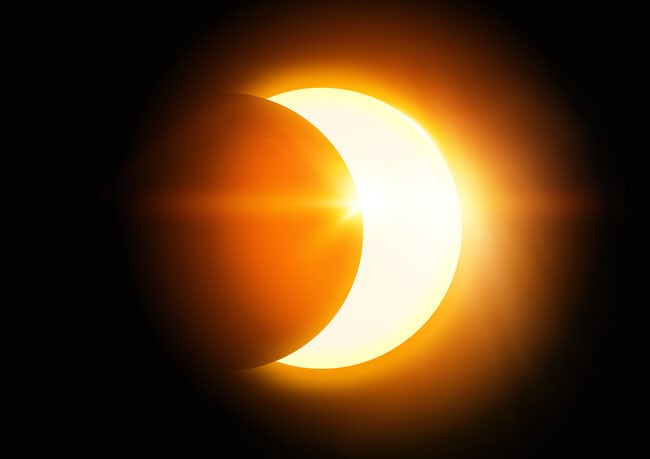
In a partial eclipse, the moon covers only part of the sun. In a total eclipse, the moon covers the entire sun briefly, revealing the corona. The viewing experience is dramatically different.
Was it safe to look at the eclipse?
Only during totality (when the sun was completely covered) was naked-eye viewing safe. Before and after totality, certified eclipse glasses were essential.



Joe Rao
Joe Rao is an esteemed astronomer who writes for Space.com, Sky & Telescope, and Natural History Magazine. Mr. Rao is a regular contributor to the Farmers' Almanacand serves as an associate lecturer for the Hayden Planetarium in New York City.
- Joe Rao

- Joe Rao
- Joe Rao
- Joe Rao




How does the shadow casting method work?
Fascinating…Looking forward to it
We are too!
Me TOO! it’s on my birthday!
It is my son’s 16th birthday!
Happy Eclipse Birthday to him!
wow
nice
good