Feed A Cold, Starve A Fever: A New Take For 2026

Quick Reference: Feed A Cold, Starve A Fever
- The old rule: feed a cold to warm the body, starve a fever to cool it. Traced to John Withals’ English dictionary, 1574.
- What today’s medicine says: feed them both. Immune defense burns extra calories whether the illness is a runny nose or a 102 degree fever.
- The bigger priority: fluids. Fevers dehydrate you and colds need mucus thin enough to flush germs out.
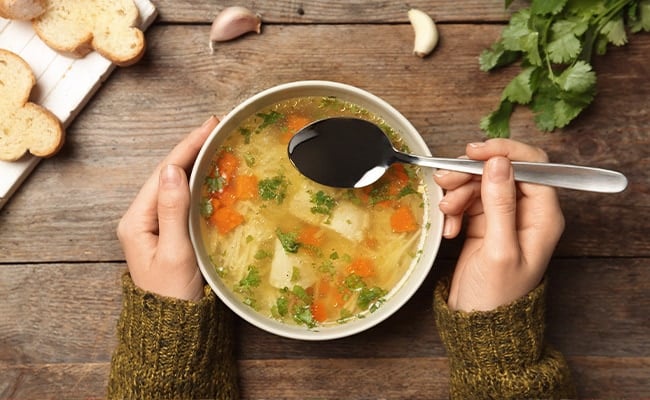
- Good picks when appetite drops: hot herbal tea, low-sodium chicken soup, bone broth, electrolyte drinks, diluted juice, plain water.
- Skip: caffeine and alcohol. Both dry you out on top of the illness.
- When to call a doctor: fever over 103 F, fever lasting more than three days, trouble breathing, chest pain, dehydration, or symptoms that keep getting worse.
Cold and flu season lands on most American households from October through March, and it always seems to bring back the same folk rule with it: feed a cold, starve a fever. Your grandmother probably said it. So did ours. It sounds folksy and firm, and for four and a half centuries people have taken it as gospel. The trouble is, modern medicine has quietly moved on. The updated take is simpler and easier on a sick body: feed both, drink more, and rest.
The Farmers’ Almanac does not give medical advice, but we do keep an eye on where old sayings hold up and where they wear out. This one has worn out. Below is where the phrase came from, what the latest research from Yale School of Medicine and the American Academy of Pediatrics actually shows, and a plain-English plan for eating and drinking your way through a cold or a fever without making yourself worse.
Origin Of “Feed A Cold Starve A Fever”
The saying is old. It first shows up in print in John Withals’ dictionary of 1574, which flatly declares that “fasting is a great remedy of fever.” Elizabethan physicians believed the body was heated by the food it burned. A cold, in their framing, was a chill of the humors, so fuel the fire. A fever was already too hot, so pull the fuel away. Doctors of the 16th and 17th centuries thought withholding food would rest the digestive tract and let the body cool itself.
The rule of thumb outlived the theory behind it. Well into the 20th century, families still starved feverish children on the assumption that a growling stomach helped the illness burn out faster. It did not. It just left the sick person weaker.
Important New Information
Fighting off an infection is metabolic work. Your immune cells run hotter, replicate faster, and burn through calories at a higher rate than usual. A 2016 study from Yale School of Medicine published in Cell found that mice fighting a bacterial infection did better with food and that mice fighting a viral infection also benefited from being fed. The old feed-a-cold-starve-a-fever rule did not hold up in either arm of the experiment. The takeaway the researchers put in plain English: nourish the body, whichever bug it is battling.
The Johns Hopkins Medicine guidance is even blunter: eat if you can, and drink even if you cannot eat. The updated adage, then, is short. Feed them both. Water them more.
Why To Feed A Cold
- Immune defense costs calories. Your body needs extra energy to fight off a viral or bacterial infection. A balanced meal keeps the immune system stocked with the amino acids, zinc, and vitamin C it needs to combat any pathogenic invader.
- Warmth slows rhinoviruses. Cold viruses replicate faster in a cold environment. Eating produces body heat, which is one small reason a hot lunch on a cold day feels like it helps. It literally does.
- You keep your strength up. Colds usually last five to ten days. Skipping meals across that stretch leaves you dragging by day three and slower to bounce back at the end.
Why To Feed A Fever
- Fevers speed up metabolism. A one-degree Fahrenheit rise in body temperature can raise your resting calorie burn by roughly 10 to 13 percent. Skip meals and the deficit adds up fast.
- The 16th-century theory was wrong. In the 1500s and 1600s doctors believed a fever meant metabolism was overworked and that withholding food would let the digestive system rest and cool the body. We now know that reducing calorie intake can in fact make it harder for your body to fight off a fever.
- Food gives the body something to work with. Feeding a fever replenishes your body and gives it the strength it needs to keep fighting off the illness.

Fluids Are Key, Stay Hydrated
Loss of appetite is common when you are feeling under the weather. While it is wise to tune into your hunger cues, it is also vital to provide your body with the food and energy it needs to fight off illness. Calories help you recover. Fluids matter even more.
Fevers dehydrate your system. Colds require mucus to flush out the germs inside you. Fluids help prevent mucus from drying up and blocking the exit routes germs are supposed to take. When mucus hardens it inhibits coughs, and coughing is one of your body’s ways of dislodging germs. The Cleveland Clinic puts the target at roughly 8 to 12 cups of fluid a day for an adult with a mild fever, and more if the fever climbs.
Related: 10 Reasons To Try Bone Broth

If you do not feel like eating when you are sick, drink your calories to stay hydrated and nourished. Hot herbal teas, electrolyte drinks, diluted fruit juice, bone broths, and chicken soup are all good options. Soup is a fair everyday pick because it delivers calories and fluid together. Avoid caffeine and alcohol, which further dehydrate. If you feel nauseous, sip slowly.
What To Eat, Day By Day
Not every day of a cold or flu feels the same. Here is a rough map that lines up with the way most infections progress in an adult.
| Day of Illness | Typical Symptoms | What to Eat (and Why) | What to Limit |
|---|---|---|---|
| Day 1-2 (early) | Scratchy throat, mild fatigue, runny nose beginning | Warm broth (chicken soup genuinely reduces nasal congestion in clinical studies); hot tea with honey; plain crackers or toast | Heavy proteins and fats (digestion diverts energy from immune response). Alcohol (suppresses immune function even in small amounts) |
| Day 3-4 (peak) | Congestion, sore throat, body aches, possible fever | If fever: prioritize fluids (water, electrolyte drinks, broth). Bananas, white rice, applesauce, or toast (BRAT pattern) if stomach is upset. Zinc lozenges started within 24 hours of symptoms may shorten duration | Dairy can thicken mucus for some people (personal variation; not universal). Sugary drinks (temporarily suppress white blood cell activity). Cold beverages (harder on inflamed throat than warm ones) |
| Day 5-6 (resolution) | Symptoms easing; energy returning; congestion loosening | Gradually reintroduce normal foods; start with easily digested options (eggs, oatmeal, soup). Continue warm fluids. Probiotic-rich foods (yogurt, kefir) may support gut microbiome if you have taken antibiotics | No need to restrict; listen to appetite. If coughing persists, avoid foods that trigger throat irritation (spicy, very acidic, very cold) |
| Fever specifically | Temperature above 100.4 F (38 C) | Fluid intake is the priority. Cool (not cold) water, sports drinks, diluted juice. Popsicles help if the throat makes swallowing uncomfortable. Appetite suppression during fever is normal and expected | Forcing solid food when appetite is absent is counterproductive. The “starve a fever” half of the saying is not literal starvation; it means do not force food. Fluids always |
Note: this is a general guide. If symptoms are severe, worsen after day 3, or include difficulty breathing, chest pain, or confusion, see a doctor. The old saying “feed a cold, starve a fever” dates to at least 1574 but has no strong clinical support as a literal rule.
When To Call A Doctor
- Fever above 103 degrees Fahrenheit in an adult, or above 100.4 F in an infant under three months.
- Fever lasting more than three days, or one that keeps climbing.
- Trouble breathing, chest pain, or wheezing.
- Signs of dehydration: dark urine, dizziness, dry mouth, no tears when crying.
- Confusion, a stiff neck, or a severe headache with the fever.
- Symptoms that improve then suddenly worsen, which can point to a secondary bacterial infection.
None of the above is a stand-in for medical care. Call your provider or pediatrician when any red flag shows up. Folk wisdom is a comfort. Antibiotics and hydration therapy save lives.
A Final Thought
Your friends at Farmers’ Almanac wish you well, especially during cold and flu season. Rest when you can, keep a full mug beside the couch, and let the body do what it is built to do. The old rule was clever for its time. The new rule is kinder to a sick body: feed the cold, feed the fever, and out-drink both.
Psst… come and visit us at The Farmhouse.

Frequently Asked Questions About Feeding A Cold Or Fever
Is it true you should feed a cold and starve a fever?
No. The saying dates to a 1574 dictionary and reflects Elizabethan ideas about body heat that modern medicine has set aside. Yale researchers and Johns Hopkins both point to the same practical rule: eat what you can and drink even more. Fighting infection burns calories whether the illness is a runny nose or a fever.
What should you eat when you have a cold?
Warm, easy-to-digest foods that give you protein, fluids, and mild sodium: chicken soup, bone broth, oatmeal, scrambled eggs, plain toast with honey, mashed sweet potato, or a smoothie made with yogurt and banana. Add fruit for vitamin C once your throat can handle it.
What should you eat when you have a fever?
The same short list works for a fever, with an emphasis on fluids. Broth-based soups, herbal teas, water flavored with lemon, and oral rehydration solutions all help. Do not force a full meal if you feel nauseous. Small sips and small bites, every hour or two, add up.
How much water should you drink with a fever?
The Cleveland Clinic guideline is roughly 8 to 12 cups of fluid a day for an adult with a mild fever, and more if the fever is high or if you are sweating heavily. Check your urine color: pale straw is on target, dark amber means drink more.
Does chicken soup actually help a cold?
Yes, modestly. A 2000 University of Nebraska study led by Dr. Stephen Rennard found that chicken soup slowed the movement of certain infection-fighting white blood cells in the lab, which helps explain why it can ease congestion. It also gives you warmth, salt, protein, and hydration in one bowl, which is why generations have leaned on it.
Should you skip meals when you feel too sick to eat?
Try to drink calories instead. Bone broth, smoothies, protein-rich milk or a plant-based milk, warm honey tea, and diluted juice all deliver fuel without a full plate. Then eat as soon as appetite returns, even if it is only a few bites at first.
When should you call a doctor for a fever?
Call for any fever above 103 F in an adult, any fever in an infant under three months, or any fever that lasts more than three days. Also call for trouble breathing, chest pain, confusion, a stiff neck, signs of dehydration, or symptoms that get better then suddenly worsen.
Join The Discussion
Do you feed a cold and starve a fever, or do you feed them both?
What is the one food or drink your household always reaches for when a bug goes around?
Share your experience with your community here in the comments below.


Natalie LaVolpe
Natalie LaVolpe is a freelance writer and former special education teacher. She is dedicated to healthy living through body and mind. She currently resides on Long Island, New York, with her husband, children, and dog.
- Natalie LaVolpe

- Natalie LaVolpe
- Natalie LaVolpe
- Natalie LaVolpe