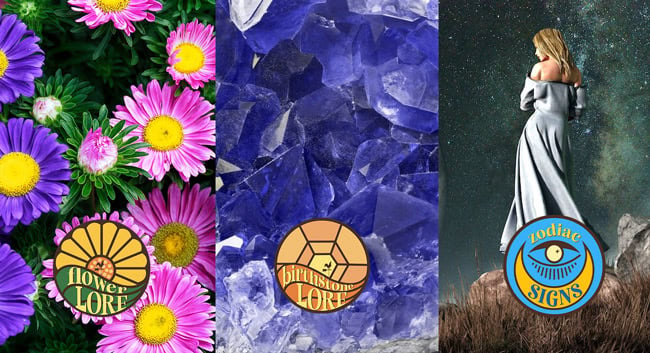
September Birth Month Symbols And Fun Facts: Birthstone, Flower, Zodiac
Quick Reference: September Symbols
- Birthstone: Sapphire (also lapis lazuli and aventurine as alternates)
- Birth flowers: Aster (purity, wisdom) and morning glory (affection)
- Birth tree: Vine (in the Celtic tree calendar, Sep 2 to Sep 29)
- Zodiac: Virgo (Aug 23 to Sep 22) and Libra (Sep 23 to Oct 22)
- Full Moon: Harvest Moon or Full Corn Moon
- Colors: Rusty orange, red, and deep blue
- Bird: Hawk
- Anglo-Saxon name: Haligmonath, “holy month”
September is the doorway month. The energy of summer fades, leaves begin to change color, kids head back to school, and the harvest moves into full swing. If your birthday falls in September, this guide walks through every symbol the month carries: birthstone, birth flowers, birth tree, zodiac signs, the Full Harvest Moon, herbs, the hawk, weather lore, the night sky, and a long list of fun facts. Share your favorites in the comments.

September Birth Month Symbols
September birth month symbols cluster around two themes: harvest and balance. The aster, September’s birth flower, stands for purity and wisdom. The sapphire, its birthstone, is the gem of connection and clear communication. Virgo and Libra serve as the month’s zodiac signs, one practical and one diplomatic. The hawk soars in as bird of the month, a symbol of strength and perseverance. Dill and chamomile are the healing herbs tied to the two signs. Each piece reinforces the same idea: September is a month for finishing what you started.
September Birth Month Flower: Aster
September’s birth flower is the aster, a late-season garden starlet. A member of the Asteraceae family alongside sunflowers, daisies, cosmos, and zinnias, asters are cold-hardy, deer-resistant perennials that grow one to six feet tall and one to four feet wide. Each bloom has a yellow center and petals that branch out like rays, ranging from white to purple to deep blue, well suited for borders, rock gardens, and wildflower plots. Asters are originally native to Europe and Asia, but their hardy adaptability has carried them around the world.
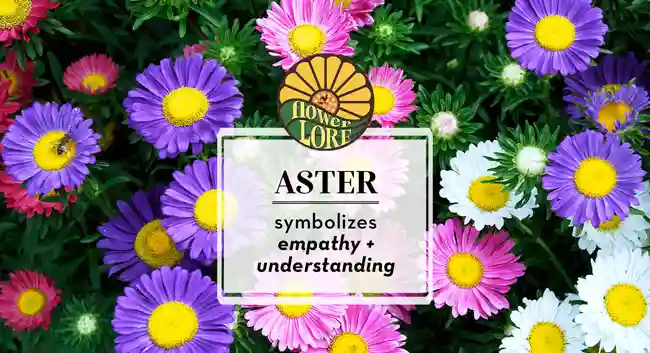
Aster carries the symbolism of empathy and understanding. In India, China, and parts of Persia, these flowers were carried for weddings as a sign of purity and love. Chinese tradition ties asters to fidelity, devotion, and wisdom, traits any marriage could use as a foundation. September also has a second, less-known birth flower in some Victorian language-of-flowers tables: morning glory, which stood for affection and the bond between the giver and recipient.
RELATED: Farmers’ Almanac Best Days to Get Married
Any questions? Contact [email protected]
Aster has a long history, dating back to Ancient Greece. The name comes from the Greek word asteri, meaning “star,” after the star shape of the bloom. In Greek myth, the aster was created by the goddess Astraea, the star goddess, when she wept for a sky empty of human stars. For a deeper look at the symbolism, see our companion article: September Birth Flower, Aster.

September Fun Facts:
- Asters do not play by the rules at bloom time. They open in response to the shorter, cooler days of fall, just as most other blooms are dying off, making them late-summer pollinator heroes.
- In Christian tradition, asters tie to the Feast of St. Michael (Michaelmas), celebrated each year on September 29. Because asters are one of the last blooms to peak at that point, they are also known as “Michaelmas daisies.”
September Birthstone: Sapphire
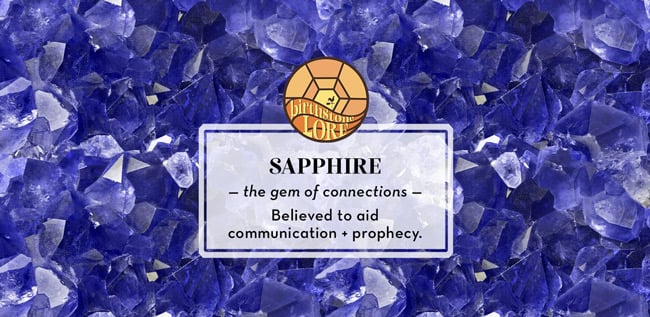
Sapphire is September’s birthstone, known for its blue color and its hardness (Mohs 9, second only to diamond). The name comes from the ancient Greek sappheiros, meaning “precious blue gem.” Blue sapphires have been considered a deeply spiritual stone, set into the robes of clergy and the crowns of royalty for centuries. In the Middle Ages, the stone was thought to symbolize heaven and attract its blessings.
Sapphire is also known as the “gem of connections” and was believed to aid clear communication and prophecy. For a deeper dive on the geology, famous stones, and folklore, read our companion article: September Birthstone, Sapphire.
Related product: September Birthstone – Lapis Necklace
September Fun Facts:
- Not all sapphires are blue. Sapphire is a variety of the mineral corundum, and corundum shows up in a rainbow of colors thanks to trace elements like iron, titanium, and chromium. Only red corundum is called ruby; every other color of corundum is a sapphire.
- Natural sapphires take millions of years to form deep in the Earth. They can also be grown in a lab using the same chemistry, often with more consistent color and fewer flaws than mined stones.
- Sapphire is one of the few gems that can show a natural asterism, a reflection of a six-rayed star across its surface. These “Stones of Destiny” are especially prized.
September Colors: Rusty Orange, Red, and Deep Blue
September is associated with earthy autumn colors: rusty orange, red, and deep blue. The fiery oranges and reds carry the warmth of summer’s last days and the look of backyard bonfires, fall harvests, and changing leaves. Red also calls up the ripe apples that show up in farm stands around now. Deep blue, a nod to the sapphire, adds the cool tone of colder days ahead.
September Fun Facts:
- Red carries meaning in many cultures. In the West it is tied to love; in Eastern cultures it stands for good fortune and joy. It is the dominant color in many Asian weddings.
- The word orange comes from the Sanskrit naranga, the name for the aromatic citrus grown in India and Southeast Asia. It moved into Persian and Arabic as naranj, naming both the fruit and the color.
Full Harvest Moon (Or Full Corn Moon)
September’s full Moon is known as the Harvest Moon or the Full Corn Moon, depending on its closeness to the autumnal equinox. The Harvest Moon is the full Moon that lands closest to the first day of fall in the Northern Hemisphere. The name dates back to a time when farmers depended on the Moon’s light to keep harvesting late into the evening. Unlike other months, the Harvest Moon is not tied to a specific calendar month; it follows the lunar cycle, so it can fall in either September or October.
When October’s full Moon falls closer to the fall equinox, September’s full Moon takes the name Full Corn Moon instead. Several Native American tribes called the September full Moon the Full Corn Moon or Green Corn Moon, because it lined up with corn harvest in the Northern Hemisphere. For dates and exact timestamps, see our September full Moon page.

September Fun Facts:
- The Full Harvest Moon rises close to the same time each evening for several nights in a row, which is what gave farmers their extra harvest light.
- Many fall and harvest festivals are still held around the Full Harvest Moon, plus songs like Neil Young’s “Harvest Moon” that take their name from it.
September Zodiac Signs: Virgo And Libra
September is one of the months that straddles two zodiac signs: Virgo and Libra. Virgo runs August 23 through September 22. Libra picks up the day after and runs through October 22. The Celtic tree calendar also marks September with the Vine (September 2 through September 29), a sign of harvest, gathering, and joy in finished work.
Virgo (August 23-September 22)
Smart, organized, kind: practical is the middle name for Virgos. Symbolized by the virgin, the sixth sign of the zodiac is good at looking at the big picture and putting a plan around it. Staying organized and keeping control of the future gives a Virgo a sense of security. Virgos lean on reason over emotion, and their eye for detail can read as picky or critical. This earth sign is patient, but Virgos expect excellence from themselves and often set the same bar for the people around them. Even small letdowns like a last-minute cancellation can rattle them. Virgos also avoid disappointing others, which can tip into people-pleasing. They are born with a sense of duty and they finish the job. You want a Virgo on your team.
It takes time to earn a Virgo’s trust, and they often come across as shy at first. Once they open up, you have a friend for life. Virgos are lifelong learners, always after new knowledge, willing to sign up for a class or pick up a book over a night out. They do not need a packed social calendar to be content, but they do prize beauty: fashion and decorating, to a Virgo, are an extension of who they are.
Libra (September 23-October 22)
Libras, the seventh sign of the zodiac, are kind, selfless, and quietly intelligent. Represented by the scales of justice, Libras value harmony and are masters of compromise and diplomacy, good at seeing more than one side of a question. They thrive when their schedule, partnerships, friendships, and sense of fairness all line up. They are often called indecisive, but they are really weighing options. Libras are typically nonconfrontational, willing to put others first to keep the peace, which makes them strong team players at work and at home.
An air sign, Libras are daydreamers. They make great plans and sometimes struggle to follow through. Their imagination serves them well in arts and literature. Ruled by Venus, the planet of beauty, Libras love a life that looks good and feels good: a touch of luxury, time to be tended to. On the outside they look self-assured; inside they often wrestle with identity and self-esteem, which is why time alone matters to them.
September Fun Facts:
- Virgo is ruled by Mercury, the fastest planet in our solar system, which fits: Virgos run regimented lives with long-term plans and quick thinking on the move.
- Libra is one of the four cardinal signs, one at the start of each season. As the first sign of autumn, Libras are natural leaders ruled by Venus, full of bold ideas.
September Herbs of the Month
Folk tradition pairs herbs with zodiac signs, with specific herbs thought to highlight each sign’s strengths and ease its rough spots.
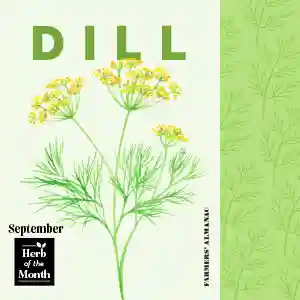
September’s two signs each pull a different herb forward: chamomile for Virgo, dill for Libra. Both grow well in a kitchen garden and dry well for tea or seasoning.
Virgo Herbs (August to September): In Greek myth, chamomile was tied to the god Apollo and stood for patience and endurance. In Norse tradition, it was linked to the goddess Frigg and considered a draw for good luck and prosperity. Chamomile has long stood as a symbol of purity and virtue in art and literature.
Shakespeare names chamomile more than once, and it tends to signal the compassionate, nurturing roles. The flower also appears in Victorian art as a sign of innocence and beauty.
Libra Herbs (September to October): Dill carries a distinct, clean scent and was long tied to renewal and protection. In ancient times, it was thought to ward off evil spirits and protect against curses, with its lace-like blooms believed to repel negative energy.
Many cultures treat dill as a lucky charm and weave it into rituals for wealth and good fortune, including bridal bouquets. In Greek and Norse tradition, dill was tied to strength and love and used in rituals and love potions.
September Fun Facts:
- Chamomile can be harvested for tea by plucking the open blooms while leaving the stem intact for new growth. Steep three to four tablespoons of fresh or dried flowers in boiling water for a fruity, apple-tinted tea. A sprig of mint or a spoon of honey rounds it out.
- To dry dill, hang the leaf sprigs upside down in a warm, well-ventilated spot for several weeks. Once dried, strip the leaves and store in an airtight container.

September Birth Month Bird: Hawk
The hawk, soaring over the treetops, stands for the strong, watchful spirit of those born in September. Like September itself, hawks are diligent and dependable. They stand for strength, adaptability, protection, and perseverance, and they tend to rise above whatever gets in their way.
A hawk can look threatening from below, but they are a vital part of any ecosystem, helping to control rodent populations and other animals that humans treat as pests.
September Fun Facts:
- Hawks live in virtually every habitat on Earth except the extreme polar regions, on every continent except Antarctica. They typically nest high in trees, on cliff faces, or on utility poles.
- Hawks generally live 15 to 20 years in the wild, with some species living up to 30 years in captivity.
- A group of hawks circling on a thermal is called a “kettle,” because the swirling pattern looks like steam rising off a boiling kettle.
What Does “September” Mean?
The name September comes from septem, Latin for “seven,” because September was the seventh month of the early Roman calendar (which started in March). In 700 BCE, the Roman ruler Numa Pompilius gave the calendar a lunar makeover, adding January and February at the front. September stayed put and became the ninth month, where it still sits today.
September has 30 days. In the Northern Hemisphere it marks the start of fall; in the Southern Hemisphere it marks spring. The autumnal equinox usually falls on September 22 or 23. For a closer look at the equinox itself, see our guide to the first day of fall.
September Fun Facts:
- September used to have only 29 days. When Julius Caesar reformed the Roman calendar in 46 BC, an extra day was added to bring it to 30.
- The Anglo-Saxons called September Haligmonath, an Old English word for “holy month,” set aside for festivities and religious thanks for a strong summer crop.
September Weather Lore
For centuries people have read the sky for short-range forecasts, and September is rich in weather sayings, especially the ones about rain. One popular September adage: “The first snow comes six weeks after the last thunderstorm in September.” Treat these the way farmers did, as a guide for planning the harvest rather than a guaranteed forecast. For something more measurable, check our regional long-range forecast.
Other September weather lore worth knowing:
- Fair on the first of September, fair the entire month.
- If the storms in September clear off warm, all the storms of the following winter will be warm.
- When September has been rainy, the following May is generally dry. When May is dry, September is apt to be wet.
- Thunder in September indicates a good crop of grains and fruits the next year.
September Night Sky
With longer, still-mild nights, September is one of the best months in the Northern Hemisphere to look up. The month brings the Harvest Moon, planet-viewing windows, and the autumn constellations Andromeda, Cassiopeia, and Pegasus.
The Andromeda Galaxy is a favorite September find. Also known as Messier 31, it is a spiral galaxy larger than our Milky Way, sitting 2.5 million light years away. That makes it the farthest object you can see with the naked eye, though binoculars or a telescope sharpen the view. Optimal viewing runs from September through October. Look high in the eastern sky at nightfall, away from city lights. To the naked eye it shows up as a hazy patch about the width of a full Moon.
The Northern Lights
The Northern Lights, or aurora borealis, are the prize sight of late-summer skywatching, and September is one of the better months to catch them. The dancing curtains of light appear when solar particles get pulled into Earth’s magnetic field near the poles. In the Northern Hemisphere we call them the aurora borealis; in the Southern Hemisphere they are the aurora australis.
When those particles collide with atmospheric molecules, the energy releases as colored light. Aurora is not strictly seasonal, but September and March are usually called the best viewing months: milder weather, longer dark, and clearer skies. The best places to see them are inside the auroral zone, a roughly 1,550-mile radius of the magnetic poles. In the US, Fairbanks, Alaska sits right under the auroral oval; northern Michigan and Minnesota also offer strong viewing. During strong geomagnetic storms, the auroral oval expands and the northern continental US can see the lights too. For more, see our aurora borealis sightings page.
September Fun Facts:
- Scientists say the Andromeda Galaxy is headed straight for us and will eventually merge with the Milky Way. Not for a few billion years, though.
- The term aurora borealis was coined by Galileo in 1619. The word aurora comes from the Roman goddess of dawn; boreas was the Greek name for the north wind. The Greeks called the same goddess Eos, sister to Helios (the Sun) and Selene (the Moon).
September Gardening
The cooler temperatures of September are a welcome shift as the fall harvest kicks in. Now is the time to enjoy the ripe tomatoes, sweet corn, and crisp apples, but there is still real work to do in the garden.
- September is an ideal time to plant herbaceous perennials, trees, and shrubs, leaving enough time for roots to set before the ground freezes. Local garden centers often discount perennials now; pick healthy ones so they make it through winter.
- Divide and replant any spring-blooming perennials. Water deeply to encourage new root growth.
- Plant needled and broadleaf evergreens by October 1. Water deeply at planting and then weekly until the ground freezes.
- Sow grass seed on well-prepared soil. Cool-season grasses like bluegrass and ryegrass do best with early-fall sowing.
- Refresh containers with cool-season flowers: chrysanthemums, fall-blooming asters, ornamental cabbage, and pansies.
- Dig up outdoor herbs like rosemary, chives, thyme, and marjoram and pot them up for indoor growing through winter.
- Keep pruning to a minimum. Plants need to channel energy into winter dormancy, not into new growth. Trim evergreen hedges for shape if needed.
- Remove any dead branches that could fall.
- Protect tree trunks and new shrubs from deer, rabbits, and voles with metal fencing, wire cylinders, or hardware cloth.
- Check the vegetable garden daily. Harvest as things ripen. If a frost is on the way, cover with frost fabric or light blankets.
- Pick unripe tomatoes before the first chilly nights and ripen them indoors.
- Toward the end of the month, start harvesting late-season squash and early pumpkins.
- Pick any cool-season vegetables like lettuce, spinach, peas, radishes, or swiss chard you planted in August.
- Plant winter crops: lettuce, spinach, arugula, kale, garlic, cabbage, brussels sprouts, swiss chard, beets, cauliflower, leeks, and carrots. For step-by-step help with brussels, see our brussels sprouts guide.
- Pull any spent plants from the garden. Compost healthy plant matter; bag and toss anything diseased.
- Prep the compost pile for autumn yard waste. Pile in grass clippings, leaves, yard trimmings, and kitchen scraps. Keep the pile moist and skip any diseased material.
- Pull weeds from beds and lawn before they go to seed. Your spring self will thank you.
- After a hot summer, keep watering. Water plants thoroughly, especially the ones that are not drought-tolerant. Water infrequently but deeply, twice a month through mid-to-late fall.
- Plant spring bulbs like daffodils, tulips, and crocuses now so the roots can establish a bit before winter dormancy.
- Watch for end-of-season deals on gardening supplies, planters, potting soil, and even plants before stores swap in holiday items.
- Collect, dry, and save seeds from your favorite plants to sow next spring.
September Trivia
- Labor Day falls on the first Monday in September, honoring American workers. President Grover Cleveland signed it into law on June 28, 1894. The first known Labor Day parade was held in New York City on September 5, 1882, more than a decade before it became a federal holiday.
- In 1752 the British Empire skipped 11 days of September, between the 2nd and the 14th, to finish its switch from the Julian to the Gregorian calendar.
- The Romans tied each month to a different god. September was dedicated to Vulcan, the Roman god of fire.
- September always begins on the same day of the week as exactly one other month: December.
- Constitution Day, also called Citizenship Day, falls on September 17, the date the US Constitution was signed by delegates in 1787. The federal observance honors the document and the country’s citizens.
- On September 11, 2001, the worst terrorist attack on US soil took place: two hijacked planes struck the twin towers of the World Trade Center, a third hit the Pentagon, and a fourth came down in a field in Pennsylvania after passengers attempted to retake the plane. The day is now observed as Patriot Day in memory of the lives lost.
- September birthdays run heavy on familiar names: England’s first Queen Elizabeth, authors Roald Dahl, Shel Silverstein, and Agatha Christie, actress Greta Garbo, scientist Michael Faraday, Victoria Woodhull (the first woman to run for US president, in 1872, before women could vote), Jim Henson of The Muppets, tennis star Serena Williams, and Bruce Springsteen all share a September birth month.
- To recognize US-grown rice and its place in a healthy diet, President George H.W. Bush named September National Rice Month.
September Birth Month FAQ
What is the September birthstone?
The September birthstone is sapphire, the blue variety of the mineral corundum. Lapis lazuli and aventurine are sometimes listed as traditional alternates. Sapphire stands for wisdom, loyalty, and clear communication. See our full guide to the September birthstone, sapphire for color, geology, and famous stones.
What is the September birth flower?
September has two birth flowers: the aster, a star-shaped late-summer perennial that stands for wisdom and purity, and the morning glory, a Victorian-era alternate that stands for affection. The aster is the main one on most modern charts. Read more about its meaning in our September flower lore guide.
What are the September zodiac signs?
September is split between two zodiac signs. Virgo runs August 23 through September 22, and Libra runs September 23 through October 22. Virgo is an earth sign ruled by Mercury; Libra is an air sign ruled by Venus.
What is the September birth tree?
In the Celtic tree calendar, September is the month of the Vine (September 2 through September 29), tied to harvest, gathering, and joy in finished work. It fits a month that already turns on the harvest theme.
Why is September called September if it is the ninth month?
The name comes from Latin septem, meaning seven, because September was the seventh month of the early Roman calendar (which started in March). When January and February were added to the front of the calendar around 700 BCE, September kept its name but slid to the ninth slot.
What is September’s full Moon called?
September’s full Moon is usually called the Harvest Moon, the full Moon nearest the fall equinox. When October’s full Moon falls closer to the equinox instead, September’s is called the Full Corn Moon, after the timing of corn harvest.
What colors represent September?
September’s colors are rusty orange, red, and deep blue. The oranges and reds reflect the autumn harvest, the changing leaves, and ripe apples; the deep blue nods to the sapphire birthstone and the cooler nights moving in.
What is the bird of the month for September?
The hawk is September’s bird of the month. It stands for strength, adaptability, and perseverance, and it suits a month centered on harvest and the long view ahead.
Join The Discussion
Is your birthday in September?
Do you have a favorite September symbol?
Got an interesting September fun fact, symbol, or piece of folklore that did not make it in here?
Share it with the community in the comments below.


This article was published by the Staff at FarmersAlmanac.com. Any questions? Contact us at [email protected].
- Farmers' Almanac Staff

- Farmers' Almanac Staff

- Farmers' Almanac Staff

- Farmers' Almanac Staff