August 2026 Night Sky Guide: Perseid Meteors, Two Eclipses, Venus, and the Sturgeon Moon

August 2026 brings one of the year’s finest months for stargazing, with dark skies for the Perseid meteor shower, a brilliant evening appearance by Venus, a solar eclipse, and a deep partial lunar eclipse during the Full Sturgeon Moon. Here are the dates to mark—and exactly how to watch.
All times below are Eastern Daylight Time unless otherwise noted.
August 2026 Night Sky Highlights
- August 5: Last Quarter Moon at 10:21 p.m.
- August 12: New Moon at 1:37 p.m. and a total solar eclipse visible along a path through the Northern Hemisphere
- August 12–13: Perseid meteor shower reaches its peak
- August 14–16: Venus reaches its greatest separation from the Sun in the evening sky
- August 19: First Quarter Moon at 10:46 p.m.
- August 27–28: Deep partial lunar eclipse
- August 28: Full Sturgeon Moon at 12:18 a.m.
The August Moon-phase times are based on U.S. Naval Observatory calculations, converted from Universal Time to Eastern Daylight Time.
August 12–13: The Perseid Meteor Shower Peaks
The Perseids are often considered the most dependable meteor shower of the summer—and conditions in 2026 could hardly be better.
The shower peaks on the night of Wednesday, August 12, into the early morning of Thursday, August 13. Because the New Moon also arrives on August 12, there will be virtually no moonlight to wash out the fainter meteors.
The Perseids are active from approximately July 17 through August 24, but the greatest concentration of meteors is expected during the night of August 12–13. The International Meteor Organization places the traditional broad maximum between the afternoon of August 12 and early morning of August 13 for North American observers.
What Causes the Perseids?
Every August, Earth passes through a stream of dust left behind by Comet 109P/Swift-Tuttle. When these tiny pieces of comet debris strike Earth’s atmosphere at tremendous speed, they heat the surrounding air and create the bright streaks we call meteors or “shooting stars.”
The meteors appear to radiate from the constellation Perseus in the northeastern sky, which is how the shower received its name. They can, however, flash across any portion of the heavens.
How Many Meteors Will You See?
Under a truly dark country sky, observers may see dozens of meteors per hour near the peak. Idealized meteor rates are sometimes quoted near 100 per hour, but your actual count will depend on cloud cover, light pollution, the height of Perseus above the horizon, and natural year-to-year variations in the stream.
Bright Perseid fireballs can occasionally leave glowing trails that remain visible for several seconds.
How To Watch the Perseids
Begin watching around 10 p.m. on August 12, when Perseus is climbing in the northeast. Conditions generally improve after midnight as the radiant rises higher in the sky.
Find a dark location with a wide view, settle into a reclining lawn chair, and look about halfway between the horizon and directly overhead. Do not stare only at Perseus—the longest meteor trails may appear some distance away from the radiant.
No telescope or binoculars are needed. In fact, they restrict your field of view. Give your eyes about 20 to 30 minutes to adjust to the darkness, keep phones and white flashlights turned off, and plan to watch for at least an hour.
August 12: A Total Solar Eclipse—But Not for Most of America
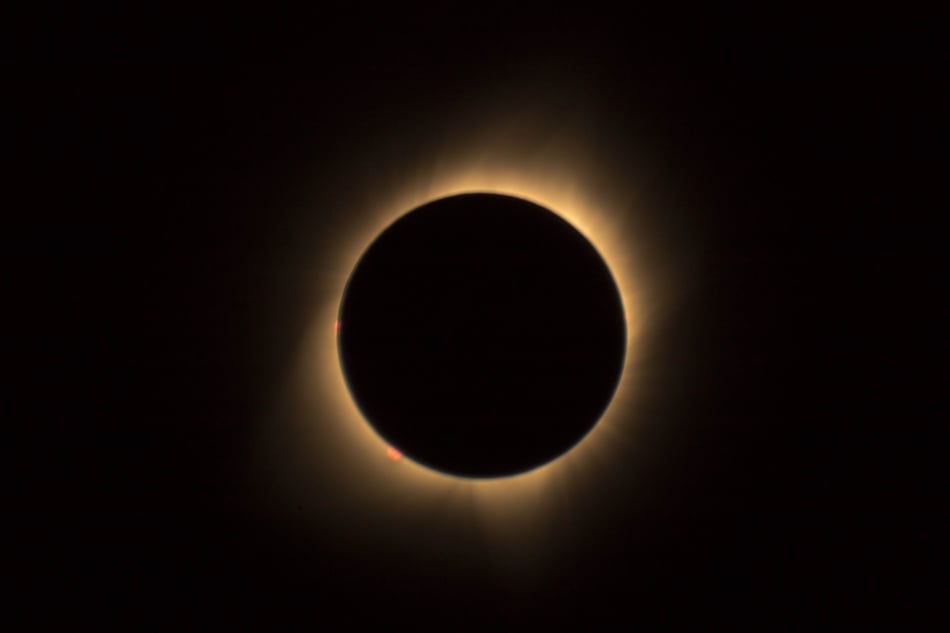
August 12 also brings a total solar eclipse, although the path of totality will not cross the continental United States.
Totality will pass over portions of northern Russia, Greenland, Iceland, northern Spain, and a small section of Portugal. Some locations in the United States—from Alaska to parts of the East Coast as far south as North Carolina—may see a small partial eclipse. The amount of the Sun covered and the local viewing time will vary considerably by location.
Important Solar-Eclipse Safety
Never look directly at the Sun without a safe solar viewer. Regular sunglasses do not provide sufficient protection.
Use certified eclipse-viewing glasses or an approved handheld solar viewer whenever any portion of the Sun remains visible. Never look through binoculars, a telescope, or a camera unless a properly designed solar filter has been securely placed over the front of the instrument.
August 14–16: Look for Brilliant Venus After Sunset
Around August 14–16, Venus reaches its greatest eastern elongation, meaning it appears near its widest separation from the Sun during this evening appearance.
Look low in the western sky shortly after sunset. Venus will be the remarkably bright, steady object shining through the twilight—far brighter than any nearby star.
A clear western horizon will be important because the planet remains relatively low in the sky. Through a small telescope, Venus will appear close to half illuminated, resembling a tiny version of a quarter Moon.
August 27–28: A Deep Partial Lunar Eclipse
One of the month’s most dramatic sights arrives on the night of Thursday, August 27, into Friday, August 28, when the Full Moon passes deeply into Earth’s shadow.
Although this is technically a partial lunar eclipse, it will come close to totality. At maximum eclipse, approximately 93 percent of the Moon’s diameter will be inside Earth’s dark central shadow, called the umbra. Only a narrow portion of the lunar disk will remain brightly illuminated.
The shadowed part of the Moon may appear dark gray, reddish, or copper-colored because sunlight passing through Earth’s atmosphere is bent toward the lunar surface.
Lunar-Eclipse Times for the Eastern United States
- Penumbral eclipse begins: 9:24 p.m., August 27
- Partial eclipse begins: 10:34 p.m.
- Greatest eclipse: 12:13 a.m., August 28
- Partial eclipse ends: 1:52 a.m.
- Penumbral eclipse ends: 3:02 a.m.
The early penumbral stage may be difficult to notice. The show becomes obvious after 10:34 p.m., when the dark umbral shadow begins crossing the Moon.
Unlike a solar eclipse, a lunar eclipse is completely safe to watch with the naked eye. Binoculars will reveal the curved edge of Earth’s shadow particularly well. The eclipse will be visible from much of North and South America, though the Moon’s position and the portion of the event visible will depend on location.
August 28: The Full Sturgeon Moon
The Moon reaches full illumination at 12:18 a.m. EDT on Friday, August 28. For most North American observers, it will look fullest from sunset Thursday evening through the overnight lunar eclipse.
The traditional Farmers’ Almanac name for August’s full Moon is the Sturgeon Moon, a reference to the lake sturgeon traditionally caught in greater numbers around the Great Lakes and other waterways during late summer. Other traditional August Moon names include the Grain Moon, Green Corn Moon, and Red Moon.
Because the full phase occurs only minutes after the eclipse reaches maximum, the Sturgeon Moon and the lunar eclipse are essentially one combined skywatching event.
See the Summer Triangle and Milky Way
Even between the month’s major events, the August sky has plenty to offer.
After nightfall, look high in the sky for the three bright stars of the Summer Triangle:
- Vega in Lyra the Lyre
- Deneb in Cygnus the Swan
- Altair in Aquila the Eagle
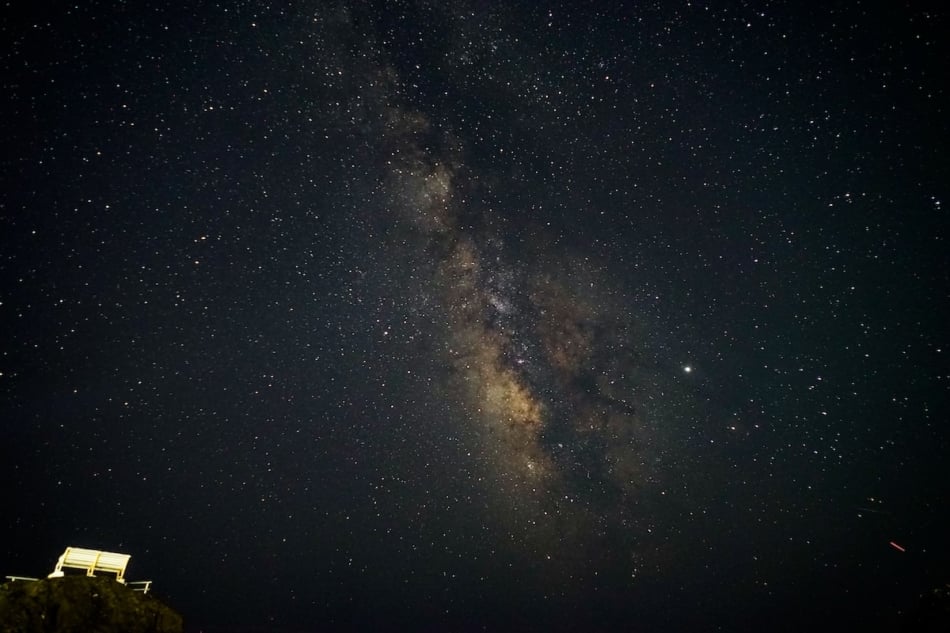
Vega is usually the easiest to find because it is the brightest of the three. From a dark location, the hazy band of the Milky Way passes through the Summer Triangle near Deneb and stretches toward the southern horizon.
The best views will come during the dark, moonless portion of the month centered on the August 12 New Moon. A pair of ordinary binoculars can transform the faint Milky Way haze into a field filled with countless stars.
Your August Stargazing Checklist
For the best possible view:
- Choose a location away from streetlights, buildings, and passing headlights.
- Check the weather shortly before leaving; thin clouds and haze can hide faint meteors.
- Allow at least 20 minutes for your eyes to become adjusted to darkness.
- Use a dim red flashlight rather than a white light.
- Bring a reclining chair, insect repellent, and a light blanket or jacket.
- Use your unaided eyes for meteor watching and binoculars for the Moon, stars, and Milky Way.
- Never view a solar eclipse without proper solar-viewing protection.
August’s warm nights make it one of the easiest months to begin exploring the heavens. Whether you catch a brilliant Perseid fireball, spot Venus glowing over the western horizon, or watch Earth’s shadow darken the Sturgeon Moon, there is good reason to step outside and look up.

- Tim Konrad

- Tim Konrad

- Tim Konrad

- Tim Konrad