September Epsilon Perseid Meteor Shower 2026: When To Look

The famous August Perseids may be over, but Perseus isn’t quite finished producing shooting stars. A little-known meteor shower arrives in September—and 2026 offers unusually dark skies for watching it.
If you thought meteor season ended with August’s spectacular Perseids, there’s another reason to look up.
The September Epsilon Perseid meteor shower peaks on September 9, 2026, sending fast-moving meteors across the late-summer sky. This is a much smaller shower than the famous August Perseids, but this year it has one major advantage: almost no moonlight.
The Moon becomes New at 11:27 p.m. EDT on September 10, meaning the nights around the meteor shower’s peak will be exceptionally dark.
And there’s another reason astronomers are paying attention in 2026: calculations suggest Earth could encounter an older trail of meteor debris early on September 10, possibly creating a brief increase in activity. It is far from guaranteed—but it makes this year’s shower more interesting than usual.
September Epsilon Perseids 2026: Quick Guide
- Peak: September 9, 2026
- Best night to watch: September 9 into the early morning of September 10
- Active dates: Approximately September 5–21
- Expected rate: Up to about 8 meteors per hour under ideal conditions
- Typical rate: Around 5 meteors per hour in many years
- Meteor speed: About 40 miles per second (64 km/s)
- Radiant: Constellation Perseus
- Best viewing: Northern Hemisphere
- Moon: Nearly New—excellent dark-sky conditions
- Equipment needed: None
The International Meteor Organization’s 2026 meteor calendar places the official maximum at approximately 18:00 UTC on September 9 and gives the shower a Zenithal Hourly Rate, or ZHR, of about 8.
For more upcoming shooting-star displays, bookmark the Farmers’ Almanac 2026 Meteor Shower Calendar.
When Is The Best Time To See The September Epsilon Perseids?
For most people in the United States, the best practical viewing window will be late Wednesday night, September 9, through the predawn hours of Thursday, September 10.
The shower’s official maximum occurs during daylight hours across North America, so don’t worry about trying to catch one exact moment. Meteor showers last for days, and activity should remain elevated throughout the night.
Start watching around 10 or 11 p.m. local time, when Perseus is becoming well positioned, and continue through the hours after midnight.
As with many meteor showers, your odds generally improve toward dawn as the radiant climbs higher in the sky.
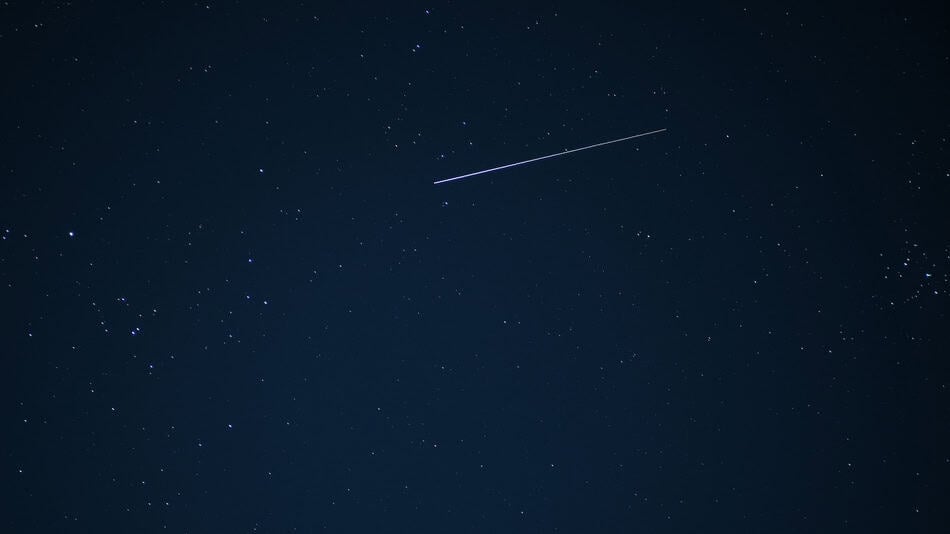
One Time To Keep An Eye On
There is an especially intriguing window this year.
Meteor researchers have modeled a possible encounter with older debris from the shower at approximately 06:10 UTC on September 10. That translates roughly to:
| Time Zone | Possible Activity Time |
|---|---|
| Eastern | 2:10 a.m. September 10 |
| Central | 1:10 a.m. September 10 |
| Mountain | 12:10 a.m. September 10 |
| Pacific | 11:10 p.m. September 9 |
Don’t set your expectations too high. Scientists caution that any extra activity may be weak—or may not materialize at all.
But if you’re already outside watching, this is a particularly interesting window to stay out a little longer.
How Many Meteors Will You See?
This is not another August Perseid spectacle.
The famous Perseid meteor shower in August 2026 was capable of producing 50 to 100 meteors per hour under ideal conditions.
The September Epsilon Perseids are much quieter.
The International Meteor Organization lists a 2026 ZHR of about 8 meteors per hour, although rates around five per hour are more typical of the shower historically.
And remember: ZHR is an idealized number. It assumes exceptionally dark skies, perfect visibility, and the meteor shower’s radiant near the zenith.
From a suburban backyard, you might only see a few September Epsilon Perseids during an hour of watching.
That’s why patience matters.
The Big Advantage In 2026: Almost No Moon
What the September Epsilon Perseids lack in numbers this year, they make up for in darkness.
The New Moon arrives September 10 at 11:27 p.m. EDT, just after the shower’s peak.
That means bright moonlight won’t wash faint meteors out of the sky.
Under a dark rural sky, the Milky Way may also be prominent, making this an excellent night simply to go stargazing—even if meteor activity remains modest.
See the Farmers’ Almanac Moon Phase Calendar for upcoming lunar phases and times.
Are These The Same Perseids We Saw In August?
No—and this is where the name gets confusing.
The September Epsilon Perseids are a separate meteor shower from August’s famous Perseids.
Both appear to radiate from roughly the same part of the northern sky around Perseus, which explains their similar names. But astronomers classify them as separate meteor streams.
The August Perseids come from debris left behind by Comet 109P/Swift-Tuttle. NASA describes them as one of the most plentiful annual meteor showers.
The parent object responsible for the September Epsilon Perseids, on the other hand, has not been firmly identified.
So the August Perseids aren’t literally returning for an encore.
Think of it instead as a different stream of cosmic debris arriving from the same general neighborhood of the sky.
Where Should You Look?
The meteor shower’s radiant lies in Perseus, in the northeastern portion of the sky during the evening for Northern Hemisphere observers.
But here’s the important part:
Don’t stare directly at Perseus.
Meteors can appear almost anywhere overhead, and their streaks often look longer when you look some distance away from the radiant.
NASA recommends taking in as much sky as possible rather than using binoculars or a telescope, since optical equipment gives you a much narrower field of view.
A reclining lawn chair works better than a telescope for meteor watching.
How To Watch The September Meteor Shower
For the best chance of spotting shooting stars:
- Get away from city lights. Rural skies can reveal dramatically more meteors than urban areas.
- Go outside after 10 or 11 p.m. Conditions should improve as Perseus climbs higher.
- Stay out after midnight. The predawn hours generally offer the best opportunity.
- Give your eyes 20–30 minutes to adjust. Avoid checking a bright phone screen.
- Look broadly overhead. Don’t focus exclusively on the radiant.
- Skip the telescope. Your eyes provide a far wider field of view.
- Dress warmly. September nights can become surprisingly chilly, especially outside cities.
NASA explains that meteor showers occur when Earth moves through streams of dust and debris left behind by comets—and sometimes asteroids. Those tiny particles enter Earth’s atmosphere at tremendous speeds and produce the brief streaks of light we call shooting stars.
Why Astronomers Are Especially Interested This Year
The September Epsilon Perseids have occasionally behaved unpredictably.
Astronomers recorded unusually strong activity in 2008 and another sharp episode of bright meteors in 2013.
For 2026, several modeling efforts suggest Earth may pass near older trails of particles during the early hours of September 10.
The International Meteor Organization emphasizes that the predicted activity could be low, and previous comparable circumstances have not always produced an obvious outburst. Still, observations this year could help scientists better understand the mysterious shower and its unknown parent object.
In other words: don’t expect a meteor storm—but don’t completely rule out a surprise either.
A Great September Night To Look Up
Even if the September Epsilon Perseids only deliver a handful of shooting stars, September 9–10 is still one of September 2026’s better nights for stargazing.
The almost-New Moon means unusually dark skies.
Perseus will be rising prominently.
And every few minutes, if you’re lucky, a fast meteor may flash through the darkness.
If you missed August’s spectacular Perseids—or simply aren’t ready to put away the lawn chair yet—consider this September’s quieter encore.
For more celestial events this month, see our September 2026 guide to the Moon, meteor showers, equinox, and night sky and the Farmers’ Almanac 2026 Astronomy Calendar.
Will you be looking for shooting stars on September 9? Tell us where you’ll be watching from in the comments!


- Farmers' Almanac Staff

- Farmers' Almanac Staff
- Farmers' Almanac Staff
- Farmers' Almanac Staff