Why September Mornings Are Suddenly Covered in Dew
Have you noticed your lawn suddenly soaking wet every September morning even though it hasn't rained? Longer nights, cooler temperatures, and lingering late-summer moisture create ideal conditions for heavy morning dew.

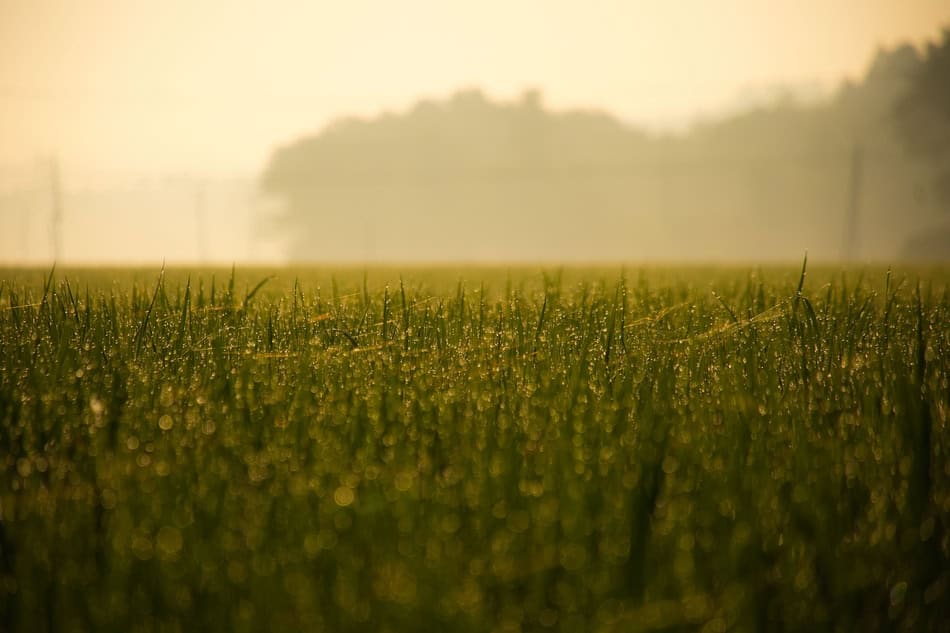
Walk outside on a September morning and you may notice something that seemed far less common just a few weeks ago: the grass is soaking wet, leaves are sparkling, spiderwebs are outlined with tiny droplets, and even the car is covered in moisture.
Yet it may not have rained at all.
So why is there so much dew in the morning during September?
The answer has everything to do with the changing season. September brings longer nights, cooler temperatures, lower sun angles, and increasingly favorable conditions for condensation. Together, they turn late-summer and early-fall mornings into some of the dewiest of the year.
And that morning dew can tell you quite a bit about the weather.
What Causes Dew in the Morning?
Dew forms when a surface becomes cool enough for water vapor in the surrounding air to condense into liquid water droplets.
The critical temperature is called the dew point.
During the day, grass, plants, roofs, cars, and the ground absorb heat from the Sun. After sunset, those surfaces begin releasing that heat back into the atmosphere and toward the night sky.
If a surface cools to the dew point, water vapor begins condensing on it.
That is why you can wake up to a dripping-wet lawn even though not a single drop of rain fell overnight.
In simple terms:
Warm, moist air + a cool nighttime surface = morning dew.
Why Is There More Dew in September?
There are several reasons dew suddenly becomes especially noticeable as summer begins giving way to fall.
1. September Nights Are Getting Longer
Perhaps the biggest reason is something happening every day right above us: the amount of daylight is shrinking rapidly.
Around the September equinox, most of the United States is losing roughly two to three minutes of daylight each day.
Longer nights give the ground, grass, cars, roofs, and plants more time to cool before sunrise.
The longer those surfaces cool, the greater the chance they will reach the dew point.
By September, there can be several additional hours between the strongest afternoon heating and the following sunrise compared with the height of summer.
That extra cooling time makes a big difference.
2. September Nights Are Cooler
September may still produce hot afternoons, but nighttime temperatures generally begin trending downward.
Those cooler nights make it much easier for surface temperatures to reach the dew point.
You might have an afternoon temperature in the upper 70s followed by an overnight low in the 50s. If the dew point remains relatively high, the temperature may eventually fall close enough to it for widespread condensation to occur.
The result?
A lawn that looks as if someone turned on the sprinklers overnight.
3. Late-Summer Air Can Still Be Very Moist
September occupies an interesting position on the calendar.
The nights are becoming cooler, but plenty of summer moisture can still be present in the atmosphere.
Warm soil, lakes, rivers, vegetation, recent rainfall, and humid air masses can all contribute moisture to the near-surface atmosphere.
When that moisture is combined with longer, cooler nights, conditions become ideal for heavy dew.
This is one reason some September mornings can be remarkably wet even during otherwise dry stretches of weather.
4. Clear September Nights Encourage Dew
You may notice the heaviest dew after a beautiful, clear night.
That isn’t a coincidence.
Clouds act somewhat like a nighttime blanket, absorbing and returning some outgoing heat toward Earth’s surface.
Under a clear sky, however, the ground and other exposed surfaces can lose heat more efficiently through radiational cooling.
Grass can actually become slightly cooler than the air just above it.
If the grass temperature reaches the dew point, water begins condensing directly onto the blades.
That is why a clear, calm September night can leave your yard drenched by sunrise.
5. Calm Winds Help Dew Form
Wind also matters.
On a breezy night, air near the ground is continually mixed with somewhat warmer air from above. That mixing can prevent surfaces from cooling enough for heavy dew to develop.
On a calm night, a thin layer of cool air can settle close to the ground.
That makes conditions much more favorable for dew.
The classic recipe for a particularly dewy morning is:
Clear skies + light winds + moist air + a cool night.
Why Does Grass Get So Much Wetter Than Everything Else?
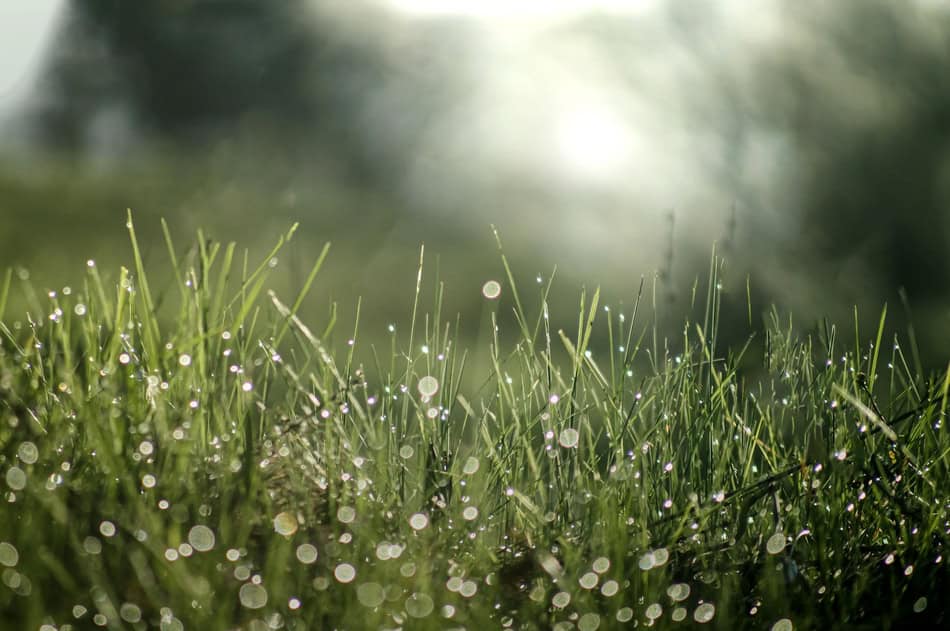
Grass is one of the best surfaces for producing visible dew.
Thin blades of grass lose heat quickly after sunset and are highly exposed to the open sky. Their large surface area also provides countless places for water droplets to collect.
This explains something you may have noticed:
Your lawn can be soaked with dew while the sidewalk beside it remains nearly dry.
Different materials cool at different rates. Grass may fall below the dew point while concrete, stone, or other surfaces remain slightly warmer.
Why Spiderwebs Suddenly Appear on Dewy Mornings
September dew also reveals something that was there all along.
Spiderwebs.
Fine strands of silk can be almost invisible when dry. When dew droplets collect along the strands, however, entire webs suddenly appear—often creating spectacular patterns across lawns, shrubs, fences, and gardens.
This is one reason September is such a good month for spotting intricate spiderwebs during an early morning walk.
The spider didn’t necessarily build the web that morning.
The dew simply made it visible.
Can Morning Dew Predict the Weather?
To a degree, yes.
For generations, farmers and weather watchers paid attention to dew because a heavy coating often develops beneath clear, calm nighttime skies.
One old weather belief says:
“When the dew is on the grass, rain will never come to pass.”
Like most weather folklore, it shouldn’t be taken literally. Rain can certainly fall later in the day after a dewy morning.
But there is some meteorological reasoning behind the saying.
Heavy dew frequently forms beneath relatively clear skies and light winds—conditions often associated with more settled weather at that particular moment.
Conversely, an unusually warm, cloudy, or windy night may produce little or no dew.
Dew, Fog, and Frost: What’s the Difference?
These three September and autumn phenomena are closely related but aren’t the same thing.
Dew is liquid water that condenses onto cool surfaces.
Fog consists of tiny water droplets suspended in the air near the ground.
Frost forms when surfaces are cold enough for ice crystals to develop rather than ordinary liquid dew.
As fall progresses and nights become colder, the sparkling dew of September mornings gradually gives way to another familiar sight:
the first frost of autumn.
That transition is one of nature’s clearest signs that the season is advancing.
Is Morning Dew Good for Your Garden?
Usually, yes—with a few qualifications.
Dew provides plants with a small amount of moisture and creates a humid environment around leaves during the early morning.
But don’t count on dew as a substitute for watering.
Even a lawn that looks absolutely soaked at sunrise may have received only a relatively small quantity of water.
Gardeners should continue checking soil moisture, rather than judging watering needs solely by how wet the leaves look.
There is another consideration.
Repeated periods of prolonged leaf wetness can encourage certain fungal diseases, particularly when temperatures and humidity are favorable.
Good spacing, airflow, and watering plants near their base rather than repeatedly soaking foliage can help reduce problems.
Why You May Notice Dew More as Fall Approaches
Morning dew is more than an interesting weather phenomenon.
It is one of the subtle signs that the seasonal clock is turning.
September afternoons can still feel completely like summer. The Sun can be warm. Temperatures can climb into the 70s, 80s, or even 90s in some parts of the country.
But nighttime tells a different story.
The Sun is setting earlier.
The nights are growing longer.
The ground is cooling more rapidly.
Morning temperatures are falling.
And increasingly, the day begins beneath millions of tiny drops of water.
A Sign of the Changing Season
Long before leaves reach peak fall color or the first frost whitens the fields, morning dew can signal that autumn is approaching.
It appears quietly—on lawns, gardens, fields, cars, rooftops, and spiderwebs.
So the next time you step outside on a September morning and wonder why everything is suddenly soaking wet, look up at the clear sky and remember what happened overnight.
The surface beneath your feet simply became cold enough to reach the dew point.
And those sparkling droplets are another small reminder that summer is slipping away and fall is taking its place.


This article was published by the Staff at FarmersAlmanac.com. Any questions? Contact us at [email protected].
- Farmers' Almanac Staff

- Farmers' Almanac Staff

- Farmers' Almanac Staff

- Farmers' Almanac Staff