When Mosquitoes Die Off And Disappear in Fall Where You Live
When do mosquitoes finally disappear for the year? Temperatures around 50°F dramatically slow mosquito activity, while freezing weather kills many exposed adults. But some mosquitoes have surprisingly clever ways of surviving winter.

There’s a moment every fall when you step outside and suddenly realize something wonderful: the mosquitoes are gone.
No buzzing around your ears. No slapping your ankles. No rushing inside at dusk.
But what actually happened to them?
Many people assume the first chilly night kills off the mosquitoes for the year. The real answer is more complicated—and mosquitoes are much better at surviving winter than you might think.
What Temperature Do Mosquitoes Die?
There is no single temperature at which all mosquitoes suddenly die.
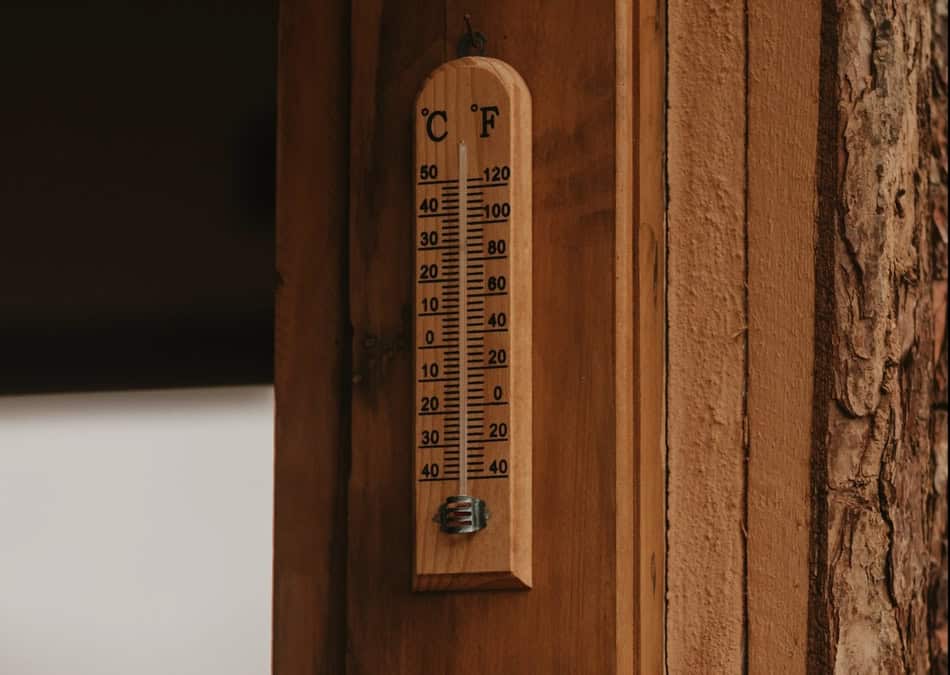
However, around 50°F is an important dividing line.
Mosquitoes are cold-blooded insects, meaning their body temperature and activity are heavily influenced by the temperature around them. Mississippi State University Extension notes that mosquitoes are most active when temperatures are above 50°F. Once temperatures repeatedly fall below that level, mosquito activity generally drops sharply.
That gives us a useful rule of thumb:
- Above 60°F: Mosquitoes can still be quite active.
- 50–60°F: Activity generally begins slowing down.
- Below about 50°F: Most mosquitoes become increasingly sluggish and much less likely to bite.
- Near or below freezing: Many exposed adult mosquitoes will die, especially after a sustained freeze.
But even a freezing night does not mean every mosquito in your area is dead.
Some are simply waiting for spring.
The Magic Number Is About 50°F
If you’re wondering, “When will the mosquitoes finally stop biting?”, watch your nighttime temperatures.
A single cool evening in the 40s can dramatically reduce mosquito activity, but mosquitoes may return when temperatures rebound.
That’s why you can have a frosty-feeling October morning followed by mosquitoes buzzing around the yard three days later when temperatures climb back into the 60s.
The real seasonal change tends to happen when temperatures are consistently cool, especially when nighttime lows repeatedly fall into the 40s and below.
In northern parts of the country, that may happen in September or October. Farther south, mosquito season can stretch much later—and in the warmest parts of the United States mosquitoes can remain active through much or even all of the winter.
The CDC notes that mosquito season generally extends from summer into fall across much of the country, while southern states can experience a considerably longer season.
Does the First Frost Kill Mosquitoes?
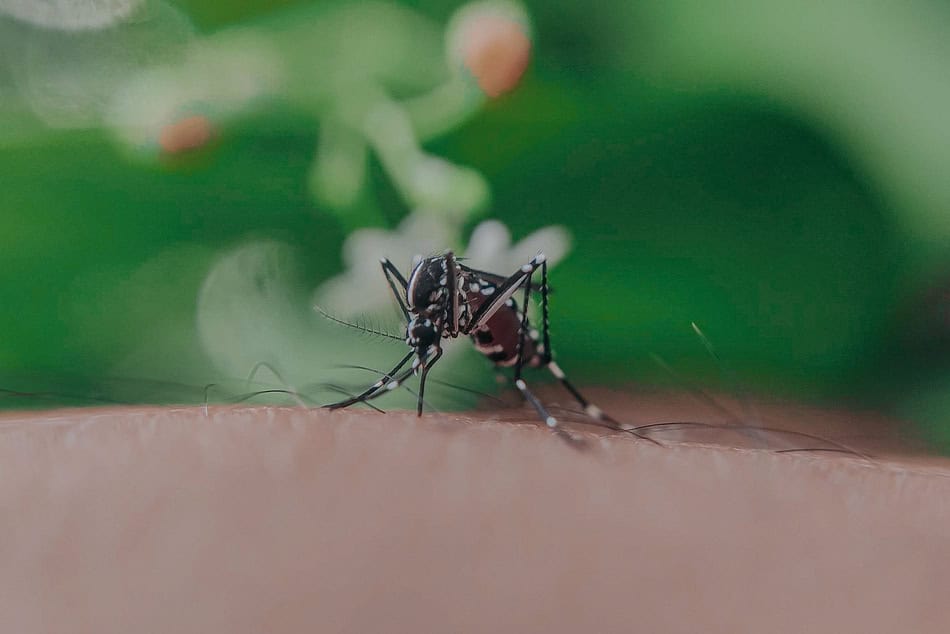
A light frost can greatly reduce mosquito activity, but it doesn’t necessarily end mosquito season.
A more substantial or prolonged freeze kills many adult mosquitoes that are exposed to it.
That’s why the first hard frost or freeze is often considered the unofficial end of mosquito season in colder climates.
New York health officials, for example, advise that mosquitoes may remain active into late fall and have previously cautioned residents that mosquitoes can remain active until the first heavy frost.
Still, don’t assume one cold night means they’re gone for good.
A warm spell following a frost can sometimes produce another burst of mosquito activity.
So Where Do Mosquitoes Go During the Winter?
Here is where things get interesting.
If freezing temperatures killed every mosquito and every mosquito egg, there wouldn’t be many mosquitoes left the following spring.
Different mosquito species have developed several ways to survive the cold.
Some Mosquitoes Survive Winter as Eggs
Certain species lay exceptionally hardy eggs before winter arrives.
The adult mosquitoes may die, but their eggs remain dormant until warmer weather and water return.
Some Aedes mosquito eggs can survive drying for months. The CDC notes that Aedes eggs can remain viable after drying out for up to eight months, helping the next generation survive unfavorable conditions.
Come spring, rain fills containers, tree holes, puddles and other depressions.
The eggs hatch.
And mosquito season begins again.
Some Adult Mosquitoes Hibernate
Other mosquitoes use a completely different strategy.
Adult females find protected places and enter a dormant state for the winter.
They may shelter in places such as:
- Sheds
- Garages
- Culverts
- Hollow logs
- Caves
- Basements
- Crawl spaces
- Other protected structures
The CDC notes that some mosquitoes seek sheltered locations as temperatures fall and can survive the winter in enclosed spaces.
Purdue University Extension also notes that some species overwinter as dormant, mated adult females, while others survive as dormant eggs.
So although mosquitoes seem to disappear, some are quite literally hiding out until spring.
Can Mosquitoes Come Back During a Warm Fall Day?
Absolutely.
Anyone who has enjoyed an unusually warm October afternoon knows the feeling.
You thought mosquito season was over.
Then—buzz.
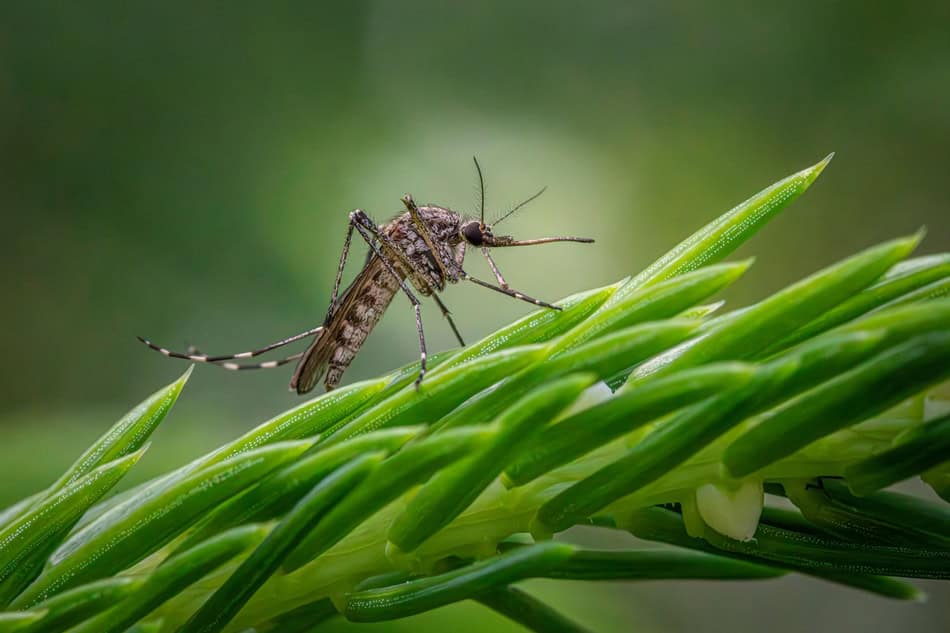
Because mosquitoes depend heavily on outside temperature, an extended warm spell can temporarily wake up or increase the activity of mosquitoes that remain alive.
That’s why mosquito season does not usually end on one specific calendar date.
It ends gradually as cold weather becomes persistent.
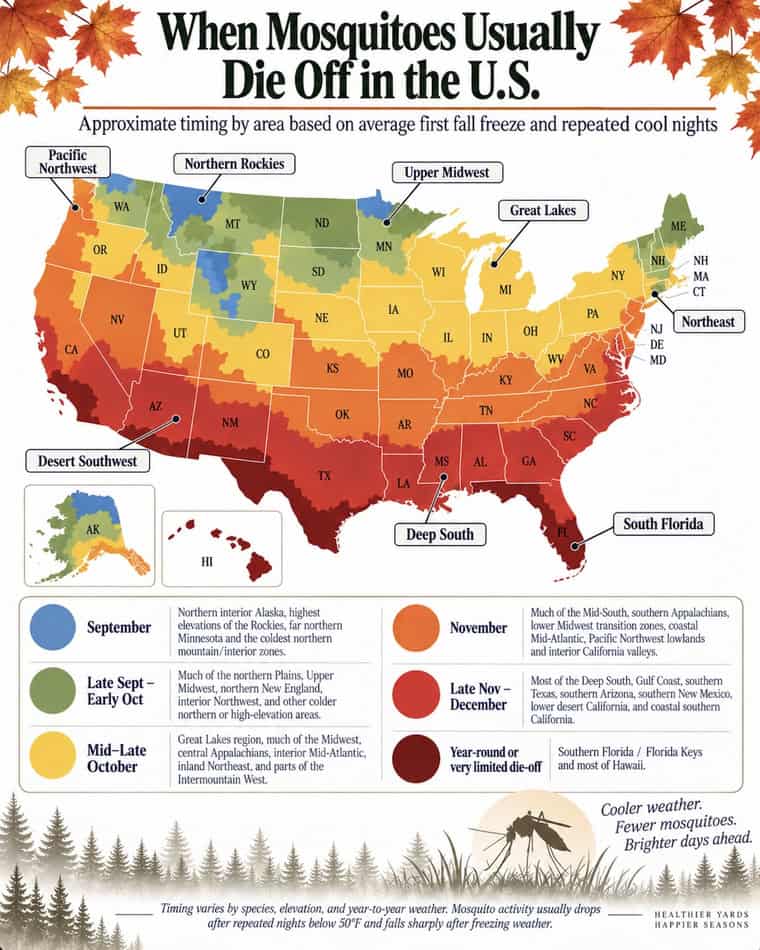
When Do Mosquitoes Usually Disappear?
The timing varies enormously depending on where you live.
Northern United States
Mosquito numbers typically decline sharply during September and October as nights become colder. The first significant freezes usually bring the season close to an end.
Mid-Atlantic and Midwest
Mosquitoes can remain active well into fall, especially during warm, wet years. Several warm days in October can still produce noticeable mosquito activity.
Southeast
Mosquito season can continue through much of autumn and sometimes into winter.
Florida, Gulf Coast and Other Very Warm Areas
There may never be a true mosquito-free season.
Warm temperatures allow some mosquito populations to remain active during much of the year.
Why You Shouldn’t Ignore Fall Mosquitoes
Cooler weather doesn’t automatically mean mosquito-borne illness is no longer a concern.
Penn State Extension warns that mosquitoes and mosquito-borne diseases including West Nile virus and eastern equine encephalitis (EEE) may remain a concern into the fall when temperatures remain warm enough for mosquitoes to be active.
In other words, don’t put away the insect repellent just because the calendar says September or October.
If mosquitoes are still flying and biting, precautions still make sense.
Fall Is a Great Time to Reduce Next Year’s Mosquitoes
Once mosquito activity starts slowing down, take a walk around your property.
Look for anything capable of holding water.
That includes:
- Flowerpot saucers
- Buckets
- Children’s toys
- Wheelbarrows
- Birdbaths
- Clogged gutters
- Tarps
- Pool covers
- Old tires
- Trash-can lids
Mosquitoes don’t need a pond to reproduce. Even relatively small amounts of standing water can become breeding habitat.
New York State’s Department of Health recommends removing or draining standing water and keeping gutters, containers, pools and other potential breeding areas maintained to reduce mosquito populations around the home.
Cleaning these areas in fall can reduce potential mosquito habitat around your yard.
So, What Temperature Makes Mosquitoes Go Away?
Here’s the easiest way to remember it:
Around 50°F, mosquitoes begin becoming much less active.
Repeated temperatures in the 40s reduce activity even more.
And a hard freeze around 32°F or below will kill many exposed adult mosquitoes and generally brings mosquito season to an end in colder parts of the country.
But winter doesn’t wipe mosquitoes off the map.
Some survive as eggs.
Some survive as larvae.
And some adult females simply find a protected hiding place and wait.
Then, when warm weather and standing water return in spring, the whole cycle begins again.
So the first morning you walk outside without hearing that familiar high-pitched whine, enjoy it.
Mosquito season may finally be over—but they’re already prepared for next year.
Frequently Asked Questions
Do mosquitoes die when temperatures drop below 50°F?
Not necessarily. Around 50°F is better thought of as an activity threshold rather than an instant death temperature. Many mosquitoes become sluggish at cooler temperatures but can survive and become active again during a warm spell.
Does frost kill mosquitoes?
Frost and freezing temperatures kill many exposed adult mosquitoes, but not every mosquito species or life stage. Some survive winter as dormant eggs or adults in protected locations.
Can mosquitoes survive freezing temperatures?
Yes. Depending on the species, mosquitoes can survive winter as cold-tolerant eggs, larvae or dormant adult females.
Can mosquitoes bite in October?
Definitely. If October remains warm enough, mosquitoes can continue flying and biting. In warmer parts of the country, mosquitoes may remain active far beyond October.
When is mosquito season officially over?
There is no universal date. In colder climates, persistent cold weather and the first substantial freeze usually mark the end of meaningful mosquito activity. In warm climates, mosquito activity can continue throughout much of the year.


- Farmers' Almanac Staff

- Farmers' Almanac Staff

- Farmers' Almanac Staff
- Farmers' Almanac Staff