Daylight Saving Time 2026: When Do Clocks Fall Back—and Could Congress Cancel It?
Daylight Saving Time is scheduled to end November 1, 2026, when clocks fall back one hour. But Congress is considering legislation that could end the twice-yearly clock change. Here’s what happens next.

Daylight Saving Time is scheduled to end on Sunday, November 1, 2026—but a bill moving through Congress could potentially change that. Here’s exactly when the clocks change, what the new Sunshine Protection Act would do, and where the legislation stands right now.
If you’ve heard that Americans may not have to “fall back” this year, there’s a good reason.
Congress has taken its biggest step toward permanent Daylight Saving Time in years.
On July 14, 2026, the U.S. House of Representatives passed the Sunshine Protection Act of 2025, H.R. 139, by a vote of 308–117. The bill would end the twice-a-year clock changes and effectively keep most of the United States on Daylight Saving Time year-round.
But there’s an important catch:
It is not law yet.
As of September 23, 2026, the bill has been sent to the U.S. Senate and referred to the Senate Committee on Commerce, Science, and Transportation. Unless Congress finishes passing the legislation and it is signed into law before the scheduled change, Americans who observe Daylight Saving Time should still plan to turn their clocks back on Sunday, November 1, 2026.

When Does Daylight Saving Time End in 2026?
Under the law currently in effect:
Daylight Saving Time ends Sunday, November 1, 2026, at 2:00 a.m. local time.
At 2:00 a.m., clocks move back one hour to 1:00 a.m.
That means most Americans get an extra hour that night—the familiar “fall back” change.
The National Institute of Standards and Technology confirms that Daylight Saving Time in 2026 runs from March 8 at 2:00 a.m. until November 1 at 2:00 a.m. local time.
So, barring a change in federal law, set your clocks back one hour before going to bed on Saturday night, October 31.
For our complete guide to the clock change, visit the Farmers’ Almanac guide to Daylight Saving Time 2026.
Daylight Saving Time 2026 Dates
Here are the important dates:
- Sunday, March 8, 2026: Daylight Saving Time began at 2:00 a.m. Clocks moved forward from 2:00 a.m. to 3:00 a.m.
- Sunday, November 1, 2026: Daylight Saving Time is currently scheduled to end at 2:00 a.m. Clocks move backward from 2:00 a.m. to 1:00 a.m.
- Sunday, March 14, 2027: Under current federal law, Daylight Saving Time would begin again at 2:00 a.m.
Federal rules currently establish Daylight Saving Time from the second Sunday in March through the first Sunday in November.

But Could the November 1 Time Change Be Canceled?
Potentially—but it has not been canceled.
That distinction is important.
The House passed H.R. 139, the Sunshine Protection Act, on July 14. The bill was received by the Senate on July 15 and referred to the Senate Committee on Commerce, Science, and Transportation, where the official Senate committee listing still shows it as of September 23.
You can follow the official federal legislation through the U.S. Government Publishing Office’s page for H.R. 139.
For the bill to become law, the Senate would still have to pass legislation and the measure would then need to complete the constitutional process for enactment. If the Senate changes the House bill, the chambers would also have to agree on identical legislative text.
Until that happens, November 1 remains the official 2026 “fall back” date.
What Would the Sunshine Protection Act Actually Do?
Despite its name, the Sunshine Protection Act doesn’t create more sunlight.
It changes what the clock says when that sunlight occurs.
The House-passed legislation would repeal the federal provision establishing the temporary annual DST period and alter the legal offsets for U.S. time zones. In practical terms, most places that now move their clocks ahead in March would remain on that later clock setting throughout the winter rather than falling back in November.
In other words:
The evening would stay lighter by the clock—but winter mornings would also stay darker later.
For example, a winter sunset that would occur at 4:45 p.m. under standard time would instead read approximately 5:45 p.m. under permanent Daylight Saving Time. But a 7:15 a.m. sunrise would similarly become about 8:15 a.m.
The amount of actual sunlight does not change. We would simply be shifting how our clocks line up with it.
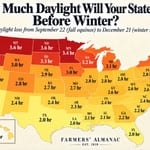
That distinction is especially noticeable as we move toward the shortest days of the year. See our state-by-state guide to how much daylight each state loses between fall and winter.
So Would We Fall Back in November If the Bill Passes?
The House-passed text contains no future delayed effective date for its central time changes. It repeals the provision establishing the seasonal Daylight Saving Time period and changes the statutory time-zone offsets.
That means if legislation in this form becomes law before November 1, the scheduled fall-back could be eliminated.
But readers should not change their plans yet.
As of September 23, 2026, federal law has not changed.
The safest rule is simple:
Unless a new federal law is enacted, clocks go back one hour on November 1.
We’ll update this page if Congress acts.
Didn’t the Senate Already Pass Permanent Daylight Saving Time?
Yes—but that was a different Congress.
In March 2022, the Senate approved an earlier version of the Sunshine Protection Act by unanimous consent. The House did not pass that bill before that Congress ended, so it never became law.
This time, the situation is essentially reversed.
The House has passed the bill, while Senate action is still required.
A separate Senate version, S. 29, the Sunshine Protection Act of 2025, was introduced in January 2025 and referred to the Senate Commerce Committee.
That is why headlines saying Congress has “passed permanent Daylight Saving Time” can be misleading. One chamber of Congress passing legislation does not by itself change the clocks.

Which States Don’t Change Their Clocks?
Most Americans observe Daylight Saving Time, but not everyone does.
Hawaii and most of Arizona remain on standard time throughout the year. The Navajo Nation, however, observes Daylight Saving Time even though much of surrounding Arizona does not.
The U.S. territories of Puerto Rico, the U.S. Virgin Islands, American Samoa, Guam, and the Northern Mariana Islands also do not observe the seasonal clock change.
Under current federal law, states can choose to remain on standard time year-round. They cannot independently choose permanent Daylight Saving Time under the existing system.
That legal distinction is one reason so many state proposals have depended on Congress acting first.
According to the National Conference of State Legislatures’ Daylight Saving Time tracker, numerous states have considered legislation dealing with permanent standard time or permanent Daylight Saving Time.
Haven’t We Tried Permanent Daylight Saving Time Before?
Yes.
During the energy crisis of the 1970s, Congress temporarily put much of the country on year-round Daylight Saving Time.
The experiment began in January 1974, but Congress later amended the law and restored standard time beginning in October 1974 before the original experiment had run its planned course.
The historical episode frequently comes up in the current debate because permanent DST produces a major seasonal tradeoff: later sunsets in winter also mean later sunrises.
Supporters of permanent Daylight Saving Time emphasize the benefits of additional evening light and eliminating the disruption of changing clocks twice each year. Opponents and some sleep and health researchers have instead argued for permanent standard time, which more closely aligns clock time with the Sun.
Whichever system ultimately prevails, one thing cannot be legislated away: winter itself.
By December, the Northern Hemisphere simply receives much less daylight.
See exactly what happens as we approach the 2026 winter solstice and the shortest day of the year.
Why Do We Change the Clocks at 2:00 A.M.?
The federal change happens at 2:00 a.m. local time.
In spring, the clock jumps directly from:
1:59 a.m. → 3:00 a.m.
In fall, the clock goes from:
1:59 a.m. → 1:00 a.m.
That repeated hour is why the fall change gives us what feels like an “extra” hour.
Of course, your smartphone, computer, smart TV, and many newer appliances will change automatically. Old-fashioned clocks, watches, ovens, microwaves—and perhaps the clock in your car—may still need a helping hand.
Does Daylight Saving Time Actually Save Daylight?
No.
It merely rearranges it.
Changing the clocks cannot alter sunrise, sunset, Earth’s orbit, or the length of the day. It simply shifts an hour of daylight from the morning side of our schedules toward the evening during the months DST is observed.
That distinction becomes particularly obvious each autumn. Since the fall equinox, days have been steadily shortening across the United States as we head toward December’s winter solstice.
See our Farmers’ Almanac explanation of how much daylight we’re really saving with Daylight Saving Time.
You can also see how quickly the daylight is disappearing where you live in our state-by-state daylight-loss guide.
The Bottom Line for November 2026
For now, the answer is straightforward:
Yes, the clocks are still scheduled to change in 2026.
Daylight Saving Time is scheduled to end at 2:00 a.m. local time on Sunday, November 1, 2026, when clocks move back one hour.
The House has passed legislation that could end the twice-yearly switch, but the Sunshine Protection Act has not become law as of September 23, 2026. Its latest official status is referral to the Senate Commerce Committee.
So don’t retire the old saying just yet:
Spring forward. Fall back.
At least for now.
Frequently Asked Questions
When do we turn the clocks back in 2026?
Sunday, November 1, 2026, at 2:00 a.m. local time. Clocks move backward one hour to 1:00 a.m.
Is Daylight Saving Time ending permanently in 2026?
Not under current law. The House passed legislation that would establish permanent Daylight Saving Time, but the Senate has not yet passed the House measure and it has not become law.
Did Congress pass permanent Daylight Saving Time?
The House of Representatives passed H.R. 139 on July 14, 2026, by 308–117. That is not the same as final congressional enactment. The measure was subsequently referred to the Senate Commerce Committee.
Could we avoid falling back on November 1?
Possibly, if federal legislation becomes law before the scheduled change and its operative provisions remain substantially as written. Until then, the November 1 change remains scheduled.
Is it Daylight Saving or Daylight Savings Time?
The official term is Daylight Saving Time, without the extra “s,” although “Daylight Savings Time” is extremely common in everyday speech.
When would we spring forward again?
If current law remains unchanged, the next spring-forward occurs Sunday, March 14, 2027, at 2:00 a.m. local time.


- Farmers' Almanac Staff

- Farmers' Almanac Staff
- Farmers' Almanac Staff
- Farmers' Almanac Staff