

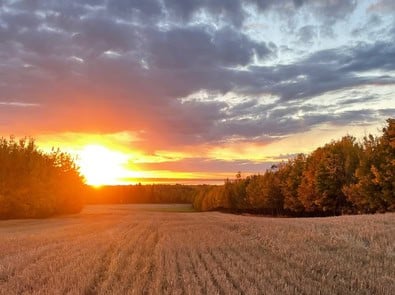
Daylight Saving Time is scheduled to end November 1, 2026, when clocks fall back one hour. But Congress is considering legislation that could end the twice-yearly clock change. Here’s what happens next.
Read More
Daylight Saving Time is scheduled to end November 1, 2026, when clocks fall back one hour. But Congress is considering legislation that could end the twice-yearly clock change. Here’s what happens next.
Read More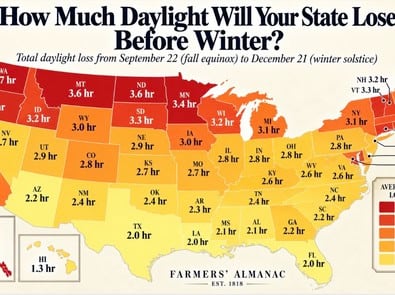
How much daylight will your state lose before winter? See our state-by-state guide showing the dramatic difference in daylight between the fall equinox and winter solstice—from just over an hour in Hawaii to nearly six hours in Alaska.
Read More
It’s official—fall begins today, September 22, 2026! The autumnal equinox arrives tonight at 8:05 p.m. EDT, marking the astronomical beginning...
Read More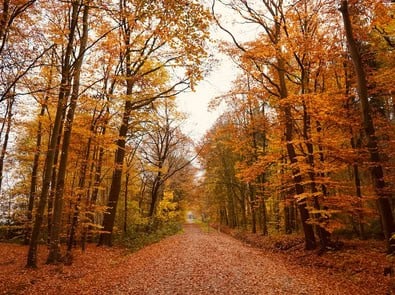
Every fall, millions of trees seem to change almost overnight. Green hillsides turn yellow. Maples blaze red and orange. Oaks...
Read More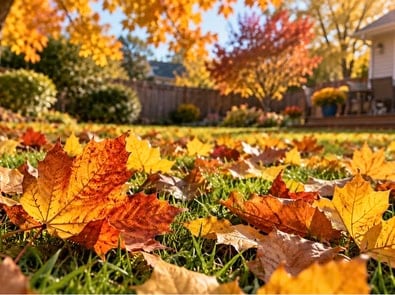
Should I leave fallen leaves on my lawn? Learn when leaves help your grass and soil, when they can smother turf, and what to do with them this fall.
Read More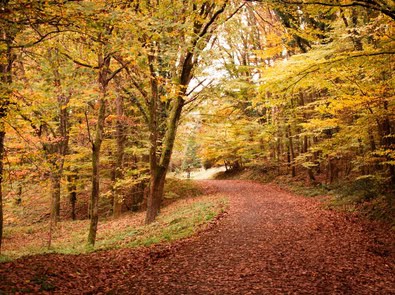
Have you noticed it yet? Step outside on a September morning and the air somehow smells different. Cooler. Earthier. Woodier....
Read More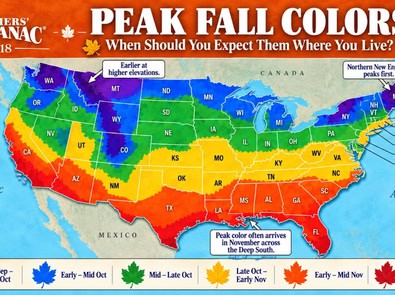
When will fall colors peak near you in 2026? Our new U.S. map shows how peak foliage progresses from the northern mountains in late September through New England, the Midwest, Appalachians and South into November.
Read More
The calendar says fall begins on one date. Meteorologists say another. But trees, birds, butterflies, and frost may tell an entirely different story. Here are the three ways autumn really begins—and how to tell when fall has arrived where you live.
Read More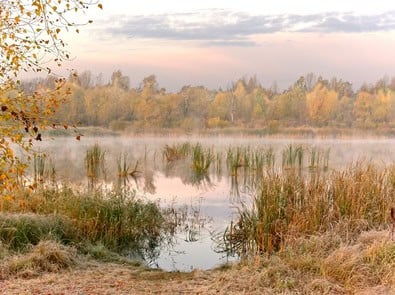
That crisp September morning followed by an 80-degree afternoon isn’t unusual. Here’s why fall often arrives overnight before it shows up during the day.
Read More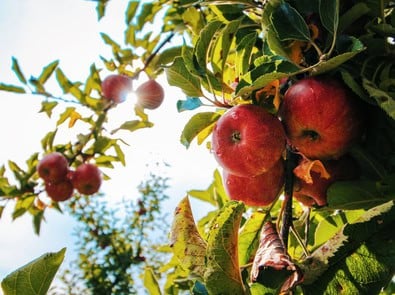
Why do apples suddenly turn redder in September? Cool nights, sunny days and anthocyanins create fall’s beautiful apple blush—but red doesn’t always mean ripe.
Read More