When to Put Snow Tires On: A State-by-State Guide

A frosty windshield is a reminder. A snow-covered road is a deadline you may already have missed.
If you use winter tires, the best time to put them on is usually before snow arrives, when daily temperatures consistently fall below about 45°F (7°C). That is the seasonal changeover guideline recommended by Michelin. Michelin USA
For many northern drivers, that means October or November. In milder climates, the decision depends more on elevation, your commute, and whether you regularly travel into snow country.
Our state-by-state guide can help you plan an appointment—but your local forecast should make the final call.
The 45°F Rule: Watch the Thermometer
“Snow tires” are also called winter tires, and their usefulness extends beyond deep snow. Their rubber compounds and tread designs are intended for cold weather and wintry roads.
Treat 45°F as a practical seasonal guideline, rather than an exact point at which every tire suddenly changes performance. Tire models, pavement conditions, and driving demands vary.
One chilly night followed by a week of warm afternoons does not necessarily mean it is time to switch. Look for an established cooling trend, pay attention to temperatures during your actual commute, and prepare before forecast snow or ice.
If your vehicle has summer performance tires, check the tire manufacturer’s cold-weather guidance early. Do not assume they are suitable for a cold autumn road trip.
Planning tip: Reserve your installation appointment before the first storm creates a rush at local tire shops.
Related: When Will the First Snowfall Arrive Where You Live?
When to Put Snow Tires On in Every State
How to use this guide: These windows are broad editorial planning estimates, not official installation dates, legal deadlines, forecasts, or calculated statewide temperature averages. Mountain communities and northern sections may need an earlier switch. Warmer lowlands and coastal areas may need a later one—or no seasonal winter set.
In mild-climate states, suggested months apply primarily to colder areas or drivers with regular winter-weather travel. Use sustained cold, your local forecast, and your driving route to decide.
| State | Broad planning window | Local considerations |
|---|---|---|
| Alabama | November–December, if needed | Most relevant in northern and higher-elevation areas; many southern drivers do not need a seasonal winter set. |
| Alaska | September–October | Interior and northern communities may need an earlier changeover; southeastern coastal conditions differ. |
| Arizona | October–November in high country | Flagstaff and mountain routes have different needs from Phoenix and the low desert. |
| Arkansas | November–December, if needed | Prioritize the Ozarks, northern areas, and regular travel on icy roads. |
| California | October–November in snow country | Sierra and other mountain travel matter more than the calendar in mild coastal cities. |
| Colorado | September–October in mountains; October–November at lower elevations | High passes can experience winter conditions well before lower cities. |
| Connecticut | Late October–November | Interior hills generally warrant earlier attention than the shoreline. |
| Delaware | November–December, if needed | Consider your commute and trips north; a seasonal set is not essential for every driver. |
| Florida | Usually no seasonal changeover | Prepare for conditions at your destination if traveling north in winter. |
| Georgia | November–December, if needed | Most relevant in northern mountains and for regular winter travel. |
| Hawaii | Usually no seasonal changeover | High-elevation access requires separate attention to road restrictions and conditions. |
| Idaho | October–November | Higher terrain and colder interior valleys may need an earlier switch. |
| Illinois | Late October–November | Northern Illinois generally cools earlier than the southern part of the state. |
| Indiana | Late October–November | Northern and lake-effect areas deserve earlier preparation. |
| Iowa | October–November | Watch for sustained cold and early wintry weather. |
| Kansas | November | Western and northern routes may need earlier attention during cold spells. |
| Kentucky | November | Higher terrain and colder northern areas may warrant an earlier appointment. |
| Louisiana | Usually no routine seasonal changeover | Northern drivers and frequent travelers to colder states should assess their routes. |
| Maine | October–November | Northern and interior communities may need an earlier switch than the southern coast. |
| Maryland | November; October–November in western mountains | Western highlands have different winter needs from the Eastern Shore. |
| Massachusetts | Late October–November | Western hills and inland communities may need an earlier switch than Cape Cod. |
| Michigan | October–November | The Upper Peninsula and northern Lower Peninsula merit earlier preparation. |
| Minnesota | October | Northern communities and early winter weather can advance the schedule. |
| Mississippi | Usually no routine seasonal changeover | Northern areas and regular travel into colder regions may justify a winter set. |
| Missouri | November | Northern Missouri generally needs earlier attention than the far south. |
| Montana | September–October in mountains; October–November elsewhere | Elevation, mountain routes, and early cold spells can move timing forward. |
| Nebraska | October–November | The Panhandle and northern routes may need an earlier switch. |
| Nevada | October–November in northern and mountain areas | Reno and mountain routes differ sharply from Las Vegas. |
| New Hampshire | October–November | Northern communities and the White Mountains may need earlier preparation. |
| New Jersey | Late October–November in colder areas; November–December near the coast | Northwest hills differ from the southern shore. |
| New Mexico | October–November in northern high country | Mountain communities differ from warmer southern valleys. |
| New York | October–November upstate; November–December around New York City and Long Island | Adirondack and lake-effect travel can justify an earlier switch. |
| North Carolina | October–November in mountains; November–December elsewhere, if needed | High mountain routes differ from the Piedmont and coast. |
| North Dakota | October | Prepare earlier if sustained cold or snow arrives ahead of schedule. |
| Ohio | Late October–November | The northeast snowbelt may warrant an earlier appointment. |
| Oklahoma | November–December, if needed | The Panhandle and northern routes deserve particular attention. |
| Oregon | October–November in mountains and colder interior areas | Cascade travel differs from a mild coastal commute. |
| Pennsylvania | October–November in higher terrain; November in many lower areas | Northern counties and mountain routes may need an earlier switch. |
| Rhode Island | November | Inland routes and travel into northern New England can affect timing. |
| South Carolina | November–December, if needed | Most relevant in the Upstate and for trips into mountain snow country. |
| South Dakota | October–November | The Black Hills and northern areas may need earlier preparation. |
| Tennessee | November; October–November in high mountains | Elevation and regular icy-road travel matter more than a statewide date. |
| Texas | November–December in the Panhandle and colder areas, if needed | Many southern and coastal drivers do not need a seasonal winter set. |
| Utah | October–November | Mountain communities and canyon travel may require earlier preparation. |
| Vermont | October–November | Higher terrain and northern communities merit earlier attention. |
| Virginia | November; October–November in mountain areas | Mountain roads differ from coastal and lowland routes. |
| Washington | October–November in mountains and colder interior areas | Cascade passes and eastern Washington differ from mild coastal locations. |
| West Virginia | October–November | Higher Appalachian terrain may need an earlier switch. |
| Wisconsin | October–November | Northern Wisconsin usually warrants earlier preparation than southern cities. |
| Wyoming | September–October in high country; October–November at lower elevations | Highways and passes can experience early winter conditions. |
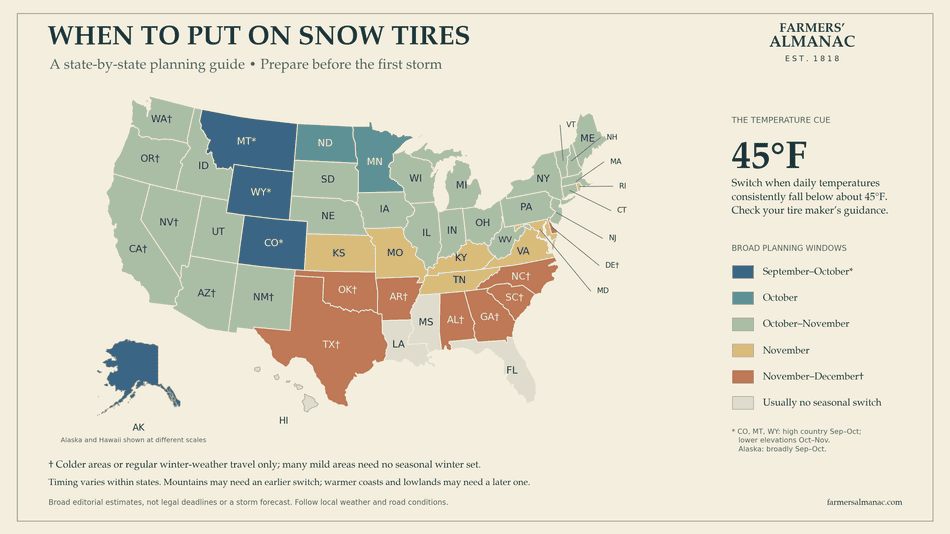
Washington, D.C.: November–December is a useful planning window for drivers who choose winter tires, with earlier preparation for regular trips into colder or mountainous areas.
For your hometown’s typical temperatures, consult NOAA’s U.S. Climate Normals. For upcoming driving conditions, check your local National Weather Service forecast.
Do You Need Winter Tires If Your State Rarely Gets Snow?
A state line cannot tell you what tires you need. Consider where and when you drive.
Dedicated winter tires deserve consideration if you regularly encounter snow, ice, or prolonged cold—especially on hills, rural roads, and routes that are not cleared quickly.
In a mild climate, suitable all-season tires may meet your everyday needs. Some all-weather tires offer a year-round option with the three-peak mountain snowflake symbol, indicating that they meet a defined snow-traction test.
That symbol appears on dedicated winter tires and some all-weather tires, so it does not by itself identify a seasonal winter tire. Continental’s tire-sidewall guide explains the markings. Continental Tire
Match the tire to your vehicle and driving conditions with help from a qualified tire professional. Even good tires do not make an ice storm safe to drive through.
Do AWD Vehicles Still Need Snow Tires?
All-wheel drive can help a vehicle get moving on a slippery road. It does not eliminate the need for tire grip when braking.
If your driving conditions call for winter tires, AWD is not a substitute. And if you install a winter set, use winter tires on all four wheels, rather than mixing two winter tires with two tires designed for another season. Michelin’s winter-tire buying guide explains why a complete set matters. Michelin USA
Whatever your drivetrain, slow down and leave additional following distance on wintry roads.
Mountain Trips Can Change Your Timing
Your driveway may be dry and mild while the road to your destination is snowy.
Before a mountain trip, check the forecast along the entire route, current road conditions, and any traction-device requirements. Winter tires do not automatically exempt you from chain controls.
For example, Caltrans explains California’s chain-control requirements, while Colorado’s transportation department publishes its traction and chain rules. Caltrans
If you are considering studded tires, check the current rules in every state you will drive through before buying or installing them.
Check More Than the Installation Date
Before the winter season, inspect your tires for wear, damage, and proper inflation.
The National Highway Traffic Safety Administration recommends checking tires at least monthly and before long trips. Measure pressure when tires are cold, and use the vehicle manufacturer’s recommended pressure from the door-frame label or owner’s manual—not the maximum pressure printed on the tire. NHTSA
Have a tire professional assess an older winter set before reinstalling it. A tire that still has enough tread for general use may no longer provide the winter performance you need.
Keep an ice scraper, warm clothing, a flashlight, and other emergency supplies in the vehicle. Tires are one part of winter preparation.
When Should You Take Winter Tires Off?
Plan the spring changeover when temperatures are consistently warming and regular snow or ice exposure has ended. Follow your tire manufacturer’s guidance, and account for any remaining mountain trips.
Avoid leaving a dedicated winter set on through summer: winter compounds can wear faster on hot roads. Michelin USA
A Little Preparation Beats the First-Storm Scramble
Use your state’s window to start planning, then watch the conditions where you actually drive. If a seasonal winter set fits your needs, arrange the switch before sustained cold and winter weather catch you on the road.
For a broader look at the season ahead, see the Farmers’ Almanac Winter Weather Forecast. Use short-range local forecasts and transportation alerts for individual travel decisions.
When do you usually switch to winter tires? Tell us your state and your timing in the comments!


- Farmers' Almanac Staff

- Farmers' Almanac Staff
- Farmers' Almanac Staff
- Farmers' Almanac Staff