Quince: The Hard Fall Fruit That Turns Fragrant and Rosy When Cooked

Quince is one of those fruits that can make you wonder if you bought it too soon.
It looks a little like a lumpy yellow pear, sometimes with a faint fuzz on the skin. Pick one up and it’s surprisingly hard.
Quince is a fall fruit, though the exact season depends on where it’s grown. It’s not nearly as common in U.S. supermarkets as apples or pears, so farmers’ markets and specialty grocers are often your best bet. The Farmers’ Almanac seasonal produce guide includes quince among the fruits to look for in fall.
If the fruit is still green and barely fragrant, leave it on the counter for a few days. As it ripens, the skin turns more yellow and the scent gets stronger. Keep it away from apples and pears if you can; quince is so aromatic that its perfume can transfer to nearby fruit.
The Magic Happens When You Cook It
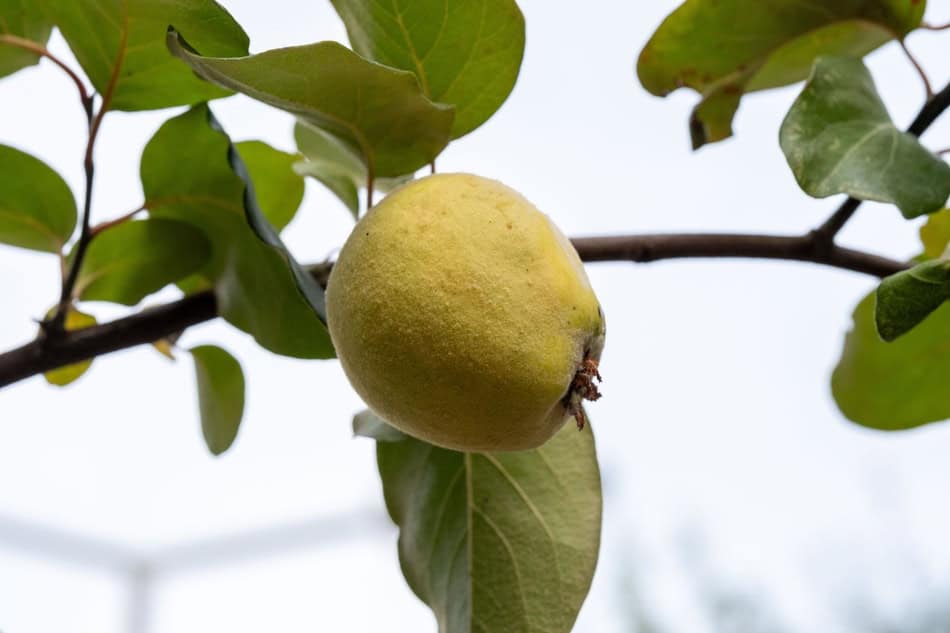
Raw quince is not especially inviting. The flesh is dense, dry, and astringent, which is why it has traditionally been cooked rather than eaten out of hand.
Heat changes everything.
Given enough time, quince softens and becomes deeply fragrant. The pale flesh can also turn pink, coral, or even a deeper rosy red as it cooks. Not every fruit changes color to the same degree, but when it happens, it’s part of the fun.
Slow cooking is what quince wants. Poaching, baking, and simmering give the fruit time to soften and let its aroma develop.
This simple baked version uses honey and lemon and doesn’t ask much of you beyond patience.
Baked Honey Quince
Serve it warm with yogurt, vanilla ice cream, or a little sharp cheese.
Serves: 4
Prep time: 15 minutes
Bake time: About 1½ hours
Ingredients
- 2 ripe quince
- 1 cup water
- ½ cup honey
- 1 tablespoon lemon juice
Directions
- Heat the oven to 350°F. Rub away any fuzz on the quince, then rinse and dry them. Cut each fruit in half and carefully remove the hard core. Quince is very firm, so use a sturdy knife and a stable cutting board.
- Bring the water and honey to a boil in a small oven-safe pot. Stir in the lemon juice.
- Add the quince halves, cover, and bake until tender, about 1½ hours. Check them near the end with the tip of a knife. Larger or especially firm fruit may need a little longer.
- Serve warm with some of the honey syrup spooned over the top.
The method is adapted from Cooperative Extension guidance for cooking quince.
Quince may not win you over at first glance. It’s hard, awkward to cut, and not especially pleasant raw. But give it heat and time, and it becomes something else entirely: tender, fragrant, and sometimes beautifully rosy.
That transformation is really the reason to buy it.

- Maggie Konrad

- Maggie Konrad
- Maggie Konrad
- Maggie Konrad