Halloween Candy Is Expensive This Year. Here’s How Much You Actually Need.

Standing in the Halloween candy aisle has gotten a little painful. Those enormous variety bags disappear fast once the doorbell starts ringing, but buying two or three “just in case” can turn into a surprisingly expensive insurance policy against an empty bowl.
And candy really has gotten pricier. The U.S. Bureau of Labor Statistics recently examined the rise in candy prices, finding substantial increases in both the ingredients that go into confectionery products and the finished sweets shoppers bring home. Meanwhile, Americans are still expected to spend $4.1 billion on Halloween candy this year, according to the National Retail Federation. Candy remains the most common Halloween purchase, even as shoppers say they’re paying closer attention to prices.
So how much do you actually need?
For most houses, the answer is surprisingly easy to estimate. Start with the number of trick-or-treaters you expect, decide how many pieces you want to give each one, and buy for that number rather than grabbing giant bags until the cart feels sufficiently Halloween-ish.
Start With Two Pieces Per Trick-or-Treater
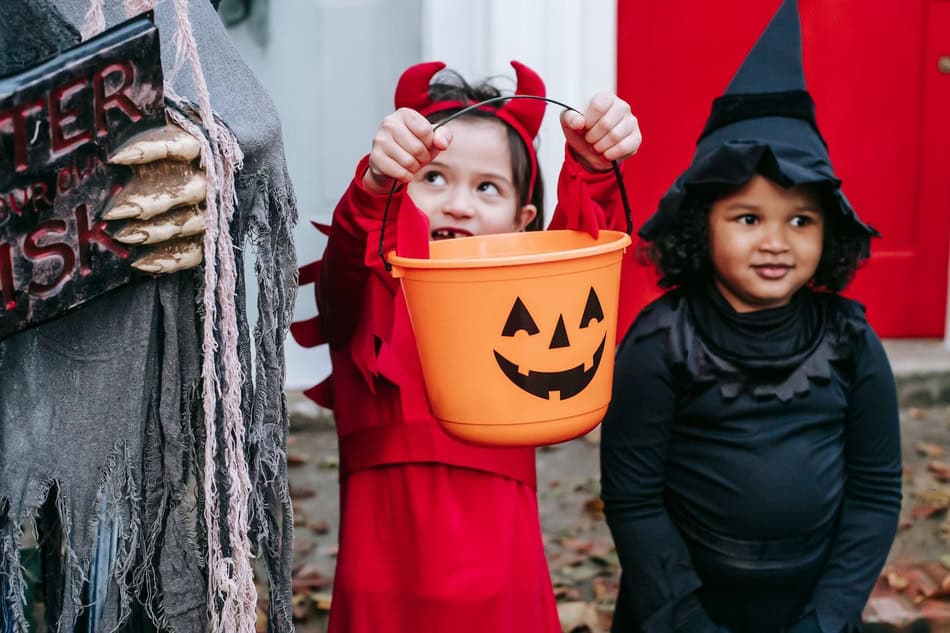
If you’re handing out fun-size or miniature candy, two pieces per child is a practical starting point. It feels generous without burning through the bowl in the first hour.
The math is simple:
| Expected trick-or-treaters | Candy at 2 pieces each | With a 10% cushion |
|---|---|---|
| 25 | 50 pieces | 55 pieces |
| 50 | 100 pieces | 110 pieces |
| 75 | 150 pieces | 165 pieces |
| 100 | 200 pieces | 220 pieces |
| 150 | 300 pieces | 330 pieces |
| 200 | 400 pieces | 440 pieces |
So if you usually get about 100 trick-or-treaters, you don’t need to stare at the shelf wondering whether three giant bags is excessive. Your target is roughly 220 fun-size pieces if you want a small cushion.
Then check the package. Many variety bags give an approximate piece count. If yours contains about 70 pieces, three bags gets you close. If it contains 110, two will do it.
If you’re handing out full-size candy bars, the equation changes: plan on one per trick-or-treater.
But How Many Trick-or-Treaters Will You Get?
This is the hard part, especially if you’re new to the neighborhood.
Your best source probably isn’t an online calculator. It’s the person two doors down who handed out candy last year.
Ask a few nearby neighbors what a normal Halloween looks like on your block. “We get around 40 kids” is much more useful than knowing how many children live in the ZIP code. If you handed out candy last year, you can work backward from what you bought. If you started with 200 pieces, gave out two at a time, and had roughly 40 left, you probably saw around 80 trick-or-treaters.
Give yourself some wiggle room rather than treating last year’s number like a reservation list. Weather, neighborhood events, and the day of the week can all change the flow from year to year. Halloween falls on Saturday, October 31, in 2026, as noted in the Farmers’ Almanac Halloween guide, so this year won’t follow exactly the same routine as every other Halloween.
That’s where the extra 10% in the table comes in. It gives you a buffer without doubling your order out of fear.
Don’t Compare Bags by Price Alone
An $18 bag can be a better buy than a $14 bag if it contains considerably more candy.
When you’re comparing options, look for the approximate number of pieces and work out the cost per piece. You don’t need to stand in the aisle doing long division to four decimal places; you’re just trying to see which bag actually gives you more treats for the money.
This matters more this year because shoppers are actively looking for ways to stretch Halloween budgets. In the National Retail Federation’s 2026 survey, 31% said they would comparison shop if Halloween prices were higher than expected, while 26% planned to look harder for coupons and sales.
Variety can help too. You don’t have to fill the entire bowl with the most expensive chocolate assortment. A mix of chocolate, fruity candy, lollipops, and other individually wrapped treats can give kids choices while making your candy budget go farther.
Keep a Reserve Bag Out of the Bowl
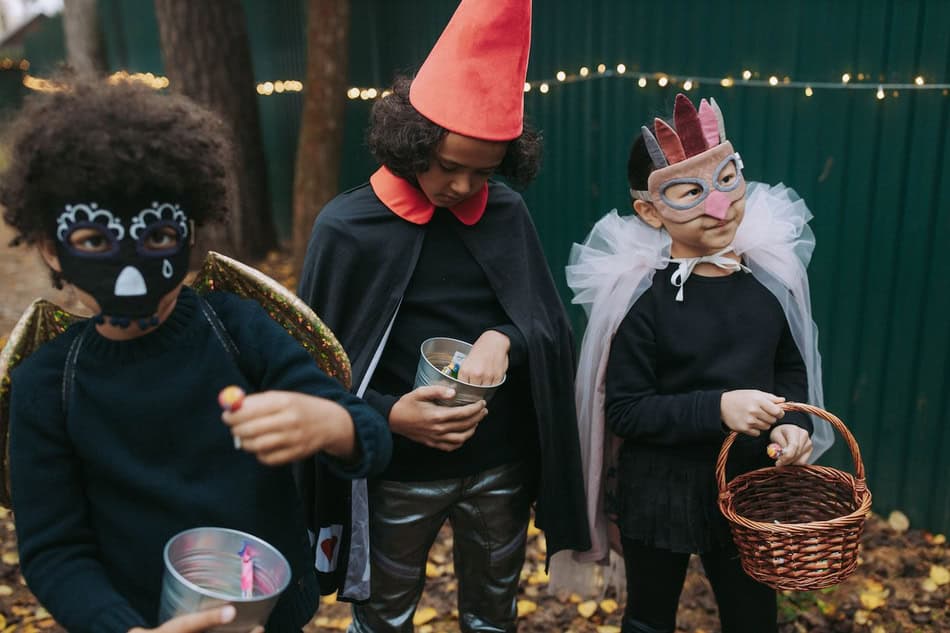
Here’s one simple way to avoid running out at 6:45 p.m.: don’t put everything out at once.
Start with enough candy for the first stretch of trick-or-treating and keep a bag in reserve. If the sidewalk is packed, you have backup. If traffic is light, you haven’t opened every package in the house.
You can also adjust as the night goes on. Start with two pieces per visitor. If you still have a mountain of candy when the parade of costumes has slowed to an occasional knock, that’s the time to become the house giving out three or four.
The opposite strategy, handing out fistfuls early and rationing the final six pieces among a group of disappointed middle-schoolers, is considerably less fun.
If You Want Leftovers, Plan Them on Purpose
There is no rule that says the perfect Halloween ends with an empty bowl.
If your household actually likes the candy you’re buying, a modest surplus isn’t a problem. Buy the varieties you won’t mind seeing in the pantry on November 1 and count that as part of the plan.
If you would rather not have a month’s supply of miniature candy bars sitting around, stick closer to the estimate and resist the giant emergency bag at checkout.
The National Retail Federation says 61% of consumers celebrating Halloween this year plan to hand out candy. With that many bowls being filled, and $4.1 billion expected to be spent on sweets, it’s worth spending thirty seconds on the math before spending another twenty dollars on candy you may never need.
The Easy Rule to Remember
If you want one number to take to the store, use this:
Expected trick-or-treaters × 2 fun-size pieces, then add about 10% for breathing room.
Fifty kids? Aim for roughly 110 pieces. A hundred? About 220. If you’re the full-size-bar house, buy one for each expected visitor and a few extras.
Halloween should end with a porch full of pumpkin guts and candy wrappers, not a receipt that makes you wonder exactly when fun-size became luxury-size.
And if you’re wondering when to make the candy run, the Farmers’ Almanac Halloween 2026 guide recommends buying during the second-to-last week of October, late enough that the household doesn’t mysteriously eat half of it before Halloween.

- Maggie Konrad

- Maggie Konrad
- Maggie Konrad
- Maggie Konrad