
Why Does Popcorn Explode? The Tiny Explosion Happening Inside Every Kernel

Pour a handful of popcorn kernels into a hot pan, and for a little while, nothing happens. Then comes the first pop! A few seconds later, the whole pan is rattling as those tiny yellow kernels burst into fluffy white pieces.
It’s an ordinary kitchen moment with some extraordinary science behind it.
Each popcorn kernel is a miniature pressure cooker. Hidden beneath its hard outer shell are starch and a small amount of water. Add enough heat, and the pressure inside builds until the kernel can no longer hold it.
What happens next is surprisingly dramatic.
What’s Inside a Popcorn Kernel?
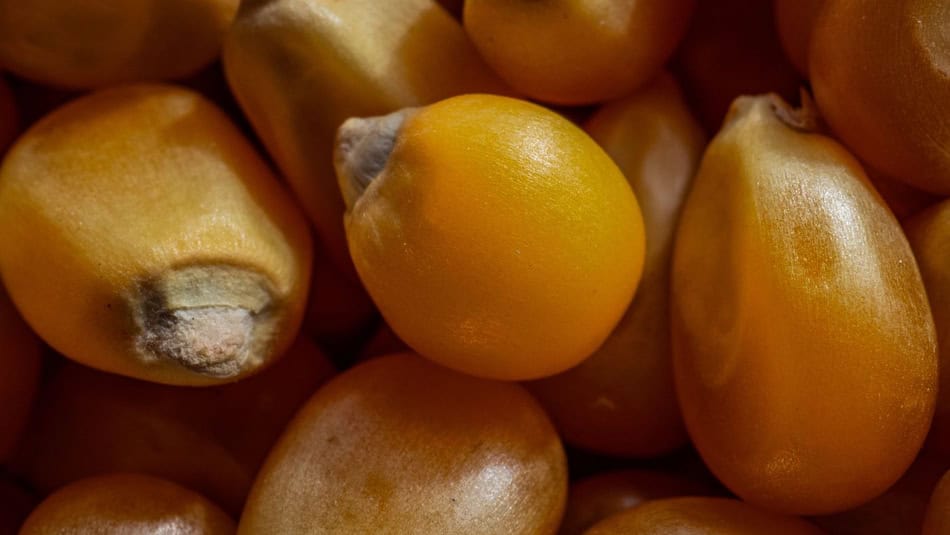
A popcorn kernel may look like a solid little seed, but there’s more going on beneath that shiny yellow surface than you might expect.
Its outer covering, called the pericarp or hull, is unusually tough. Inside is a store of starch along with a small amount of moisture.
That combination is what makes popcorn special.
According to the USDA National Agricultural Library, the hard outer covering helps trap the moisture as the kernel heats up.
Most popcorn kernels contain roughly 13–14% moisture when they’re properly conditioned for popping. That’s a relatively small amount of water, but it’s essential.
Without it, you’d have a pan full of hot, unpopped kernels instead of a bowl of popcorn.
How Does Popcorn Actually Pop?
As the kernel heats, the water inside gets hotter and begins turning into vapor. Because the tough hull keeps that vapor trapped, pressure builds.
Meanwhile, heat softens the starch inside the kernel into a thick, flexible material.
Eventually, the pressure becomes too great for the hull to contain. The shell ruptures, the pressure drops rapidly, and the hot starch expands outward.
Almost instantly, that starch cools and sets into the airy, irregular shape we recognize as popcorn.
The transformation is remarkable because the soft white part was inside the little yellow kernel all along. Heat and pressure simply gave it the opportunity to expand.
In a 2015 study published in the Journal of the Royal Society Interface, researchers filmed popping kernels with high-speed cameras to understand exactly what happens.
They found that nearly all the kernels in their experiment popped when heated to approximately 356°F (180°C).
That’s a lot of energy packed into something you can balance on the tip of your finger.
Why Does Popcorn Make That Popping Sound?
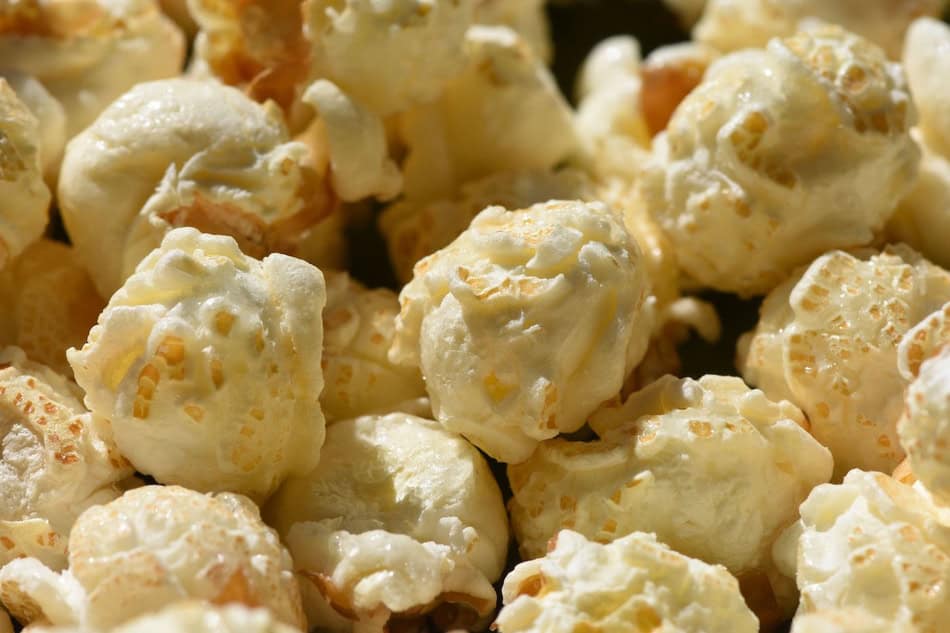
You might assume the familiar pop! is simply the sound of the hard shell cracking open.
But researchers discovered something more interesting.
The scientists studying popcorn used synchronized high-speed video and sound recordings to compare the moment the hull ruptured with the noise that followed.
Their findings suggest that the familiar popping sound comes primarily from the sudden release of pressurized water vapor.
The shell breaks, the steam escapes, and the rapid pressure change creates the sound.
So that delightful racket coming from your popcorn maker isn’t just kernels breaking apart. You’re hearing the release of pressure from dozens of tiny chambers.
The researchers also noticed that kernels can launch themselves into the air as they pop, using a temporary projection of expanding starch to push off the surface beneath them.
It’s an impressive little performance for something that started as a piece of corn.
Why Do Some Popcorn Kernels Never Pop?
No matter how carefully you make popcorn, there’s often a handful of stubborn kernels left at the bottom of the bowl.
Those hard, unpopped pieces are sometimes called old maids.
One common reason they don’t pop is that the kernels have lost too much moisture. Without enough water inside, they may never develop the pressure needed for a proper explosion.
A damaged hull can cause problems, too. If the shell has a crack or other weakness, steam can escape before enough pressure builds.
And sometimes the kernels simply haven’t received enough heat.
The University of Minnesota Extension explains that popcorn’s ideal moisture content is approximately 13–14%. If kernels become too dry, their popping performance suffers.
That’s why storing unpopped popcorn properly matters.
Keep the kernels in an airtight container in a cool, dry cupboard to help preserve their natural moisture. Leaving them exposed to air, particularly in a very dry environment, can reduce their ability to pop.
And if you’re popping popcorn on the stovetop, use a suitable covered pan and follow a tested preparation method. Hot oil, escaping steam, and flying kernels can cause burns.
Why Doesn’t Ordinary Corn Pop the Same Way?
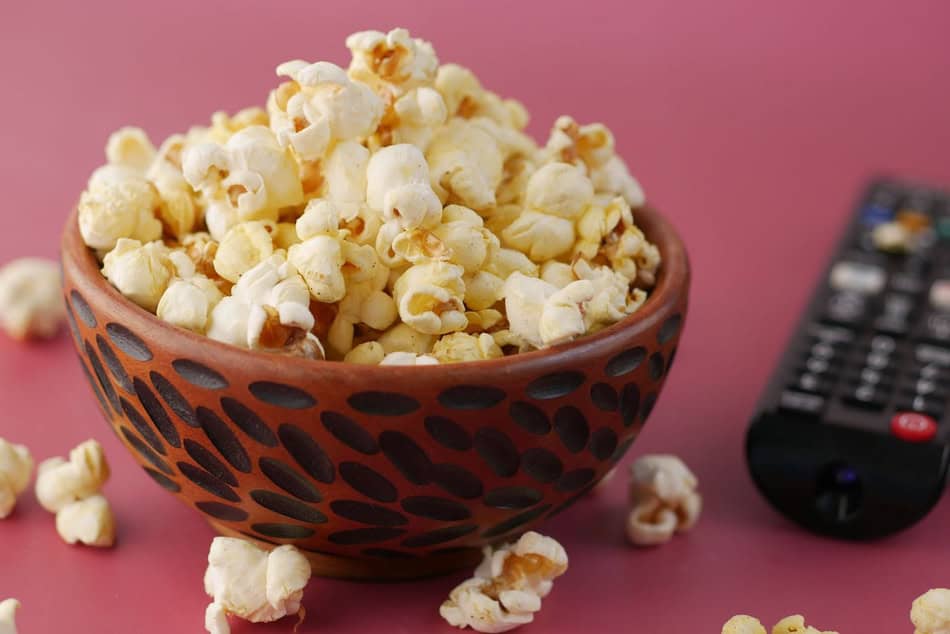
If popcorn is just corn, why can’t you toss a handful of sweet corn into a hot pan and expect the same result?
The answer lies largely in the kernel’s structure.
Popcorn is a particular type of corn, Zea mays everta, selected for its ability to expand dramatically when heated.
Its tough hull and internal starch structure allow pressure to build and produce the characteristic fluffy result.
Sweet corn, the kind we commonly eat from the cob, has a different structure and is generally harvested while its kernels are tender and moist.
Other types of dried corn can sometimes expand or crack when heated, but they don’t typically produce the same impressive puffed texture as popcorn.
A Little Kitchen Science Worth Watching
The next time you make popcorn, listen closely to that first pop.
Inside the kernel, water has been heated, pressure has built, and starch has transformed from a compact mass into something light and airy.
All of it happens so quickly that your eyes can barely follow the action.
For a closer look, try filming a batch of popcorn through the clear lid of a suitable popcorn maker, keeping your camera away from heat and steam. Slow down the footage afterward and watch the transformation.
What looks like a simple snack is actually a tiny demonstration of physics happening right in your kitchen.
And now you know why movie night comes with its own soundtrack.

- Maggie Konrad

- Maggie Konrad
- Maggie Konrad
- Maggie Konrad