When Should You Clean Your Gutters? A State-by-State Guide

Quick Reference: Fall Gutter Cleaning
- Clean after the final major leaf drop, which runs one to three weeks after peak color
- Finish before the first lasting snow or ice, when wet leaves freeze into a block
- North: mid October to early November. Midwest and Northeast: November. South: late November into December
- Oaks drop last, often after the first hard freeze; if you have oaks, wait for them
- Full gutters in winter mean ice dams, and ice dams mean water in the walls
- A second, lighter clean in spring catches maple seeds and blossom
Gutter cleaning is a timing job. Do it in early October and the maples finish the week after. Leave it until the first snow and the leaves are frozen into a solid, immovable mass that holds meltwater against the roof all winter. The window is after the last big drop and before the first lasting freeze, and it lands in a different fortnight in every state. Here is where it falls in yours.
Why Timing Beats Frequency
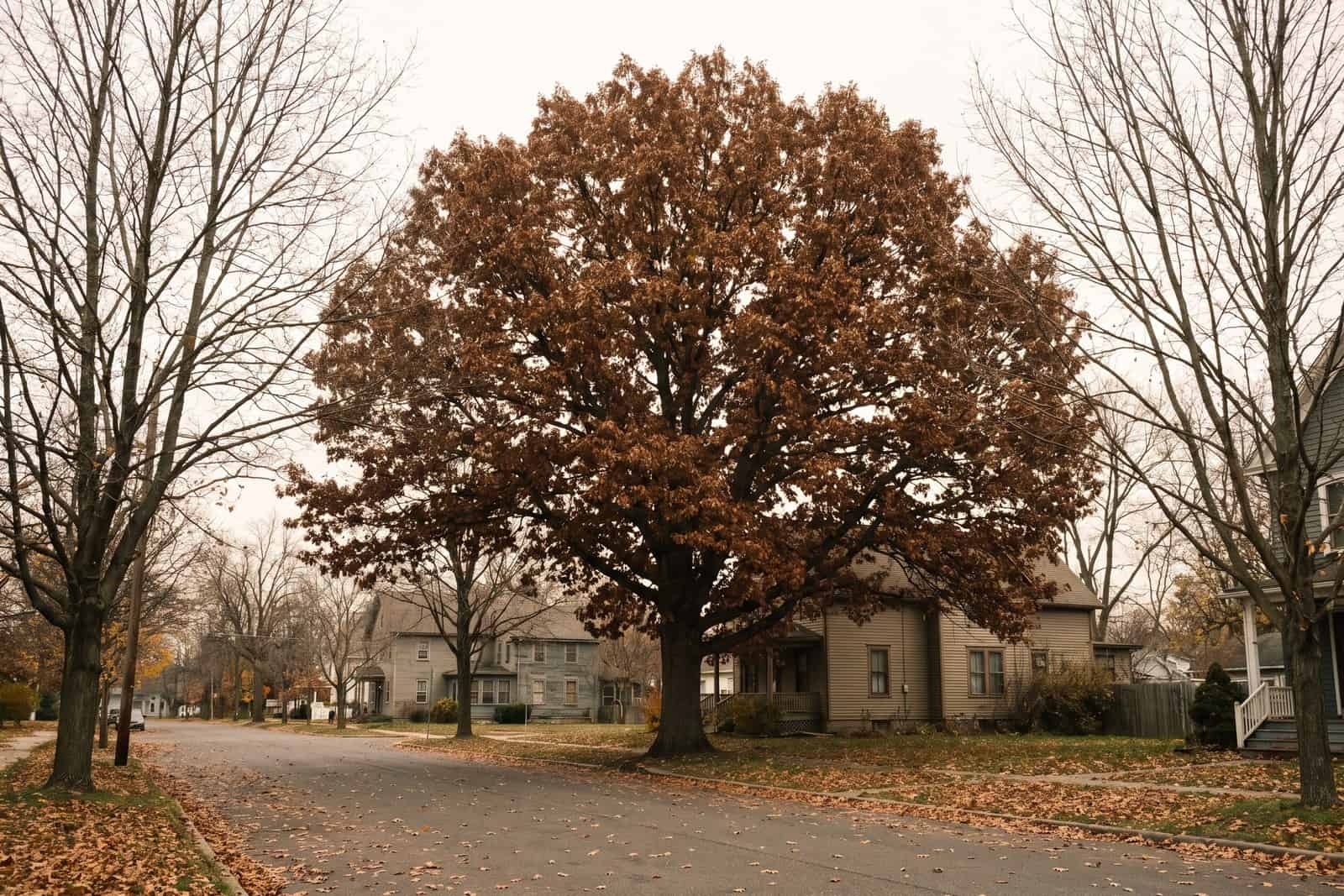
Leaves come down in a rush. Most deciduous trees drop the bulk of their canopy in a two to three week burst that follows peak color, often triggered by the first hard frost or a windy front. Clean before that burst and you clean twice. The exception is oaks, which hang on to brown leaves well past the first hard freeze, sometimes into winter, so a yard with big oaks gets its real deadline a few weeks after everyone else. Our leaf raking guide covers the same window from the ground up.
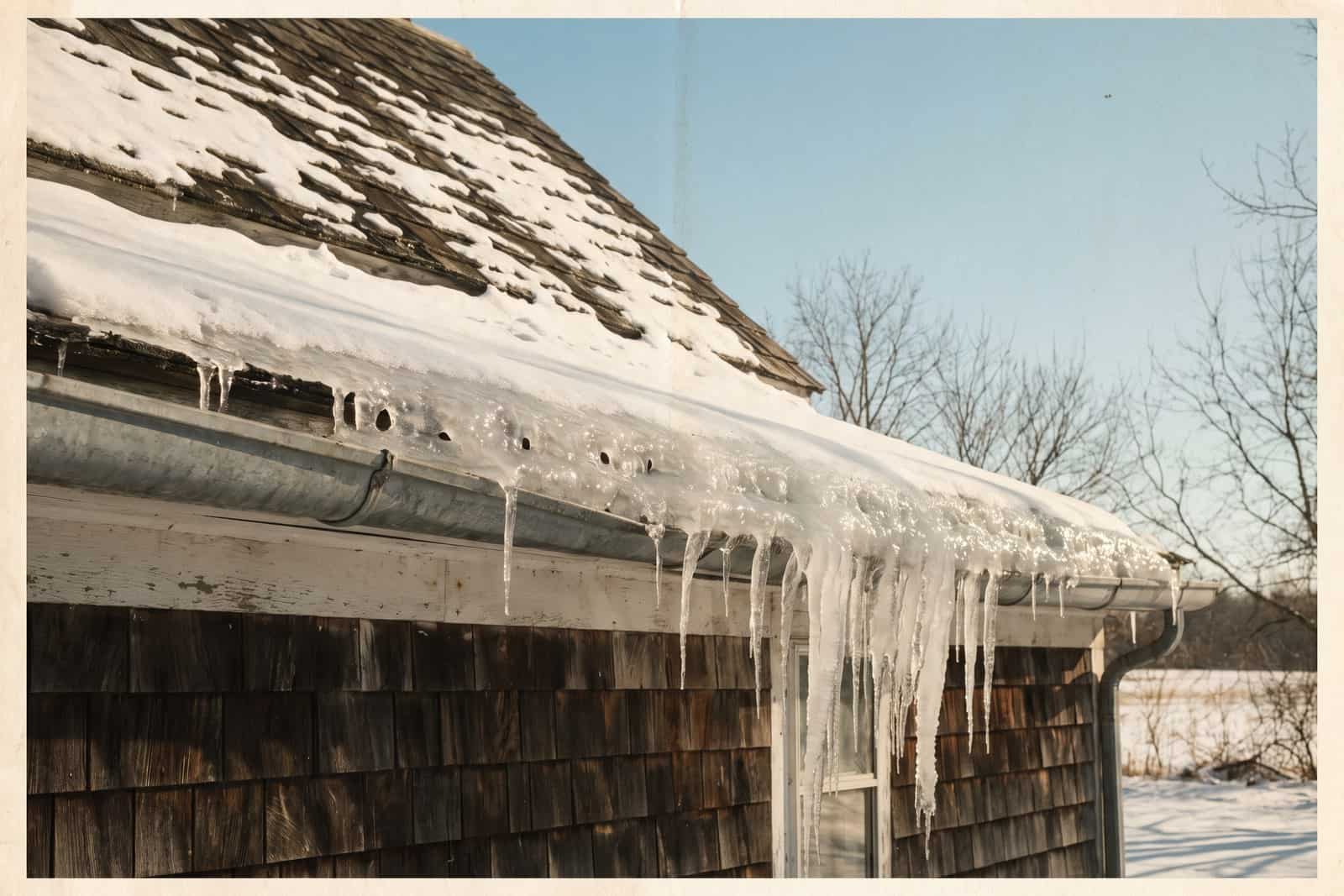
The other side of the window is winter. Once the gutters hold wet leaves and the temperature drops below freezing for good, the whole lot freezes solid. Meltwater from the warm roof above then has nowhere to go, refreezes at the cold eave and builds an ice dam that pushes water back under the shingles. Clear gutters do not prevent every ice dam, but full ones guarantee them.
Gutter Cleaning Windows by State
The leaf drop column is the typical final major cleanup period for the state. The hard freeze column is the practical cut-off, because after it the leaves freeze and the ladder work gets dangerous. Where the two overlap, aim for the first mild, dry weekend after most of the leaves are down.
| State | Final major leaf drop | Typical first hard freeze (clean before) |
|---|---|---|
| Alabama | Late November to December | Late November to early December |
| Alaska | Late September to October | Late September to early October |
| Arizona | October to November in the high country; little to clear in the low deserts | Mid October (high country); rare in Phoenix and Tucson |
| Arkansas | Mid November to December | Mid to late November |
| California | November to December where there are deciduous trees; varies near the coast | Mid December (inland valleys); rare on the coast |
| Colorado | Late October to November | Mid to late October |
| Connecticut | Late October to mid November | Late October to early November |
| Delaware | Mid to late November | Mid November |
| Florida | No single deadline; north Florida sees leaf drop into winter | Late December to January (north); rare central and south |
| Georgia | Late November to December | Late November to early December |
| Hawaii | No autumn leaf drop season | None at sea level |
| Idaho | Late October to November | Mid to late October |
| Illinois | Late October to November | Late October to mid November |
| Indiana | Late October to November | Late October to early November |
| Iowa | Late October to November | Late October |
| Kansas | Late October to November | Early to mid November |
| Kentucky | November | Early to mid November |
| Louisiana | December into winter for some trees | Early to mid December (north); rare on the coast |
| Maine | Mid to late October | Mid to late October |
| Maryland | Mid to late November | Mid to late November |
| Massachusetts | Late October to mid November | Early to mid November (coast); late October (Worcester hills) |
| Michigan | Late October to early November | Late October to early November |
| Minnesota | Mid to late October | Mid to late October |
| Mississippi | Late November to December | Late November to early December |
| Missouri | November | Early to mid November |
| Montana | October to early November | Early to mid October |
| Nebraska | Late October to November | Late October |
| Nevada | October to November at elevation; later in the warm valleys | Late October (north); rare in Las Vegas |
| New Hampshire | Mid to late October | Early to mid October |
| New Jersey | Early to mid November | Mid to late November |
| New Mexico | October to November in the high country; later lower down | Early to mid November (Rio Grande valley) |
| New York | Late October to mid November | Late October (upstate) to late November (NYC) |
| North Carolina | Mid November to December; earlier in the mountains | Mid to late November |
| North Dakota | October | Early to mid October |
| Ohio | Late October to November | Late October to early November |
| Oklahoma | November to December | Mid to late November |
| Oregon | November in most populated areas | Early to mid December (west); mid October (east) |
| Pennsylvania | Early to mid November | Early November (Pittsburgh) to late November (Philadelphia) |
| Rhode Island | Early to mid November | Early to mid November |
| South Carolina | Late November to December | Mid to late November (inland); early December (coast) |
| South Dakota | October to early November | Mid October |
| Tennessee | November to December | Early to mid November |
| Texas | November to December in the north; December into winter farther south | Early December (Dallas); early November (Panhandle); rare on the coast |
| Utah | Late October to November | Late October to early November |
| Vermont | Mid to late October | Mid to late October |
| Virginia | Mid November to December | Early to mid November |
| Washington | Late October to November | Early to mid December (west); mid to late October (east) |
| West Virginia | Early to mid November | Early to mid November |
| Wisconsin | Late October to early November | Mid to late October |
| Wyoming | October to early November | Early to mid October |
How to Clean Gutters Safely
- Ladder on firm, level ground, with someone footing it, and never on the top two rungs. A standoff bracket keeps the ladder off the gutter, which bends under weight.
- Work from the downspout outward. Scoop the debris into a bucket hung from the ladder rather than dropping it on the lawn you just raked.
- Flush with a hose toward the downspout once the solids are out. If the water backs up, the downspout is blocked: run the hose up from the bottom, or use a plumber’s snake.
- Check the slope. Water should run to the downspout without pooling. Standing water after the flush means a sagging hanger that wants resetting.
- Look at the seams and end caps while you are up there. A drip is a lot easier to seal on a dry November afternoon than in February.
- Stop when the leaves are frozen. Frozen debris does not come out, and a frosted ladder is the wrong place to be.
Gutter Guards, Downspout Extensions and the Spring Clean
Guards cut the volume of leaves that get in but they do not end the job; pine needles, seed pods and roof grit still arrive, and a guard with a mat of leaves on top sheds water straight over the edge. Plan on checking guarded gutters once a year rather than cleaning them twice. Downspout extensions that carry water at least four feet from the foundation are the cheapest flood insurance there is. And a lighter spring clean, after the maple seeds and blossom, keeps the system ready for summer storms.
What the Weather Lore Says About a Leafy Autumn
Almanac readers have long watched the trees for signs of the winter ahead. A heavy leaf fall that comes early, and leaves that drop before they have fully turned, are among the traditional signs of a hard winter listed in our 20 signs of a hard winter. Whatever the season brings, the long range outlook for your region is in the Farmers’ Almanac extended forecast.
Get the sky and season ahead, every week
The Farmers’ Almanac newsletter carries the dates worth circling, the Best Days, and the long range outlook for your region. Sign up free.
Frequently Asked Questions
When is the best time to clean gutters in the fall?
After the final major leaf drop and before the first lasting snow or hard freeze. For most of the country that is a two to three week window in late October or November. Yards with oaks should wait for the oaks, which drop last.
How many times a year should gutters be cleaned?
Twice is the usual rule: a thorough clean in late fall after the leaves are down, and a lighter one in late spring after seeds and blossom. Houses under heavy tree cover, or with pines, may need a third check in midsummer.
Can I clean gutters after the first frost?
Yes, and often you should, because the first light frost is what brings a lot of leaves down. The cut-off is the first hard freeze and the first lasting snow, when wet leaves freeze into a block that cannot be removed until spring.
What happens if I do not clean my gutters before winter?
Leaves hold water, the water freezes, and the gutter becomes a dam. Roof meltwater then backs up under the shingles and into the wall, which is the classic ice dam. Full gutters also pull away from the fascia under the weight of ice.
Do gutter guards mean I never have to clean gutters?
No. They reduce the leaf volume but needles, seeds and grit still get through, and a mat of leaves on top of a guard sends rain over the edge. Check guarded gutters once a year.
Why do oak leaves fall so late?
Many oaks hold their dead leaves through the first hard freeze and sometimes into winter, a habit called marcescence. If you have oaks over the house, your real gutter deadline is a few weeks after the rest of the neighborhood.
Read Next
- When Should You Rake Your Final Leaves of the Year?
- When Is the First Hard Freeze in Your State?
- Should I Leave Fallen Leaves on My Lawn?
- First Snowfall Where I Live: When Will the First Snow Arrive in 2026?

Josh Morley grew up in Liverpool, where checking the sky before you leave the house is less a habit than a survival skill. He has spent his working life with data, and he came to the Farmers' Almanac by way of the thing the two have in common: the weather is the largest dataset any of us live inside, and most of us read it every day without noticing.
- Josh Morley

- Josh Morley
- Josh Morley
- Josh Morley