When Should You Rake Your Final Leaves of the Year? A State-by-State Guide
Are you really finished raking for the year—or will the trees cover your lawn again next week? Here's when to expect your final major leaf cleanup in every state, plus why you shouldn't rake too early.

Every autumn, homeowners face the same frustrating question:
Is this the last time I’m going to have to rake the yard—or are those trees going to dump another load of leaves next week?
The answer depends greatly on where you live, what kinds of trees grow in your yard, and how quickly autumn weather arrives.
In northern states, the bulk of leaf cleanup may be finished by late October or early November. Across much of the South, however, oaks and other trees may continue dropping leaves well into December—or even winter.
And there’s another surprise:
You don’t necessarily need to wait until every last leaf has fallen, and you don’t necessarily need to rake all of them.
Here’s how to know when it’s time for your final major leaf cleanup of the year, plus our state-by-state guide to when most homeowners can expect the bulk of autumn leaves to finally be down.
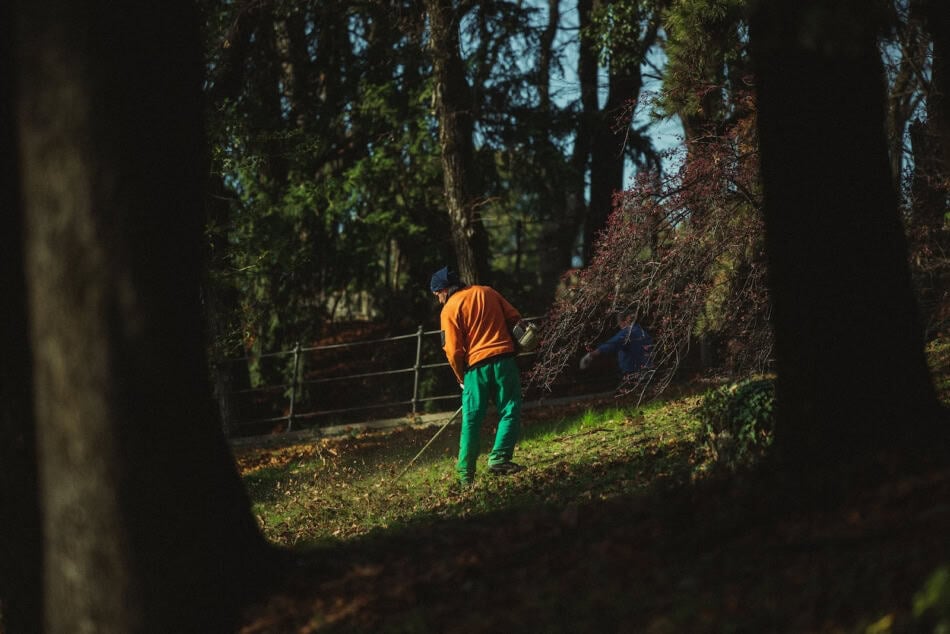
When Should You Do Your Final Fall Raking?
Instead of choosing a date on the calendar, watch your trees.
Your final major leaf cleanup should generally come when:
- Most deciduous trees in your yard have lost roughly 80–90% of their leaves.
- The lawn is no longer being quickly covered after every windy day.
- Grass growth has slowed considerably.
- Colder weather and repeated frosts have arrived.
- Snow or prolonged winter weather is approaching in colder climates.
Don’t worry about waiting for every stubborn oak leaf to fall.
Some trees hold onto dead leaves remarkably late, and certain oaks may retain leaves into winter.
Your goal isn’t a perfectly leaf-free landscape.
It’s to prevent a heavy, matted blanket of whole leaves from covering the lawn all winter.
Iowa State University Extension warns that thick layers of leaves can block light and interfere with the turf’s ability to prepare for winter.
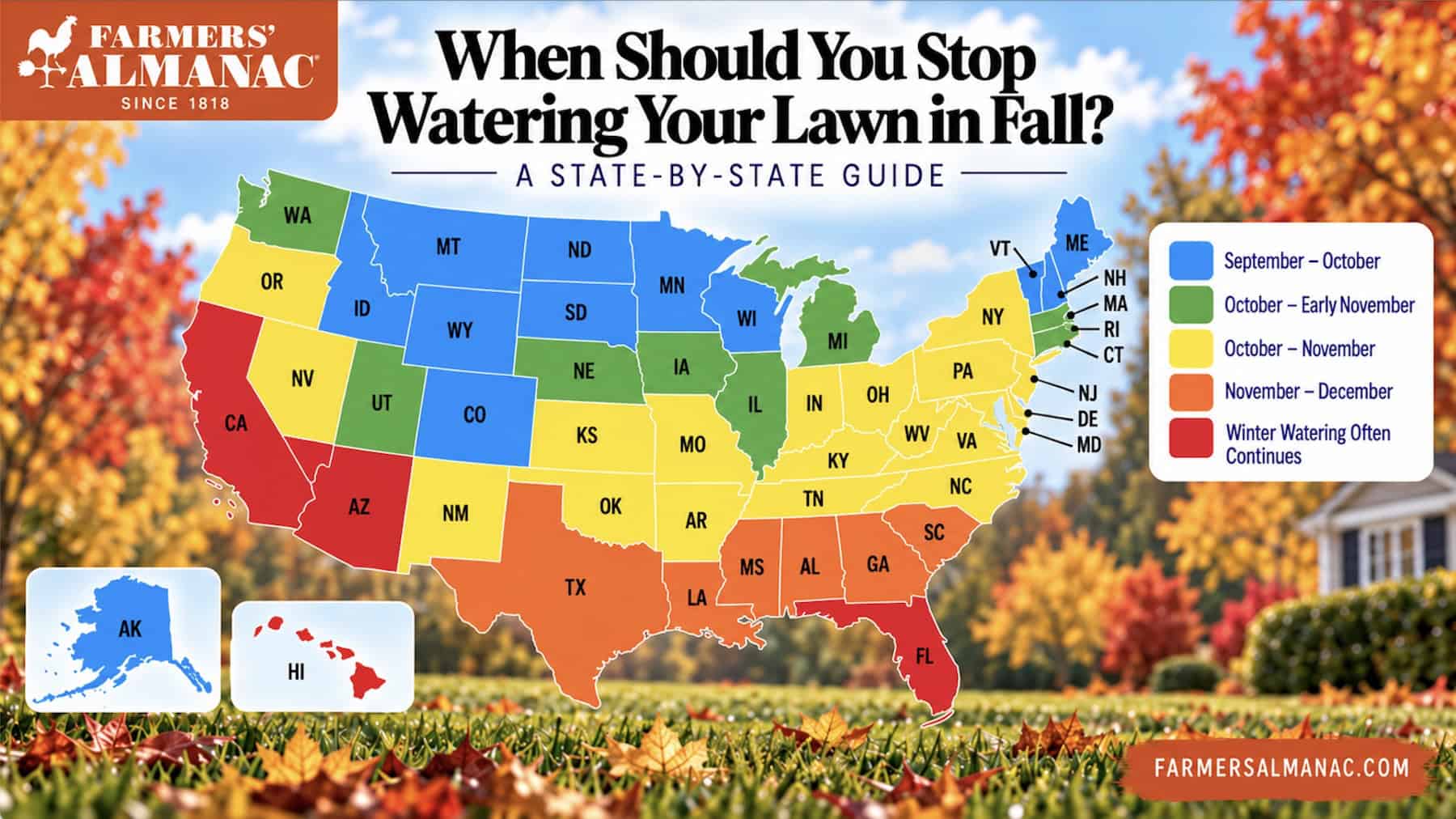
RELATED: When Should You Stop Watering Your Lawn in Fall? A State-by-State Guide
Why You Shouldn’t Rake Too Early
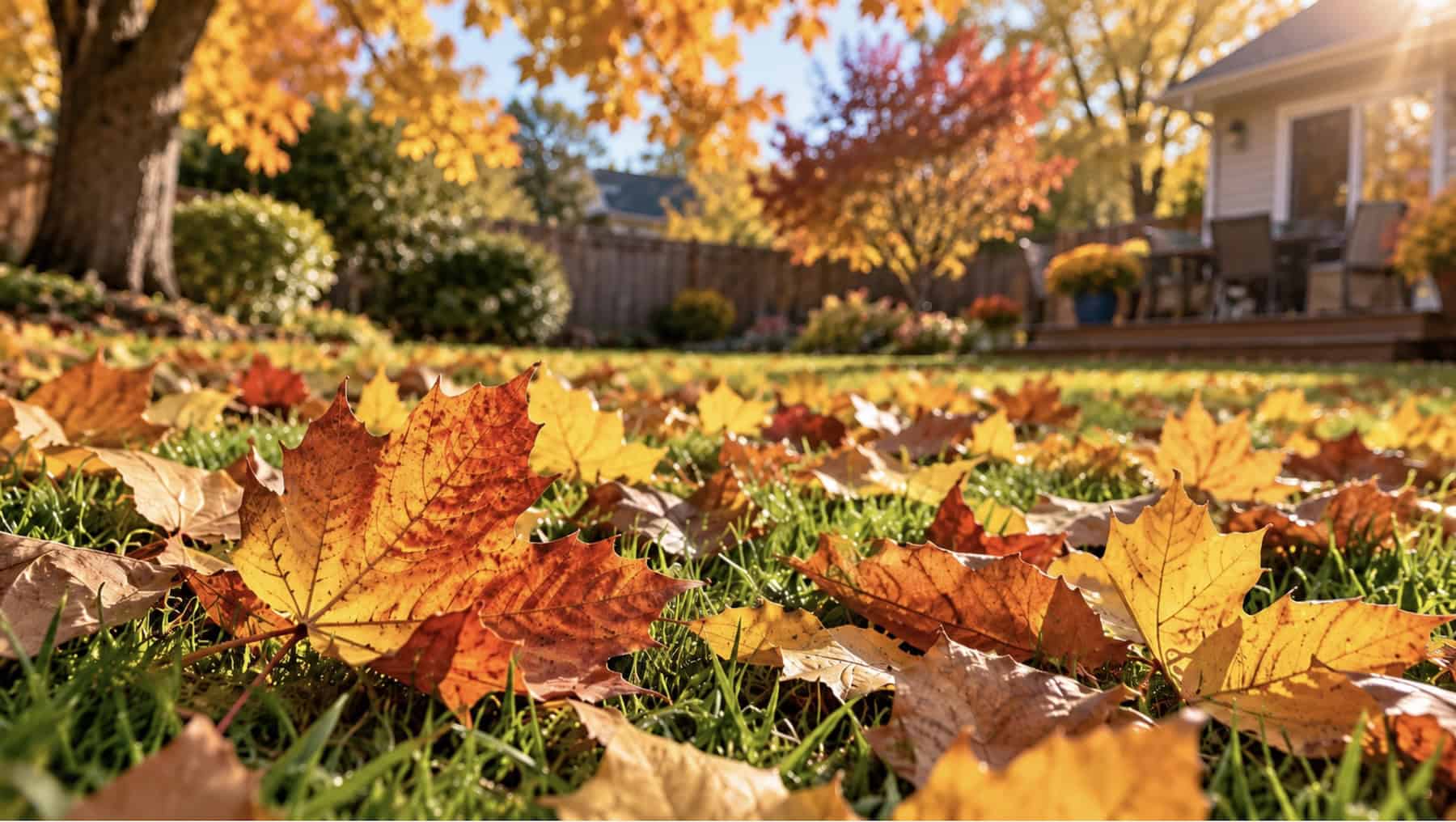
That first October afternoon when the lawn disappears beneath yellow leaves can make you want to clean everything at once.
But if most of the canopy is still full, you’ll probably just be repeating the job a few days later.
Different tree species lose their leaves at different times.
Birches, ashes and some maples may drop relatively early, while many oaks can hold their foliage significantly longer. Even trees of the same species can behave differently depending on temperatures, sunlight, moisture and location.
Shortening daylight and changing temperatures are among the signals that trigger the autumn transition in deciduous trees.
That’s why a calendar can’t tell you precisely when your final leaves will fall.
The trees can.
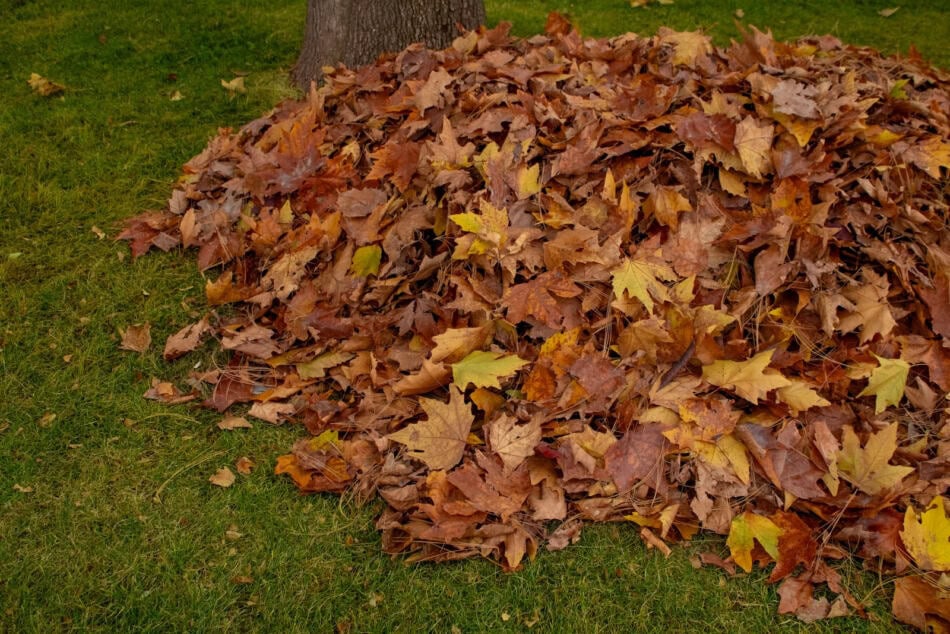
But Don’t Let Thick Leaves Sit on Your Lawn for Weeks
Waiting for the final cleanup doesn’t mean ignoring leaves completely.
If you have a lawn surrounded by mature trees, deal with heavy accumulations periodically throughout fall.
A thick mat of wet leaves can:
- Block sunlight from turf
- Reduce air circulation
- Smother sections of grass
- Create conditions favorable to some lawn diseases
- Leave weak or bare areas the following spring
University of Minnesota Extension recommends managing leaves before they become excessive and suggests switching from mulching to collecting leaves once the leaf layer becomes so heavy that less than about half of the lawn remains visible.
So think of autumn leaf cleanup as a process—not one giant weekend.
The Better Question: Should You Rake or Mulch Your Leaves?
Here’s some good news for anyone tired of filling lawn bags:
You may not need to rake many of your leaves at all.
When the layer isn’t too thick, run a mower over dry leaves several times until the pieces are small enough to settle between blades of grass.
Colorado State University Extension notes that shredded leaves can add organic matter to the soil and return nutrients as they decompose. Research cited by UMass Extension has also found that properly mulching leaves into turf does not necessarily increase thatch or lawn disease.
The important distinction is:
Shredded leaves = potentially useful.
A thick, wet blanket of whole leaves = potentially troublesome.
If you can barely see the lawn beneath the leaves, you probably have too much material to simply leave in place.
When Should You Rake Your Final Leaves? State-by-State Guide
The dates below are general seasonal windows for the final major leaf cleanup, not predictions of the exact day your final leaf will fall.
Elevation, latitude, tree species, urban heat, drought, storms and unusual temperatures can move leaf drop earlier or later by several weeks.
In states with large climate differences—California, Texas, Arizona and others—the timing can vary dramatically within the same state.
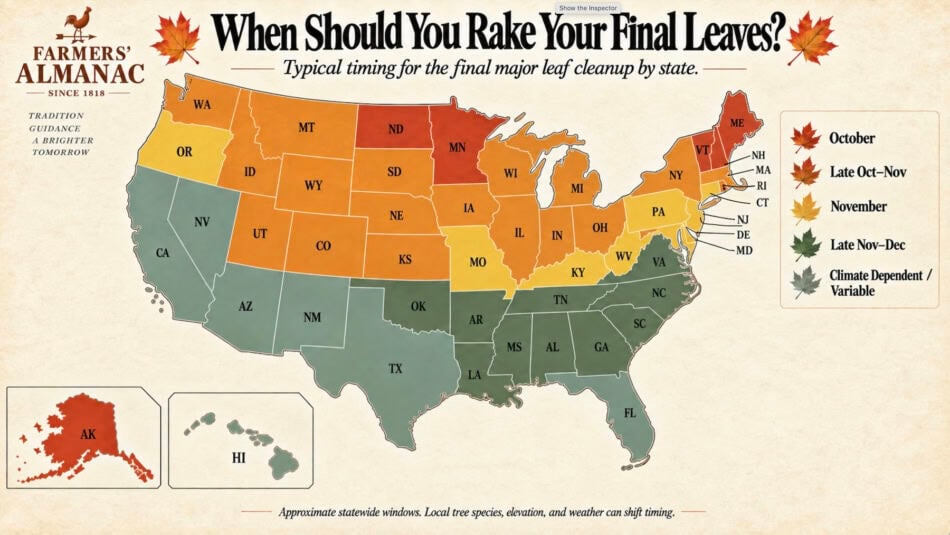
| State | Typical Final Major Leaf Cleanup |
|---|---|
| Alabama | Late November–December |
| Alaska | Late September–October |
| Arizona | October–November in high country; later or minimal cleanup in low deserts |
| Arkansas | Mid-November–December |
| California | November–December in many deciduous areas; highly variable near the coast and Southern California |
| Colorado | Late October–November |
| Connecticut | Late October–mid-November |
| Delaware | Mid- to late November |
| Florida | No single fall deadline; northern Florida often sees more leaf drop from late fall into winter |
| Georgia | Late November–December |
| Hawaii | No traditional statewide autumn leaf-drop season |
| Idaho | Late October–November |
| Illinois | Late October–November |
| Indiana | Late October–November |
| Iowa | Late October–November |
| Kansas | Late October–November |
| Kentucky | November |
| Louisiana | December into winter for some trees |
| Maine | Mid- to late October |
| Maryland | Mid- to late November |
| Massachusetts | Late October–mid-November |
| Michigan | Late October–early November |
| Minnesota | Mid- to late October |
| Mississippi | Late November–December |
| Missouri | November |
| Montana | October–early November |
| Nebraska | Late October–November |
| Nevada | October–November at higher elevations; later in warmer valleys |
| New Hampshire | Mid- to late October |
| New Jersey | Early–mid-November |
| New Mexico | October–November in high country; later at lower elevations |
| New York | Late October–mid-November |
| North Carolina | Mid-November–December; earlier in the mountains |
| North Dakota | October |
| Ohio | Late October–November |
| Oklahoma | November–December |
| Oregon | November in many populated areas |
| Pennsylvania | Early–mid-November |
| Rhode Island | Early–mid-November |
| South Carolina | Late November–December |
| South Dakota | October–early November |
| Tennessee | November–December |
| Texas | November–December in northern areas; December into winter farther south |
| Utah | Late October–November |
| Vermont | Mid- to late October |
| Virginia | Mid-November–December |
| Washington | Late October–November |
| West Virginia | Early–mid-November |
| Wisconsin | Late October–early November |
| Wyoming | October–early November |
Important: These Aren’t Hard Deadlines
A warm autumn can delay leaf fall.
A sudden freeze, windstorm or heavy rain can bring down a huge portion of a tree’s leaves almost overnight.
The timing of the first freeze also varies tremendously across the country—and even within individual states. National Weather Service climate records show this clearly: average first freezes can occur during September in some northern and high-elevation areas while parts of the South don’t typically freeze until November or later.
Use the table as a planning guide.
Then look up.
If your trees are still half full, your final cleanup probably isn’t here yet.
Why Oaks Always Seem to Be the Last Trees Standing
You’ve cleaned the yard.
You’ve put away the rake.
Then you look at the oak tree.
It’s still covered in leaves.
Sound familiar?
Many oaks are notorious for hanging onto leaves longer than other deciduous trees. Some young trees and lower branches can even retain dead brown leaves deep into winter, a phenomenon known as marcescence.
That means you shouldn’t necessarily wait for your oak tree to become completely bare before declaring leaf season finished.
Do the major cleanup after most leaves have dropped and deal with the remaining stragglers as necessary.
Otherwise, in an oak-filled neighborhood, you may be waiting a very long time.
Should You Rake Leaves Before the First Snow?
If a significant layer of whole leaves is covering your lawn, yes—try to deal with it before persistent snow cover arrives.
Leaves trapped beneath snow can become wet, compressed and matted against the turf.
University of Nebraska–Lincoln Extension notes that excessive leaf cover over winter can smother turf and may contribute to conditions favorable to snow mold.
But again, that doesn’t mean every leaf needs to disappear.
A light scattering is much different from a wet six-inch layer.
What If Leaves Fall After Your Last Mowing?
You have several choices.
1. Mow Them Anyway
If conditions are dry enough and the mower can still be used safely, make another pass and shred them.
2. Rake or Blow Heavy Areas
Concentrate on spots where leaves collect deeply:
- Under large trees
- Along fences
- Around shrubs
- In corners
- Against buildings
3. Move Leaves Into Garden Beds
Instead of throwing them away, use appropriate leaves as organic material in garden and landscape beds.
Leaves can provide organic matter as they break down. Colorado State University Extension recommends using fallen leaves in several ways, including lawn mulching, composting and garden-bed mulch.
4. Compost Them
Dry autumn leaves are an excellent carbon-rich—or “brown”—material for a compost pile.
Shredding them first speeds decomposition.
Should You Leave Some Leaves for Wildlife?
There’s another reason you don’t need to make every corner of your property spotless.
Fallen leaves create habitat for insects and other small creatures, and many beneficial organisms spend at least part of their life cycle in leaf litter.
That doesn’t mean allowing a thick mat to smother the lawn.
Instead, consider a compromise:
Clear or mulch leaves on your lawn and walkways, while allowing some intact leaves to remain beneath trees, around shrubs or in appropriate garden areas.
University of Maryland Extension notes that keeping some leaves intact can preserve more wildlife value than shredding everything with a mower.
Your yard doesn’t have to look like a forest floor—but it doesn’t need to look vacuumed, either.
Never Leave Leaves Piled in the Street
One place leaves definitely don’t belong is the storm drain.
Leaves washing into streets and drainage systems can contribute organic material and nutrients to waterways.
Instead:
- Compost them.
- Mulch them.
- Use them in garden beds.
- Follow your municipality’s leaf collection program.
And keep gutters and storm drains clear when heavy autumn rains are expected.
What About Wet Leaves?
Wait for them to dry whenever possible.
Wet leaves are heavier, harder to rake and much more difficult for a mower to shred effectively.
UMass Extension recommends mowing leaves when they’re dry and notes that multiple mower passes may be needed to reduce them into fine pieces.
A dry, breezy afternoon can make a job that looked enormous in the morning considerably easier.
The 80–90% Rule
Here’s perhaps the simplest way to decide when you’ve reached the end of leaf-raking season:
Look at the trees—not the ground.
If your deciduous trees are still holding plenty of foliage, don’t assume this weekend’s cleanup will be the last one.
But when roughly 80–90% of the leaves have fallen, do your final major cleanup.
Then don’t obsess over the leftovers.
Mulch, move or rake any significant late accumulation as needed.
That is usually more practical than waiting for every last oak leaf to surrender.
Should You Rake Leaves Immediately After They Fall?
Not necessarily.
A light covering can usually wait.
But if leaves completely cover your grass, don’t allow them to sit wet and matted for weeks while you wait for the rest of the trees to catch up.
Iowa State Extension recommends mowing when leaf layers are thin and dry and managing thicker accumulations so grass remains exposed.
Several smaller cleanups are often healthier for the lawn—and easier on your back—than one enormous cleanup at Thanksgiving.
The Bottom Line
So, when should you rake your final leaves of the year?
Wait until most of the deciduous trees in your yard have dropped approximately 80–90% of their leaves, then perform your final major cleanup.
For much of the northern United States, that generally happens from mid-October through early November.
Across the Mid-Atlantic and central states, November is more common.
Across much of the South, leaf cleanup can continue through late November and December, while subtropical regions may never experience one clearly defined fall leaf-drop season.
But don’t let the calendar—or one stubborn oak tree—control you.
And remember: the goal isn’t to remove every leaf.
Keep thick, matted leaves from smothering the lawn, mulch moderate amounts with your mower, compost what you collect and consider leaving some leaf litter in appropriate garden areas for wildlife.
When most of the trees are bare and the lawn can breathe, you can finally put away the rake.
At least until next fall.


- Farmers' Almanac Staff

- Farmers' Almanac Staff
- Farmers' Almanac Staff

- Farmers' Almanac Staff