16 Little Known Turkey Facts You Probably Did Not Know

Can wild turkeys fly? Why do their heads change color? And did Benjamin Franklin really want one as America’s national bird? These turkey facts may surprise you.
Few birds are as closely tied to an American holiday as the turkey. Every November, it takes its place on Thanksgiving decorations, schoolroom drawings, and dinner tables. But there is plenty to discover about the bird beyond its familiar fan-shaped tail.
From woodland habits to a few stories that have grown in the telling, here are 16 little known turkey facts to share around the holiday table.
Quick Reference Turkey Facts
- Native home: The Americas.
- Two living species: The wild turkey and the ocellated turkey.
- Names to know: An adult male is a tom or gobbler, a female is a hen, and a young turkey is a poult.
- Surprising ability: Wild turkeys can fly at speeds of up to 55 miles per hour.
Planning your holiday? Explore our Thanksgiving history, traditions, and date guide.
16 Little Known Turkey Facts
1 Wild Turkeys Can Fly at Up to 55 Miles per Hour
That big bird crossing the road has another way to get where it is going. Wild turkeys are capable of powerful flights over short distances, with speeds clocked at up to 55 miles per hour, according to the U.S. Department of Agriculture. They spend much of their time walking, so seeing one take wing can come as a surprise.
2 They Sleep in Trees but Build Their Nests on the Ground
At sundown, wild turkeys fly into trees to roost for the night. Nesting is another matter. A hen lays her eggs in a shallow depression on the ground, often sheltered by brush or other vegetation. The Cornell Lab of Ornithology describes both habits.
3. A Male Turkey Can Change the Color of His Head
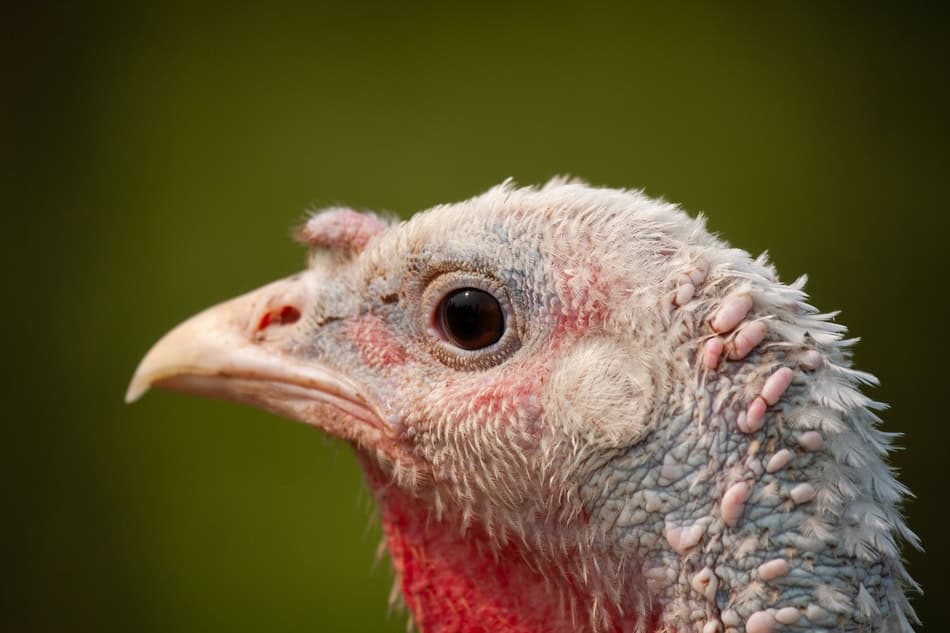
A gobbler’s head can put on quite a show. During spring courtship displays, the bare skin can turn bright blue and white while the fleshy growths become swollen and red. The Florida Fish and Wildlife Conservation Commission describes these dramatic changes as males strut and display for hens.
4. Some Female Turkeys Have Beards
The dark tuft hanging from a turkey’s chest is called a beard, and it consists of hairlike feathers. It is usually associated with males, but some hens have one, too. New York’s Department of Environmental Conservation reports that fewer than 10 percent of females have beards. A beard alone does not always tell you whether a bird is male or female.
5. An Adult Turkey Has Thousands of Feathers
An adult wild turkey carries approximately 5,000 to 6,000 feathers, according to the U.S. Fish and Wildlife Service. The tail fan gets much of the attention, but take a closer look at the body feathers: sunlight reveals an iridescent sheen.
6. Turkeys Can Purr
“Gobble, gobble” is only part of the conversation. Turkeys also cluck and purr, as the U.S. Fish and Wildlife Service notes. Listen carefully when watching a flock; you may hear much quieter sounds than the familiar gobble.
7. Their Daytime Eyesight Is Better Than Their Night Vision
Wild turkeys have excellent vision and can see colors. With eyes on the sides of their heads, a slight turn lets them survey their surroundings. Their night vision is poor, however, and they are primarily active during daylight, according to the USDA’s wild turkey guide.
8. They Swallow Grit to Help Process Food
Wild turkeys swallow grit that helps break down what they eat, according to Cornell’s species guide. The grit works in the gizzard, the muscular part of a bird’s stomach that grinds food. Those little particles serve a useful purpose.
9. Acorns and Salamanders Can Both Be on the Menu
Wild turkeys are omnivores. Their diet includes nuts, seeds, berries, and other plant material, along with insects and occasional small animals such as salamanders. Cornell’s food guide shows just how varied a turkey’s woodland menu can be.
10. Baby Turkeys Can Feed Themselves Within a Day
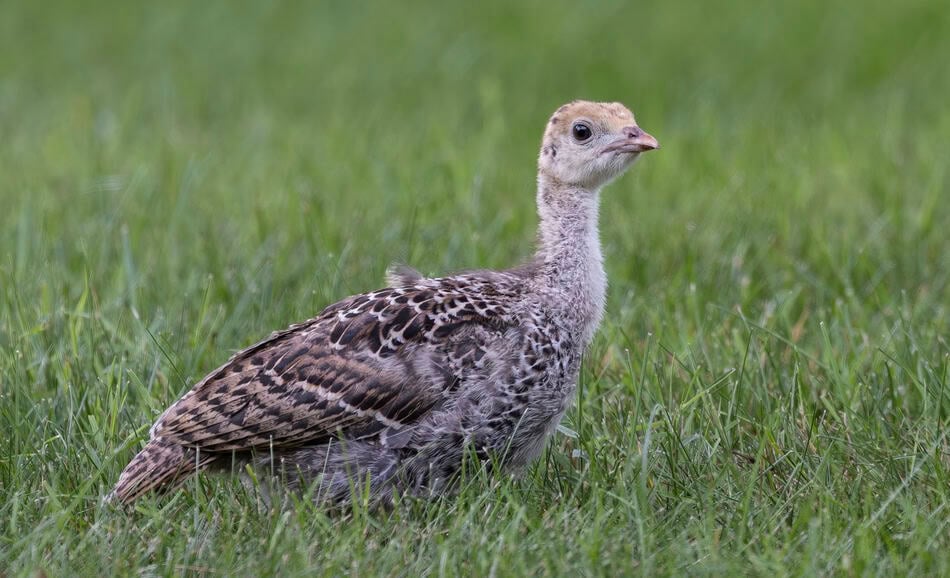
A baby turkey, called a poult, is ready to get moving soon after hatching. The Smithsonian’s National Zoo notes that chicks can feed themselves within a day. Insects are especially important early in life, with plant foods becoming a larger part of the diet as the young birds develop.
11. Young Wild Turkeys Learn to Fly Within Weeks
Poults do not stay grounded for long. New York wildlife biologists report that they can fly at about two to three weeks old, allowing them to begin roosting in trees at night.
12. There Are Two Living Species of Turkey
The wild turkey familiar across much of North America is Meleagris gallopavo. Its relative, the ocellated turkey, lives in Mexico and Central America and has brilliant blue, green, and bronze plumage. Cornell’s overview of turkey origins identifies these as the world’s two living turkey species.
13. People Were Raising Turkeys Long Before the Pilgrims Arrived
Indigenous people domesticated turkeys in Mexico more than 2,000 years ago, according to the Smithsonian’s National Zoo. The bird’s place in agriculture and food traditions reaches back many centuries before the 1621 Plymouth harvest celebration.
14. Wild Turkeys Disappeared From New York for About a Century
Today, a turkey sighting in New York might seem ordinary. But habitat loss and unregulated hunting wiped out the state’s original population by the mid-1840s. Around 1948, birds from Pennsylvania crossed into western New York as suitable habitat returned. The state’s wildlife history records an absence of roughly 100 years.
15. Benjamin Franklin Praised the Turkey but Never Proposed It as the National Bird
The familiar story goes further than the historical record. Franklin did admire the turkey, calling it “a much more respectable Bird” in a letter to his daughter. But, as the Franklin Institute explains, he did not propose making it the national bird. You can read his praise in the Library of Congress transcription.
16. Turkey Was Probably at the 1621 Harvest Feast but the Menu Is Not Certain
Turkey may well have been served at the harvest celebration shared by Wampanoag people and Plymouth colonists. The surviving eyewitness account mentions venison and wildfowl, without naming turkey specifically. Plimoth Patuxet Museums considers turkey probable because William Bradford described plentiful wild turkeys that autumn. A complete menu has not survived.
Turkey Facts Frequently Asked Questions
What Is a Male Turkey Called
An adult male turkey is called a tom or gobbler. A female is a hen.
What Is a Baby Turkey Called
A young turkey is called a poult.
Are Wild and Domestic Turkeys the Same Species
Yes. Domestic turkeys belong to the same species as the wild turkey, Meleagris gallopavo, as the Smithsonian’s National Zoo explains.
Can Female Turkeys Have Beards
Yes. A small proportion of hens grow the chest tuft commonly associated with males.
Which turkey fact surprised you most? Have you ever spotted a flock roosting in the trees? Tell us in the comments below.
For more seasonal trivia to share at the table, read 16 Little Known Pumpkin Facts You Probably Did Not Know.

- Tim Konrad

- Tim Konrad
- Tim Konrad
- Tim Konrad