
A Meteor Shower That Once Filled the Sky With Thousands of Shooting Stars Is Active This Thanksgiving
The Andromedid meteor shower is active Thanksgiving week, November 25-27, 2026. Once a storm that dropped thousands of meteors an hour, it is quiet now - here is when and how to look.
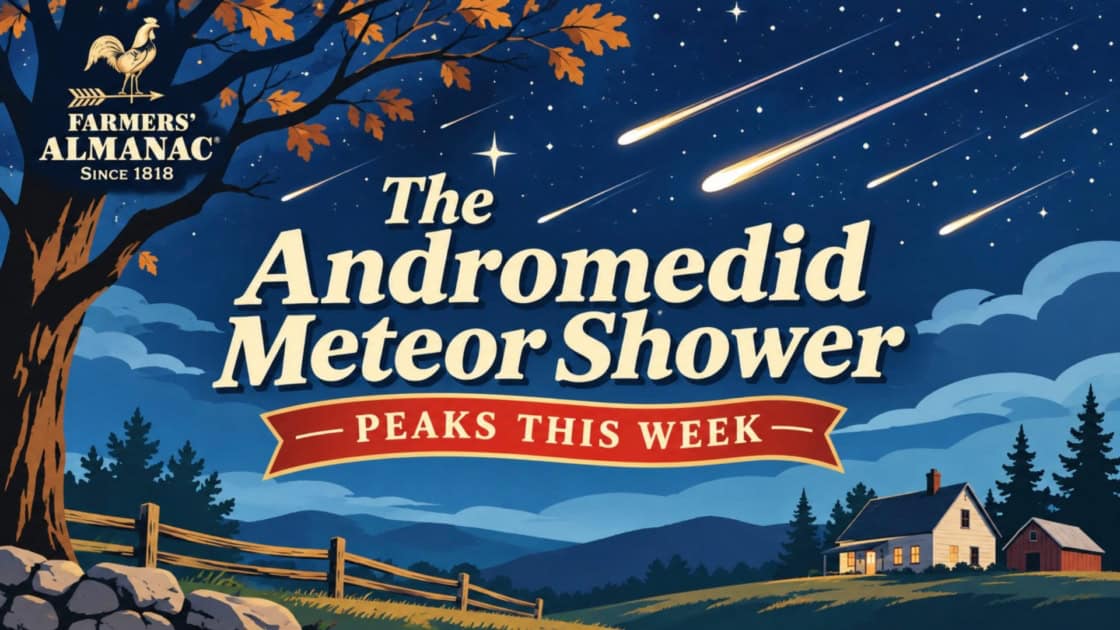
Step outside over the next few nights, and you might catch a shooting star from one of the most fascinating meteor showers in recorded history.
The Andromedid meteor shower remains active during Thanksgiving week, November 25–27, 2026. Although relatively obscure today, this shower once produced some of the most spectacular celestial displays of the 19th century, sending thousands of meteors streaking across the night sky in a single hour.
This year, however, stargazers will have to contend with the bright November Beaver Moon, which will make spotting these elusive shooting stars particularly challenging.
Andromedid Meteor Shower 2026: At a Glance
- Traditional peak dates: November 25–27
- 2026 activity: The annual shower peaked earlier in November but remains active this week.
- Best time to look: Around 9 p.m. to 11 p.m. local time
- Where to look: High in the sky, near the constellation Andromeda
- Expected activity: Less than one Andromedid meteor per hour
- Moon phase: Waning gibbous
- Parent comet: Comet 3D/Biela
- Equipment needed: None
When Can You See the Andromedid Meteor Shower?
The evenings of Wednesday, November 25, through Friday, November 27, offer an opportunity to look for lingering Andromedid meteors.
According to the American Meteor Society’s latest meteor activity forecast, the shower remains active, although its annual maximum occurred around November 7.
Unlike many meteor showers that are best observed in the hours before sunrise, the Andromedids are favorably positioned during the late evening for observers across much of the United States and southern Canada.
Around 10 p.m. local time, the area of the sky from which these meteors appear to originate will be near its highest point.
If skies are clear, consider stepping outside after Thanksgiving dinner and spending some time beneath the stars.
The Beaver Supermoon Will Make Viewing Difficult
Unfortunately, Mother Nature has thrown stargazers a curveball this year.
The Full Beaver Supermoon reached peak illumination on Tuesday, November 24. The Moon will remain nearly full during the following evenings, flooding the night sky with light and washing out many fainter meteors.
The American Meteor Society estimates that full Moon conditions can reduce visible meteor counts by at least 75 percent.
While a spectacular meteor display is not expected, patient observers may still catch a brighter shooting star.
The Meteor Shower That Once Made Stars Fall Like Rain
What makes the Andromedids particularly interesting is their extraordinary history.
On November 27, 1872, observers witnessed an astonishing meteor storm, with thousands of shooting stars appearing every hour.
Thirteen years later, on November 27, 1885, another remarkable display unfolded.
According to historical accounts documented by Sky & Telescope, Chinese observers described the spectacle as though “stars fell like rain.”
These extraordinary displays were connected to the breakup of a comet that had disappeared from view.
In an era long before electric streetlights illuminated towns and cities, the sight must have been unforgettable.
The Mystery of a Comet That Disappeared
The Andromedids are associated with Comet Biela, officially designated 3D/Biela.
In 1846, astronomers discovered that the comet had broken into two distinct pieces. Both fragments were observed again in 1852, but the comet was never seen again.
Although the comet disappeared, debris from it continued traveling through the solar system.
When Earth encounters these trails of cosmic dust, particles enter our atmosphere, producing the glowing streaks we call meteors or shooting stars.
Over time, gravitational forces have altered the debris streams, making the spectacular meteor storms of the 1800s much less common.
Today, the annual Andromedids are generally a very quiet shower, but their history serves as a remarkable reminder of how unpredictable the night sky can be.
How to Watch for Shooting Stars This Thanksgiving
You don’t need a telescope or binoculars to enjoy a meteor shower. In fact, your unaided eyes are the best tools for the job.
For the best chance of seeing a meteor:
- Find an open area away from streetlights and other artificial lighting.
- Head outside around 10 p.m.
- Look toward the darkest portion of the sky, away from the bright Moon.
- Allow your eyes 20 to 30 minutes to adjust to the darkness.
- Bring a warm blanket, reclining chair, and something hot to drink.
- Be patient. Meteors can appear anywhere in the sky.
Even if you don’t spot an Andromedid, you may catch a lingering meteor from the Taurid or Leonid showers, which also remain active in late November.
Explore our complete 2026 Meteor Shower Calendar for more opportunities to see shooting stars.
The Best Meteor Shower of 2026 Is Still Ahead
If the bright November Moon spoils your Thanksgiving stargazing, there’s good news.
The Geminid meteor shower peaks December 13–14, 2026, and promises much more favorable viewing conditions.
A thin waxing crescent Moon will leave much of the night dark, creating excellent opportunities to observe one of the strongest and most reliable meteor showers of the year.
Read our 2026 Geminid Meteor Shower Guide to start planning your December stargazing.
In the meantime, take a moment during the Thanksgiving holiday to step outside, look up, and appreciate the wonders of the late-autumn night sky.
You never know when a shooting star might pass overhead.
Have you ever seen a meteor shower or a particularly memorable shooting star? Share your experience with us in the comments below!


- Farmers' Almanac Staff

- Farmers' Almanac Staff
- Farmers' Almanac Staff
- Farmers' Almanac Staff