The Beaver Moon Is a Supermoon on November 24, and Two Closer Ones Follow

November’s full Moon arrives on Tuesday, November 24, and it is a supermoon. It is also the first of three in a row, and the least close of the three, which is a nice problem to have if you like looking up: the next two are better still.
The Moon reaches the precise moment of fullness at 9:53 a.m. Eastern Time, which is the middle of the morning across North America. So the show is not at that instant. It is the two evenings either side of it, when a Moon more than 99 percent lit climbs out of the eastern sky not long after the Sun has gone.
At a Glance
- Full: Tuesday, November 24, 2026, 9:53 a.m. Eastern Time
- Distance when full: 360,765 kilometers, which makes it a supermoon
- Closest point: Wednesday, November 25 at 4:15 p.m. Eastern, 359,336 kilometers, the day after it is full
- Best evenings: Monday the 23rd and Tuesday the 24th, both more than 99 percent lit
- Moonrise on the 24th: 4:17 p.m. New York, 4:09 p.m. Chicago, 4:29 p.m. Denver, 4:44 p.m. Los Angeles
- Next one, and closer: the Cold Moon, December 23, at 356,738 kilometers
When to Look, and Which Way to Face
Face east. In late November the Moon clears the horizon in the late afternoon, close enough to sunset that you can watch the sky change color and the Moon come up in the same twenty minutes. On the 24th moonrise is 4:17 p.m. in New York, 4:09 p.m. in Chicago, 4:29 p.m. in Denver and 4:44 p.m. in Los Angeles, local time in each case.
Those times assume a flat horizon. If you have a ridge, a treeline or a row of houses to the east, add anywhere from a few minutes to half an hour. It is worth walking somewhere with a clear view rather than watching from a window, because the first ten minutes after it clears the horizon are the best part.
Why This One Counts as a Supermoon
The Moon’s orbit is not a circle, so its distance from Earth changes through the month. Across 2026 it runs between 356,660 and 406,435 kilometers, a swing of about 50,000 kilometers. The word supermoon has no formal astronomical definition, but the common test is whether a full Moon falls within the closest tenth of that range, which for this year means nearer than roughly 361,600 kilometers.
At 360,765 kilometers, the Beaver Moon sits just inside that line. There is a wrinkle worth knowing, though. The Moon does not reach its closest point until Wednesday, November 25 at 4:15 p.m. Eastern, when it is 359,336 kilometers away. In other words it is nearest to us the day after it is full, so if you are out on the Wednesday evening you are looking at a very slightly larger and very slightly less than full Moon.
Whether you can tell the difference by eye is another matter. A supermoon is around seven percent wider than an average full Moon, which sounds like a lot and looks like very little when there is nothing beside it in the sky to compare it against.
Two Closer Supermoons Follow
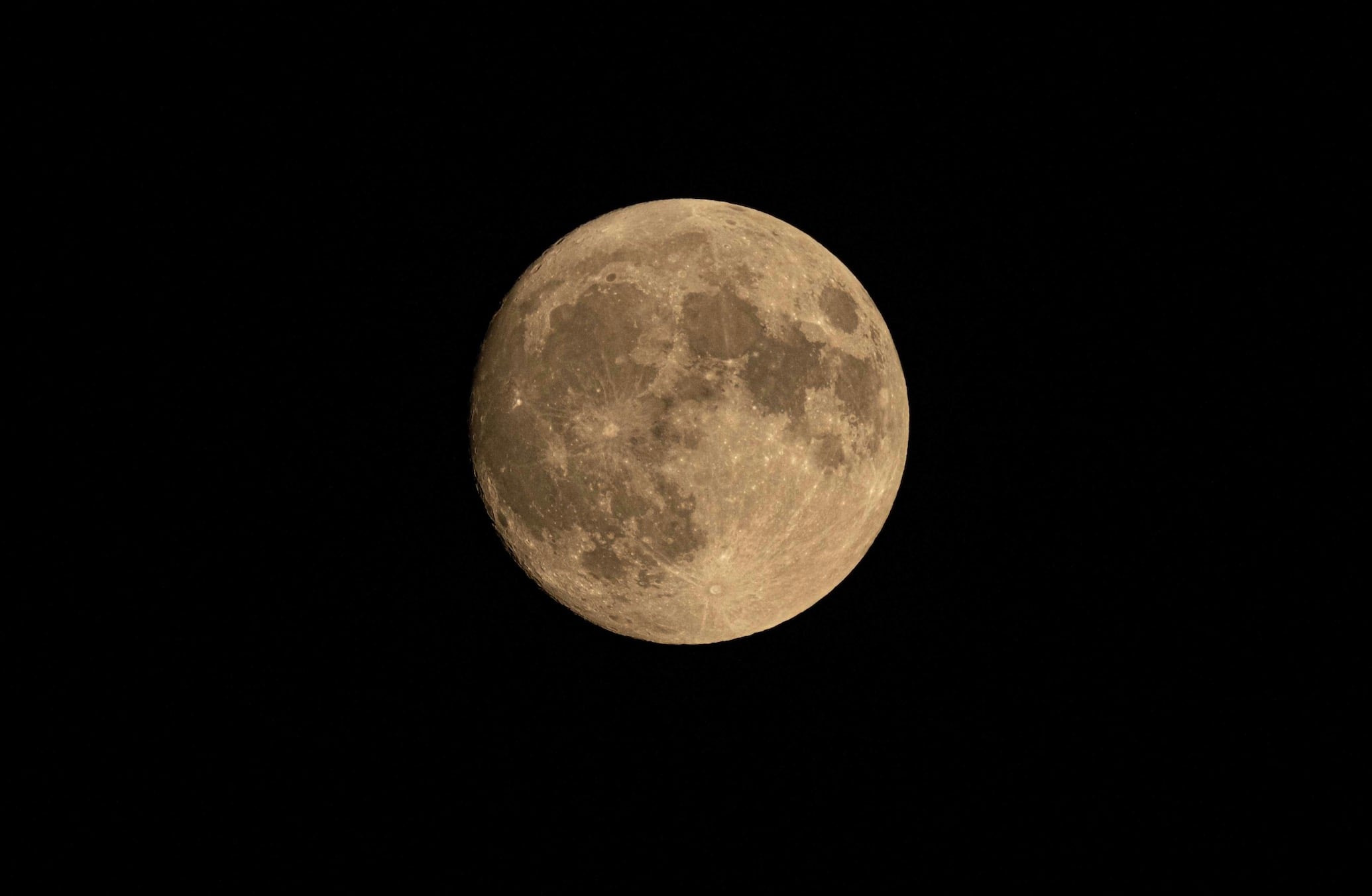
This is the opening act. The Cold Moon is full on Wednesday, December 23 at 8:28 p.m. Eastern and sits 356,738 kilometers away, which makes it the closest full Moon of 2026 by a comfortable margin and only a whisker off the closest the Moon gets all year. The Wolf Moon then follows on Friday, January 22, 2027 at 7:17 a.m. Eastern, at 357,644 kilometers.
Three supermoons in a row is not rare. It happens because perigee, the Moon’s closest approach, drifts slowly through the lunar cycle and spends a few months lining up with the full Moon before drifting out of step again. Our full Moon calendar carries every date and time for the rest of the year and into the next.
Why It Looks Orange and Oversized Low Down
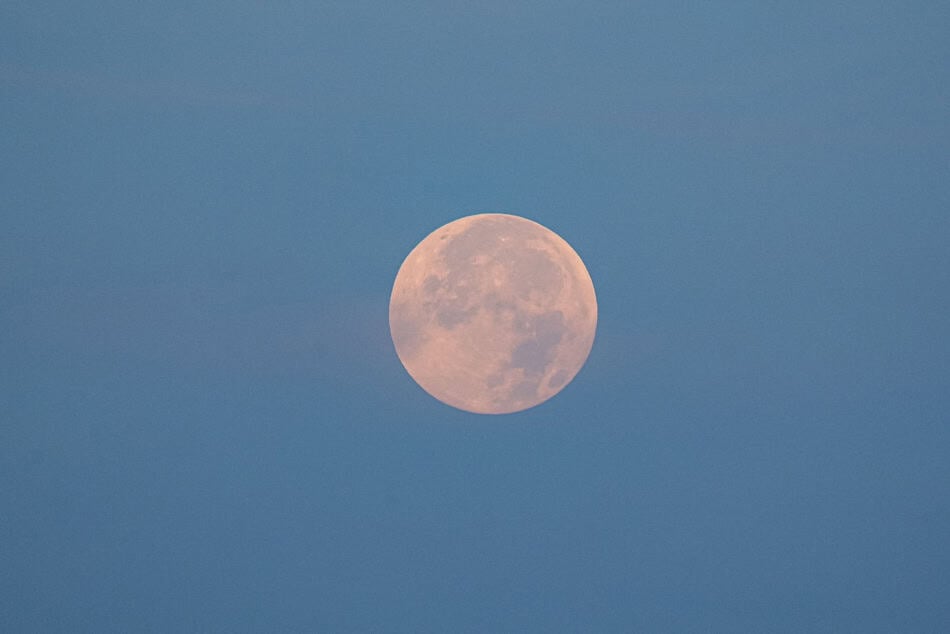
A Moon just clearing the horizon often comes up a deep amber or orange, and people reasonably assume the supermoon is the reason. It is not. When the Moon is low, its light reaches you through a much longer slice of the atmosphere than when it is overhead, and that extra air scatters the shorter blue wavelengths out of the beam and leaves the longer reds and oranges behind. It is the same mechanism that colors a sunset.
The size is a separate trick, and a stranger one. A Moon sitting behind trees, barns or a distant ridge looks considerably bigger than the same Moon an hour later with empty sky around it, even though a photograph taken on the same lens will show no difference. That is the Moon illusion, and the fact that nobody has fully settled on an explanation after centuries of people noticing it is part of its charm. Put the color and the apparent size together and moonrise beats midnight for a view, supermoon or not.
What Else Is Up This Week
The Leonid meteor shower peaked before dawn on November 17, so that one has been and gone, and the bright Moon now makes faint meteors hard work anyway. The next shower worth staying up for is the Geminids, which peak on the night of December 13 under a Moon only around a fifth lit.
Mercury and Venus both turned direct on November 13 and are climbing back into the morning sky, and Saturn stays up most of the evening. Our guide to the planets visible tonight has the rise and set times for November.
Where the Name Comes From
November’s full Moon has long been called the Beaver Moon. Late autumn is the stretch when beavers finish their lodges and shore up their dams before the water starts to freeze, and it was also the season when thick winter pelts were trapped in early America. The month’s Moon carries plenty of other names besides, among them the Frost Moon, the Mourning Moon and the Freezing Moon, and our full guide to the Beaver Moon sets out where each of them was recorded.
Beaver Moon Supermoon FAQ
What time does the Beaver Moon rise on November 24, 2026?
Moonrise falls in the late afternoon. It is 4:17 p.m. in New York, 4:09 p.m. in Chicago, 4:29 p.m. in Denver and 4:44 p.m. in Los Angeles, all local time. Those are the moments the Moon clears a flat horizon, so allow longer if you have hills, buildings or trees to the east.
Is November 2026’s Beaver Moon really a supermoon?
Yes, on the usual measure. The Moon is 360,765 kilometers away at the moment it is full. Across 2026 its distance runs from 356,660 to 406,435 kilometers, and the common test counts a full Moon as a supermoon when it falls within the closest tenth of that range, which this year means nearer than about 361,600 kilometers. The Beaver Moon sits just inside that line.
Which night is better, November 23 or November 24?
Either. The Moon is more than 99 percent lit on both evenings, because the exact moment of fullness lands at 9:53 a.m. Eastern on the 24th, in daylight. The Moon rises in late afternoon on the 24th and a little earlier on the 23rd, so both nights give you a full-looking Moon climbing in the east after sunset.
When is the next supermoon after this one?
The Cold Moon on December 23, 2026, full at 8:28 p.m. Eastern and 356,738 kilometers away. That is the closest full Moon of the year, closer than this one, and it is followed by the Wolf Moon of January 22, 2027 at 357,644 kilometers.
Are you planning to watch the Beaver Moon rise? Tell us where you are watching from and what the sky is doing.

Josh Morley grew up in Liverpool, where checking the sky before you leave the house is less a habit than a survival skill. He has spent his working life with data, and he came to the Farmers' Almanac by way of the thing the two have in common: the weather is the largest dataset any of us live inside, and most of us read it every day without noticing.
- Josh Morley

- Josh Morley
- Josh Morley
- Josh Morley