
Why Is the Sun Suddenly Blinding You When You Drive?

You take the same road home every afternoon. But lately, something has changed. As you round a familiar bend or approach an intersection, the setting Sun seems to shine straight through your windshield. You lower the visor, squint, and wonder why your ordinary commute has suddenly become so difficult.
If you’ve noticed more blinding sunlight during your drive this fall, there’s a reason. The Sun’s position in the sky is changing with the seasons, and your commute may now line up with the worst possible angle for glare.
It’s not that the Sun has gotten brighter. It’s that you’re meeting it in a different place.
Why Sun Glare Can Be Worse in Fall
Throughout the year, the Sun follows a changing path across our sky. In the Northern Hemisphere, its daily arc becomes progressively lower and shorter as we move from summer toward winter.
According to NASA’s explanation of the autumnal equinox, these seasonal changes happen because Earth is tilted on its axis as it travels around the Sun.
By October, daylight hours are shrinking, and the Sun is setting earlier than it did during the summer.
That means a drive that took place in bright afternoon sunshine a couple of months ago may now coincide with the Sun dropping toward the horizon.
And when that sunlight shines directly into your windshield, even a familiar stretch of road can become difficult to see.
The effect depends on where you live, which direction you’re traveling, and when you’re on the road. Drivers heading generally west near sunset may encounter direct glare, while eastbound drivers can experience a similar problem shortly after sunrise. Because the Sun’s rising and setting positions also shift throughout the year, certain roads may become particularly troublesome for several weeks.
A route that caused little trouble in August might suddenly have you reaching for your sunglasses in October.
Why That Low Sun Can Make Driving Dangerous
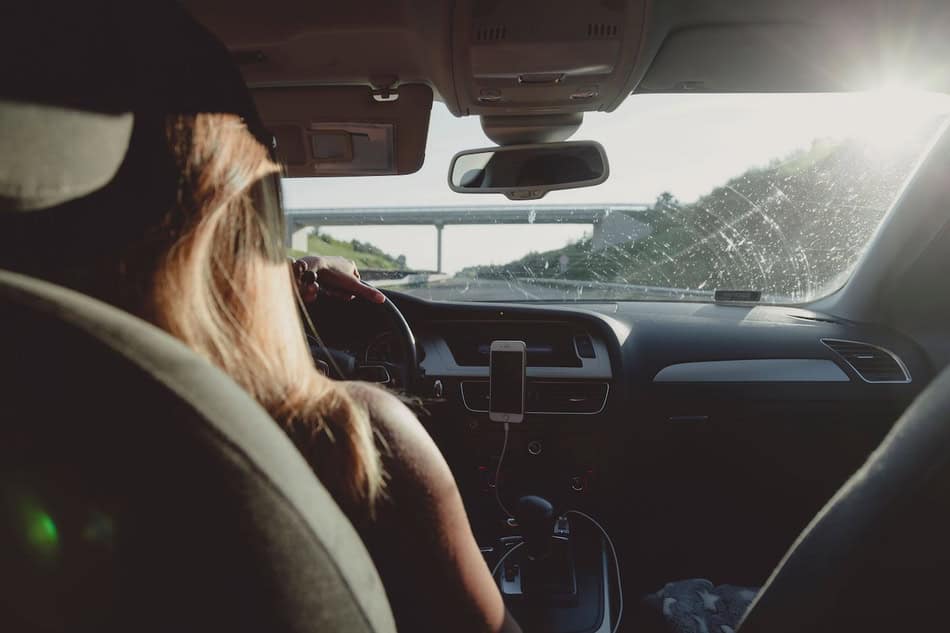
Anyone who’s driven toward a brilliant sunset knows how quickly visibility can change. One moment, the road ahead looks perfectly clear. The next, you’re struggling to distinguish a traffic signal, the brake lights of another car, or someone crossing the street.
The American Automobile Association (AAA) warns that sunlight shining directly into drivers’ eyes around sunrise and sunset can make it much harder to see roadway hazards.
The problem isn’t necessarily that the entire road disappears. Glare can reduce contrast, making certain objects harder to pick out against the brightness ahead.
A pedestrian in a crosswalk or a vehicle slowing in front of you may be more difficult to recognize until you’re closer than you should be.
There’s another detail worth remembering: If the Sun is blinding you, other drivers traveling in the same direction may be having trouble seeing, too.
Your Windshield Could Be Making the Problem Worse
Here’s something that may surprise you. Even when your windshield looks reasonably clean, it could be contributing to that blinding glare.
Over time, a thin film can build up on the inside of the glass. Dust, fingerprints, and smudges on either side of the windshield may be barely noticeable in ordinary daylight.
But when low-angle sunlight strikes the glass, those imperfections can scatter light and make an already uncomfortable situation worse.
AAA’s fall driving advice specifically recommends cleaning the inside and outside of your windshield to remove streaks, dust, and smudges that interfere with visibility.
It’s an easy maintenance task to overlook because the inside of the windshield doesn’t usually look dirty.
If you’ve cleaned the exterior glass and the glare still seems unusually bad, take a closer look at the inside. You may discover a hazy film you hadn’t noticed before.
Scratches, chips, and worn windshield wipers can also make visibility problems worse, so they’re worth checking before the next especially sunny commute.
What to Do When the Setting Sun Is in Your Eyes
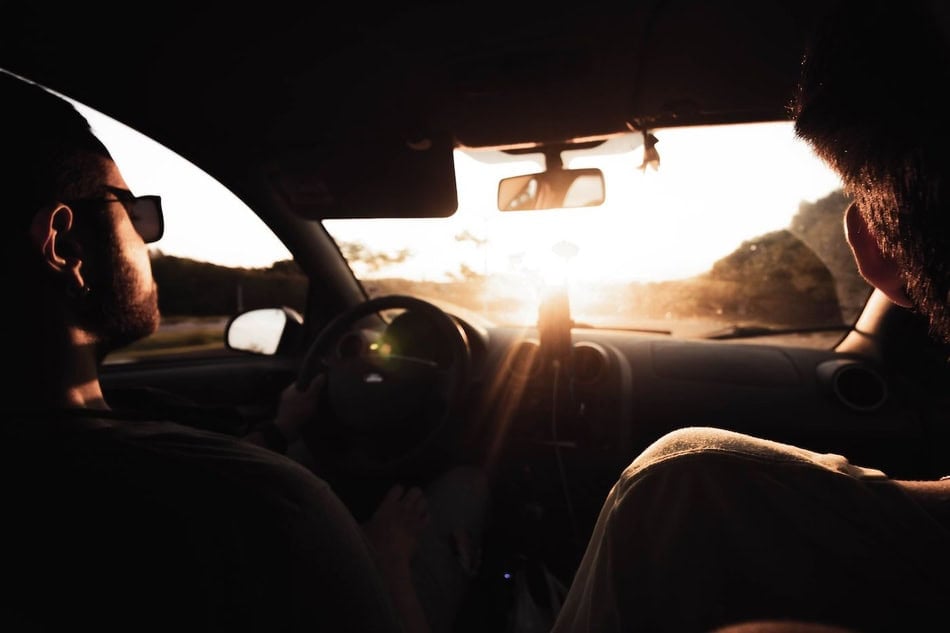
You can’t change the Sun’s position, but you can make it easier to deal with.
AAA recommends keeping polarized sunglasses handy, using your car’s sun visor, slowing down when visibility is reduced, and leaving extra distance between your vehicle and the one ahead.
Polarized sunglasses can help cut reflected glare, although they won’t eliminate the brightness of the Sun itself. They can also make some dashboard displays harder to read, so choose lenses that let you see your instruments clearly.
Turn on your headlights when appropriate to help other drivers see your vehicle, even if it still looks bright outside.
If you regularly encounter severe glare on the same road, consider adjusting your departure time or taking a different route. Even a modest change in timing or direction may help you avoid driving directly toward the setting Sun.
And if the glare becomes so intense that you can’t see the road ahead clearly enough to drive safely, don’t try to push through it. Reduce speed appropriately and find a safe place to pull off the road until visibility improves.
The most important thing is to respond to what you can actually see, not what you expect to be there.
Will Fall Sun Glare Get Worse After Daylight Saving Time Ends?
Daylight saving time ends on Sunday, November 1, 2026, when clocks move back one hour in most of the United States.
That clock change doesn’t alter the Sun’s actual position. It does, however, change the clock time of sunrise and sunset.
After the change, sunset will occur roughly an hour earlier by the clock than it otherwise would on that date. That can shift which drivers encounter the Sun near the horizon during their usual commute. Some may find themselves driving home after dark instead of facing direct sunset glare.
In other words, fall sun glare doesn’t simply get worse for everyone as the season progresses. The problem shifts with the Sun’s changing position, your schedule, and the direction you’re traveling.
So if your drive home suddenly feels like a staring contest with the setting Sun, you’re not imagining the change. Your familiar route may simply be lining up with a different part of the Sun’s seasonal journey across the sky.
And before tomorrow’s commute, it might be worth giving that windshield a good cleaning.

- Maggie Konrad

- Maggie Konrad
- Maggie Konrad
- Maggie Konrad