
Found White Spots on Your Halloween Candy? Here’s When to Toss It

You unwrap a piece of Halloween chocolate and notice something strange. Instead of the smooth brown surface you’re expecting, there’s a chalky white coating or a scattering of pale spots. Has the chocolate gone bad? Is that mold?
Not necessarily. That unappetizing coating could be something called chocolate bloom, a harmless change that can make perfectly edible chocolate look like it belongs in the trash.
But not every suspicious-looking piece of candy deserves a second chance. Here’s what to look for before taking a bite.
Why Does Chocolate Turn White?
Chocolate contains cocoa butter and sugar, and both can change the way chocolate looks when it’s exposed to certain storage conditions.
The white coating is called chocolate bloom. According to the Canadian Food Inspection Agency, there are two common types.
Fat bloom happens when chocolate gets too warm. Some of the cocoa butter melts, separates from the other ingredients, and eventually appears on the surface as a hazy, whitish coating.
Sugar bloom is caused by moisture. When sugar on the chocolate’s surface dissolves and then crystallizes again, it can leave behind white spots or a rough, grainy appearance.
Neither type is harmful on its own. Chocolate affected by bloom may not taste quite as good as it once did, and its texture can change, but the coating itself isn’t a food-safety problem.
That’s welcome news if you’ve just opened a chocolate bar that looks a little worse for wear.
How Can You Tell If Chocolate Is Safe to Eat?
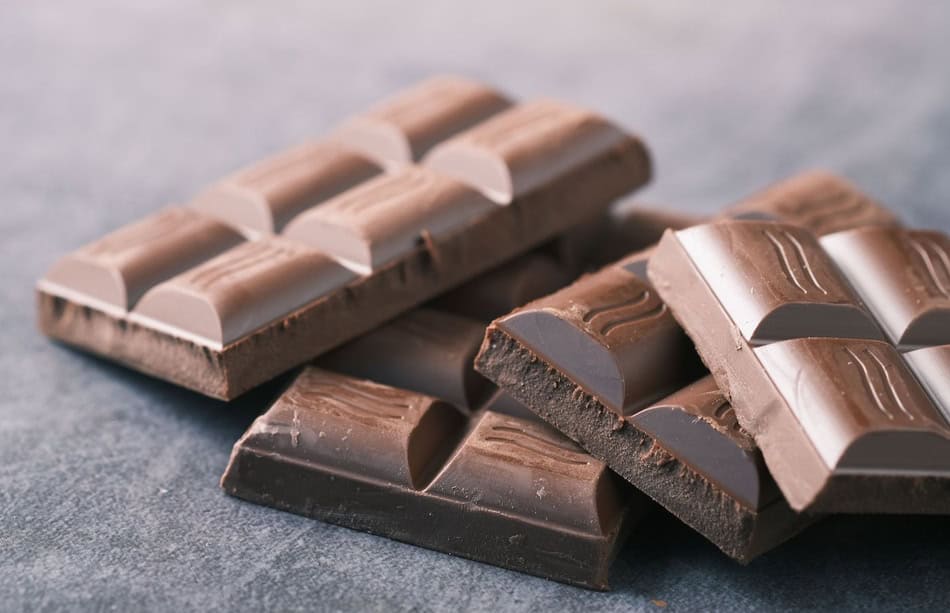
Chocolate bloom usually appears as a flat, cloudy film, pale streaks, or whitish speckles. Sometimes the surface looks dull instead of shiny.
The important distinction is that bloom is a change in the chocolate itself, not something growing on it.
If you’re looking at a smooth or grainy white coating on an otherwise normal piece of chocolate, bloom is a possible explanation.
But appearance alone can’t guarantee that candy is safe.
If you notice fuzzy growth, unusual colors, a strange odor, unexpected moisture, or anything else that makes you suspect spoilage, throw the candy away. Don’t taste it to find out.
The USDA’s guidance on moldy foods explains why visible mold shouldn’t be taken lightly. Some molds can produce substances that make people sick, and contamination isn’t always limited to what you can see.
Be especially cautious with filled chocolates. A candy bar with caramel, cream, or another filling isn’t quite the same as a solid piece of chocolate. Even if the outside looks normal, a filling that appears spoiled or smells unusual is a reason to discard the entire piece.
When you can’t confidently identify the white coating as harmless bloom, the safest choice is to toss the candy.
Other Halloween Candy Warning Signs You Shouldn’t Ignore
White chocolate bloom isn’t the only thing worth checking when sorting through a trick-or-treat bag.
The U.S. Food and Drug Administration recommends inspecting children’s Halloween treats before they’re eaten, paying particular attention to commercially wrapped candy.
Look for wrappers with tears, tiny holes, or other signs that they may have been opened or damaged. Candy with suspicious discoloration or an unusual appearance should also be discarded.
The FDA advises children not to eat treats that aren’t commercially wrapped. Parents should also check ingredient labels for food allergens and remove choking hazards, such as hard candies, gum, and small toys, from very young children’s treat bags.
These precautions don’t mean every piece of candy with an imperfect wrapper is dangerous. They’re simply sensible steps when you don’t know how the candy has been handled.
What About Halloween Candy That’s Past Its Best-By Date?
Finding an old bag of Halloween chocolate tucked in the pantry doesn’t automatically mean it’s unsafe.
A best-by date generally refers to quality rather than an exact deadline when a food becomes dangerous.
The USDA explains that, apart from infant formula, product dates generally aren’t indicators of food safety. Proper storage and signs of spoilage also matter.
That doesn’t mean candy lasts forever. Older chocolate can lose flavor, develop an unpleasant texture, or show other signs of deterioration.
Check the packaging, storage history, and condition of the candy rather than relying on the date alone. If something seems wrong, don’t eat it.
How to Keep Halloween Chocolate From Turning White
Fortunately, preventing chocolate bloom is fairly simple.
The Canadian Food Inspection Agency recommends keeping chocolate in a consistently cool, dry location. Heat can encourage fat bloom, while moisture contributes to sugar bloom.
Avoid leaving chocolate in a warm car, near a sunny window, or beside a heat source. A dry pantry or cupboard away from temperature swings is generally a better place to keep your Halloween stash.
And if your chocolate has already developed bloom but is otherwise safe to eat, there’s no need to waste it. You can still enjoy it or use it in baking, where its less-than-perfect appearance won’t matter.
The next time you unwrap a chocolate bar and discover an unexpected white coating, remember that it’s not necessarily a sign of spoilage. Sometimes chocolate just loses its good looks before it loses its usefulness.

- Maggie Konrad

- Maggie Konrad
- Maggie Konrad
- Maggie Konrad