

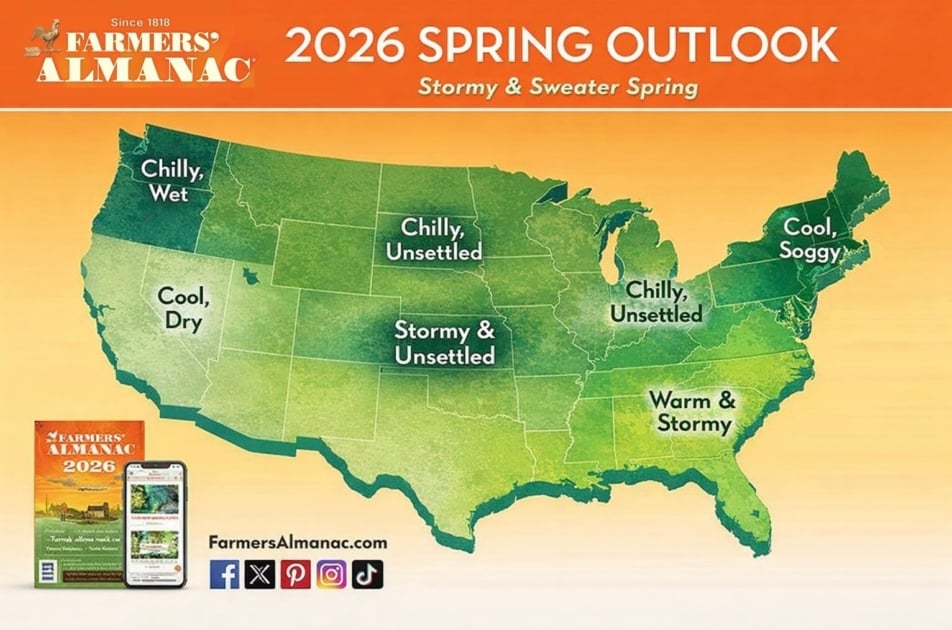
SLOTH-LIKE SPRING AHEAD – 2026 FARMERS’ ALMANAC
SLOTH-LIKE SPRING AHEAD
Spring officially arrives on March 20th with the Vernal Equinox, marking the moment when day and night are nearly equal in length. While this astronomical milestone signals winter’s end, the meteorological reality tells a slower story this year. Much like its namesake, spring is expected to arrive at an unhurried pace—taking its time before fully stretching into warmth. Here is the Spring 2026 Farmers’ Almanac Forecast.
A Slow Warm-Up
Mother Nature may be reluctant to turn up the heat immediately. Cool temperatures are forecast to linger from late March through mid-April, particularly across the North Central States, New England, and much of the Northeast. Frosty mornings may persist longer than average, increasing the risk of late freezes that could affect early-blooming fruit trees and tender garden plants.
Helpful tip: Gardeners and farmers alike should delay planting frost-sensitive crops and keep row covers, cold frames, or mulch handy to protect young plants during cold snaps.
A Wet and Stormy Season
Spring storms are expected to be frequent and active, bringing heavy rain, thunderstorms, and even occasional snow, especially in the Northwest and North Central regions. Saturated soils could delay fieldwork and planting schedules, while increased runoff may lead to localized flooding in low-lying or poorly drained areas.
Much of the country is predicted to experience a soggy spring, which may benefit drought-stricken soils but also raises concerns about erosion, root rot, and fungal diseases in crops.
Helpful tip: Ensure proper drainage in fields and gardens, rotate crops where possible, and monitor for early signs of mold or mildew during prolonged wet periods.
Regional Temperature Trends
- Northern & Central U.S.: Cooler-than-average temperatures are expected, with fluctuating warm and cold spells.
- South Central Region: A mild but wet spring may support strong pasture growth, though muddy conditions could challenge livestock management.
- Southeast & Southwest: These regions are likely to enjoy the warmest spring, with temperatures rising early and remaining mild. However, the Southwest faces another dry spring, continuing concerns about water availability and wildfire risk.
Helpful tip: In dry regions, conserve moisture by mulching heavily and planting drought-tolerant varieties. Rain barrels and drip irrigation systems may prove especially valuable.
RELATED: Farmers’ Almanac Winter 2025-2026 Forecast
Notable Weather Events to Watch
- Derby Day (Kentucky): Increased chances of rain could make for muddy tracks and soggy spectators.
- Late-Season Snow: Possible in the Northern Plains and mountainous areas, potentially impacting travel and livestock.
- Severe Weather Season: The Plains and Southeast may see an active period of severe storms, including hail, high winds, and tornadoes.
Helpful tip: Review emergency plans early, secure loose equipment, and stay weather-aware during peak storm months.
Looking Ahead to Early Summer
Despite spring’s slow start, Memorial Day weekend looks generally favorable for outdoor activities across much of the country. Some scattered showers may pass through parts of the Northeast and Great Lakes, but widespread washouts are not expected.
Seasonal Signs to Watch For
Traditional folklore suggests observing nature for clues about the season ahead:
- Early frog calls often signal warming soil temperatures.
- Abundant blossoms may indicate a productive growing season—if frost stays away.
- Busy ants and thick bird nests are said to hint at lingering cool or wet weather.
RELATED: Farmers’ Almanac Planting Calendar
Bottom line: Patience will be the key to this spring. While conditions may be slow, cool, and wet in many areas, careful planning and close attention to local weather patterns can help gardeners and farmers make the most of the season once spring finally finds its stride.
About Farmers’ Almanac Forecasts
For over 200 years, the Farmers’ Almanac has been predicting long range weather forecasts to help you plan ahead.
These forecasts are created using a tried-and-true formula that adapts to the mysteries of nature and the ever-changing world in which we live. The basis of our prediction method was developed by our founding editor according to correlations between celestial events, and various meteorological conditions.
Today this formula uses the original rules set forth back in 1818, but also accounts for fluctuations in the environment on Earth, as well as solar activity (sunspots), the motion of the Moon, and other proprietary factors.
RELATED: Famers Almanac 2024 – 2025 Accuracy
