

Flash Floods: What You Need to Know to Stay Safe
What causes a flash flood? Learn how these dangerous weather forces form and how to keep yourself, and your family, safe.
Quick Reference
- What it is: A rapidly developing flood, often arriving as a wall of water up to 20 feet high.
- Annual U.S. toll: About 127 deaths per year, more than lightning, tornadoes, or hurricanes.
- Knock-down threshold: 6 inches of fast-moving water can sweep an adult off their feet.
- Vehicle threshold: 2 feet of water will float most cars, including SUVs.
- Rule of thumb: Turn Around, Don’t Drown.
Flash floods are the most dangerous weather event in North America, killing an average of 127 people each year in the U.S. according to the National Weather Service. They move fast, hit hard, and arrive with little warning. The good news is that almost every flash-flood death is preventable when you know what causes one and what to do when a warning is issued.
What Causes a Flash Flood?
Standard floods come on slowly as rivers and streams rise over their banks. Flash floods are different. They sweep across the land in minutes, often as a moving wall of water that can reach 20 feet high. They form during heavy rainstorms, after hours of sustained downpour, or in as little as a few minutes during slow-moving thunderstorms. They can also follow a breached levee or a failed dam.
The danger is not how the water looks. It is how the water moves. A healthy adult can be knocked off their feet by six inches of rapidly moving floodwater. Two feet of water is enough to float a large vehicle, including an SUV or a school bus. Once a vehicle is floating, the driver is no longer in control of where it goes.
Flash Flood Watch vs Flash Flood Warning
Two terms get used during a storm. Knowing the difference saves lives.

Flash Flood Safety Tips During the Event
- Get to higher ground. If a Flash Flood Warning is issued for your area, leave low-lying spots without waiting to “see how bad it gets.”
- Avoid drainage ditches, streambeds, and culverts. Water moves fastest there, and the ground can give way under your feet.
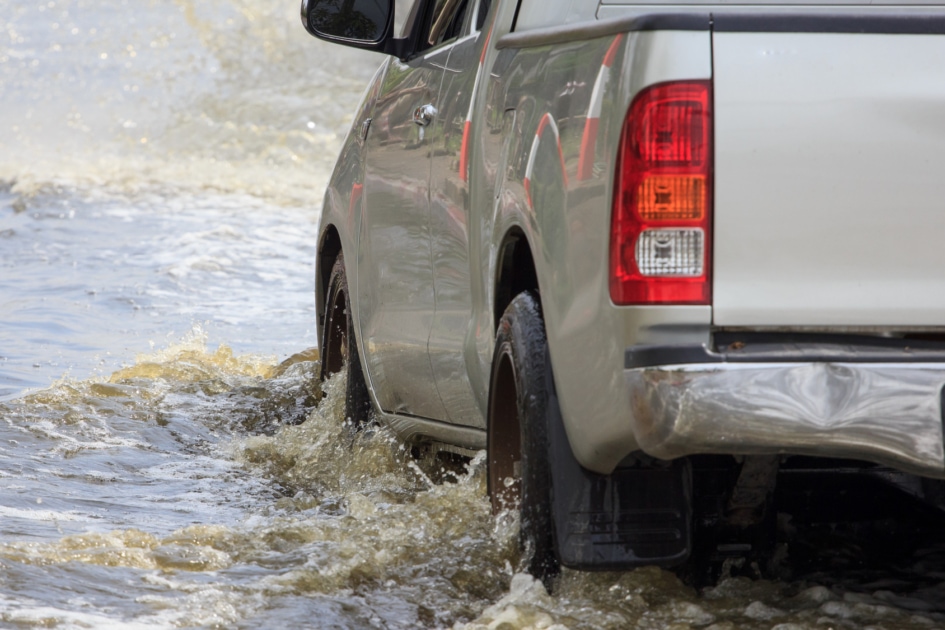
- Turn around, don’t drown. More than 65 percent of flash-flood deaths happen in vehicles. Never drive across a flooded road, even one you know. A foot of water floats most cars. The road under the water may already be washed out.
- If your car is caught in rising water, abandon it and climb to higher ground. Do not stay inside hoping it stabilizes.
- If you must walk through floodwater, pick the slowest-moving section and probe the ground ahead with a long stick for holes, soft spots, or hidden manhole covers.
- Stay away from downed power lines. Floodwater conducts electricity. A live wire upstream can energize the water around you.
- Keep children and pets out of the water. Both are easily knocked off their feet by current adults can stand against.
Where Flash Floods Strike Hardest in the U.S.
Flash floods are not evenly distributed. Some regions are far more exposed because of terrain, soil, and storm patterns. Knowing your home region’s risk helps you plan an evacuation route before the warning comes through.
After the Flood: What to Watch For
- Drink only bottled water until local authorities confirm the tap water is safe.
- Avoid standing floodwater. It may carry oil, gasoline, raw sewage, or an electrical charge from a downed line.
- Watch for hidden damage on roads and bridges that look intact. The road bed beneath them may be washed out.
- Do not enter flooded buildings. Foundation damage is rarely visible from the outside.
- Wait for the all-clear from authorities before returning home.
- Wash and disinfect everything that touched the water. Flood mud often contains sewage and chemicals.
- Watch for mold for the next two weeks. Drying out fast is the single biggest factor in keeping a flooded home livable.
How to Prepare Before the Storm
The Farmers’ Almanac has been helping readers plan ahead since 1818. Flash floods are the one weather event where a small amount of advance prep saves more lives than any single in-the-moment response.
- Know your zone. Check FEMA’s Flood Map Service Center for your address’s risk category.
- Pick a higher-ground destination within 10 minutes of your home. Drive it once in dry weather.
- Sign up for local alerts. Most counties offer free cell-phone Wireless Emergency Alerts for flash floods.
- Build a 72-hour kit: water, non-perishable food, medications, important documents in a waterproof bag, cash, and a small radio.
- Photograph your belongings annually for insurance.
- Talk through the plan with everyone in the household, including kids. The first warning is not the time to teach.

Frequently Asked Questions
How fast can a flash flood form?
A flash flood can form in as little as a few minutes during a slow-moving thunderstorm, or after several hours of heavy rain over saturated ground. In slot canyons and steep mountain valleys, the rise is fastest. By definition, a flash flood is one that begins within six hours of the heavy rainfall that caused it.
How much water does it take to sweep away a car?
About two feet of moving water will float most cars, including SUVs and small trucks. Once floating, the car is at the mercy of the current. This is why over 65 percent of flash-flood deaths happen in vehicles. The phrase to remember is: Turn Around, Don’t Drown.
What is the difference between a Flash Flood Watch and Warning?
A Watch means conditions are right for a flash flood to develop. A Warning means one is already happening or imminent in your area. A Watch is your prep window. A Warning is your move-to-higher-ground signal.
Are some U.S. regions more prone to flash floods?
Yes. Texas Hill Country, the Appalachian valleys, the Desert Southwest, the Mid-Atlantic urban corridor, the Gulf Coast, and Northern California’s burn-scarred foothills all carry elevated flash-flood risk. Each region has its own trigger, from monsoon thunderstorms to atmospheric rivers.
What should I keep in a flash-flood emergency kit?
Water for 72 hours, non-perishable food, medications, copies of important documents in a waterproof bag, cash, a battery or hand-crank radio, flashlights, batteries, a first-aid kit, and a small backpack you can carry to higher ground. Keep it on an upper floor or in a closet near the front door.
Is it ever safe to drive through a flooded road?
No. Even six inches of moving water can cause loss of control or stalling. A foot of water can float a car. The pavement under the water may already be washed out. Every year, drivers familiar with a road die crossing it. Turn around.


Jaime McLeod
Jaime McLeod is a longtime journalist who has written for a wide variety of newspapers, magazines, and websites, including MTV.com. She enjoys the outdoors, growing and eating organic food, and is interested in all aspects of natural wellness.
- Jaime McLeod

- Jaime McLeod
- Jaime McLeod
- Jaime McLeod





During the years I worked with FEMA, most of the deaths we saw from hurricanes were drownings from people driving through the flood waters from the rains accompanying the hurricane. It cannot be stressed enough what you have already said about not driving into or walking into flood waters.