Wolf Moon: January Full Moon Horoscope and Planning Guide
Quick Reference: Wolf Moon by Year
- 2026: Saturday, January 3, 5:03 a.m. EST (Moon in Cancer)
- 2027: Friday, January 22, 7:17 a.m. EST (Moon in Leo)
- 2028: Tuesday, January 11, 11:03 p.m. EST (Moon in Cancer)
- 2029: Tuesday, January 30, 1:03 a.m. EST (Moon in Leo)
- 2030: Saturday, January 19, 10:54 a.m. EST (Moon in Cancer)
Why “Wolf”: named for the howling of hungry wolves heard near villages in the cold heart of winter. Rule of thumb: January’s full Moon is the first full Moon of the calendar year. Dates verified against the U.S. Naval Observatory; times shown in Eastern Standard Time.
The Wolf Moon is January’s full Moon, the first one of the calendar year, and the Farmers’ Almanac has read it as a planning cue for over 200 years. This guide treats the Wolf Moon the way the Almanac treats every lunation in its Zodiac Calendar: as a date to anchor the week to, not a fortune. The next Wolf Moon peaks on Saturday, January 3, 2026, at 5:03 a.m. Eastern Standard Time, with the Moon in Cancer and the Sun in Capricorn. Below you will find the sign-by-sign planning notes the Almanac publishes for the January full Moon, an honest folklore caveat, and the gardening and Best Days work the Wolf Moon traditionally signals across the first week of the year.
When Is the Wolf Moon Each Year?
The Wolf Moon is whichever full Moon falls in January, so the date shifts a little each year. The lunar cycle runs about 29.5 days, which means the January full Moon can land anywhere from the first week to the last week of the month. The Quick Reference at the top of this page gives the rolling five-year list. The next one, on Saturday, January 3, 2026, peaks at 5:03 a.m. EST (2:03 a.m. PST, 10:03 UTC). Peak illumination falls before sunrise across North America, so the brightest viewing window opens at moonrise on the evening of Friday, January 2, and runs through moonset on Saturday morning. The Moon looks full to the naked eye for about a day on either side of peak. For every full Moon’s exact time across the calendar year, see our full Moon dates and times resource.
What Is the Wolf Moon?
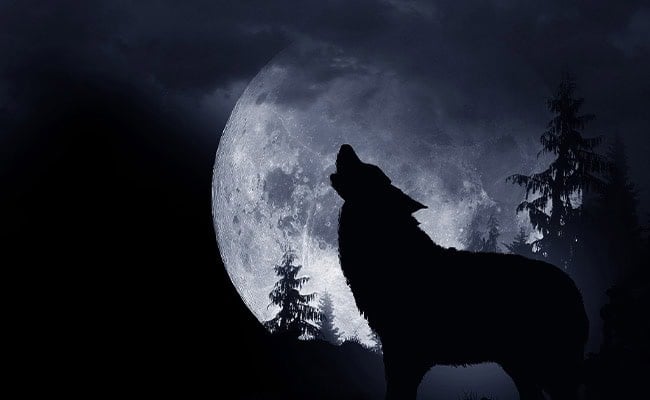
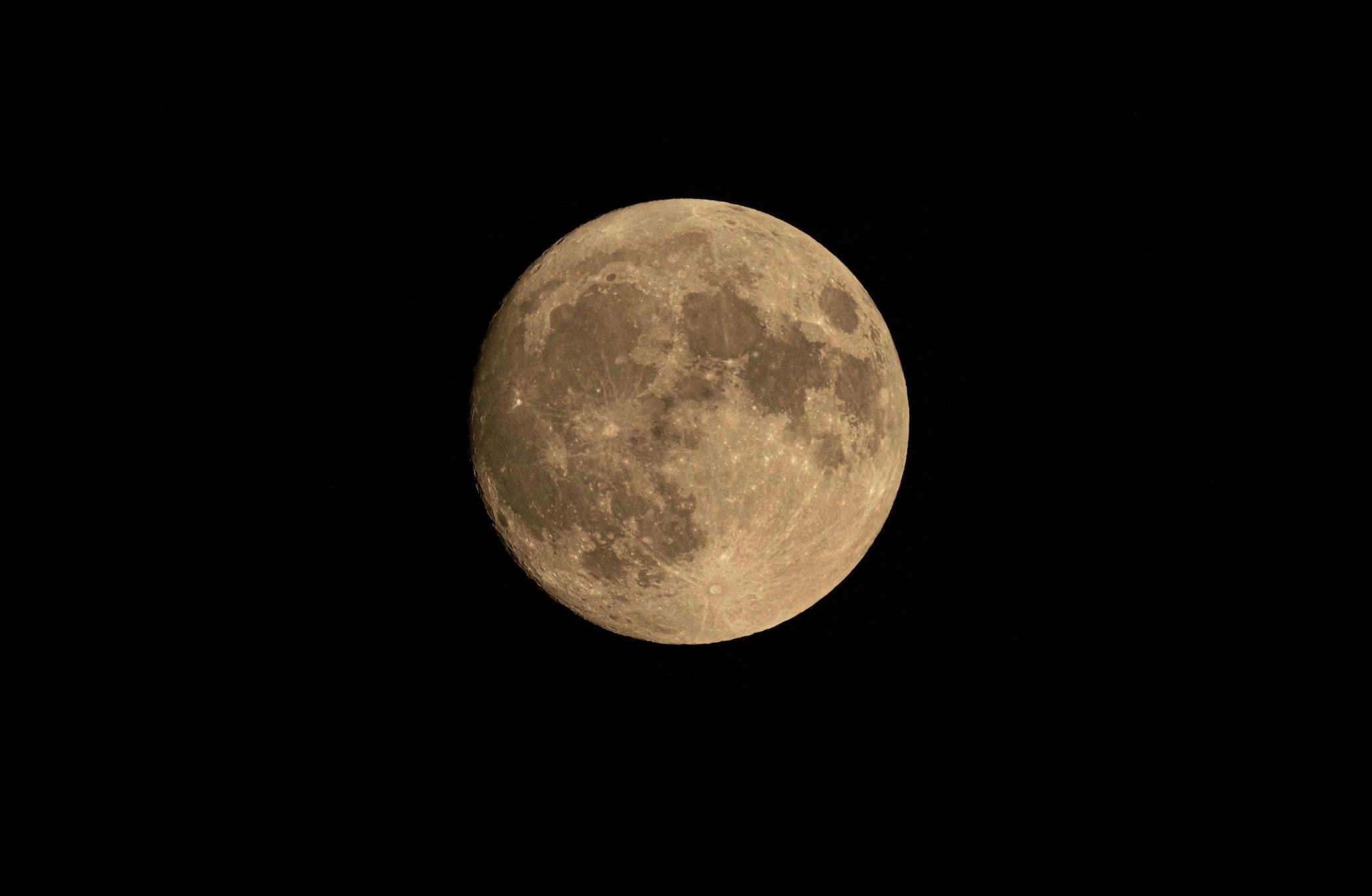
The Wolf Moon is a folklore name, not a feature of the Moon itself. The name comes from North American and European tradition: January’s full Moon was tied to the howling of hungry wolves heard near villages in the cold heart of winter, when prey was scarce and the packs ranged closer to settlements. The Moon looks the same off-white it always does, with the occasional warm tone near the horizon caused by atmosphere, not by the season. For the physics behind a full Moon, NASA’s plain-English explainer on Moon phases walks through the geometry: a full Moon happens when Earth sits between the Sun and Moon and the lunar face is fully lit.
A full Moon always sits in the sign opposite the Sun. In January, when the Sun is in Capricorn for most of the month and crosses into Aquarius around January 19 or 20, the Wolf Moon falls in either Cancer (opposite Capricorn) or Leo (opposite Aquarius), depending on the date. That Cancer to Capricorn or Leo to Aquarius axis is the lens the Almanac uses for the sign-by-sign notes below. See our companion guide to the January full Wolf Moon for the deeper folklore history, and the January birthstone piece for the other traditions tied to the first month of the year.
Wolf Moon Energy by Zodiac Sign
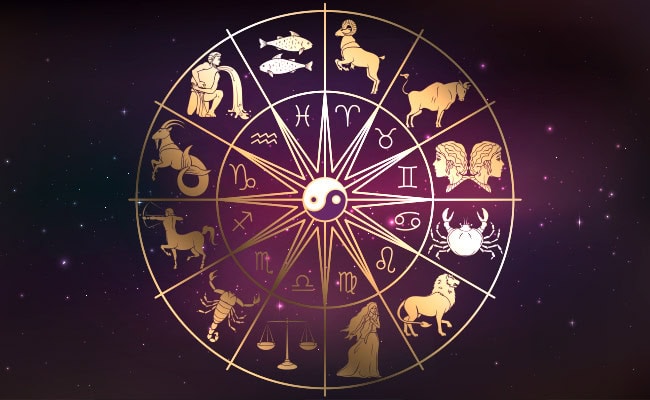
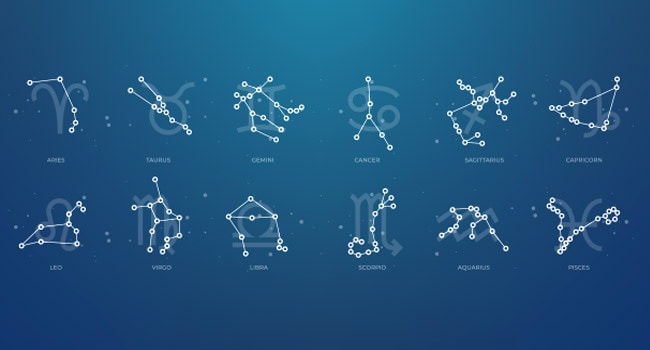
Here is the planning frame the Farmers’ Almanac uses for each zodiac sign during the week of the Wolf Moon. Find your birthday in the date ranges below to find your sign. Treat the notes as calendar prompts the Almanac would publish for any Best Days window: useful nudges to think about a topic, not predictions about outcomes. The themes hold whether the Wolf Moon falls in Cancer (the more common placement) or in Leo (which happens when the January full Moon lands after the 20th, as it did in 2024 and 2025 and will again in 2027 and 2029).
Aries: March 21 to April 19
The Wolf Moon traditionally lights up the household corner of your chart, Aries. The week of the January full Moon is a useful one to look at the home itself: a long-postponed repair, a room that needs rearranging, a family conversation that has been hovering. Romance and the home theme run in parallel, so the same window favors a slow evening with a partner. Creativity tied to the household, baking, woodworking, planning the spring garden, all land well.
Taurus: April 20 to May 20
The Wolf Moon traditionally spotlights communication for you, Taurus, layered on top of the home themes you already favor. The window is a useful one to focus on the household: spend an evening with family, host a small lively gathering, or make the call to the relative you have been meaning to ring. The January full Moon can also flag a move, a renovation, or a real-estate decision; if a paperwork step has been waiting, this is the week to put it on the calendar.
Gemini: May 21 to June 20
The Wolf Moon traditionally highlights money and resources for you, Gemini, with the kitchen-table angle on top: shared expenses, the household budget, the year’s savings plan. The week often brings a surge of activity in daily affairs: travel, visits to friends or siblings, a flurry of short errands. If you are involved in communication or contract work, this is a good window to debut a writing project or speaking date. Keep the budget review on the calendar alongside the launch.
Cancer: June 21 to July 22
The Wolf Moon often falls in your sign, Cancer, which makes it one of the most important full Moons on your calendar in any year it lands before January 20. You are in the spotlight and you can move matters in your favor more easily than at other times. This lunation tends to bring the fulfillment of a long-running personal goal, often involving a core relationship. Finances, income, and a possible raise or payout can turn up. If you have been weighing a job change, the Cancer Moon paired with the Capricorn Sun gives you both sides of the question on the same page.
Leo: July 23 to August 22
The Wolf Moon traditionally turns the lights down for you, Leo, which is unusual for a sign that runs hot most of the year. The week is a useful one to step back, rest, and review the past year before launching into the new one. If you are feeling burned out, treat the first weeks of January as a recovery window: a long sleep, a slow walk, a quiet evening. In years when the Wolf Moon lands in Leo itself (the late-January full Moons in 2027 and 2029), the spotlight comes back to you and a personal goal often crests.
Virgo: August 23 to September 22
The Wolf Moon traditionally spotlights your social life and your friendships, Virgo. The week often brings a major nudge toward your hopes, dreams, and long-term goals, with someone in your network opening a door. Plan the gathering, make the call, send the message that has been sitting in drafts. Old friends and new acquaintances both tend to surface in this window. (Please note: the Farmers’ Almanac does not offer medical or therapeutic advice; information shared is for educational purposes only.)
Libra: September 23 to October 22
The Wolf Moon traditionally marks a notable spot on your career ladder, Libra. With the Sun on the work side of your chart and the full Moon’s opposition pulling the home side in, a promotion, award, or favorable review can be on offer, or you may find yourself reaching for a new echelon entirely. If a job conversation has been on your calendar for early January, the Wolf Moon’s emphasis on long-term planning is in your favor. Pair the work decision with a household conversation before the week ends.
Scorpio: October 23 to November 21
The Wolf Moon traditionally nudges you to broaden the picture, Scorpio. The week often brings a strong pull toward personal and professional growth, with travel, academics, certifications, or international ties in the mix. If you are involved in publishing, media, legal work, or international business, those threads tend to take the lead. Sign up for the course, book the trip, make the unexpected call. When a career conversation lands during a Cancer Wolf Moon, it steers toward the household side rather than the office side.
Sagittarius: November 22 to December 21
The Wolf Moon traditionally brings the big-money lens to the calendar for you, Sagittarius. The January full Moon highlights assets, investments, settlements, inheritances, or a payout, often tied to a family member or the household. Assess the budget and the debts alongside the assets; the Almanac’s planting-by-the-Moon rule of “look at both sides before you commit” applies here as much as in the garden.
Capricorn: December 22 to January 19
The Wolf Moon traditionally falls opposite your Sun sign, Capricorn, so the week turns attention toward your closest partnerships. Look at where you stand with a spouse, a business partner, a co-parent, or anyone whose calendar runs alongside yours. The Cancer Moon is the classic week to make long-term plans, become official, set a wedding date, or seal a contract. The Capricorn season also keeps the career ladder in view; pair the partnership conversation with a quiet year-plan review.
Aquarius: January 20 to February 18
The Wolf Moon traditionally highlights your daily routine, your work, and your health, Aquarius. The kitchen-table emphasis of the Cancer Moon lands here as a nudge to focus on productivity and a sustainable pace: clear the inbox, finish the project that has been sliding, set a daily rhythm that fits the new year. The window is also useful for a health check-up or a fitness reset. (Please note: the Farmers’ Almanac does not offer medical advice; information shared is for educational purposes only.)
Pisces: February 19 to March 20
The Wolf Moon traditionally lights up the part of your chart that deals with romance, creativity, and play, Pisces. The week is a good one to plan a date night, sign up for the art class, or do something that makes you feel like a kid again. For couples, a shift around the heart’s desires can be apparent: a deeper commitment if you are aligned, a parting of ways if you are not. The week can also bring a major project to the finish line, or hand you a new one to start.
Other January Full Moon Names
Different traditions named January’s full Moon differently. Wolf Moon is the most common name in North American almanac usage, but the same lunation has carried several other folk names worth knowing:
- Old Moon, marking the Moon that closes the old year and opens the new.
- Moon After Yule, an Anglo-Saxon name tying the lunation to the Yule celebrations of late December.
- Ice Moon, named for the deep cold of the month across much of the Northern Hemisphere.
- Cold Moon, used in some traditions for January (and in others for December, which is why the Almanac prefers Wolf Moon for January to avoid the overlap).
- Spirit Moon, from several Indigenous traditions of the Great Lakes region.
For the longer story behind each name and the regional traditions they came from, see our companion piece on the full Wolf Moon.
Wolf Moon Folklore: An Honest Caveat
The Farmers’ Almanac has tracked the Moon’s zodiac sign as a planning tool for over 200 years. It is a calendar, not a fortune. The sign-by-sign notes above are folklore: they collect themes the Almanac has published for each sign during the January full Moon, paired with practical suggestions for how to use the week. Direct scientific evidence that a Cancer Moon causes household news, or that a Capricorn Sun causes career conversations, is limited. What the lunar cycle does do, every month, is mark a 29.5-day rhythm of light and gravity that the Almanac and many readers find useful for scheduling work, rest, planting, and Best Days. Use the Wolf Moon notes the way you would use any other tradition: as a prompt to think about a topic on a specific date, then decide for yourself what to act on. If you keep a planner, note what came up around the Wolf Moon week and check back in February; that is the Almanac’s preferred way to test a tradition.
Wolf Moon Gardening and Best Days
The Farmers’ Almanac has tracked Moon-sign planting for over two centuries. The week of the Wolf Moon falls in the waning portion of the lunar cycle once peak passes, which the Gardening by the Moon Calendar traditionally marks as the better window for root crops, bulb work, and any chore that benefits from drawing energy down rather than pushing it up. January is too cold for outdoor planting across most of the continental United States and all of Canada, so the Wolf Moon’s planting role is mostly indoors:
- Sort the seed packets for spring and order what is missing before the rush.
- Start onions, leeks, and shallots under lights in the waxing window before the Wolf Moon peaks.
- Work on root and bulb projects in the waning window after the Wolf Moon peaks.
- Pencil in last-frost dates for your region and count back to set indoor sowing dates.
- Prune dormant fruit trees on a clear, dry day in the waning window.
The Best Days Calendar applies the same logic to household tasks, from weaning livestock to cutting hair to mowing the lawn. Treat the Wolf Moon as the pivot point for the month: the waxing days before it favor starts and growth; the waning days after it favor finishes and cleanup.
How to See the Wolf Moon
The Wolf Moon needs no telescope and no binoculars. A clear sky, a low horizon, and a warm coat will do. Peak illumination times vary year to year (see the Quick Reference at the top of this page), but the Moon looks full to the naked eye for a full day on either side of peak. The brightest viewing window opens at moonrise the evening before peak and runs through moonset the following morning.
Best Viewing By Region
| Region | What to expect in January | Tip |
|---|---|---|
| Northeast and New England | Clear, dry nights behind a passing front are the best bet | Look east at moonrise, then let it climb |
| Southeast and Gulf | Mild and often clear, though coastal moisture can soften the edge | Coastal humidity blurs detail; move inland if you can |
| Midwest and Great Lakes | Cold, dry Canadian air gives some of the steadiest viewing in the country | Lake-effect cloud can shut the show down with little warning |
| Great Plains | Wide, low horizons and very little light pollution | Among the best viewing anywhere in North America. Wind is the main nuisance |
| Mountain West and Southwest | Thin, dry air at altitude gives exceptional clarity | Get above any valley inversion for the cleanest view |
| Pacific Northwest | Persistent overcast is the usual obstacle | Drive inland or uphill to get above the cloud deck |
| California and the Southwest deserts | Reliably clear skies through most of the season | Coastal fog is the only common spoiler; a few miles inland fixes it |
| Southern Canada | Very cold, very clear, and very steady when the sky opens | Northern latitudes see the Moon lower in summer and higher in winter than the US does |
Practical Tips
- Step outside about 20 minutes before sunset on Wolf Moon night to catch the Moon rising in the east.
- Let your eyes adjust for 5 to 10 minutes; the contrast between the bright Moon and dim winter twilight is striking.
- For photography, a phone in night mode works well for a wide scene. A DSLR at 1/125 second, f/8, ISO 200 holds detail on the lunar disc.
- The Moon looks largest near the horizon, an optical illusion that has fooled humans for centuries. Catch it then for the most dramatic photo.
- The Quadrantid meteor shower peaks the same first week of January every year, usually January 3 to 4; a bright Wolf Moon near that date will wash out fainter meteors. Plan dark-sky meteor watching for the last week of the month after the Moon has waned.
- Check moonrise and moonset for your location in our full Moon dates and times resource before heading out.


Wolf Moon FAQ
When is the next Wolf Moon?
The next Wolf Moon peaks on Saturday, January 3, 2026, at 5:03 a.m. Eastern Standard Time (2:03 a.m. Pacific, 10:03 UTC). Peak falls before sunrise across North America, so the brightest viewing window opens at moonrise on Friday evening, January 2, and runs through moonset on Saturday morning, January 3. For the five-year list, see the Quick Reference at the top of this page.
What zodiac sign is the Wolf Moon in?
The Wolf Moon falls in Cancer when the January full Moon lands before about January 20, and in Leo when it lands after that. A full Moon always sits in the sign opposite the Sun, and the Sun crosses from Capricorn into Aquarius around January 19 or 20. The Cancer to Capricorn axis is the classic home and work pairing; the Leo to Aquarius axis adds creative expression and community to the mix.
Why is January’s full Moon called the Wolf Moon?
The name comes from the howling of hungry wolves heard near villages in the cold heart of winter, when prey was scarce and the packs ranged closer to settlements. Other traditional January names include the Old Moon, the Moon After Yule, the Ice Moon, and the Spirit Moon.
Is the Wolf Moon a good time to plant?
January is too cold for outdoor planting across most of the continental United States and all of Canada, so the Wolf Moon’s planting role is mostly indoors. The Almanac’s Gardening by the Moon Calendar marks the waxing window before the Wolf Moon peaks for above-ground starts like onions and leeks under lights, and the waning window after the Wolf Moon peaks for root work and seed sorting. Check the regional frost dates first.
How does the Wolf Moon affect each zodiac sign?
The Wolf Moon’s Cancer or Leo placement emphasizes home, family, and the household for every sign in most years, with a counterweight of career, structure, and the year’s long plan from Capricorn or Aquarius on the Sun’s side. The full sign-by-sign planning notes are in the section above. Treat them as calendar prompts, not predictions.
Do I need a telescope to see the Wolf Moon?
No. The full Moon is easily visible to the naked eye. Step outside near moonrise, about 20 minutes before local sunset, on Wolf Moon night, and look east. A clear sky and a low horizon are all you need. A warm coat helps; early January is one of the coldest weeks of the year across most of North America.
Is “Wolf Moon Horoscope” the same as the Farmers’ Almanac Zodiac Calendar?
The Farmers’ Almanac uses the Moon’s zodiac sign as a planning calendar, not a fortune-telling tool. The Zodiac Calendar tracks the Moon’s sign every day of the year and is published alongside Best Days and Gardening by the Moon. Same source data, same 200-plus-year tradition; just a planning frame instead of a prediction frame.
FA Astrology
The Farmers’ Almanac is renowned for Best Days and Gardening by the Moon, calendars that draw insights from the positions of the Sun and Moon. Our Wolf Moon planning notes use the same source data: the Moon’s sign, the Sun’s sign, and the rhythm of the lunar cycle. Treat them as calendar prompts, not predictions.
We hope these Wolf Moon planning notes spark useful conversations with your household and partners in the first week of the year.
Do you have any questions? Let us know in the comments below!
Join The Discussion
What do you think of our Wolf Moon planning notes?
What is your zodiac sign?
Would you be interested in daily Best Days and zodiac planning notes by email?
Share your thoughts with your community here in the comments below …


Kyle Thomas
Kyle Thomas is an expert astrologer who writes for The New York Post, Cosmopolitan Magazine, Marie Claire, Elite Daily, Bustle,and more. He has been featured on Access Hollywood, E! Entertainment, NBC and ABC television. Kyle is globally recognized as a "celebrity astrologer" for his guidance of well known actors in Hollywood and prominent business executives, but he also loves sharing his comic insights with everyday people. His work explains how astrology influences lifestyle and trends worldwide. Learn more about him at KyleThomasAstrology.com.
- Kyle Thomas

- Kyle Thomas
- Kyle Thomas
- Kyle Thomas