Household Hints: Old-Fashioned Wisdom That Still Works
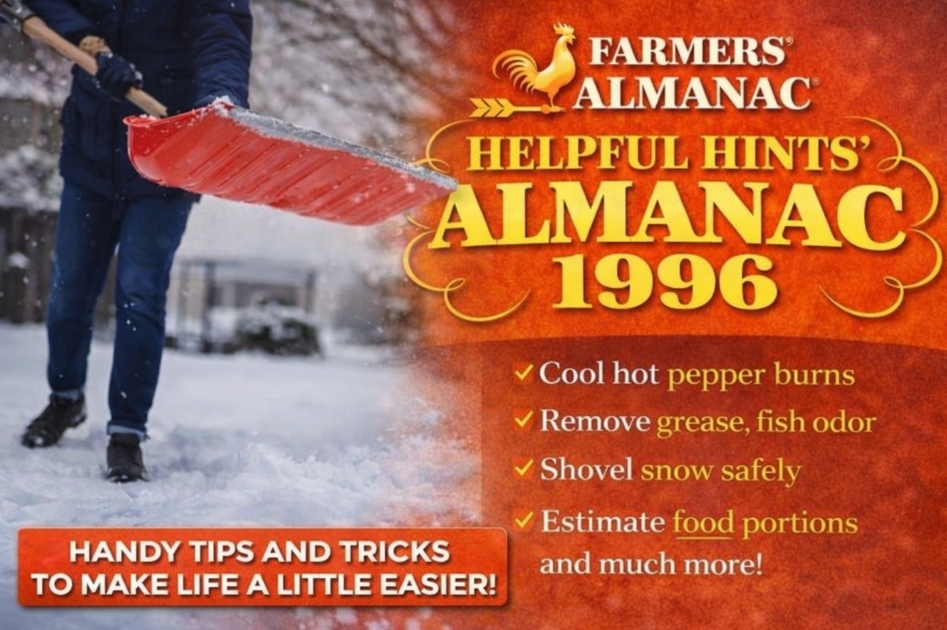
Quick Reference: Old-Fashioned Household Hints
- Cool a hot-pepper mouth: drink a cup of milk. The main protein washes the capsaicin away like a detergent.
- Scrub greasy hands: sprinkle sugar into your palms with any soap to lift grease and grime.
- Skim fat from soup: wrap two ice cubes in cheesecloth and glide them across the surface.
- Water a hanging plant without a mess: set a few ice cubes on the soil so it melts in slowly.
- Shovel snow safely: breathe out as you lift, never hold your breath and strain.
Before YouTube hacks, TikTok tips, and 47-step “life optimization” threads, there were little nuggets of wisdom tucked into the back pages of almanacs, community cookbooks, and church newsletters. These are the household hints your grandmother clipped out and taped inside a cabinet door, the kind that used ingredients already sitting in the kitchen.
This collection of Helpful Hints came straight from that era, the 1996 Farmers’ Almanac, when solutions were simple, the fix was already in your pantry, and nobody was trying to sell you a subscription box to solve your problems. From cooling your mouth after a rogue jalapeno to keeping crystal glasses chip-free, these tips are equal parts practical, clever, and charmingly low-tech.
Some are surprisingly useful. Some are delightfully random. All of them are a reminder that everyday life once ran on shared wisdom, not search algorithms. Here are the classic household hints that still hold up today.
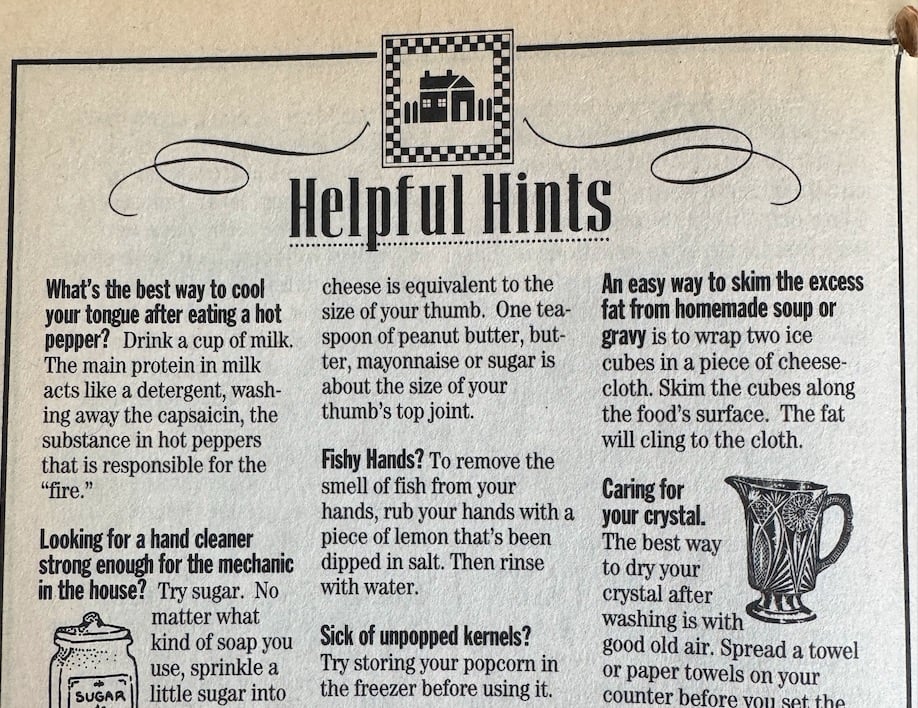
Household Hints from the 1996 Farmers’ Almanac
We have grouped the original hints two ways, the ones you will reach for in the kitchen and the ones for the rest of the house. Every tip is carried straight from the 1996 pages, just tidied up for the counter. For more pantry-shelf fixes, our roundup of the many uses for vinegar keeps the same spirit.
In the Kitchen
- Cool your tongue after a hot pepper. Drink a cup of milk. The main protein in milk acts like a detergent, washing away the capsaicin, the substance in hot peppers that causes the fire.
- Wash the fishy smell off your hands. Rub your hands with a piece of lemon dipped in salt, then rinse with water.
- Cut down on unpopped kernels. Store your popcorn in the freezer before you pop it.
- Make a cool, different drink. Add a few drops of vanilla to your iced coffee.
- Skim excess fat from homemade soup or gravy. Wrap two ice cubes in cheesecloth and skim them along the surface. The fat clings to the cloth.
Around the House
- Clean the mechanic’s hands. No matter what soap you use, sprinkle a little sugar into your palms to help scrub away grease and grime. Keep some in a shaker near the sink for easy access.
- Water a hanging plant without the overflow. Put a few ice cubes on top of the soil, not against the plant. As the ice melts, the water is absorbed slowly by the roots.
- Care for your crystal. Let crystal air-dry after washing. Spread a towel on the counter, place the glasses upright, and store them upright on their bases to help prevent chipped rims.
- Pack dishes for a move. Place a paper napkin between each dish when packing. The dishes stay protected, and the napkins are handy later.
- Shop yard sales and flea markets with a plan. Buy inexpensive serving spoons for potlucks, so if one disappears it is no big loss, and pick up pretty, affordable plates to give cakes away as gifts.

Measuring Food Portions by Hand
One of the most useful hints in the 1996 collection needs no measuring cups at all. Your own hand is a portion guide you always have with you, handy when you are dishing up dinner or eyeballing a serving away from home.
Why These Old Kitchen Tricks Actually Work
Part of the charm of these hints is that many hold up to a little science. The milk trick is the clearest example. Capsaicin, the compound that makes hot peppers burn, does not dissolve in water, which is why a glass of water only spreads the heat around. Milk carries a protein called casein that surrounds the capsaicin and lifts it off your tongue, the same reason a dairy-based sauce tames a spicy dish. You can read more about how capsaicin behaves if you are curious.
The sugar hand-scrub works on the same principle as a store-bought pumice soap. Sugar granules are a mild abrasive, so they give the soap something to grab grease with, then rinse clean away. The ice-cube watering trick is simply about slowing things down: a fast pour runs straight through a root-bound pot, while a slow melt gives thirsty roots time to drink. And the two ice cubes in cheesecloth skim fat because grease firms up the instant it touches something cold and clings to the cloth. For more everyday pantry fixes in the same vein, our guide to household uses for baking soda is worth a look.
Not every old hint is backed by a lab, and that is fine. Some are just good habits passed hand to hand. The point of a house full of these tricks is the same today as it was in 1996: reach for what you already own before you go buy a gadget. When your hint garden includes a houseplant or two, our Gardening by the Moon Calendar can help you time the watering and feeding to the best days of the month.

Safe Shoveling Tip
Not every hint in the 1996 Almanac was about the kitchen. One of the most important covered the driveway. When you are shoveling snow, dirt, or whatever the season sends, do not hold your breath and strain as you lift a shovelful. Holding your breath slows the blood flow to your heart. When the breath is released, blood pressure suddenly rebounds and becomes significantly elevated, which can create a dangerous heart overload. The correct way is to breathe out as you lift the shovel and toss the snow or dirt off to the side.
This is one piece of old wisdom that modern medicine takes seriously. The American Heart Association warns that shoveling snow can be hard on your heart, especially in cold air, and recommends pacing yourself, taking breaks, and pushing the snow rather than lifting it when you can. Warm up first, dress in layers, and stop right away if you feel chest pain or shortness of breath. If a hard winter is on the way for your area, our long-range weather forecast can help you plan the shoveling days before they arrive.

Household Hints: Frequently Asked Questions
Do these old household hints really work?
Many do, and several have real science behind them. Milk neutralizes the capsaicin from hot peppers, sugar acts as a mild abrasive for scrubbing grease, and cold ice cubes firm up fat so it clings to cheesecloth. Others are simply good habits that generations have found handy. Try the ones that fit your kitchen and keep what works for you.
Why does milk cool your mouth after a hot pepper better than water?
Capsaicin, the compound that makes peppers burn, does not dissolve in water, so a glass of water just spreads the heat. Milk contains a protein called casein that surrounds the capsaicin and washes it off your tongue, which is why a cup of milk brings faster relief than water.
How do you measure food portions with your hand?
Use your hand as a rough guide. One cup of cereal, spaghetti, or vegetables is about the size of your closed fist. Three ounces of meat, fish, or poultry matches your palm without fingers or thumb. One ounce of cheese is about the size of your thumb, and one teaspoon of butter or peanut butter is about the top joint of your thumb.
What is the safe way to shovel snow?
Breathe out as you lift each shovelful rather than holding your breath and straining, which can spike your blood pressure and overload your heart. Warm up first, pace yourself, push the snow instead of lifting when you can, and stop right away if you feel chest pain or shortness of breath.
How do you keep crystal glasses from chipping?
Let crystal air-dry instead of towel-drying. Spread a towel on the counter, set the glasses upright, and store them standing on their bases rather than rim-down. Keeping the delicate rims off the shelf is what helps prevent chips over time.
Where did these hints come from?
They were printed in the 1996 Farmers’ Almanac, part of a long tradition of practical tips shared in almanacs, community cookbooks, and church newsletters. They reflect an era when the fix was usually already in your kitchen, and most of them still hold up today.


- Farmers' Almanac Staff

- Farmers' Almanac Staff
- Farmers' Almanac Staff
- Farmers' Almanac Staff