How Ancient Farmers Used the Stars to Predict the Seasons (And How To Still Read Them Tonight)

Quick Reference
- Pleiades: the Seven Sisters. Their pre-dawn rise in late spring signalled harvest to ancient Greek farmers; their fall appearance still marks cooling weather across the Northern Hemisphere.
- Orion: the Hunter. When the belt climbs into the evening sky in October and November, winter is roughly six weeks out.
- Sirius: the Dog Star, brightest star in the night sky. Its pre-dawn rise in late July gave us the phrase Dog Days of Summer, per Hesiod’s Works and Days.
- Heliacal rising: the day a star first becomes visible on the eastern horizon just before sunrise; the anchor technique for every ancient stellar calendar.
- Modern equivalent: the National Weather Service climate normals plus Farmers Almanac Best Days now do what star risings once did; the sky is still a free backup.
- Practical takeaway: learn three stars (Pleiades, Orion, Sirius) and you have a seasonal calendar accurate to plus or minus one week without any device.
Long before smartphones, weather radar, and seven-day forecasts, farmers looked to a much older source of information: the night sky.
For thousands of years, people used the stars as a natural calendar. By watching when certain constellations appeared and disappeared, farmers knew when to plant crops, harvest fields, prepare for winter, and even anticipate seasonal weather changes.
While modern technology has transformed agriculture, many of the sky signs our ancestors relied on were surprisingly accurate. In fact, some of the same stars that guided farmers centuries ago still signal the changing seasons today. NASA’s Night Sky Network tracks these same risings for modern skywatchers, and a 2016 study in the Journal of Astronomical History and Heritage documented how Pleiades observations still correlate with regional planting windows across five continents.
So grab a blanket and look up. You’re about to discover how ancient farmers read the sky long before there were weather apps.

The Original Farmer’s Almanac Was Written in the Stars
Before printed almanacs became common, farmers depended on careful observation of nature. The length of the day, the behavior of animals, and the position of the stars all offered clues about what was coming next.
Because the stars rise and set at predictable times throughout the year, they provided one of the most reliable seasonal calendars available.
Unlike the weather, which can change from day to day, the stars followed a dependable schedule. Farmers who paid attention knew exactly what those celestial patterns meant. The astronomical term for what they were tracking is heliacal rising, the moment a star first becomes visible on the eastern horizon just before sunrise after weeks of being hidden by the Sun’s glare. That first sighting was the trigger. Different cultures anchored different agricultural steps to it, but the mechanic was the same across the world.
The Pleiades: The “Seven Sisters” That Helped Farmers Know When to Plant
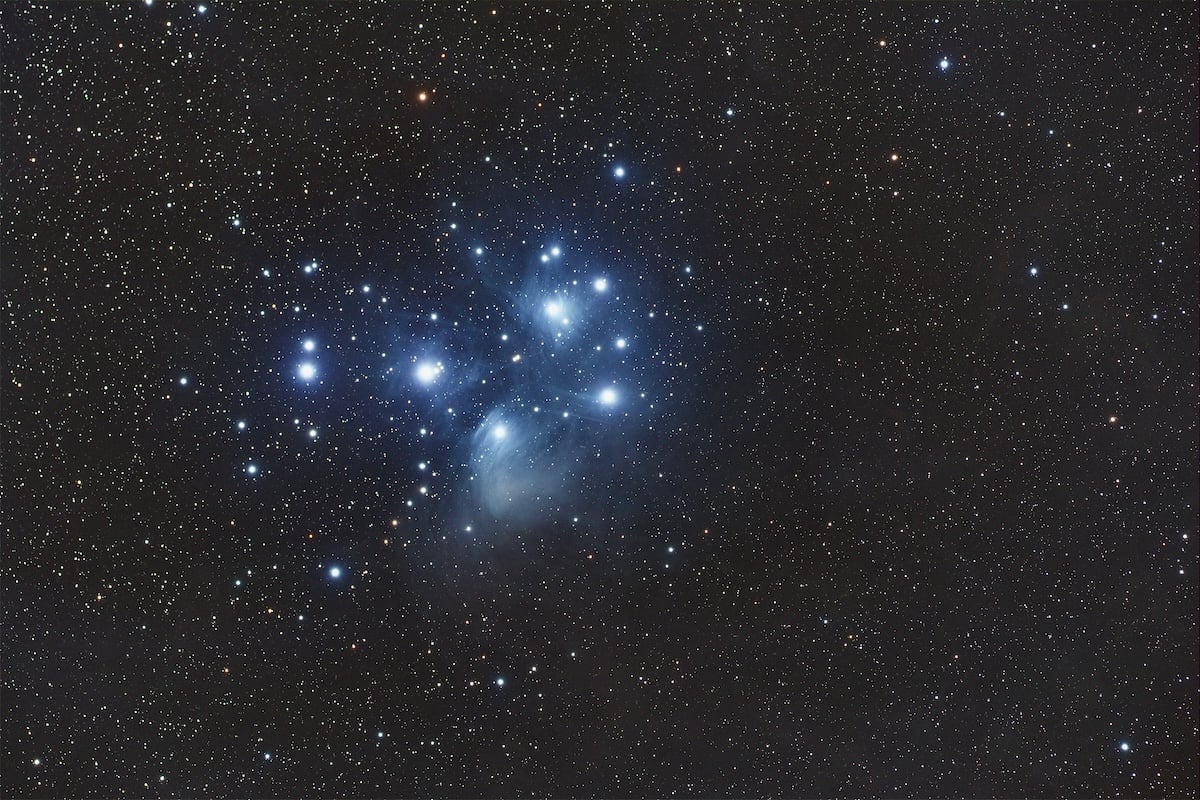
Among the most important star clusters in agricultural history is the Pleiades, often called the Seven Sisters.
This small cluster of bright stars appears in the constellation Taurus and is visible from much of the world.
For ancient Greek farmers, the appearance of the Pleiades before dawn signaled harvest time. Their disappearance later in the year indicated it was time to plow and prepare fields for the next growing season. The Greek poet Hesiod, writing around 700 BCE in Works and Days, tied specific field tasks to the cluster: “When the Pleiades, daughters of Atlas, are rising, begin your harvest, and your ploughing when they are setting.” That single instruction traveled the ancient Mediterranean and shaped farming calendars for a thousand years, well documented in the Encyclopedia Britannica summary of Hesiod’s calendar.
The Pleiades were equally important in many Indigenous traditions throughout North America. Different tribes associated the cluster with seasonal changes, ceremonial events, and agricultural activities.
Even today, the first appearance of the Pleiades in autumn reminds many skywatchers that cooler weather is on the way.
How to Find the Pleiades
Look toward the eastern sky on fall evenings. The cluster resembles a tiny dipper or a sparkling patch of diamonds. Under dark skies, most people can see six or seven stars without binoculars. The cluster sits about 14 degrees northwest of the bright red star Aldebaran; find Aldebaran first, then swing a fist-width up and to the right.
Orion: The Winter Warning Sign
Few constellations are easier to recognize than Orion the Hunter.
With its distinctive three-star belt, Orion has served as a seasonal marker for centuries.
When Orion begins appearing in the evening sky during autumn, it’s nature’s way of announcing that winter is approaching. Colonial farmers often viewed Orion’s return as a reminder to finish harvesting, stack firewood, and prepare livestock shelters before cold weather arrived. Betelgeuse, the red-orange star at Orion’s shoulder, was a common overwinter landmark; it sits 550 light-years away and pulses in brightness on a roughly 400-day cycle, per the American Association of Variable Star Observers.
Even modern stargazers know that when Orion dominates the night sky, winter isn’t far away.
A Farmer’s Rule of Thumb
See Orion rising after sunset?
It’s time to think about frost, freezing temperatures, and winter preparations. In practical terms, once Orion’s belt clears the eastern horizon by 8 p.m. in your longitude, first frost is typically 4 to 6 weeks out across the central United States.
Indigenous Astronomy: Reading More Than Just the Stars
Long before European settlers arrived, Indigenous peoples across North America developed sophisticated systems of sky observation.
For many tribes, astronomy was not separate from daily life. It was woven into agriculture, hunting, migration patterns, and cultural traditions.
The Pawnee were known for their extensive astronomical knowledge and mapped stars to specific earth lodges in their villages. The Cherokee associated certain celestial events with seasonal activities. Other nations used the appearance of stars and constellations to determine when crops should be planted, gathered, or stored. Anthropologist Ray A. Williamson’s 1984 book Living the Sky documents dozens of North American traditions in which Pleiades, Orion, or the Milky Way encoded the same seasonal cues we now assign to the Gregorian calendar.
These traditions reflected generations of careful observation and a deep understanding of the connection between the sky and the natural world.
Today, many researchers recognize Indigenous astronomy as an important source of environmental knowledge that combines science, culture, and practical experience.
Colonial Farmers and the Sky Lore They Brought to America
European settlers arrived with their own traditions of reading the heavens.
Many relied on almanacs, but they also watched the Moon, stars, and planets for clues about the seasons. Folk sayings connected celestial events to weather patterns, harvest prospects, and changing conditions. Robert B. Thomas launched the Old Farmer’s Almanac in 1792 with a math-based long-range weather formula rooted in solar activity, lunar cycles, and prevailing wind patterns. Ray Geiger picked up the same tradition for Farmers Almanac in Lewiston, Maine in 1934.
Some of these beliefs were based on superstition, while others reflected generations of accumulated observations.
The night sky served as both a calendar and a clock, helping farmers organize life in a world without modern forecasting tools.
Did Ancient Farmers Really Predict the Weather With the Stars?
Not exactly.
The stars did not tell farmers whether it would rain next Tuesday. Instead, they helped identify where they were in the seasonal cycle.
Modern science explains why these methods worked so well.
As Earth travels around the Sun, different stars and constellations become visible at different times of year. Their appearance is so predictable that farmers could use them to track the progression of the seasons with remarkable accuracy. The mechanic is called sidereal timekeeping. Earth rotates against the fixed stars in 23 hours 56 minutes, meaning a given star rises about 4 minutes earlier every night; that adds up to two hours a month, and the star maps repeat on a one-year cycle.
In other words, ancient farmers were not forecasting weather. They were reading a celestial calendar.
Sirius, the Dog Star, and the Dog Days of Summer
One star with a naming legacy that outlives its calendar role is Sirius, the brightest star in the night sky. When Sirius returns to the pre-dawn eastern sky in late July, it does so alongside the summer’s hottest weeks. Hesiod, Homer, and Roman writers wired the two together and coined the phrase we still use: Dog Days of Summer. The EarthSky primer on Sirius and the Dog Days unpacks the astronomy and mythology in one place.
The Ancient Egyptians tied the pre-dawn rising of Sirius to the annual Nile flood. Their farming calendar started on the day Sirius reappeared, an event so anchored in daily life it defined the Egyptian civil year for more than 3,000 years.
Modern Regional Star Calendars You Can Actually Use
Ancient calendars were regional, and so is the modern version. Here is a quick reference by rough North American zone.
- USDA Zones 3-5 (Upper Midwest, New England, Prairies): Orion rising after sunset in late September is your reliable frost-prep trigger; expect first frost in 5 to 7 weeks.
- Zones 6-7 (Mid-Atlantic, Ohio Valley, Pacific Northwest): Pleiades pre-dawn appearance in mid-August signals apple-harvest lead-in; Orion rising by 9 p.m. in late October flags the two-week window before first frost.
- Zones 8-9 (Southeast, Texas, coastal California, Southwest): Sirius rising with the sun in late July calls the peak heat; Orion returning to the evening sky in late November flags a mild first frost 4 to 6 weeks out.
- Zones 10-11 (South Florida, coastal Southern California, Hawaii): Pleiades sit near the zenith year-round; use the sun-star pairing of Regulus (Leo) in August to signal the transition from wet to dry season.
What Modern Farmers Can Still Learn From the Night Sky
Today’s farmers have access to sophisticated weather models, satellite imagery, and long-range forecasts. Yet there’s something valuable about understanding the natural signs that guided generations before us.
Observing the stars encourages us to pay attention to seasonal rhythms, changing daylight, and the cycles that shape life on Earth.
And let’s be honest, there’s a certain satisfaction in knowing that the same Pleiades and Orion we see today once guided farmers thousands of years ago. The Farmers Almanac long-range forecast still leans on solar activity and lunar cycles inside a math-based formula that has run for 200 years, so the astronomical thread never actually broke.
The Next Time You Look Up…
When you spot the Pleiades sparkling on an autumn evening or see Orion climbing above the horizon, you’re witnessing one of humanity’s oldest calendars in action.
Long before weather apps, smartphones, and digital forecasts, farmers trusted the stars to tell them what season was coming next.
And for countless generations, the sky never let them down.

Frequently Asked Questions
What is a heliacal rising?
The heliacal rising of a star is the day it first becomes visible on the eastern horizon just before sunrise after weeks of being hidden by the Sun’s glare. Ancient farmers anchored their seasonal calendars to those first sightings.
Which stars did ancient farmers track most?
The Pleiades cluster, Orion the Hunter, and Sirius (the Dog Star) are the three most widely referenced in Greek, Roman, Egyptian, and Indigenous North American records. Each marked a different agricultural phase.
When do the Pleiades appear in the fall?
In the Northern Hemisphere the Pleiades become visible in the eastern sky in the early evening from mid-October through winter. Their pre-dawn heliacal rising falls in mid-June, the ancient Greek harvest trigger.
How did Orion tell farmers winter was coming?
Orion returns to the evening sky in October and November. Once its three-star belt is visible after sunset, first frost is typically 4 to 6 weeks out across the central United States. Colonial farmers used the sighting to finish harvest and stack firewood.
Why is Sirius called the Dog Star?
Sirius sits in the constellation Canis Major, the Greater Dog. Its heliacal rising in late July coincided with the summer’s hottest weeks, giving us the phrase Dog Days of Summer used continuously since Hesiod’s Works and Days, around 700 BCE.
Did Native American tribes use the same stars?
Many did. The Pawnee mapped stars to their village lodges. The Cherokee tied celestial events to seasonal activities. Anthropologist Ray A. Williamson catalogued dozens of North American star calendars in his 1984 book Living the Sky.
Can I still use star risings to plan my garden?
Yes, roughly. Learn Pleiades, Orion, and Sirius, and you have a rough seasonal calendar accurate to plus or minus one week. Pair the sky check with a modern hard-data source like NOAA climate normals or the Farmers Almanac frost-date lookup for planting precision.
What replaced star-based calendars in modern farming?
Sidereal timekeeping was formalized into the Julian calendar (46 BCE), then the Gregorian calendar (1582 CE), and finally NOAA long-range forecasting. The Farmers Almanac math-based formula, running since 1818, still uses the astronomical inputs the ancient calendars did.

- Tim Konrad

- Tim Konrad
- Tim Konrad

- Tim Konrad