

How to Grow Onions: Sets, Seeds, or Transplants (Plus Day-Length Variety Matching)
Used in countless recipes and one of the best vegetables for long storage, onion are a great way to enjoy the fruits of your labor throughout the entire year.
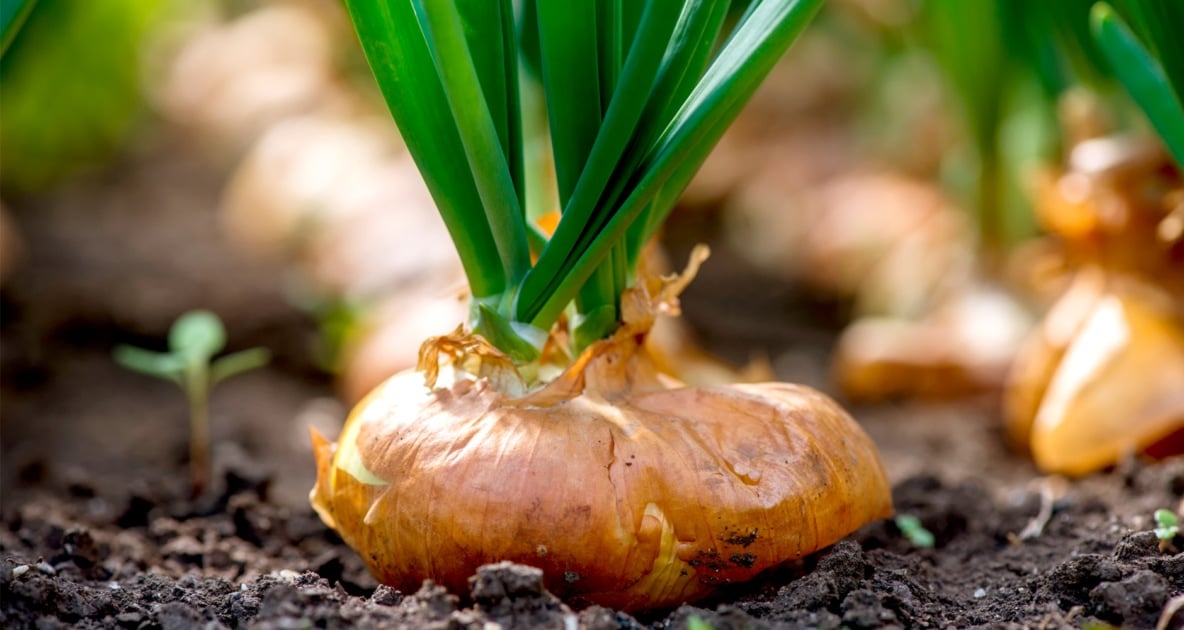
Quick Reference: Growing Onions
- Match day-length to your latitude. Short-day (Southern US), long-day (Northern US), day-neutral (anywhere).
- 3 starting methods: sets (easiest), seeds (cheapest), transplants (best yield).
- Sow seeds: indoors 10 to 14 weeks before last frost. Transplant when pencil-thick.
- Plant sets/transplants: 1 inch deep, 4 to 6 inches apart, in rows 12 to 18 inches apart.
- Tool: the Almanac’s Best Days calendar.
On this page
Related Almanac guides
Sources cited in this guide
Onions are one of the most-grown but least-understood home garden crops. The single biggest mistake home gardeners make is planting the wrong day-length variety for their latitude, which produces all leaves and tiny bulbs. This guide is how to match short-day, long-day, and day-neutral onion varieties to your USDA zone, the three starting methods (sets, seeds, transplants), and the harvest-and-cure method that determines storage life.
Day-Length: the Single Most Important Variable
Per UMN Extension and Texas A&M AgriLife Extension onion-growing research.
- Short-day onions. Form bulbs when daylight reaches 10 to 12 hours. Best for the southern US (zones 7+). Varieties: Texas Grano, Red Burgundy.
- Long-day onions. Form bulbs when daylight reaches 14 to 16 hours. Best for the northern US (zones 6 and below). Varieties: Yellow Sweet Spanish, Walla Walla, Red Wing.
- Day-neutral (intermediate). Form bulbs at 12 to 14 hours. Works anywhere; central US is the sweet spot. Varieties: Candy, Super Star.
- The mistake. Plant short-day in the north or long-day in the south and the plant produces all leaves and tiny bulbs because the daylight cue never triggers proper bulb formation.
Sets vs Seeds vs Transplants
Per UMN Extension growing onions guidance.
- Sets (small bulbs). Easiest method. Plant directly outdoors. Limited variety selection. Average yields.
- Seeds. Cheapest. Most variety selection. Slowest (10 to 14 weeks indoors before transplant).
- Transplants. Best yields. Buy bundles of pencil-thick transplants from a seed catalog (Dixondale Farms is the most-cited supplier). 30+ varieties available.
How to Plant Onions (Detail)
Below are the original detailed sections on planting onions and tips.
How To Plant Onions
Start: Onions can be started from seeds or from sets (small bulbs). Seeds can be direct sown or started indoors 8-12 weeks before the last frost. Plant ¼” deep in seed starting mix and set in a sunny window or under grow lights. After danger of frost, onions should be transplanted 3-4” apart in rows 1-2’ apart. Be sure to harden off onion plants in a sheltered area for one week before planting. Onion sets should be planted after any danger of frost. Plant by simply pressing onion sets into the soil until they are just covered, 3-4” apart in rows 1-2’ apart.
Water: Ample water is important at all stages of growth, but especially critical during bulb development. A soaking of 1” of rain or water a week is required in well-drained soil.
Soil: Prepare soil by working organic matter 6-8” deep and removing stones. Onions prefer well-drained soil. pH 6.0-7.0
Light: Full sun.
Fertilize: Onions are heavy feeders. Work a balanced fertilizer into the soil prior to planting, then continue with an all-purpose, balanced fertilizer as recommended, or side-dress with a balanced fertilizer after six weeks.
Harvest: About 100 days after sowing, when ¼ or so of the leaves have fallen over yellow, bend the tops over. After a few days, pull the bulbs and leave them in the garden, covered by the foliage, for up to a week to dry. Then move onions to a warm, dry place with good air circulation for 2-3 weeks to cure.
Notes: Be sure to plant onions suited to your area of the country. Onions come in long day, short day, and intermediate day varieties.
Onion Tips
10 Good Reasons To Save Those Onion and Garlic Skins


Growing Onions FAQ
What is the difference between short-day and long-day onions?
Short-day onions form bulbs at 10 to 12 hours of daylight; long-day at 14 to 16 hours. Match the variety to your latitude. Short-day for the southern US (zone 7 south); long-day for the northern US (zone 6 north). Day-neutral works anywhere.
When should I plant onions?
Sets and transplants: early spring, as soon as soil can be worked. Seeds indoors: 10 to 14 weeks before last frost. The earlier you plant onions, the more leaves they grow before bulb formation, and the bigger the eventual bulb.
How do you know when onions are ready to harvest?
The tops fall over and start to dry. Loosen soil with a fork, leave the bulbs in place for 2 to 3 dry sunny days to start curing. Then harvest. Cure further in a dry well-ventilated location for 2 to 3 weeks before storage.
How do you store onions?
Cool (35 to 55 F), dry, dark, well-ventilated. Mesh bags or shallow crates. Sweet varieties (Vidalia, Walla Walla) keep 1 to 2 months. Strong storage varieties (yellow Globe, Copra) keep 4 to 8 months.
Why are my onions small?
Three common causes. Wrong day-length variety for your latitude (most common). Planted too late in spring (limited leaf growth before bulb formation). Insufficient nitrogen or water during early growth. The day-length issue accounts for most cases.


This article was published by the Staff at FarmersAlmanac.com. Any questions? Contact us at [email protected].
- Farmers' Almanac Staff

- Farmers' Almanac Staff

- Farmers' Almanac Staff

- Farmers' Almanac Staff


what kind of fertilizer do i use for onion seys?
the fertilizer u have to use is nay go man so. Your Welcome
its dudehair on the line