Buck Moon 2026: July Full Moon Date, Names, Astronomy, and Zodiac
Quick Reference
- Buck Moon 2026: Wednesday, July 29, 2026
- Peak illumination: 10:36 a.m. Eastern Time (14:36 UTC)
- Rule: the first full Moon of July is the Buck Moon
- Other names: Thunder Moon, Hay Moon, Mead Moon, Salmon Moon
- Best viewing: Wednesday night, July 29, into Thursday morning, July 30
- Zodiac sign: Aquarius (Sun in Leo, full Moon opposite in Aquarius)
- Why “Buck”: July is when whitetail bucks carry their fastest-growing antlers, still soft in velvet
The Buck Moon, July’s full Moon, peaks on Wednesday, July 29, 2026, at 10:36 a.m. Eastern Time (14:36 UTC). It is named for the soft, fast-growing antlers carried by whitetail bucks at the height of summer, and shows up in older almanac entries under several other names: the Thunder Moon, the Hay Moon, the Mead Moon, and the Salmon Moon. This guide gives you the exact date and time, the folklore behind every name, what is happening in the rest of the July sky, the zodiac planning notes for the Buck Moon week, and how to step outside and see it for yourself.
When Is the Buck Moon 2026?
Full Buck Moon, July 2026: Wednesday, July 29
Peak illumination: 10:36 a.m. Eastern Time (14:36 UTC)
Moon sign: Aquarius
Sun sign: Leo
The Moon reaches full phase at the same instant everywhere on Earth, so the clock shifts by time zone: 9:36 a.m. Central, 8:36 a.m. Mountain, 7:36 a.m. Pacific, and 14:36 UTC for readers across the Atlantic. Peak falls during daylight hours across North America, which means the Moon will already be below the horizon at the moment of true full phase. Plan on a viewing window the night of Wednesday, July 29, looking southeast after sunset, and again the night of Thursday, July 30. The disc looks full to the naked eye for about a day on either side of peak.
The rule is simple: the first full Moon of July is the Buck Moon. We confirmed the 2026 date and time against the U.S. Naval Observatory’s 2026 lunar phase tables, which list every full Moon, new Moon, and quarter for the year to the minute. For the full list of 2026 Full Moon names, dates, and times, see our calendar.
Why It’s Called the Buck Moon
By the second half of July, male whitetail deer are carrying the fastest-growing antlers of the year. The bone is still soft, wrapped in the fuzzy skin called velvet, and the rack will not harden until late summer. Algonquin-speaking nations across the Northeast and Great Lakes tied the July full Moon to that growth, and early American hunters and almanac keepers picked up the name. “Buck Moon” stuck because it was useful: one glance at the calendar told you where the deer were in their year, and where you were in yours.
It is the brand’s favorite kind of folklore. A real animal, a real season, a name you can remember, and a date you can plan around. No fortune-telling required.
Other July Full Moon Names
The Buck Moon is the most common name in American almanacs, but it is not the only one. July is a busy month for nature, and the full Moon picked up a different label everywhere people watched it.
- Thunder Moon. July is the peak month for afternoon thunderstorms across most of the United States. Warm, humid air rises through the day, towering cumulus builds into thunderheads by late afternoon, and the storms roll through near sunset. The name credits the sky for what it actually does in July.
- Hay Moon. July is hay-cutting season across the Northeast and the Great Lakes. The first cutting comes off in late June, the second goes down in July, and farmers traditionally watched the full Moon to time mowing, raking, and curing.
- Mead Moon. An older English name. Mead is honey wine, fermented through the summer, and the July full Moon marked the brewing season. The name still surfaces in British folk almanacs.
- Salmon Moon. Used by some Pacific Northwest nations to mark the return of salmon runs through coastal rivers. The name is a planning prompt, not a forecast: when the Moon is full in July, the fish are moving.
Different cultures, same Moon, same week. The Almanac has used all of these names interchangeably across two centuries of full-Moon coverage; we lead with Buck Moon because it is the one most readers recognize.
The Buck Moon’s Astronomy
Here is one fact worth sitting with: the Buck Moon often rides low across the southern sky in the Northern Hemisphere. That is the opposite of June’s Strawberry Moon (which sits a little higher) and of the winter full Moons (which arc high overhead). The Sun is near its summer-solstice high, and the full Moon, which sits opposite the Sun on the sky, tracks low to balance it. For viewers in mid-northern latitudes, that means the Buck Moon often hangs not far above the horizon all night.
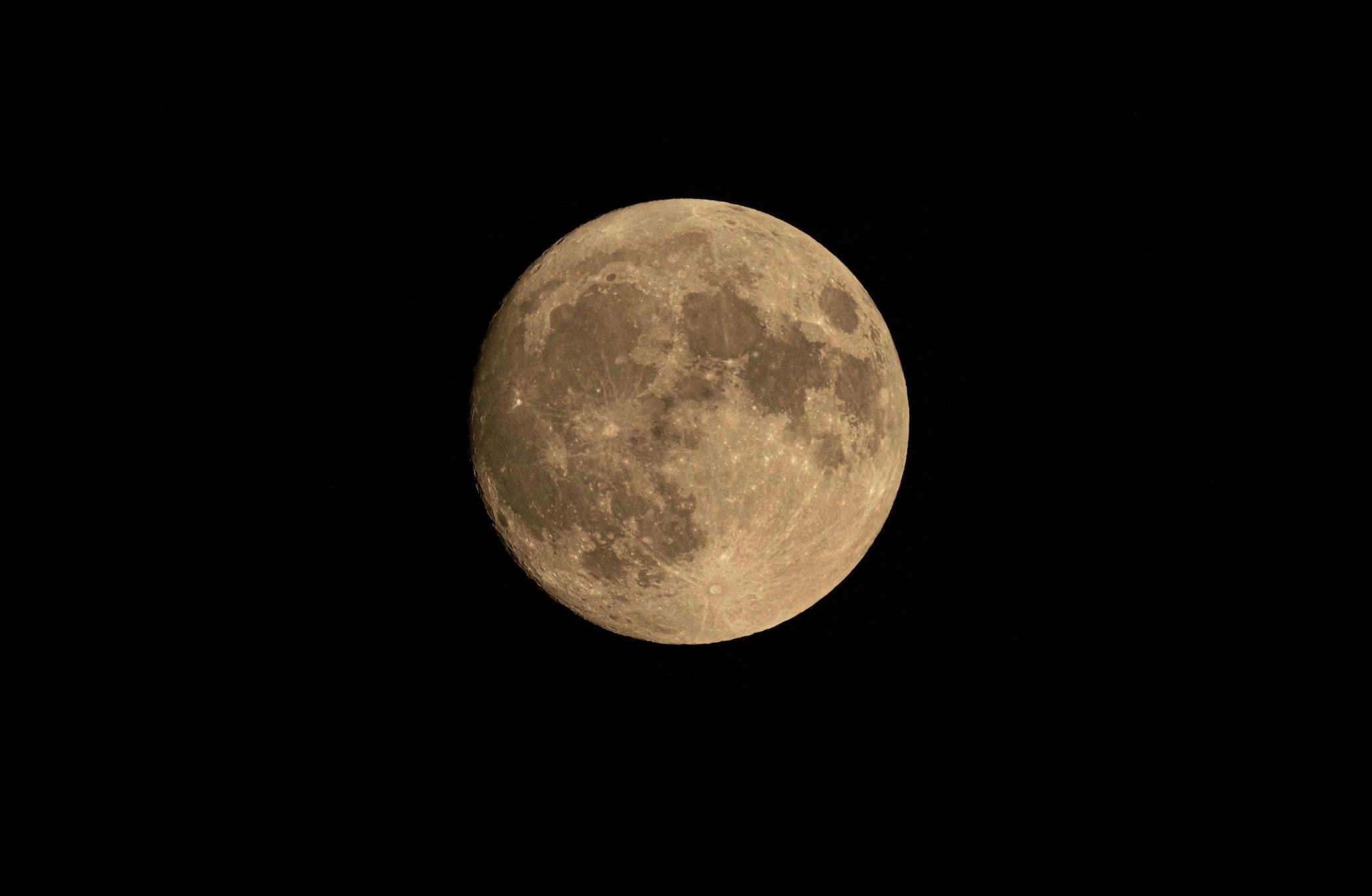
Low and large is part of the appeal. Near the horizon, the Moon looks bigger than it is (an optical illusion that has fooled people for centuries), and the warm summer atmosphere often tints it amber or honey-gold at moonrise.
July also brings aphelion: the day when Earth sits at its farthest point from the Sun in its yearly orbit. In 2026, aphelion falls on or about July 4. The distance is roughly 3% greater than at perihelion in January, which is too small a swing to drive the seasons (the Northern Hemisphere is having its warmest stretch despite being farther from the Sun). The reason is that Earth’s axial tilt does the heavy lifting, not its distance. Aphelion is the kind of fact the brand likes because it gently corrects a common assumption.
July Sky Highlights
The Buck Moon is the headline, but July’s sky has more on offer. Plan a porch chair, a clear southern view, and a small printed list of what to look for.
- Mars sits low in the western sky after sunset through July, fading as it moves away from Earth in its yearly chase around the Sun. Catch it early in the month while it is still visible.
- Jupiter climbs into the morning sky, rising before dawn and showing up as the brightest point in the east. A small pair of binoculars resolves four moons in a line across its disc.
- Saturn rises late in the evening and is well placed for viewing through the second half of July. Its rings are angled gently this year, still a fine sight in even a backyard telescope.
- Delta Aquariid meteor shower peaks the night of July 28 into July 29, 2026, the same week as the Buck Moon. Expect 15 to 20 meteors per hour from a dark site under good conditions. The bright full Moon will wash out the fainter ones, so plan on the brightest streaks only, or wait for the second peak in early August once the Moon has waned.
- The Milky Way arch is at its summer best in July. From a dark-sky site away from city light, the southern half of the galaxy stretches from horizon to horizon after midnight. The brightest, densest core is in Sagittarius, low in the south.
One more planning note: July sunsets are still late across most of the Lower 48 (after 8:30 p.m. in the Northeast, after 9 p.m. in the Pacific Northwest), so true darkness arrives late. If you have kids, plan moonrise viewing first, then push the meteor watch to after their bedtime.
Buck Moon Astrology and Zodiac Planning
One honest caveat first. The zodiac is a planning calendar, not a fortune. Direct scientific evidence that the position of the Moon decides your week is limited, and the brand has never asked you to take it on that level. What follows is the same Sun-and-Moon framework the Almanac has used since 1818 to time Best Days, gardening, and seasonal work, applied here to the Buck Moon week of July 27 to August 2, 2026. Take what is useful, leave what is not.
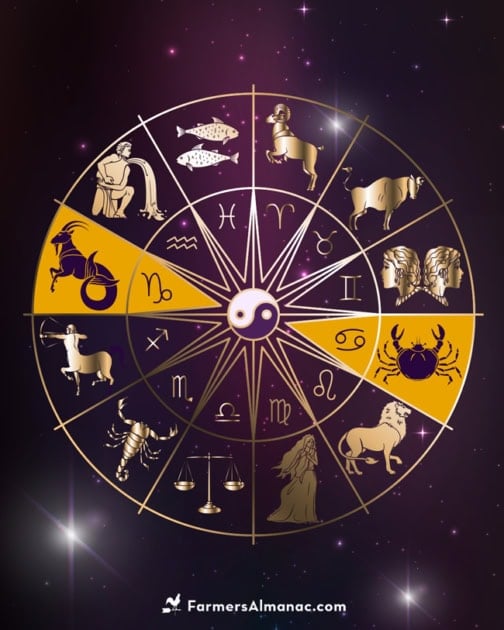
The Buck Moon reaches peak illumination in Aquarius on Wednesday, July 29, 2026, at 10:36 a.m. Eastern, 7:36 a.m. Pacific, and 14:36 UTC. During this stretch of the year, the Sun travels through Leo (July 23 to August 22). When the Sun sits in Leo, the full Moon always falls in Aquarius. The illustration below shows the wheel itself; the 2026 polarity is Leo to Aquarius.
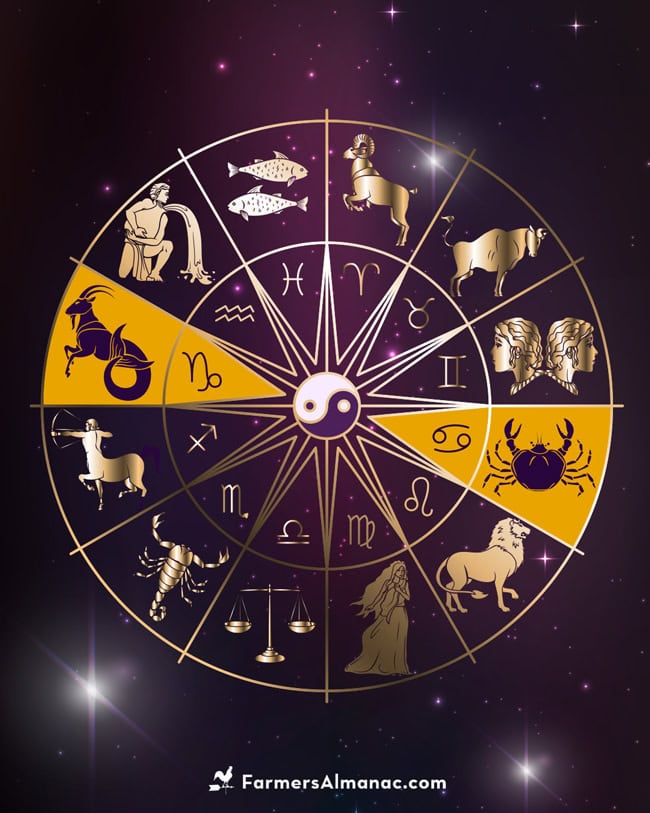
Aquarius is a Fixed Air sign, the wheel’s reminder to step back and look at the whole group: the community, the long horizon, the systems we share. The Leo to Aquarius axis pulls attention between the bright stage of personal expression and the quieter work of belonging to a larger circle. Where Leo lights up the individual, family hearth, and creative voice, Aquarius brings the friend group, the cause, and the long view of what comes after this season. Expect those themes in your own week.
Mars Supports Momentum
The Buck Moon sits in a workable angle to Mars, the planet of drive and action. Use the week to channel steady effort, courage, and follow-through, not bursts of impulse. The same energy that powered the 2025 Buck Moon (a positive Mars trine that lifted confidence and outdoor activity) returns in 2026 as quieter momentum: less sprint, more sustained pace. Personal relationships, work projects, and outdoor plans all benefit from this current if you carry it through past the full Moon itself.
Saturn Brings Common Sense
Saturn, the traditional ruler of Aquarius, anchors the 2026 Buck Moon week. Expect a stronger pull toward good changes for the long term than toward dramatic gestures, even with Leo season in full swing. Saturn’s working relationships with Uranus, Pluto, and Neptune through 2026 keep that theme intact: transformation through patience, imagination paired with realism, and one practical decision at a time. Saturn squaring Jupiter still asks you to pivot on long-term goals; staying practical in the pursuit tends to invite the kind of luck the brand has been describing since 1818.
Big shifts, in society and in our own lives, may surface near this lunation. Most show up as small, dated choices, not headlines.
Any questions? Contact [email protected]
Buck Moon Zodiac Calendar by Sign
Here is a planning guide for how the Buck Moon week of July 27 to August 2, 2026 may land on each zodiac sign, written as suggested activities and Best Days framing rather than fortune-telling. Find your birthday in the date ranges below to read your sign.
Planning note: Look back to the situations, plans, and conversations that came after the new Moon in Aquarius on February 17, 2026. Threads you started six months ago may come back for one more pass.
ARIES (March 21 to April 19)
The Buck Moon lights up your friend circle and the wider community you belong to, Aries. Good week to host the cookout, finalize the group trip, or back the cause you have been quietly supporting. A long-term goal you set in February returns for a second look. If a friendship needs an honest conversation, the energy is there to start it.
TAURUS (April 20 to May 20)
Career and public life take center stage for you, Taurus. A project, title, or recognition that has been simmering can come to a head the week of July 29. Use the Buck Moon to wrap up a piece of work, send the proposal, or accept the offer you have already decided is right. Keep one eye on home and family while the spotlight is on the office.
GEMINI (May 21 to June 20)
The Buck Moon opens up travel, learning, and the bigger picture, Gemini. Good week to book the trip, sign up for the class, or publish the piece of writing you have been polishing. A long-distance contact may surface with news. If you have been weighing a move or a new course of study, this lunation gives you a clearer view of the long horizon.
CANCER (June 21 to July 22)
Wealth, shared resources, and quiet financial decisions move to the front for you, Cancer. Use the Buck Moon week to finalize a loan, settle a bill, sign the estate paperwork, or close out a joint account. A bonus, settlement, or unexpected refund is possible. Intimacy and trust in your closest relationship also benefit from one honest conversation, the kind you have been postponing.
If you are looking for the right professional to bring in (accountant, financial planner, contractor), keep your eyes open through the week.
LEO (July 23 to August 22)
This is your full Moon, Leo. The Buck Moon falls opposite your Sun and turns the light squarely on your closest one-to-one relationships, personal and professional. Good week to renew vows, sign a partnership contract, finalize a business deal, or have the conversation you have been circling for months. What you decide here often shapes the rest of your year.
VIRGO (August 23 to September 22)
Daily routines, work, and health take the spotlight for you, Virgo. Use the Buck Moon to finish the project, wrap the work cycle, schedule the long-overdue appointment, or reset the daily habit. A workplace shift is possible: a new role, a new colleague, or a project ending. Small adjustments to your routine in this week tend to hold all the way to fall.
LIBRA (September 23 to October 22)
The Buck Moon turns up your creative life, your love life, and your time with children, Libra. Good week to host the dinner, take the date out, share the art project you have been hiding, or play with your kids without a schedule. If you are single and ready, this lunation is one of the better mingling windows of the year. If you have been working on a creative piece, ship it.
SCORPIO (October 23 to November 21)
Home, family, and your living space anchor the week for you, Scorpio. Good time to host loved ones, finish a renovation, list the house, or commit to the move you have been mulling. A family conversation that has been hanging in the air may finally come to a head. The work you do on the home base this week tends to settle the next several months.
SAGITTARIUS (November 22 to December 21)
Communications, short trips, and neighborhood matters move to the front for you, Sagittarius. Good week to ship the piece of writing, finalize a contract, sit down with a sibling, or finish a local errand list you have been carrying for weeks. A conversation that started in February may come back for one more round. Keep the calendar honest; small daily windows are where this lunation pays off.
CAPRICORN (December 22 to January 19)
Income, possessions, and personal values come into focus for you, Capricorn. Use the Buck Moon to ask for the raise, list the side project for sale, close out a money habit, or recommit to the budget. An expense or income stream may end near this week; treat it as a planning prompt, not a setback. Important relationships often pull alongside this work; honor the people who have been steady with you.
AQUARIUS (January 20 to February 18)
The Buck Moon is in your sign, Aquarius, and the spotlight is on you. Good week to step into a personal goal, declare a new direction, change the look, or finally launch the thing you have been quietly building. A significant personal or professional milestone is in reach. The choices you make this week often define how the rest of your year reads.
PISCES (February 19 to March 20)
Embrace a slower pace, Pisces. The Buck Moon falls in your quiet, reflective zone, and this is a favorable week to step back, rest, sort old paperwork, journal, or close out a long chapter. Use the time to clear the stage of anyone or anything that has just been creating clutter. An old friend or a thread from spring may resurface, sometimes as a gift, sometimes as a door closing. Either way, the rest you take now sets up the next active stretch.
Folklore and Weather Lore for July
Old almanac weather lore for July leans on two ideas: the Buck Moon is a turning point for the second half of summer, and the storms of the Thunder Moon are a planning signal, not a punishment. As always, treat these as memory aids, not forecasts. The math-based long-range forecast is the brand’s actual planning tool; the lore is the part you tell at the porch.
- “If the Buck Moon rises clear, expect a fair stretch to follow.” A folk reading of a stable high-pressure system the night of the full Moon. Often holds for a few days, sometimes not.
- “A ring around the Moon means rain by morning.” Reliable enough to be repeated. The ring is light bent through high cirrus clouds, which often arrive ahead of a frontal system.
- “Thunder in July, hay in the mow.” The Thunder Moon’s afternoon storms are also the storms that build the soil moisture for the second hay cutting. Lore that names the trade-off.
- “July dry, August wet.” A long-range balancing rule from old almanac entries. Modern climate data only weakly supports it, but the saying still surfaces because it makes farmers plan ahead for both ends.
The honest caveat: direct scientific support for these rules is uneven. We keep them because they are the working memory of two centuries of farmers, and because they pair well with the dated, math-based long-range forecast the brand has published since 1818.
Gardening and Best Days for July
July is a working month in the garden. The spring planting is in, the summer harvest is underway, and the timing of small jobs (weeding, pruning, mowing, transplanting) is what separates a good year from a thin one. The Almanac’s Best Days Calendar and Gardening by the Moon tools both lean on the Sun-and-Moon framework above.
- Plant above-ground crops on the waxing Moon (early July, before the Buck Moon). Lettuce, beans, summer squash, and cucumbers respond.
- Plant root crops and bulbs on the waning Moon (after July 29, through the first week of August). Carrots, beets, garlic, and onions go in.
- Mow lawns on the waning Moon to slow regrowth, or on the waxing Moon to encourage thick fill.
- Harvest for storage in the last quarter, after the Buck Moon, when sap has pulled back and produce keeps longer.
- Prune to discourage growth on the waning Moon. Prune to encourage growth on the waxing Moon.
Best Days for specific tasks (canning, jam-making, weaning, painting, setting fence posts) are listed by exact date in the full Almanac. The framework is the same one Sandi Duncan, Philom., and Editor Peter Geiger refined across thirty years of editorial work, now in the hands of editor Tim Konrad.
How to See the Buck Moon in 2026
The Buck Moon is easy to find. Peak phase falls during daylight in North America (10:36 a.m. Eastern), so the best viewing is the night before and the night of: Wednesday, July 29, after sunset, looking southeast for moonrise, and Thursday, July 30, when the Moon still reads as full. No telescope, no binoculars, no app required. A clear southern view of the horizon and a porch or a field will do.
Best Viewing by Region
| Region | What to expect on the night of the full Moon |
|---|---|
| Northeast and New England | Humid haze near the horizon, so the Moon reddens as it rises |
| Southeast and Gulf | Afternoon storms usually clear by late evening. Look after 10 p.m. |
| Midwest and Great Lakes | Often the cleanest horizons of the month. Move away from lake haze |
| Great Plains | Wide, low horizons and little light pollution. Among the best in the country |
| Desert Southwest | Dry air and sharp detail, though monsoon cloud is possible in late summer |
| Pacific Northwest | Coastal marine layer. Drive inland or uphill to get above it |
Practical Tips
- Step outside 20 to 30 minutes before sunset on Wednesday, July 29, to watch moonrise low in the east-southeast.
- Let your eyes adjust for 5 to 10 minutes; the Buck Moon often shows a warm amber tint at the horizon before lifting to silver-white.
- For photography, a phone in night mode handles the wide scene; a DSLR at 1/125 second, f/8, ISO 200 will hold detail on the disc itself.
- The Moon looks largest near the horizon, an optical illusion that has fooled people for centuries. Catch it then for the most dramatic photo.
- Check local moonrise and moonset for your zip code in our Moon Phases Calendar before heading out.
FA Zodiac Calendar
Farmers’ Almanac Best Days and Gardening by the Moon calendars are built on the celestial positions of the Sun and Moon. The Zodiac Calendar treats those positions as a planning tool, not a fortune. The Buck Moon notes above follow the same approach: name the lunation, name the sign, and turn it into a date you can plan around.
For a longer view of the Sun-and-Moon framework the brand has been using since 1818, see the Kyle Thomas zodiac-by-sign overviews that informed prior Buck Moon coverage on this site. Happy Buck Moon.

Buck Moon 2026 FAQ
When is the Buck Moon in 2026?
The Buck Moon peaks on Wednesday, July 29, 2026, at 10:36 a.m. Eastern Time (14:36 UTC). Peak falls during daylight across North America, so the best viewing window is Wednesday night, July 29, after sunset, and Thursday night, July 30.
Why is the July full Moon called the Buck Moon?
By the second half of July, male whitetail deer carry the fastest-growing antlers of the year, still soft and wrapped in velvet. Algonquin-speaking nations and early American almanac keepers named the July full Moon after that growth. Other traditional July names include the Thunder Moon, the Hay Moon, the Mead Moon, and the Salmon Moon.
What is the Thunder Moon?
The Thunder Moon is another traditional name for July’s full Moon, credited to the season’s peak afternoon thunderstorms across most of the United States. Warm humid air, towering cumulus, and late-day downpours are common through July, especially east of the Rockies.
Why does the Buck Moon ride low in the sky?
Because the Sun is near its summer-solstice high in the Northern Hemisphere, and the full Moon (which sits opposite the Sun on the sky) tracks low to balance it. For viewers in mid-northern latitudes, the Buck Moon often hangs not far above the horizon all night, the opposite of June’s Strawberry Moon and the winter full Moons that arc high overhead.
What zodiac sign is the Buck Moon 2026 in?
The 2026 Buck Moon falls in Aquarius. The Sun is in Leo through late July (Leo runs July 23 to August 22), and every full Moon falls in the sign opposite the Sun. That makes the 2026 polarity Leo to Aquarius. Treat the per-sign notes as a planning calendar, not a fortune.
What is aphelion and when does it happen?
Aphelion is the day each year when Earth sits at its farthest point from the Sun in its orbit. In 2026, aphelion falls on or about July 4. The distance is roughly 3% greater than at perihelion in January, too small a swing to drive the seasons. Earth’s axial tilt does that work.
What else is in the July 2026 sky?
Mars sits low in the west after sunset early in the month. Jupiter rises before dawn in the east. Saturn rises late in the evening and is well placed through the second half of July. The Delta Aquariid meteor shower peaks the night of July 28 into July 29, the same week as the Buck Moon. The Milky Way arch is at its summer best.
What full Moon comes after the Buck Moon?
The Sturgeon Moon, August’s full Moon, peaks on Friday, August 28, 2026, at 12:18 a.m. Eastern (04:18 UTC). See our Full Moon Calendar for every 2026 date and time.
Join the Discussion
What did you think of this Buck Moon guide?
Share your thoughts and questions in the comments.


Kyle Thomas
Kyle Thomas is an expert astrologer who writes for The New York Post, Cosmopolitan Magazine, Marie Claire, Elite Daily, Bustle, and more. He has been featured on Access Hollywood, E! Entertainment, NBC and ABC television. Kyle is globally recognized as a "celebrity astrologer" for his guidance of well known actors in Hollywood and prominent business executives, but he also loves sharing his comic insights with everyday people. His work explains how astrology influences lifestyle and trends worldwide. Learn more about him at KyleThomasAstrology.com.

This article was published by the Staff at FarmersAlmanac.com. Any questions? Contact us at [email protected].
-
Farmers' Almanac Staff

-
Farmers' Almanac Staff

-
Farmers' Almanac Staff

-
Farmers' Almanac Staff