Look Up October 27: The Moon Will Visit the Seven Sisters

There’s a special meeting taking place in the night sky on Tuesday, October 27, and you won’t need a telescope to know where to look.
The Moon will pass close to the Pleiades, a beautiful little cluster of stars better known as the Seven Sisters. In some locations, the Moon will even slip directly in front of several stars, briefly hiding them from view.
It’s a chance to spot one of the night sky’s most famous star clusters, with our bright Moon showing the way.
When and Where to Look on October 27
According to NASA’s October 2026 skywatching guide, the Moon will pass near the Seven Sisters on the night of October 27 into the morning of October 28.
For observers across much of the United States, the evening of October 27 is the time to watch.
Start looking toward the eastern sky after the Moon has risen. As the evening progresses, the Moon and star cluster will climb higher, making them easier to spot above trees and buildings.
Around 9:30 p.m. Eastern Daylight Time, the Moon and Pleiades will be especially close as seen from Earth, although the exact appearance and timing depend on your location.
One important detail: The Moon will be only about a day past full, so its glare may make the smaller, fainter stars difficult to see. Binoculars will be especially helpful.
If you’re watching from an area with a clear eastern horizon and reasonably clear skies, look for a compact grouping of stars near the Moon. Depending on your location, you may see the Moon beside the cluster or passing across part of it.
What Are the Seven Sisters?
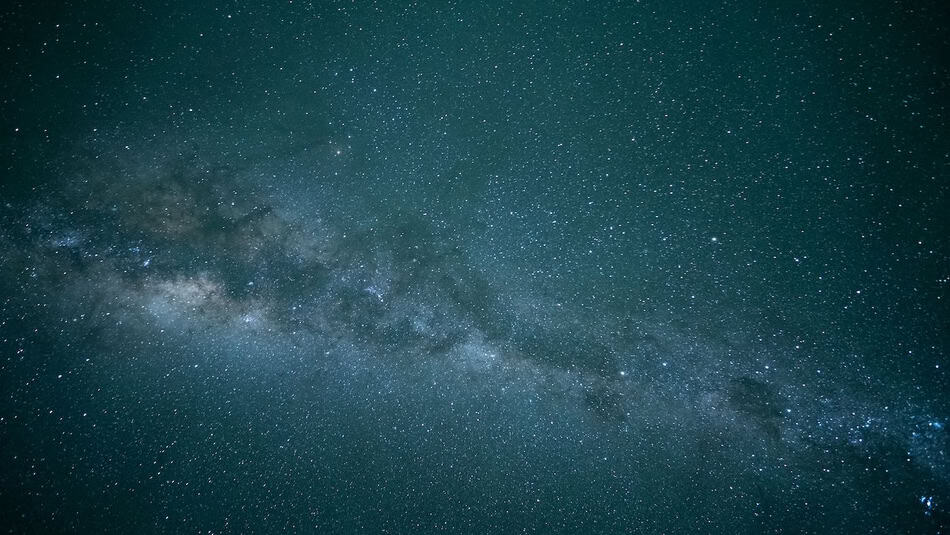
The Seven Sisters, also known as the Pleiades or Messier 45, are a group of stars in the constellation Taurus, the Bull.
At first glance, they look like a tiny dipper or a little sparkling patch of stars.
Despite the name, most people can distinguish about six or seven stars with the unaided eye under good conditions. The cluster actually contains many more stars than that.
According to NASA’s research on the Pleiades, the cluster lies roughly 440 light-years from Earth.
That means the light reaching your eyes from these stars tonight began traveling toward us approximately 440 years ago.
Unlike a constellation, whose stars may lie at widely different distances, the Pleiades is a real group of stars associated with one another in space.
It’s also one of the most recognizable star clusters in the night sky, visible during autumn and winter evenings in the Northern Hemisphere.
Why Are They Called the Seven Sisters?
Long before astronomers studied the Pleiades with telescopes, people around the world recognized this little cluster and told stories about it.
In Greek mythology, the Seven Sisters were the daughters of Atlas and Pleione. Their names were Maia, Electra, Taygete, Alcyone, Celaeno, Sterope, and Merope.
According to the traditional story, the sisters were transformed into stars. Variations of the myth describe their connection to Orion, the great hunter, who appears in a neighboring part of the sky.
But Greek mythology is only one chapter of the cluster’s long cultural history.
Many cultures developed their own stories and traditions associated with these stars. Their seasonal appearances also served as useful markers in ancient calendars and agricultural life.
For generations of skywatchers, the Pleiades were far more than a pretty collection of stars.
Will the Moon Actually Cover the Seven Sisters?
For some observers, yes.
When the Moon passes directly in front of a distant star from our viewpoint, astronomers call the event a lunar occultation.
The Moon doesn’t actually reach the star, of course. It simply moves across our line of sight, briefly blocking the star’s light.
During the October 27–28 encounter, observers in parts of North America and elsewhere may see individual Pleiades stars disappear behind the Moon and later reappear.
Where you live matters. Some locations will have a favorable view of an occultation, while others will see the Moon passing close to the cluster without covering its brighter stars.
The nearly full Moon will also make the event challenging to observe. If you’re hoping to watch individual stars disappear, binoculars or a telescope may be necessary.
But you don’t have to witness an occultation to enjoy the encounter. Simply finding the Seven Sisters beside the Moon is a lovely introduction to one of autumn’s best-known celestial sights.
A Little Stargazing Tip
If you have binoculars, bring them outside on October 27.
The Pleiades are especially attractive through binoculars because their wider field of view makes it easier to appreciate the cluster’s compact pattern.
You may find that the Moon’s glare is distracting, so try looking carefully around its bright edge rather than expecting a dramatic field of glittering stars.
And if the weather doesn’t cooperate, don’t worry. The Seven Sisters remain visible on many clear autumn and winter evenings. In fact, they’ll be easier to appreciate when the Moon isn’t shining so brightly nearby.
Still, there’s something charming about seeing the Moon make its way past a group of stars that has fascinated people for thousands of years.
On October 27, take a few minutes to step outside and look east. The Moon will be easy to find, and nearby, the Seven Sisters will be waiting.

- Maggie Konrad

- Maggie Konrad
- Maggie Konrad
- Maggie Konrad