What Do You Call the Night Before Halloween? Your Answer May Reveal Where You Grew Up
The night before Halloween has many names—and a history that once had nothing to do with October. Explore the regional roots of Mischief Night.
Ask someone what they call the night before Halloween, and their answer might reveal where they grew up.
In New York and New Jersey, it’s often Mischief Night. In parts of New England, you may hear Cabbage Night. Around Detroit, generations knew it as Devil’s Night. Others remember Goosey Night or Gate Night.
And for plenty of Americans, October 30 has never had a special name at all.
So where did this unusual tradition come from, and where is it still recognized? The history of Mischief Night takes us from English springtime customs to American neighborhood pranks—and includes a surprising change of season.
What Is Mischief Night?
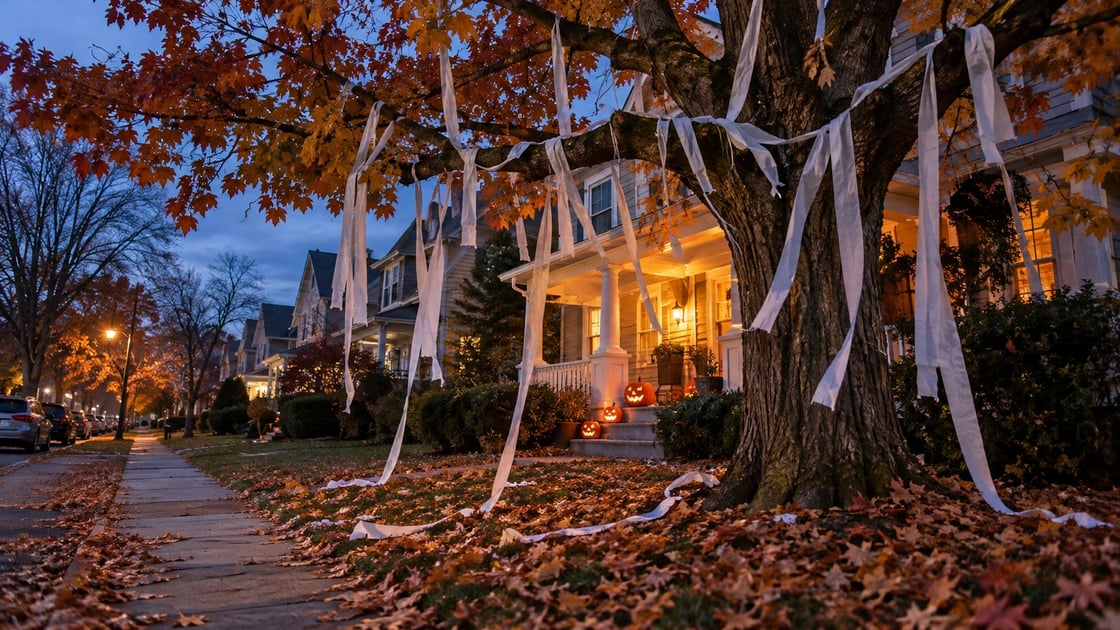
Mischief Night is an informal tradition associated with pranks on October 30, the evening before Halloween. Historically, children and teenagers marked the occasion with tricks such as ringing doorbells and running away, soaping windows, moving outdoor furniture, or draping trees with toilet paper.
Some antics were remembered as neighborhood nuisances. Others crossed into vandalism and caused real harm.
Unlike Halloween, Mischief Night never became a nationwide celebration. It remained a patchwork of local customs, often passed from older children to younger ones.
Smithsonian folklorist James Deutsch recalls growing up near Newark, New Jersey, where Mischief Night was part of the community’s folklore in the 1960s. Children knew the tradition even when no one could explain exactly how it began.

When Is Mischief Night?
In American communities that recognize it, Mischief Night falls on October 30 each year. In 2026, that is Friday, the evening before Halloween.
But the date has not always been the same everywhere.
In parts of northern England, particularly Yorkshire, the tradition has been associated with November 4, the evening before Bonfire Night. Earlier English accounts place it on April 30, the night before May Day.
That springtime connection is one of the most unexpected details in Mischief Night’s history.
The Origins of Mischief Night: A Springtime Tradition
Long before Mischief Night became associated with jack-o’-lanterns and fallen leaves, an English version belonged to the arrival of May.
Writing in BBC History Magazine, Chris and Karen Allen describe accounts from the 1790s in Lancashire that place Mischief Night on May Eve. Young people used the occasion for disruptive pranks, including disturbing fences and setting livestock loose.
Later records place the custom on November 4, before Bonfire Night.
Why did the mischief move six months across the calendar? The answer is uncertain. The Allens suggest that urbanization may have weakened the connection to rural May celebrations, encouraging young people to attach their traditions to another festive evening.
These accounts establish Mischief Night’s English roots, but they do not identify a single inventor or a precise starting date. Like many folk traditions, it developed through local habits repeated over generations.

How Mischief Night Became Part of Halloween
British mischief customs became part of North America’s broader Halloween traditions, although their journey from one community to another is difficult to trace.
By the early 20th century, American newspapers were documenting October 30 pranks under familiar regional names.
Language historian David Wilton cites a Pennsylvania newspaper published on October 31, 1924, that described the previous evening as Mischief Night. The same issue used Devil’s Night in a report about nearby Eddystone.
Even then, neighboring communities did not necessarily agree on what to call the occasion.
Where Is Mischief Night Still Recognized?
New Jersey remains a place where the name is actively used. Local announcements still refer to October 30 as Mischief Night, sometimes alongside reminders about youth curfews.
For example, North Brunswick’s 2026 announcement identifies October 30 as Mischief Night and sets an 8 p.m. curfew for children under 18. Voorhees Police also issued a 2026 Mischief Night notice, with a 9 p.m. curfew for those 17 and younger.
Those notices demonstrate that the name remains part of local life, even as communities work to discourage destructive behavior.
Elsewhere, the tradition’s names survive in regional vocabulary and family memories. The boundaries overlap, and usage can change from town to town.
| Regional name | Places historically associated with it |
|---|---|
| Mischief Night | New Jersey and southeastern Pennsylvania |
| Cabbage Night | Parts of the Northeast and Great Lakes region, including Cincinnati |
| Goosey Night | Northern New Jersey and New York City |
| Devil’s Night | Especially Detroit and southeastern Michigan |
| Gate Night | Scattered northern communities, including southeastern New York |
These names describe regional traditions rather than universal participation. Someone may recognize the name without ever having taken part.
Why Is It Called Cabbage Night?
Cabbage Night has a connection to the garden: cabbages were among the objects carried and thrown during autumn mischief.
Wilton documents an 1861 newspaper reference from Trenton, New Jersey, that described boys carrying cabbages and called Halloween itself Cabbage Night.
That historical detail reveals how fluid these traditions could be. An old reference to Cabbage Night does not necessarily mean October 30.
The meaning of Goosey Night is less certain. Although “goose” and “goosey” have older associations with foolishness, the origin of the evening’s name remains unclear.
Devil’s Night in Detroit: A More Serious History
Detroit’s Devil’s Night developed a history far removed from nostalgic tales of doorbell pranks.
According to the Detroit Historical Society, the occasion became increasingly dangerous during the early 1980s as arson devastated properties and threatened residents.
Detroit recorded more than 800 fires during its three-day Halloween period in 1984. That figure covers the broader holiday period, rather than October 30 alone.
Residents, volunteers, and city agencies worked to reverse the destruction. The Angels’ Night effort became a prominent part of that response, with volunteers watching neighborhoods and reporting suspicious activity.
By 2018, Detroit was shifting its focus toward Halloween in the D, with family activities at police precincts, fire stations, recreation centers, and other community locations.
The city’s story became one of neighbors working together to reclaim Halloween for their children.
Keeping the Fun in the Night Before Halloween
For many families, the appeal of the evening before Halloween is the anticipation: pumpkins on the steps, leaves rustling along the sidewalk, and costumes waiting for their big night.
There are plenty of ways to enjoy that feeling without leaving a neighbor with damage or a cleanup bill. Carve pumpkins together, exchange spooky stories, organize a neighborhood scavenger hunt, or surprise a willing friend with a small Halloween treat.
Whatever you call October 30, its regional names offer a glimpse into the customs people carry with them long after childhood.
Did you grow up with Mischief Night, Cabbage Night, Goosey Night—or another name entirely? Share what you called it and where you grew up in the comments!


- Farmers' Almanac Staff

- Farmers' Almanac Staff
- Farmers' Almanac Staff
- Farmers' Almanac Staff