The One Fall Yard Cleanup Job You Should NOT Do Until Spring
Before you clean up your garden this fall, put down the pruners. Leaving certain stems, seed heads, and leaves can help birds, bees, butterflies, and other wildlife survive winter.

Before you cut every dead flower and perennial to the ground this fall, put down the pruners. What looks like a messy garden could be helping birds, bees, butterflies, and other wildlife survive the winter.
There’s something satisfying about a perfectly cleaned-up yard in fall.
The leaves are raked. The garden beds are cleared. Every brown flower stalk gets cut down.
But there’s one common fall cleanup job you may be better off putting off until spring:
Don’t cut down all of your perennial flowers, grasses, and dried plant stems.
Those dead-looking plants may still have an important job to do.
Standing stems can shelter overwintering insects. Dried flower heads can provide seeds for birds. Fallen leaves can protect caterpillars, chrysalises, beetles, and other small creatures through the coldest months.
The goal isn’t to let your entire yard become overgrown.
It’s to leave some of the right things alone.
Quick Answer: What Should You Leave Standing in Fall?
If the plants are healthy, consider leaving some:
- Coneflowers
- Black-eyed Susans
- Asters
- Goldenrod
- Bee balm
- Joe-Pye weed
- Sunflowers
- Liatris
- Coreopsis
- Native ornamental grasses
- Hollow or pithy perennial stems
You can still remove diseased plants, rotting fruit, invasive weeds, and anything blocking walkways.
Think of it as selective cleanup, not no cleanup at all.
Why Dead Plant Stems Matter in Winter
To us, a dried flower stalk may look finished.
To an insect, it can look like an apartment building.
Many native insects spend winter tucked inside stems, leaf litter, bark, brush piles, or other protected places.
The Xerces Society recommends leaving stems, leaves, flower heads, and other natural material in parts of the landscape because many insects overwinter right where they lived during the growing season.
Some native bees also use hollow or pithy stems for nesting.
That means cutting every stem to the ground, shredding it, and hauling it away in October can remove habitat before its occupants have a chance to emerge in spring.
Those Dead Flowers Can Become Bird Feeders
You may also want to leave the seed heads.
Coneflowers, black-eyed Susans, asters, sunflowers, goldenrod, and other plants continue producing value long after their flowers fade.
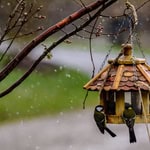
Their seeds can become winter food for:
- Goldfinches
- Sparrows
- Chickadees
- Juncos
- Other seed-eating birds
This fits with a broader fall bird-friendly approach. Farmers’ Almanac already recommends leaving some seed heads, fallen leaves, berries, and native plants in place rather than making every corner of the yard perfectly clean.
Related: When Should You Stop Feeding Birds in Fall?
A dried coneflower covered in snow may not look like much to us.
To a hungry goldfinch, it can be lunch.
Don’t Rake Every Leaf Out of Your Garden Beds, Either
The same thinking applies to fallen leaves.
A thick mat of wet leaves should not be left smothering your lawn.
But leaves beneath shrubs, trees, and perennial beds can provide valuable winter habitat.
Farmers’ Almanac recommends a simple approach:
Mulch some. Move some. Compost some. Leave some.
That means you can remove excess leaves from turf while relocating some of them into garden beds or less-manicured corners of the yard.
Related: Should I Leave Fallen Leaves on My Lawn? Here’s What You Should Really Do
Leaf litter can shelter insects at multiple life stages, including eggs, caterpillars, pupae, and adults.
Those insects also become food for birds.
So that “messy” patch under your shrubs may actually be one of the busiest winter habitats in your yard.
What SHOULD You Clean Up This Fall?
Leaving habitat does not mean ignoring the entire yard.
Some material should still go.
Remove Diseased Plants
If a perennial, vegetable plant, or shrub suffered from a serious disease, remove affected material.
Diseased debris can sometimes harbor pathogens that return the following year.
Farmers’ Almanac recommends removing diseased and heavily infested plant material as part of fall garden cleanup.
Related: The Fall Garden Checklist: 6 Things to Do Before the First Hard Freeze
Pick Up Rotting Fruit
Remove fallen apples, pears, tomatoes, pumpkins, and other rotting fruit.
They can attract pests and help some diseases persist.
Remove Mature Weeds
Pull invasive weeds and plants carrying mature seeds before they have a chance to spread.
Keep Walkways Clear
Wet leaves can become slippery.
Clear:
- Steps
- Sidewalks
- Driveways
- Decks
- Patios
- Frequently used paths
Move suitable healthy leaves into garden beds rather than automatically bagging them.
What About Your Lawn?
Your lawn is different from a perennial bed.
A heavy blanket of whole leaves can block sunlight and airflow and may smother the grass beneath.
For light to moderate leaf cover, mowing over the leaves can break them into smaller pieces.
For heavier accumulations, move the excess elsewhere.
Farmers’ Almanac has a complete guide here:
7 Leaf-Raking Hacks That Make Fall Cleanup Easier
And if you’re wondering whether it’s time to put the mower away:
When Should You Stop Mowing Your Lawn? State-by-State Guide
The simplest rule is to keep mowing while your grass is still actively growing.
Try the “Tidy Edges, Wild Middle” Approach
If you don’t like the appearance of an untidy garden, there’s an easy compromise.
Keep the most visible parts neat.
Trim along:
- Sidewalks
- Driveways
- The front edge of garden beds
- Patios
- Lawn borders
Then leave more natural material deeper inside the beds.
That way, the garden looks intentional without removing every possible source of winter habitat.
A useful way to think about it:
Don’t make your yard messy. Make it strategically messy.
When Should You Cut Everything Back?
Spring is usually the better time to tackle many of those dead perennial stems.
But don’t necessarily attack the garden on the first warm afternoon of the year.
Some overwintering insects may still be inside the stems or beneath leaves.
Wait until spring is truly underway and insects have begun emerging.
Then gradually cut back last year’s growth.
One wildlife-friendly option is to place cut stems loosely in an out-of-the-way corner instead of immediately shredding or bagging them.
That gives any insects still inside an opportunity to emerge.
What About Your Final Fall Leaf Cleanup?
You also don’t necessarily need to keep raking until every single leaf has disappeared.
Exactly when trees finish dropping their leaves varies greatly depending on climate and tree species.
Farmers’ Almanac has broken down the typical timing across the country here:
When Should You Rake Your Final Leaves of the Year? State-by-State Guide
In colder parts of the country, the major leaf drop may finish in October or early November, while some southern trees can continue dropping leaves much later.
A Little Fall Mess Can Mean More Life Next Spring
For generations, fall cleanup often followed one simple formula:
Cut it down. Rake it up. Bag it. Haul it away.
But some of what we call “yard waste” isn’t really waste at all.
It’s habitat.
A dried coneflower can feed a goldfinch.
A hollow stem can shelter an insect.
A layer of leaves can protect a caterpillar or chrysalis.
And those insects may emerge next spring to pollinate flowers, feed birds, and become part of the backyard ecosystem all over again.
So the next time you’re standing in the garden with pruning shears in your hand, consider doing something unusual.
Put them away.
Sometimes the best fall garden chore is the one you don’t do.
What do you do?
Do you cut your garden back in fall—or leave it standing until spring? Tell us in the comments.

- Farmers' Almanac Staff

- Farmers' Almanac Staff
- Farmers' Almanac Staff