Why Mushrooms Appear in Fairy Tales and Folklore

A red cap dotted with white spots could hardly look more at home in a fairy tale. Add a ring of mushrooms in a damp autumn field, and it’s easy to see how people imagined that fairies had been there before us.
Mushrooms have inspired stories for more than one reason. Their shapes can look like furniture for tiny creatures. They can seem to appear overnight. And much of the mushroom itself is hidden from view, spreading through the soil in fine threads. Long before people understood fungi, mushrooms offered a glimpse of something strange happening beneath the ground.
The storybook mushroom
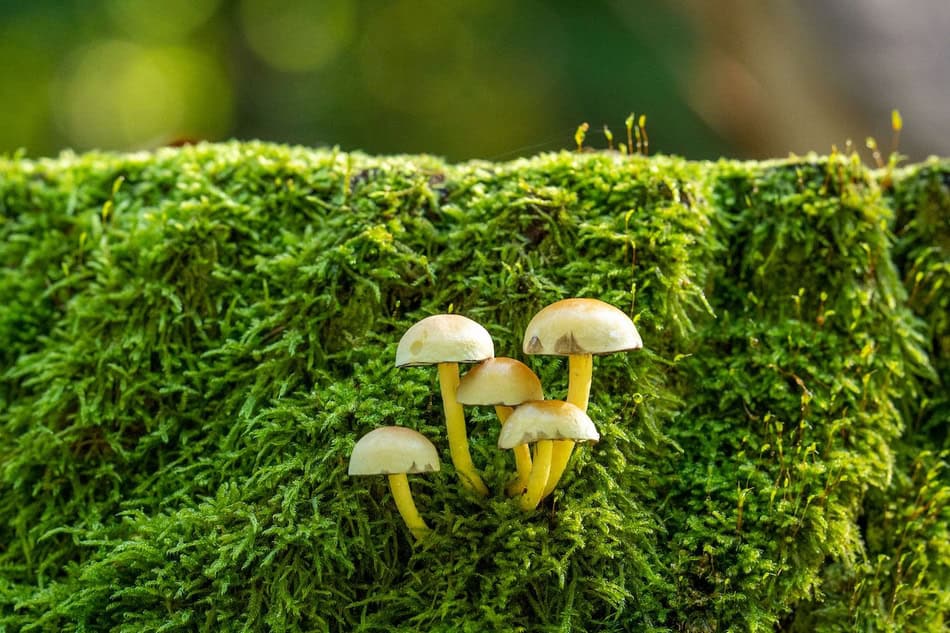
Many familiar mushrooms have a cap and stem, a shape that suggests a little umbrella, table, or stool. Even the word toadstool has traditionally been understood as a seat for a toad. Mushroom names such as fairy’s bonnet, fairy umbrella, and dryad’s saddle carry the same imaginative impulse: people looked at an unfamiliar shape and pictured who might use it.
The best-known storybook mushroom is the fly agaric, with its bright red cap and white spots. It has appeared in art and literature alongside fairies and other magical creatures since the Renaissance. In Lewis Carroll’s Alice’s Adventures in Wonderland, the mushroom becomes more than a prop: the Caterpillar tells Alice that different pieces can make her grow taller or shorter. It gives the story a real object with an unreal power, perfectly suited to a world where a person’s size is always changing.
The fairy ring and its warning
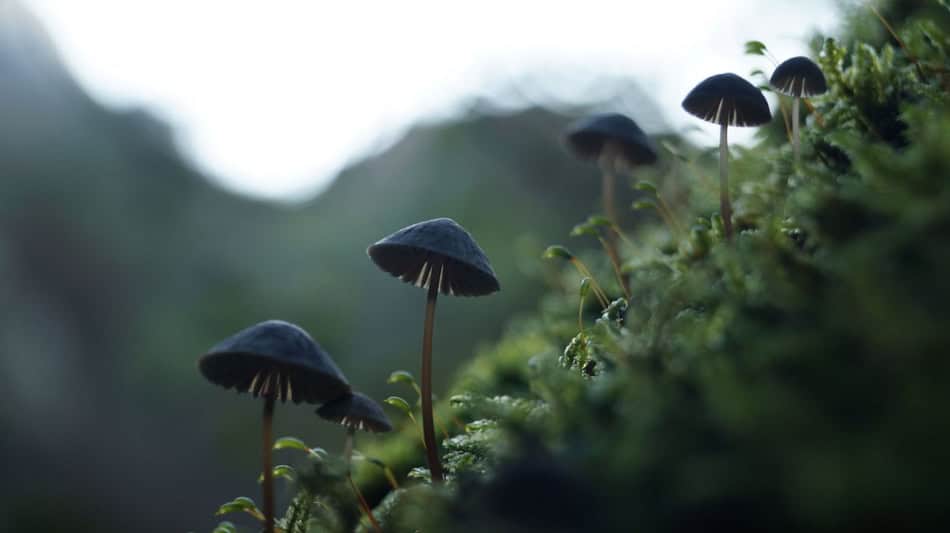
A circle of mushrooms is called a fairy ring. For centuries, one explanation was that fairies had danced there. Other traditions blamed witches, sorcerers, or even a dragon. Some stories warned that a person who stepped inside might be trapped in a dance or carried away to the fairies’ realm. The name elf-ring appears in writing from at least the 12th century.
In Irish folklore, fairy rings were places to leave undisturbed. Farmers traditionally plowed around them rather than through them. That custom has a place in the Almanac’s guide to Irish superstitions and customs.
What is really growing in a ring?
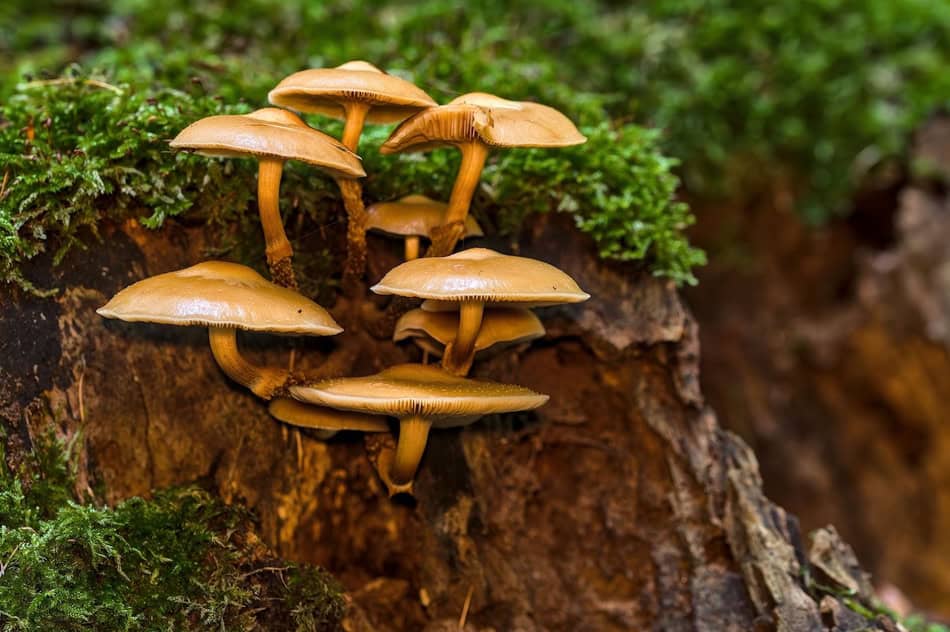
The mushrooms are only the visible part of the story. Beneath them, a fungus spreads through the soil as a web of fine threads called mycelium. When conditions are right, it produces mushrooms at the outer edge of that underground network. As the fungus grows outward, the ring can grow with it.
The ring may leave a mark on the grass, too. Some fungi release nutrients as they break down organic matter, creating a dark-green band. Others can make the soil repel water, leaving grass dry or brown. And fairy rings can be remarkably long-lived: a study in Wyoming’s Laramie Basin estimated that some were hundreds of years old, though most were younger than 80.
That combination of visible shape and hidden life is a fine recipe for folklore. The circle looks like a dance floor; the red cap like a tiny roof; the mushroom itself appears after rain as if the forest has quietly changed overnight. Science explains the pattern, but it doesn’t take away the pleasure of imagining a story around it.
Mushrooms belong to a remarkable world, both in the soil and in our stories. Farmers’ Almanac has more on the practical side in this guide to growing oyster mushrooms at home. If you find wild mushrooms, enjoy their shapes where they grow, and don’t eat them unless an expert has identified them.

- Maggie Konrad

- Maggie Konrad
- Maggie Konrad
- Maggie Konrad