

10 Uses for Onion and Garlic Skins: Soups, Compost, Dye, and Hair Rinses
Before you toss those papery onion and garlic skins, see all the things they can do: from hair dye to an athlete's foot remedy, this list will surprise you!
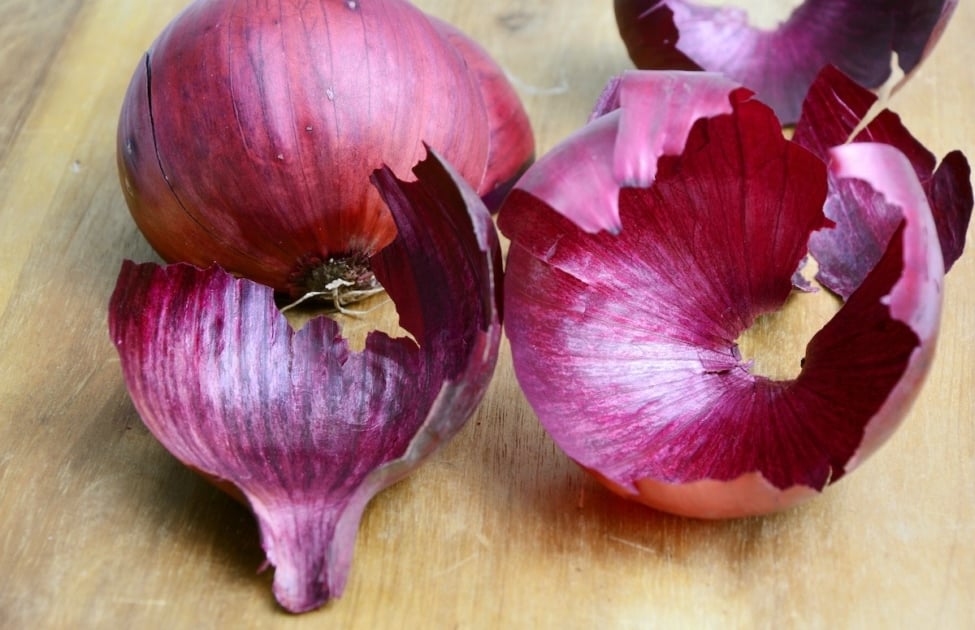
Quick Reference: Onion and Garlic Skins
- Do not throw them out. Onion and garlic papery skins are concentrated in quercetin, a flavonoid antioxidant the FDA-registered USDA database catalogues at over 4x the level of the bulb itself.
- Top use: simmer in stock or stew for richer flavor + golden color + measurable polyphenol boost.
- Garden use: compost-safe (high in potassium and trace minerals), or sprinkle around plants as a mild pest deterrent.
- Craft use: traditional natural dye for Easter eggs, wool, and cotton fabric (yellow to deep amber).
- Storage: dry skins in a paper bag at room temperature, will keep 12+ months.
On this page
Related Almanac guides
Most home cooks throw onion and garlic skins straight into the trash. They are missing one of the most concentrated sources of quercetin (a flavonoid antioxidant) in the kitchen, plus a free natural fabric dye, a compost booster, and a traditional folk remedy for muscle cramps. This guide is 10 practical ways to use the papery skins, with the science from USDA and NIH on what is actually in them.
What Is Actually In Onion and Garlic Skins?
USDA FoodData Central and NIH dietary supplement research both flag onion and garlic skins as quercetin-dense, with significant concentrations of potassium, calcium, magnesium, and trace iron. The papery layer is also the most fiber-dense part of the bulb.
- Quercetin. A flavonoid antioxidant. NIH notes preliminary research links quercetin to lower blood pressure and reduced inflammation, though clinical evidence is mixed. Onion skins contain roughly 4x the quercetin of the bulb.
- Potassium and magnesium. Documented across USDA composition studies of allium skins. Both minerals support muscle function and have been folk-used for cramp relief.
- Sulfur compounds. The same allicin and related sulfides responsible for garlic’s antibacterial activity are present in the skin, in lower but still meaningful concentrations.
- Fiber and pectin. Most of the structural fiber in an onion is in the outer layers. Useful in broth (extracted by simmering) and in compost (mineralized over time).
How to Save and Store Skins for Later Use
You do not need a special container. The skins last almost indefinitely if kept dry.
- Peel onions and garlic over a clean paper bag or shallow bowl.
- Let any moist or rotten layers go to the compost; save only dry, papery skins.
- Store in a paper bag (not plastic) on a shelf away from direct sun.
- Skins keep 12 to 18 months without losing color or aromatic compounds.
- Once a month, sift out any skins that have gone soft and compost those.
10 Practical Uses for Onion and Garlic Skins
Save your skins in a paper bag on the counter. Here are 10 ways to put them to work.
1. Add Extra Nutrition to Soups and Stews.
Onion and garlic skins can be used to add extra nutrition to soups, stews, and when making bone broth or stock. Strain the papery skins out afterward.
2. Better Roasting
Keep the skins on your garlic when you roast them. The protective layer keeps your garlic soft inside while adding the healthy nutrients listed above.
3. Nutritious Rice
Mix in some onion skins when cooking rice to add extra vitamins. Make sure to let them steep as the rice cooks. Simply remove the skins after cooking.
4. Mix Into Bread
Add one teaspoon of ground onion skin (a mortar and pestle work well to grind) to your homemade bread dough to add mild flavor and nutrients.
5. Relieve Muscle Cramps

Boil onion skins for 10-20 minutes making an infusion. Drain the skins from the water and drink it as a tea before bed to help relieve muscle cramps.
6. Induce Sleep
As a natural sleep aid, brew up a cup of onion skin tea. Simply pour boiling water over several onion skins, cover and let soak for fifteen minutes. Strain the tea (or use a tea ball) and enjoy.
7. Add Nutrients to Compost
Garlic and onion skins are great way to add nutrients to your compost pile.
8. Easter Egg or Wool and Fabric Dye
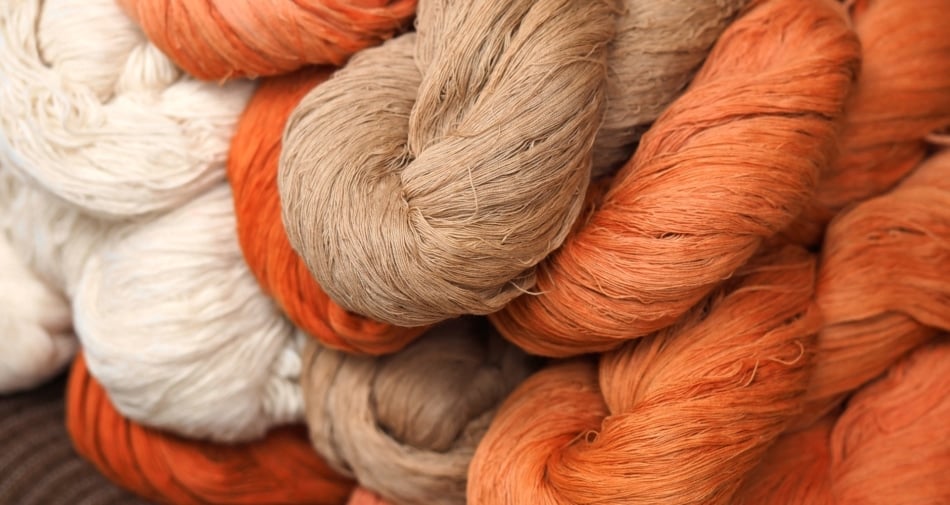
Use red onion skins to dye Easter eggs. You can also use brown or red skins to dye fabric, thread, or wool. Learn how it’s done here!
9. Hair Dye

Onion skins also make a great hair dye, turning it a beautiful golden brown. Simply add onion skins to a pot of water and boil for 30-60 minutes. Let cool overnight, then strain and pour over clean hair. Leave in for 30 minutes, then rinse.
10. Alleviate Itchy Skin
Onion and garlic skins have anti-fungal properties that make them effective at relieving itchy skin problems, including athlete’s foot. Apply onion-infused water to your skin for relief.
Can’t use them now? Freeze them! Simply store skins in a plastic bag or freezer-safe container and freeze them for later use.

Onion and Garlic Skin Broth Recipe
The single most-used application. Build a richer stock with no extra cost.
- Save skins from 6 to 8 medium onions and 2 to 3 garlic heads.
- Combine in a stockpot with 8 cups water, 2 carrots, 2 celery stalks, 1 tablespoon black peppercorns, and 2 bay leaves.
- Simmer 90 minutes uncovered. The skins will release a deep amber color and concentrated savory flavor.
- Strain through fine mesh. Discard the spent skins to the compost.
- Use as a base for risotto, French onion soup, vegetable stews, or to deglaze a roasting pan.

Onion and Garlic Skins FAQ
Are onion and garlic skins edible?
The papery outer skins are too tough and fibrous to eat directly, but they are safe to simmer in broth and stock where their compounds dissolve into the liquid. The fleshy inner layers immediately under the papery skin are fully edible and contain most of the quercetin.
What is quercetin and why is it in onion skins?
Quercetin is a flavonoid pigment that plants produce as part of their UV and pest defense. Per the NIH Office of Dietary Supplements, it has antioxidant and anti-inflammatory properties. The deepest concentrations in any common vegetable sit in onion and garlic papery skins, which is why simmering them in broth extracts visible color and measurable polyphenol content.
Can you compost onion and garlic skins?
Yes. They are nitrogen-light, mineral-heavy, and break down in 2 to 4 months in a working compost pile. Mix with damp brown material (leaves, straw) to balance the carbon-nitrogen ratio. Avoid composting moldy or rotten skins to prevent introducing pathogens.
What color does onion skin dye produce?
Yellow onion skins produce a deep golden-yellow to amber color. Red onion skins yield a rusty pink to russet brown depending on mordant. Used at Easter for centuries across Eastern Europe and Greece to dye eggs without commercial dye.
How do you use onion skins for hair?
Steep 1 cup of dried skins in 4 cups boiling water for 30 minutes. Strain and cool. Use as a final rinse after shampoo. Folk use is grey-hair masking and added shine. No major clinical evidence supports the grey-coverage claim, but the rinse is mild and inexpensive to try.
Do onion skins help with leg cramps?
Old country medicine in Appalachia and rural Europe used onion-skin tea for muscle cramps. The likely mechanism is potassium and magnesium, both of which the skins contain in modest amounts. Bananas, tomatoes, and prescription magnesium supplements are far higher-dose sources if cramps are chronic.
How long can you store dried onion and garlic skins?
12 to 18 months in a paper bag at room temperature, away from direct sun. They lose vibrancy of color over time but remain useful in broth and compost. Skins exposed to moisture will mold and should be discarded.


Natalie LaVolpe
Natalie LaVolpe is a freelance writer and former special education teacher. She is dedicated to healthy living through body and mind. She currently resides on Long Island, New York, with her husband, children, and dog.
- Natalie LaVolpe

- Natalie LaVolpe
- Natalie LaVolpe
- Natalie LaVolpe




jurema preta
When using non-organic onions, should skins be washed before peeling for adding to broth & other uses?
Yes, wash skins and I love this going to start tonight with the tea will post results in a month ? also I make what is called ash with my onion and garlic skins, you bake in oven on 300 to 350 for 2hrs or until they are done will turn dark almost black, let cool grind in grinder to powder store in jar or shaker jar gives soup,salad,stew basically a smokey ❤️ ? really looks like ashes ? but taste great in dishes
I have used yellow onion skins to dye hand spun wool yarn. Every time I peeled an onion, I put the skin in a wide mouth mason jar on my counter. Left it uncovered so any moisture could escape. Freezing was not needed.
That’s fantastic Judy! Thanks for sharing that.
It was a very comprehensive and excellent research I used your source Thank
We’re glad you found the story helpful!!
Thank you from here on out I’m started saving the outer skin of my onions and garlic ect.
Thanks so much for this information, is it safe to drink while breastfeeding.
Hi Wisconsia March, please check with your doctor, but it should be no different than eating onions.
Very effective and resilient home remedy..
Thanks very much for this vital information about onions and garlic skin
Gonna start using this from today. Thanks for educating me and my family members. God bless us all ????
We’re glad you found it helpful, Keisha!
Thanks for sharing, this info. was very helpful.