

What Is Winter Inversion?
Quick Reference
- What: Cold air trapped near the ground under a warmer layer above. Pollution piles up in the cold layer.
- Where: Mountain-rimmed cities. Salt Lake City, Boise, Fairbanks, Vancouver, Los Angeles, Denver.
- Trigger: Fresh snow reflects warmth, surface cools, warmer air aloft acts as a lid.
- Health risk: Fine particulate matter (PM2.5) trapped in the cold layer reaches dangerous levels.
- Worst case: The Great Smog of London, December 1952. Up to 12,000 premature deaths.
Love winter or hate it, one thing is sure, there is nothing like the smell of crisp, clear, cold mountain air to make a person feel truly alive. Air quality is often best in the winter time, when the weather works to “clean” the air, trapping ozone and other pollutants in precipitation or blowing them off with sharp, gusty winds. Here is everything you need to know about a bizarre phenomenon called “winter inversion.”
But in some North American cities, including Los Angeles, Boise, Fairbanks, Salt Lake City, Vancouver, and others that are tightly penned in by mountains, winter can mean an increase in the amount of pollution in the air, thanks to an effect called winter inversion.

How an Inversion Forms
Most of the time, air is warmer near the surface and cooler higher in the atmosphere. In an inversion, though, the normal atmospheric state is flipped on its head, or inverted.
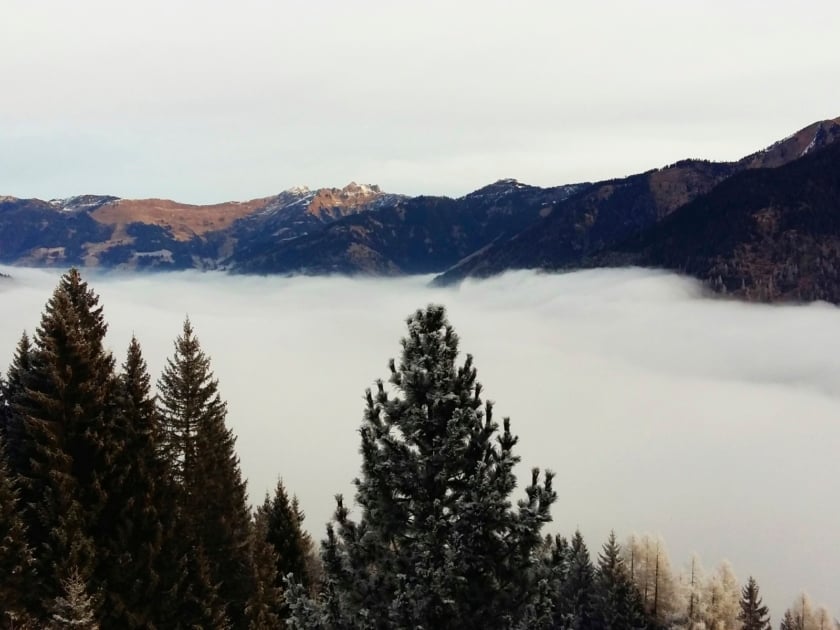
Inversions often follow on the heels of a snowstorm, when fresh snow pack on the ground reflects the Sun’s warmth back up into the atmosphere, resulting in colder temperatures near the surface and warmer air above. The higher pressure layer of warm air sitting atop the colder layer acts like the lid on a pot, trapping the cold air below.
As the inversion goes on, this trapped air begins to stagnate, and the concentration of fine particulate pollutants in the air, emitted by the consumption of fossil fuels in vehicles, power plants, and factories, increases. An extended period of inversion sometimes results in the formation of a brownish fog.
Why It Hits Mountain-Rimmed Cities
| City | Geography | Inversion signature |
|---|---|---|
| Salt Lake City, Utah | Bowl between the Wasatch and Oquirrh Mountains | PM2.5 spikes through Jan-Feb, dubbed “the goo” |
| Fairbanks, Alaska | Tanana Valley, surrounded by hills | Some of the worst U.S. winter PM2.5 readings |
| Boise, Idaho | Treasure Valley, ringed by Boise Mountains | Multi-day inversions common Dec-Jan |
| Los Angeles, California | L.A. basin between San Gabriels and the coast | Year-round inversions, worst in summer (smog) |
| Denver, Colorado | Front Range foothills | “Brown cloud” days under high pressure |
| Vancouver, BC | Fraser Valley, hemmed by Coast Mountains | Stuck high-pressure inversions in winter |
The Health Cost
Fine particulate pollution is dangerous to breathe, and can even be deadly at high enough concentrations. The tiny particles are so small they can get deep into the lungs, and eventually the bloodstream, causing serious health problems.
Related: Tips For Dealing With Poor Air Quality
In the short term, it can irritate the lungs, making it difficult to breathe. Over time it can injure the lungs, causing or aggravating serious respiratory diseases, including asthma, emphysema, or bronchitis, lung cancer, as well as heart conditions such as congestive heart failure and coronary artery disease. Premature delivery and birth defects have also been attributed to high levels of atmospheric pollution.
These effects are most pronounced in children, the elderly, those with compromised respiratory function, and anyone who works outdoors.
The Great Smog of London
In rarer cases, severe air-pollution events caused by inversions have resulted in immediate death. The Great Smog of 1952, also known as The Big Smoke, descended on London, England in December of that year. Blamed for as many as 12,000 premature deaths, and 100,000 cases of acute respiratory distress, the four-day inversion was caused by a period of cold weather combined with an anticyclone that formed around the area, trapping air inside.
Airborne pollutants from burning coal, which fueled and heated much of the city at the time, caused a thick layer of smog to form over the city in what has since come to be known as the worst air-pollution event in the history of the United Kingdom.
The inversion event was directly responsible for the creation of Britain’s Clean Air Act of 1956.
How to Stay Safe During an Inversion
- Check the AQI daily. The U.S. EPA AirNow site posts real-time Air Quality Index for every U.S. metro.
- Limit outdoor exertion. When AQI exceeds 100, kids and at-risk adults should stay inside.
- Run a HEPA filter. Indoor PM2.5 levels can match outdoor levels without filtration.
- Skip the wood fire. A backyard burn during an inversion sends fine particulate straight into the trapped layer.
- Drive less. Vehicle exhaust is the biggest contributor in most inversion cities.
The National Weather Service issues Air Stagnation Advisories when an inversion is forecast. Pair the advisory with the AirNow AQI and you have a daily decision-making tool for whether to run, bike, or stay indoors.
So if you are having a bad “air day” due to winter inversion, be sure to heed air quality warnings and alerts.

Frequently Asked Questions
What is a winter inversion?
A weather pattern in which cold air sits trapped under a warmer layer aloft. The warm layer acts like a lid, holding pollution close to the ground for days.
What causes a winter inversion?
Fresh snow reflects sunlight back into the sky. Surface temperatures drop. A layer of warmer, drier air aloft, often left behind by a high-pressure ridge, sits on top. The two layers do not mix.
Where do winter inversions hit hardest?
Mountain-rimmed cities like Salt Lake City, Boise, Fairbanks, Vancouver, Denver, and Los Angeles. The surrounding terrain blocks the lateral mixing that would otherwise break the inversion.
How dangerous is the trapped air?
Very dangerous at high concentrations. Fine particulate matter (PM2.5) reaches deep into lungs and bloodstream. It can trigger asthma, aggravate heart disease, and at extreme levels cause premature death.
What was the Great Smog of London?
A four-day inversion event in December 1952 that killed up to 12,000 people and triggered 100,000 cases of acute respiratory distress. Coal-burning combined with a cold-weather anticyclone produced what remains the worst air-pollution event in U.K. history. It led directly to the Clean Air Act of 1956.
How long does a winter inversion usually last?
Typically 2 to 7 days. The pattern breaks when a frontal system pushes through and mixes the layers, when winds pick up, or when the snow underneath melts and the surface warms.
How do I check the air quality in my city?
The U.S. EPA’s AirNow site publishes real-time Air Quality Index for every metro area, and the National Weather Service issues Air Stagnation Advisories ahead of forecast inversion events.
Tell Us
Has your town been stuck under an inversion? Tell us in the comments. For more cold-weather reads, see our cold-weather safety tips and historic blizzards entries.


Jaime McLeod
Jaime McLeod is a longtime journalist who has written for a wide variety of newspapers, magazines, and websites, including MTV.com. She enjoys the outdoors, growing and eating organic food, and is interested in all aspects of natural wellness.
- Jaime McLeod

- Jaime McLeod
- Jaime McLeod
- Jaime McLeod





I lived in Salt Lake City as a child, the smog was starting even then. So thankful to be out of that inversion mess now !