When Will Ragweed Season End Where You Live?

If you’re waiting for one cold morning to end ragweed season, you may have to wait a little longer. Unfortunately, a patch of frost does not reliably tell you whether ragweed pollen has cleared from the air.
Ragweed pollen usually peaks around mid-September, according to the American College of Allergy, Asthma and Immunology, but the plants can keep producing pollen into November in some places. The end of the season depends on where you live and how fall unfolds there. Here’s how to use local freeze dates and pollen counts to tell when relief may be getting closer.
A regional guide to when ragweed may ease
A freeze is a clue that the local growing season is changing. Weather, elevation and the pollen arriving on the wind can make your experience different from the regional pattern. The windows below show when the first freeze typically arrives, although this doesn’t guarantee that ragweed pollen will disappear.
| Where you live | Typical first-freeze pattern | What it means for ragweed watchers |
|---|---|---|
| Upper Midwest and colder parts of the Northeast | Often mid-September to early October | Watch local pollen counts now; the seasonal decline may already be underway. |
| Much of the interior West | Varies widely from September to November | Elevation matters. Higher mountain towns often freeze before nearby lower valleys, though local frost pockets can reverse that pattern. |
| Northwest | Can range from early September to November | Check your town rather than relying on a date for the whole region. |
| South | Freezes may begin in parts of Virginia in October and arrive much later farther south | Ragweed and other fall allergens can remain relevant well after northern areas have cooled. |
| Warm coastal areas and much of Florida | A freeze may come very late or not occur every year | A freeze date cannot serve as your personal end-of-season marker. Follow pollen reports instead. |
Those broad patterns come from NOAA’s map of historical first fall freezes, based on 1991–2020 climate normals. Its dates are medians: a location has reached its first freeze by that date in about half of the years measured. They are not a forecast for a particular day in 2026.
For a closer look at your area, start with the Farmers’ Almanac 2026 first-frost guide, then check your local forecast and the National Allergy Bureau’s pollen-count map. The pollen report is the better check on what is actually in the air near you.
Does the first frost kill ragweed?
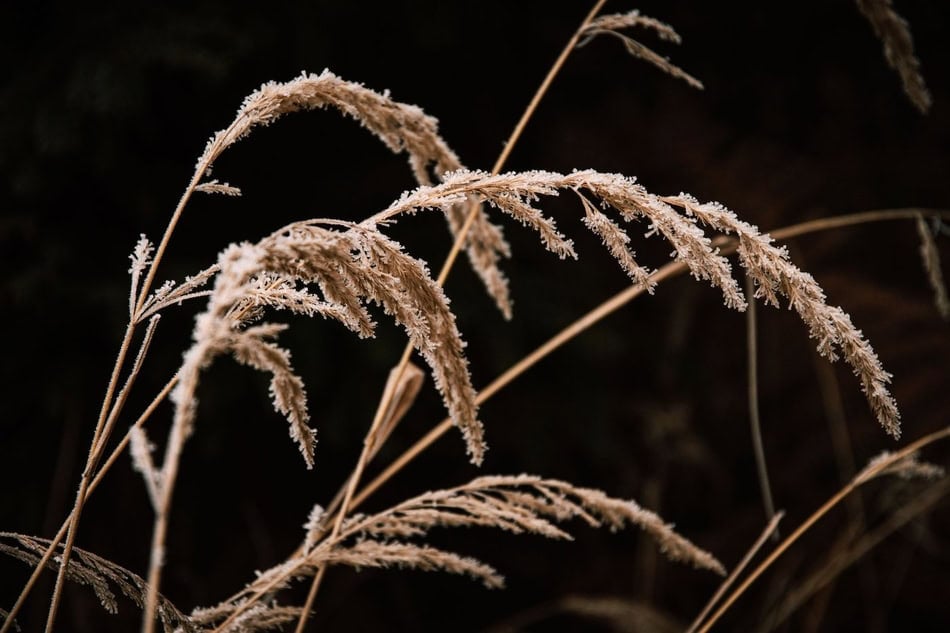
A little frost on the grass does not necessarily mean the air stayed below freezing or that every ragweed plant nearby has stopped producing pollen. The National Weather Service describes a hard freeze as an extended period at 28°F or lower, cold enough to kill most vegetation. That is a stronger sign that local plants have reached the end of their season than one patchy frost.
Even then, there is no dependable overnight switch from “ragweed” to “all clear.” ACAAI notes that ragweed allergy symptoms can linger after pollen is no longer in the air. Its fall allergy guidance advises people managing symptoms with medication to discuss their plan with a clinician rather than treating the first frost as an automatic stopping point.
Still sneezing after ragweed declines?
The calendar alone cannot tell you which allergen is responsible. Other weed pollen and outdoor mold may still be present in fall. Check whether a nearby pollen station reports ragweed specifically or weeds as a group, and speak with an allergist if symptoms persist or you are unsure of the trigger.
One plant often gets blamed unfairly at this time of year: goldenrod. Its bright flowers appear alongside ragweed season, but the two plants spread pollen differently. Our guide to goldenrod and the fall allergy mix-up explains why the showiest flower in the field is not necessarily the source of the sneezing.
For now, the most useful answer is local: use freeze timing to know when the season may be turning, and pollen counts to see whether ragweed has actually eased near you.

- Maggie Konrad