Why Your Candle Jar Turns Black and How to Reduce the Soot

You light a favorite candle, enjoy the scent, and later notice a dark ring around the glass. That black residue is soot, and a long wick, a draft, or an overly long burning session may be behind it.
A few changes can help keep the jar cleaner. Start by checking the wick before lighting, then watch how the flame behaves.
What Causes the Black Marks?
A candle’s wick draws melted wax upward to fuel the flame. When that fuel doesn’t burn completely, tiny carbon particles can escape and settle on the glass. Those particles are soot.
The National Candle Association explains that a disturbed flame can release soot as visible wisps of smoke. A flame that constantly flickers, leans, or flares deserves attention, especially if black marks are building up around the jar.
Trim the Wick Before Lighting
A long wick can produce an oversized flame and more soot. Before each use, let the candle cool completely, then trim the wick to the length specified on its label. For many cotton-wick candles, the usual recommendation is ¼ inch.
Use scissors or a wick trimmer, and remove the clipping from the jar. Don’t leave bits of wick or matches on the wax, where they can become extra fuel.
If your candle has a wooden wick, follow the maker’s instructions for trimming it; its recommended length may differ.
Keep It Out of Drafts
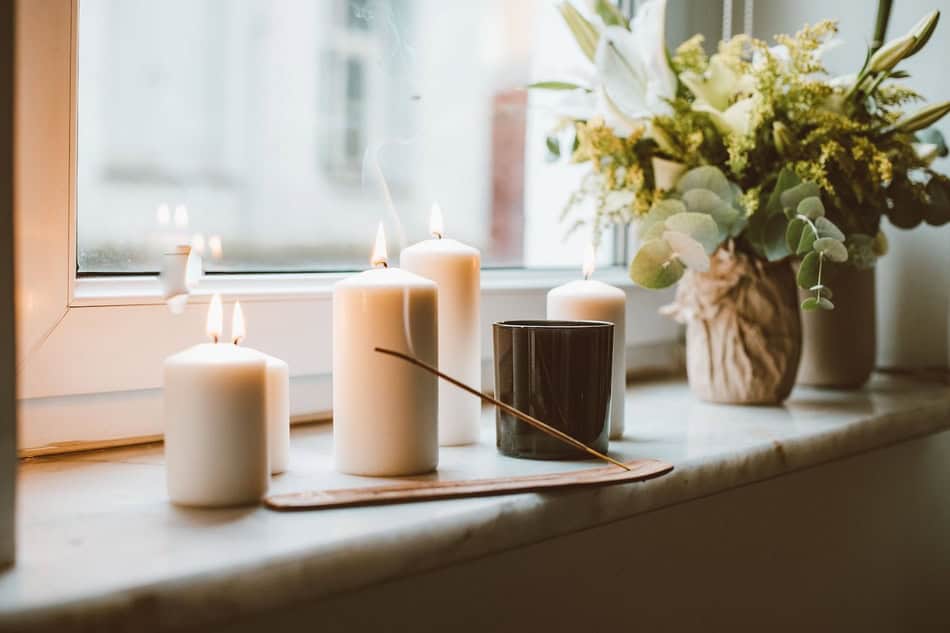
A candle beside an open window may look lovely, but moving air can make its flame flicker and smoke. Fans, heating vents, and air conditioners can do the same.
Choose a stable, heat-resistant surface in a well-ventilated room, away from direct air currents. If the flame keeps bending or fluttering, check whether a nearby vent or fan is blowing across it.
Extinguish the candle and let the wax and container cool before moving it. Keep it at least 12 inches from curtains, dried flowers, paper decorations, and other things that can burn.
Give the Candle a Break
It’s easy to light a candle after dinner and forget how long it’s been burning. Over time, carbon can collect at the wick’s tip, forming a lump often called a “mushroom.” The flame may grow larger and begin to smoke.
Follow the maximum burning time on your candle’s label. The National Candle Association’s burning guide generally recommends no more than four hours at a time, with at least two hours of cooling before relighting. A shorter limit on the label takes priority.
Setting a timer when you light the candle makes that easy to remember. Once it has cooled, check the wick and remove any loose debris before the next use.
What to Do If the Candle Starts Smoking
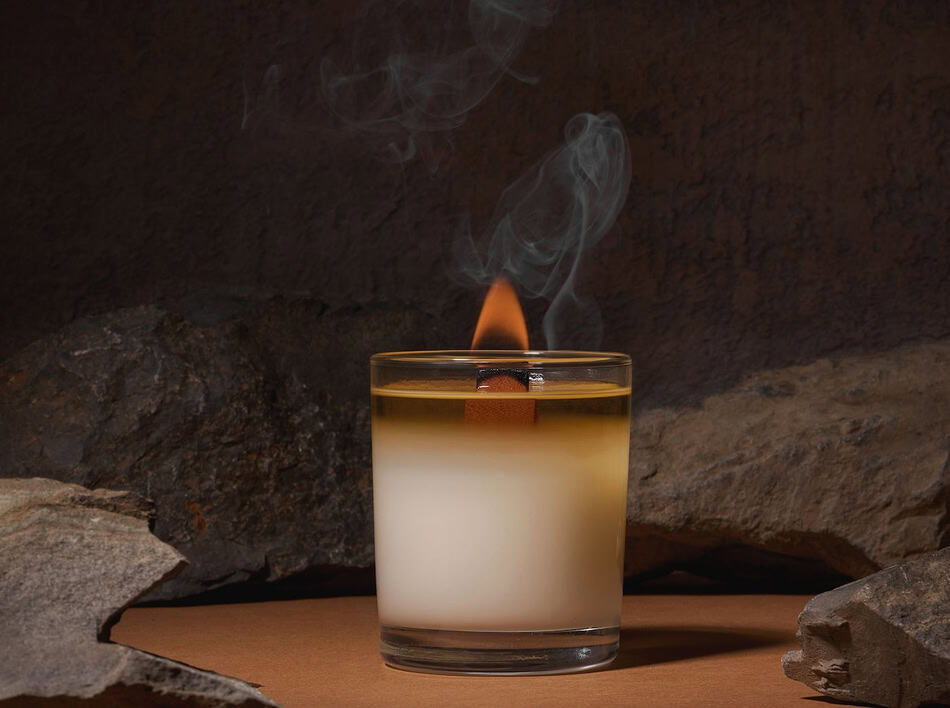
If you see persistent smoke or an unusually tall flame, extinguish the candle. Use a candle snuffer or gently blow it out. Don’t pour water into the jar; it can make hot wax splatter.
Once everything has cooled, check the wick length, look for debris, and reconsider the candle’s location. If it continues smoking after those adjustments, stop using it and contact the manufacturer. Don’t keep burning it to see whether it improves.
Also follow the label’s instructions for when to retire the candle. The association generally recommends stopping a container candle when about ½ inch of wax remains.
Candles are one of the simple comforts featured in our guide to hygge. A trimmed wick, a steady flame, and attention to the burning time help you enjoy that glow with fewer black marks on the glass.

- Maggie Konrad

- Maggie Konrad
- Maggie Konrad
- Maggie Konrad