

The Poinsettia Legend: Pepita, Joel Poinsett, and Christmas Flower Facts
Poinsettias are a true holiday tradition. But just how did this seasonal plant become associated with Christmas? We explain.
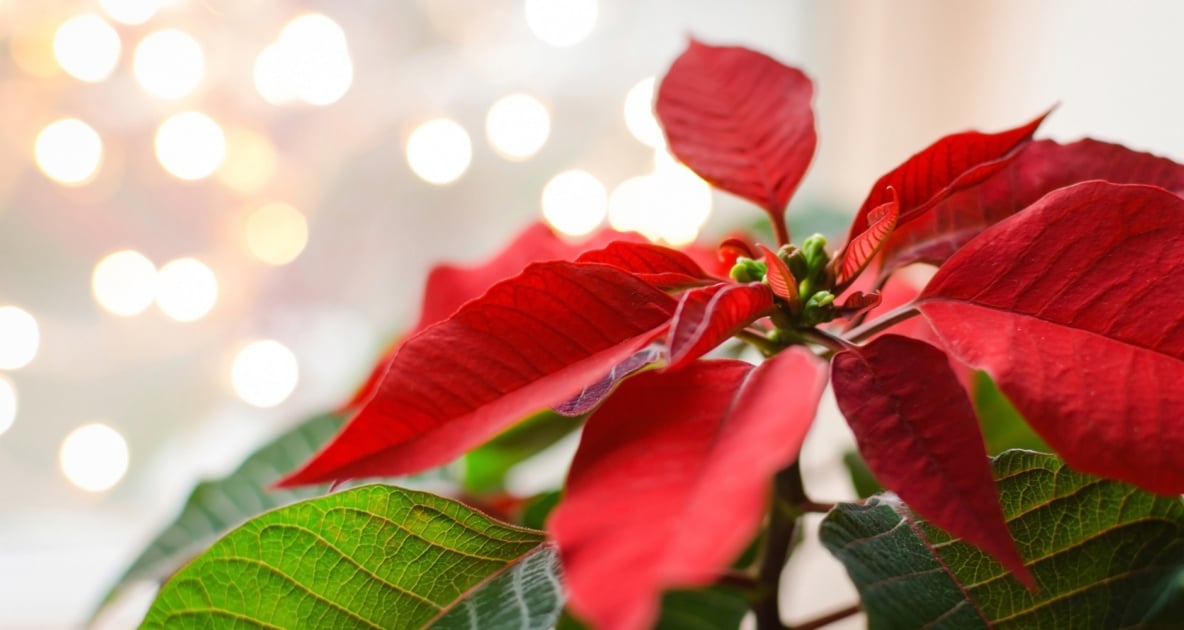
Quick Reference
- Botanical name: Euphorbia pulcherrima. Spanish name: Flores de Noche Buena, meaning flowers of the holy night.
- National Poinsettia Day: December 12, marking the death of ambassador Joel Roberts Poinsett in 1851.
- Native to: Mexico and Central America; cultivated by Aztec and Mayan peoples centuries before European contact.
- Toxicity: not dangerous to children. Ohio State University research found a 50-pound child would need to eat more than 500 bracts to reach an unsafe level. Mildly toxic to cats and dogs.
- Market share: the number-one potted plant sold in the US, exceeding sales of all other potted plants combined during the holiday season.
- Colors: red, white, peach, pink, yellow, plus marbled and striped cultivars like the pink-flecked Jingle Bells.
The poinsettia has decorated Christmas mantels, altars, and dining tables since the 1820s. Behind the scarlet bracts sit two stories, one folk, one historical. The folk story stars a poor Mexican girl named Pepita and a bouquet of roadside weeds that bloomed on Christmas Eve. The historical story stars Joel Roberts Poinsett, the first US Ambassador to Mexico, who shipped cuttings home to South Carolina and gave the plant its English name. Both stories carry forward into every red-leaved plant sold today.
The poinsettia is also known by its Spanish name, Flores de Noche Buena, meaning “flower of the holy night,” and by its Latin name, Euphorbia pulcherrima. Its beauty is almost as intriguing as the legends that surround it. The PBS NewsHour Christmas plant feature tracks how the plant traveled from Aztec temple ceremonies to modern American living rooms in less than 200 years.

Why Is The Poinsettia Flower Associated With Christmas?
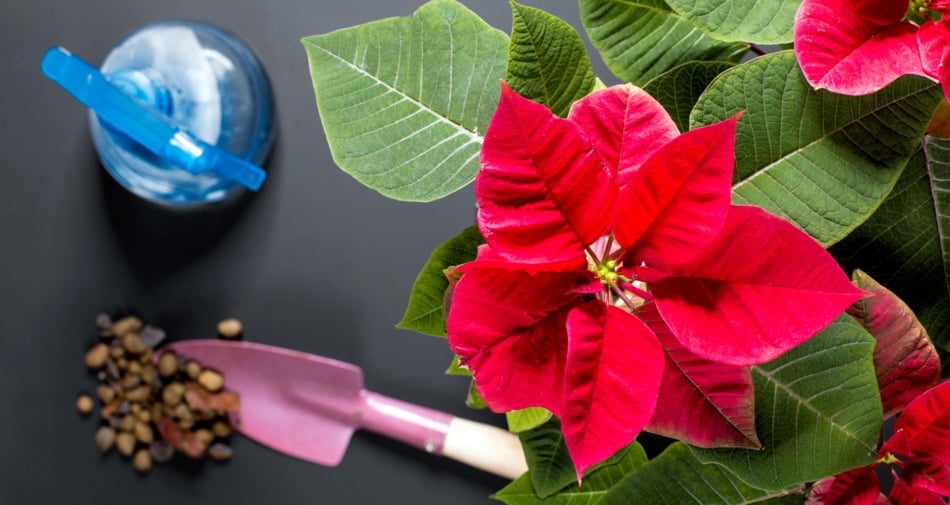
Some say the poinsettia’s scarlet petal-like bracts represent the star of Bethlehem, the five-pointed silhouette of the plant echoing the star that guided the Magi. Others believe the connection is more magical and involves a young Mexican girl named Pepita. The legend goes like this:
“Pepita wanted more than anything to present to the Christ Child a special gift on Christmas Eve, but she had no money. Crying as she walked to church, she saw an angel who instructed her to gather weeds from the roadside and present them to the Christ Child.
Pepita took the angel’s advice and gathered a bouquet of weeds to take to the church. Upon entering the church, she placed the weeds at the feet of the Christ Child, and suddenly, her humble weeds burst into brilliant red blooms.“
Another Story: Joel Roberts Poinsett
Another story attributes the poinsettia’s popularity to Joel Roberts Poinsett, the first United States Ambassador to Mexico. Ambassador Poinsett was so attracted to these crimson-leaved native Mexican plants that he transplanted some to his greenhouses in South Carolina. There, he grew and propagated them, sharing cuttings and plants with many horticultural friends.
Poinsett was a botanist, a politician, and a co-founder of the National Institute for the Promotion of Science, which later became part of the Smithsonian Institution. His shipment of poinsettias in 1828 was the first appearance of the plant on American soil.
The date of his death, December 12, marks National Poinsettia Day. The observance was made official by an Act of Congress in 2002, honoring both Poinsett and the Ecke family of California, who bred the compact, colorful varieties sold in modern florist shops.
Poinsettia Flower Facts and Trivia
- Indigenous to Mexico and Central America, the poinsettia flower was cultivated by ancient Aztec and Mayan peoples. The Aztec name translates to “brilliant flower” (cuetlaxochitl). The Mayan name translates to “ember flower” (k’alul wits). RELATED: Learn about Ember Days.
- Poinsettias are the number-one potted plant sold in the US today, exceeding annual sales of all other potted plants combined during the November-through-December holiday window.
- Poinsettias are not toxic to children or humans, but they should not be eaten. A child would have to consume more than 500 bracts (leaves) to reach an unsafe level, according to the Poisindex. They are, however, mildly poisonous to cats and dogs, so it is best to keep them out of their reach.
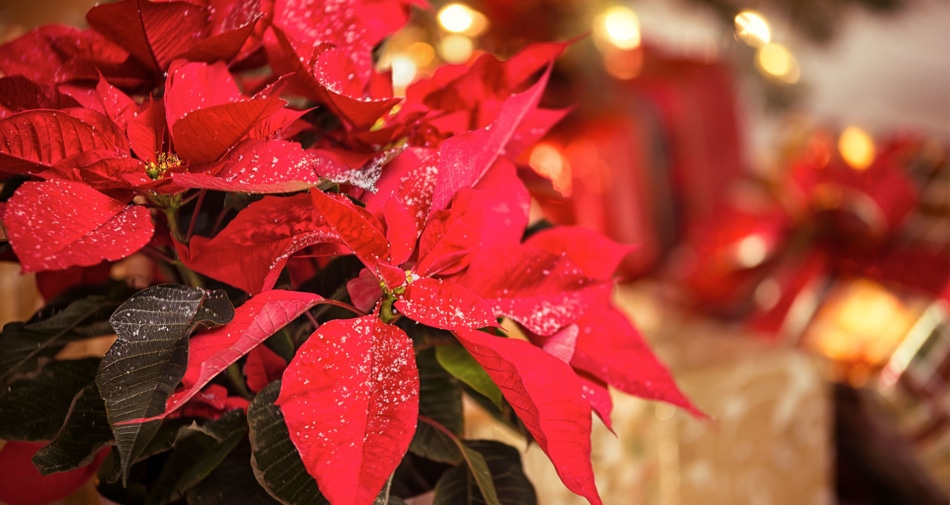
- Poinsettias come in many colors. From the traditional red to shades of white, peach, pink, and yellow, cultivars are now available in marbled, striped, and spotted tones. A seasonal variety, “Jingle Bells,” with its red bracts and pink flecks, is a rising favorite this holiday.
How to Care for a Christmas Poinsettia at Home
Poinsettias are tropical natives, so they do not enjoy the same cold your amaryllis or Christmas cactus does. The University of Illinois Extension lists the specific room conditions that keep a store-bought poinsettia colorful into February:
- Light: 6 hours of bright, indirect sunlight per day; a south or east-facing window is ideal.
- Temperature: 65 to 75 degrees Fahrenheit during the day, no colder than 60 degrees Fahrenheit at night. Keep away from cold windowpanes and drafty doors.
- Water: water when the top of the soil feels dry to the touch; drain the saucer so roots do not sit in water.
- Humidity: a tray of pebbles and water near the pot boosts humidity in dry winter rooms.
- Bracts: the color comes from bracts, not petals. Keep the plant out of direct heat and reflected car-window sun.
When to Buy Your Poinsettia
Timing the purchase matters. A poinsettia bought too early loses its bracts on the way to Christmas dinner; a poinsettia bought too late gives you a plant that fades before New Year’s Day.
- Best window: the first week of December, once nurseries have finished the last shipments in from greenhouses.
- Signs of a good plant: tight yellow flowers (the actual flowers) at the center of the bracts; brittle stems mean the plant has been chilled.
- Transport: wrap the plant in a paper sleeve for the drive home. A 10-minute exposure to below-50 degrees Fahrenheit air can drop the bracts.
- Location at home: away from the front door, the fireplace, and any heat register.
Join The Discussion
Do you have a poinsettia or two at your house for the holidays?
Share your experience and any questions you may have in the comments below!

Frequently Asked Questions
Are poinsettias poisonous to children?
No, according to a study by Ohio State University a 50-pound child would need to eat more than 500 bracts to reach a level shown to cause any toxic effect. That said, the sap can irritate skin, so keep leaves out of small mouths.
Are poinsettias toxic to cats and dogs?
Yes, mildly. The ASPCA notes ingested leaves may cause drooling, vomiting, or diarrhea in cats and dogs. Keep the plant on a shelf that pets cannot reach, and consult your vet if symptoms last more than 24 hours.
When is National Poinsettia Day?
December 12 every year, marking the date of Joel Roberts Poinsett’s death in 1851. Congress made the observance official in 2002.
What does the name Flores de Noche Buena mean?
It translates from Spanish as “flowers of the holy night,” a nod to the plant’s traditional appearance at Mexican Christmas Eve celebrations for centuries before it reached the United States.
How do I keep my poinsettia alive past Christmas?
Water when the soil surface is dry, keep the plant in a room between 65 and 75 degrees Fahrenheit, give it 6 hours of bright indirect sunlight, and keep it away from cold drafts. Cared-for plants often hold their bracts into February.
What are those red parts, petals or leaves?
They are bracts, which are modified leaves. The actual flowers are the tiny yellow buds at the center of the bracts. The color change is triggered by short winter daylight (fewer than 12 hours of light) starting in late September.
Where do poinsettias grow naturally?
In the wild, poinsettias grow as tall shrubs, sometimes 10 feet high, in the tropical forests of southern Mexico and Central America. Aztec cultures used the sap to treat fever and the bracts as a dye.


This article was published by the Staff at FarmersAlmanac.com. Any questions? Contact us at [email protected].
- Farmers' Almanac Staff

- Farmers' Almanac Staff

- Farmers' Almanac Staff

- Farmers' Almanac Staff


Joel Poinsett is buried in Stateburg, South Carolina….a very small place worthy of a visit. The church there is a treasure!
Never herd that name in puerto rico we call them pascuas
The story of Pepita was told to 3rd graders in the 60s as part of Texas Heritage. Probably don’t/can’t anymore. Merry Christmas, or if your like Shalom, Happy Chanukah!