

How to Start a Flower Garden: A Beginner’s Guide
Flowers add color, beauty, and cheer to yards and landscapes everywhere. Here are some good tips on how to get started.
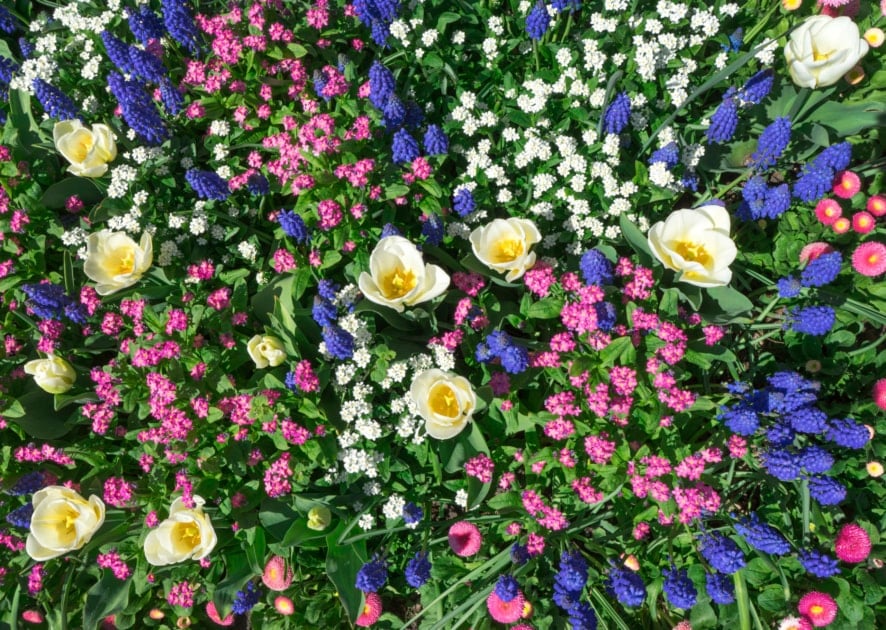
Quick Reference: How to Start a Flower Garden
- Start with: a simple sketch of the size, shape, and location of your bed.
- Read the light: full-sun spots suit petunias, zinnias, and marigolds; shade suits impatiens, coleus, dusty miller, pansies, and begonias.
- Time it: know your growing season and your last frost date before you plant seeds or transplants.
- Soil target: most annuals do well at a soil pH of 6.5. Test it with a kit or your local extension service.
- Plant order: tall in back, medium in the middle, short in front, spaced as the labels direct.
- Keep it up: water, weed, feed, and pinch off deadheads all season to keep the blooms coming.
Flowers add color, cheer, and a bit of welcome to any yard, and the 2026 growing season is a fine time to put in your first bed. You do not need an acre or a fancy plan to start a flower garden. You need a sunny or shady corner, a short list of plants that suit it, and a season’s worth of watering and weeding. Here is how to go from a bare patch of ground to a bed full of blooms, step by step.
How to Start
Take time to plan before you turn a single spade of soil. Sketch out your garden on paper, and include the size, shape, and location of the bed. Then look hard at the spot. Is the area sunny, shady, or a little of both? Watch it across a full day to see how much sun the spot gets and when it gets it. Impatiens, coleus, dusty miller, pansies, and begonias are a few annuals that do well in shade. Petunias, zinnias, and marigolds are a few varieties that grow best in full sun.
Most flowers sold as “full sun” want six or more hours of direct light a day, while “part shade” plants are happy with three to six. Matching the plant to the light is the single biggest thing a beginner can get right, so spend a day or two watching the spot before you buy a thing.

Choose the Right Flowers
Before you decide which flowers you might like, do your homework. Look in seed catalogs, garden books, and online for the growing conditions each variety needs. Flower shows, greenhouses, and garden centers also offer good advice, and the folks who work there can steer you toward plants that thrive in your area. Note the mature height, the spread, and the light each plant wants, and jot those down next to your sketch.
Annuals or Perennials: Know the Difference
One choice shapes everything else: annuals or perennials. Annuals such as petunias, zinnias, and marigolds live for a single season, bloom hard from spring to frost, then die off and need replanting each year. Perennials such as coneflowers, daylilies, and black-eyed Susans come back on their own year after year, though most bloom for a shorter window each season.
Many gardeners mix the two: perennials form the backbone of the bed, and annuals fill the gaps with steady color. If this is your very first bed, a batch of annuals is the forgiving place to start, because you get quick results and a clean slate next spring.
Consider Colors
Color is where a flower garden turns personal. Do you want the flowers to accent your house colors, to attract hummingbirds and butterflies, or to follow a theme such as red, white, and blue? Any of those goals is a fine place to begin, and each one points you toward a different short list of plants.
If pollinators are your aim, lean on nectar-rich, single-flower blooms in reds, purples, and oranges, and plant them in drifts of three or more so bees and butterflies can find them. Tucking a few pollinator favorites among your other plants also helps your vegetables, and our companion planting guide shows which flowers earn their keep next to the crops.
Know Your Growing Season
Keep in mind the length of your growing season and the last frost dates for your area. Learn as much as you can before you plant the seeds or transplants. Frost dates run weeks apart across the country, so the calendar date shifts with your region even though the rule stays the same: wait until the danger of frost has passed before you set out tender annuals.
In Canada, gardeners in British Columbia and southern Ontario often plant from mid to late spring, while the Prairies, Quebec, and the Maritimes wait until late spring once the last frost has passed. Cool-tolerant flowers like pansies can go out earlier; tender annuals should wait until the nights settle.
Designing the Bed
Once you learn which types of flowers will grow in your location and decide which ones you would like to plant, you can start designing the bed. Start small rather than large at first, especially if you are a beginner. Outline the shape of your flower garden with a garden hose laid on the ground, then edge the area with a spade so you can see the borders. Till the inside until the soil is all mixed up and there are no weeds or large rocks, and work in organic material such as compost or manure.
You may want to test the pH of your soil, which reveals its acidity and alkalinity. Most annuals do well at a level of 6.5. You can buy a tester and do this yourself, or take a sample to an extension service in your community. If your reading comes back too low or too high, Clemson University’s Home and Garden Information Center has a clear guide to changing the pH of your soil with lime or sulfur.
General Rules for Planting
- Keep tall plants in the back, medium in the middle, and short in the front. Plant as directed on labels, taking note of spacing.
- Do not plant annuals too close together or they may become crowded and not grow.
- Keep it simple.
- Water, weed, and feed your garden throughout the season.
- Pinch off the deadheads (flowers that are past their beauty). This will encourage more blooming.
- Use your imagination! Have fun!
Caring for Your Flower Garden
A new bed asks for steady, simple attention rather than fuss. Water deeply once or twice a week rather than a light sprinkle every day, which trains roots to reach down where the soil stays cool and moist. Water in the morning so the leaves dry by evening, since wet foliage overnight invites disease.
Feed annuals every few weeks with a balanced fertilizer to keep them blooming, and deadhead spent flowers so the plant puts its energy into new buds instead of seed. Pull weeds while they are small, before they steal water and light, and lay down a couple of inches of mulch to hold moisture and keep the weeds down. A few minutes most days beats a long fight on the weekend.
How to Start a Flower Garden: Frequently Asked Questions
How do I start a flower garden for the first time?
Start small. Sketch the size, shape, and location of a bed, watch the spot for a day to see how much sun it gets, and pick flowers that match that light. Outline the bed with a garden hose, edge it with a spade, work compost into the soil, and plant tall varieties in the back and short ones in front.
What flowers are easiest for beginners?
Annuals are the forgiving choice for a first bed. Petunias, zinnias, and marigolds do well in full sun, while impatiens, coleus, dusty miller, pansies, and begonias handle shade. They bloom quickly, and if a spot does not work out you get a fresh start next spring.
What soil pH do flowers need?
Most annuals do well at a soil pH of about 6.5, which is slightly acidic. Test your soil with a home kit or through your local extension service. If the reading is too high or too low, you can adjust it with lime or sulfur before planting.
When should I plant my flower garden?
Wait until the danger of frost has passed for your area, then set out tender annuals. Frost dates shift by region, from late winter in the South to late May in the North, so check your last frost date before planting seeds or transplants. Cool-tolerant flowers like pansies can go out a little earlier.
What is the difference between annuals and perennials?
Annuals live for one season, bloom hard, then die and need replanting each year. Perennials come back on their own year after year, though most bloom for a shorter window. Many gardeners use perennials as the backbone of a bed and fill in with annuals for steady color.
How much sun does a flower garden need?
It depends on the plants. Full-sun flowers want six or more hours of direct light a day, while part-shade plants are happy with three to six. Watch your chosen spot across a full day before buying, then match the flowers to the light it actually gets.
Do not forget to check the Farmers’ Almanac Gardening Calendar before you plant!


This article was published by the Staff at FarmersAlmanac.com. Any questions? Contact us at [email protected].
- Farmers' Almanac Staff

- Farmers' Almanac Staff

- Farmers' Almanac Staff

- Farmers' Almanac Staff


I’d like to add an old gardener’s “tip”, if I may. This is a technique that I’ve used for decades but have been surprised it isn’t more widely used – I actually won a small “prize” at a different website when I submitted it years ago!
When I start a new garden, for example when I planned a perennial bed for my new home in VA, I always use the garden hose or rope (something flexible) as you suggest for the layout. But then we till the bed, wet it down w/a garden hose & cover it w/clear or black plastic. The sun will sterilize the soil, killing weed seeds, fungi, bacteria & problems if you leave the plastic cover on long enough. It’s a tremendous aid for starting a bed in the middle of lawn, or weeds & gives a boost to organic growing – however, it works for everyone.
We usually plan a bed the season before we intend to plant it to get maximum solar sterilization, but it could be done early in the year w/clear plastic & planted later in the spring. After the plastic comes off, add your amendments & plant!
Hope this helps.
Is it as beneficial if you do it for your vegetable garden as well in the fall and leave the plastic all winter? How long do you leave your plastic on the flower bed? This sounds like a great tip, thank you for sharing.
I am new at this and has always been a dream of mine. Had always worked and my health was where I couldn’t be in sun. So all has changed and I’m looking forward to getting dirty and learning how to. So any help will do!!!
ive been searching when is agood time to plant flower seeds indoors? please send asap. THANKS