Moon Phases Explained: The 8 Stages, Why They Happen, and How to Read the Sky
Sure, everyone knows what a Full Moon is, but do you know what a Waxing Gibbous or a Waning Crescent are? Find out!
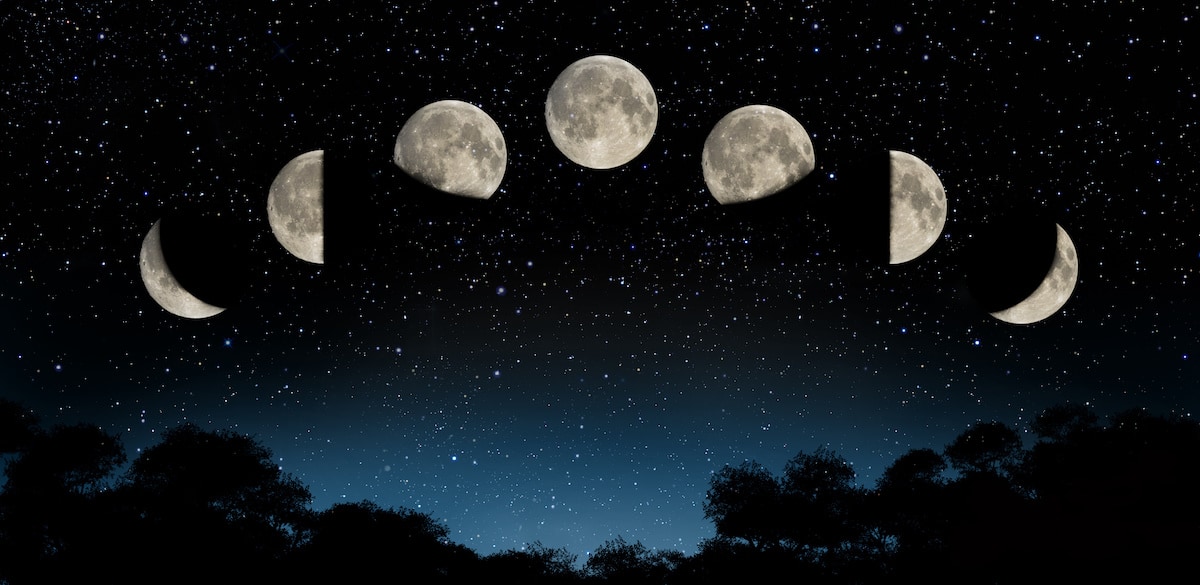
Quick Reference: The 8 Moon Phases
- New Moon: 0% lit. Moon is between Earth and sun, not visible.
- Waxing Crescent: 1-49% lit, growing each night. Visible in the western evening sky.
- First Quarter: 50% lit, right half illuminated. Visible at sunset, sets at midnight.
- Waxing Gibbous: 51-99% lit. Rises in the afternoon, dominates the early-night sky.
- Full Moon: 100% lit. Rises at sunset, sets at sunrise.
- Waning Gibbous: 99-51%, shrinking. Rises after sunset, visible into the morning.
- Last Quarter: 50% lit, left half illuminated. Rises at midnight, sets at noon.
- Waning Crescent: 49-1% lit, shrinking. Visible in the eastern morning sky before sunrise.
The moon cycles through 8 named phases every 29.5 days, the same cycle that gave us the word “month.” Each phase has a distinct look in the sky and a distinct rise and set time. Here is what each phase looks like, why it happens, and how farmers and gardeners have used the cycle for centuries.
Why the Phases Happen
The moon does not produce its own light. What you see at night is sunlight reflecting off the moon’s surface. As the moon orbits Earth, the angle between the sun, moon, and Earth changes, and we see different fractions of the sunlit side. When the moon is between Earth and the sun, we see the dark side (new moon). When Earth is between the sun and moon, we see the fully lit side (full moon). The eight named phases are evenly spaced steps in the cycle.
The full cycle takes 29.5 days, called the synodic month. The moon’s actual orbit around Earth takes 27.3 days (the sidereal month), but because Earth is also moving around the sun, the moon needs about two extra days to return to the same phase.
How to Use the Phases
The Almanac’s Best Days calendar uses moon phases as one input for timing activities. New moon to first quarter is best for planting above-ground crops; first quarter to full moon for transplanting and grafting; full moon to last quarter for harvesting root crops; last quarter to new moon for weeding, pruning, and rest.
For night-sky viewing the rule is reversed: new moon nights are darkest and best for meteor showers, deep-sky objects, and Milky Way photography. Full moon nights are bright and best for moon-watching itself, lunar photography, and night hiking.

Frequently Asked Questions
How long is one full moon cycle?
29.5 days, called the synodic month. This is the source of the word ‘month.’
What is the difference between waxing and waning?
Waxing means growing (lit portion increasing each night). Waning means shrinking. The cycle goes new -> waxing crescent -> first quarter -> waxing gibbous -> full -> waning gibbous -> last quarter -> waning crescent -> new.
When can I see a moon during the day?
Often. The waxing gibbous moon is visible in the eastern afternoon sky, and the waning gibbous is visible in the western morning sky. Only the new moon (when it is too close to the sun) and the full moon (which rises at sunset and sets at sunrise) avoid daylight overlap.
Why do moonrise times shift?
The moon rises an average of 50 minutes later each day, because Earth has to rotate an extra 12 degrees each day to catch up to the moon’s orbital position. Around the Harvest Moon the gap shrinks to about 25 minutes, which is why that full moon has its own name.



This article was published by the Staff at FarmersAlmanac.com. Any questions? Contact us at [email protected].
- Farmers' Almanac Staff

- Farmers' Almanac Staff
- Farmers' Almanac Staff
- Farmers' Almanac Staff