
Astronomy Day 2026: Spring (April 25) and Fall (September 27) Dates & How to Celebrate
If you’ve been thinking about taking up sky watching as a hobby, there’s no time like the present to learn! We've got the details on how to celebrate Astronomy Day this year.
Astronomy Day at a Glance
- What it is: a twice-yearly U.S. stargazing day created in 1973 by California astronomer Doug Berger to bring backyard telescopes onto sidewalks and malls.
- 2026 Spring Astronomy Day: Saturday, April 25.
- 2026 Fall Astronomy Day: Saturday, September 27.
- How dates are picked: always a Saturday between mid-April and mid-May (closest to the first-quarter Moon), and again between mid-September and mid-October.
- Best gear for your first night out: binoculars (7×50 or 10×50), a red flashlight, a planisphere or sky-map app, and a folding chair.
If you’ve been thinking about taking up Astronomy Day skywatching as a hobby but don’t know where to begin, there’s no time like the present to learn. National Astronomy Day celebrates the wonderful world of stargazing, and unlike most observing events, it is built around making the sky welcoming to people who have never looked through a telescope.
According to the Encyclopaedia Britannica, astronomy is the oldest of the natural sciences, with continuous written records stretching back to ancient Babylonia. Astronomy Day exists for the opposite reason: to make a 4,000-year-old science feel like something you can do tonight, in your driveway, with whatever optics you can borrow.
What Is Astronomy Day?
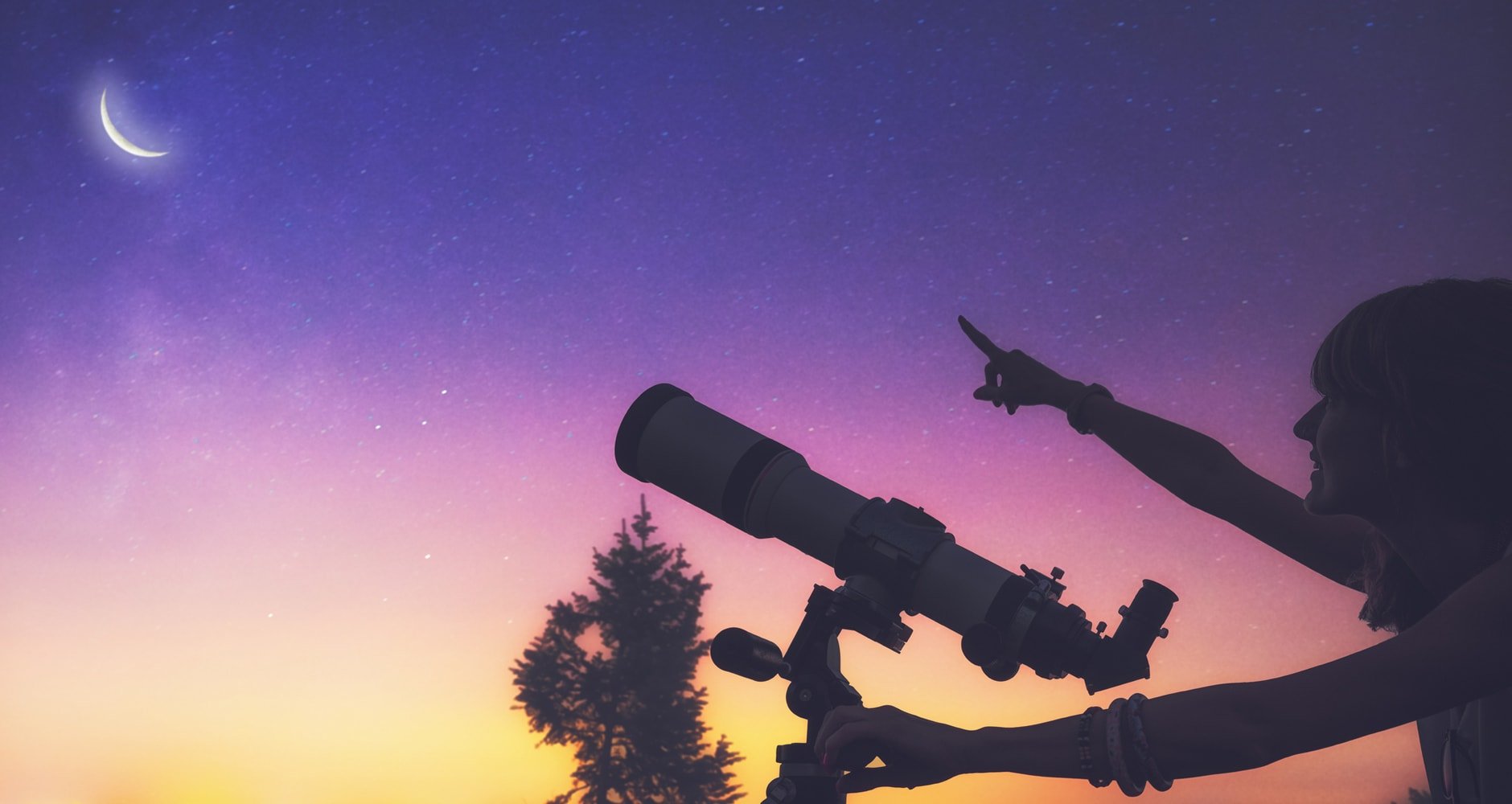
Astronomy Day takes place twice each year, once in late April or early May (known as “Spring Astronomy Day”, in 2026 it is Saturday, April 25) and once in September or October (known as “Fall Astronomy Day”, in 2026 it’s September 27).
This “holiday” was created in 1973 by California astronomer Doug Berger. During the first observance, Berger set up telescopes in busy urban locations, such as street corners, parks, and malls, as a way to bring astronomy “to the people.” Since then, the event has grown to international proportions, with amateur clubs, planetariums, observatories, and other science organizations throughout the world hosting special events twice each year in honor of Astronomy Day.
Astronomy Day Dates, 2026 to 2030
| Year | Spring Astronomy Day | Notes |
|---|---|---|
| 2026 | April 25 | Confirmed by Astronomical League and Farmers’ Almanac |
| 2027 | May 8 | Confirmed by Astronomical League |
| 2028 | April 29 | Confirmed by Astronomical League |
| 2029 | May 4 | Derived from first-quarter Moon rule; verify at astronomyday.astroleague.org closer to the date |
| 2030 | April 27 | Derived from first-quarter Moon rule; verify at astronomyday.astroleague.org closer to the date |
Astronomy Day (spring) falls on the Saturday closest to the first-quarter Moon between April 16 and May 16. There is also a fall Astronomy Day in October. Both are set by the Astronomical League.
Dates are set by the Astronomical League so that the Saturday falls close to the first-quarter Moon: high enough in the sky after sunset for sidewalk views, but not so bright it drowns out the planets and brighter star clusters.
How To Celebrate
Check with your local planetarium or museum to see if they have any programs planned, whether in person or online. Many are happy to simply take their first look through a telescope or set of high-powered binoculars right in their own backyards. Be sure to check out our guide to the visible planets.
Consider joining your local astronomy club. If you ever felt self-conscious about your lack of knowledge, fret not. They’re happy to introduce new astronomers to the hobby of stargazing.
A First-Timer’s Astronomy Day Plan
- Pick your spot. A driveway, a balcony, a school playing field, any patch of open sky 30 minutes from city lights gets you a far better Astronomy Day view than a downtown park.
- Show up at first dark, not midnight. Mercury, Venus, and the Moon are easy in twilight. Wait an hour, and Jupiter, Saturn, and the brightest deep-sky objects come up.
- Start with binoculars. 7×50 or 10×50 binoculars resolve the four Galilean moons of Jupiter, the lunar maria, the Orion Nebula, and the Pleiades. They cost a fraction of a telescope.
- Use a red flashlight. White light kills night vision in 20 seconds. Red light preserves it.
- Bring a sky map. A free app like Stellarium or SkySafari pointed at the sky names whatever you’re looking at and tells you what is coming up next.
- Find an Astronomy Day star party near you. Local clubs put telescopes on sidewalks and welcome anyone who walks up. The Astronomical League’s event finder lists them.
Happy skywatching.

Frequently Asked Questions About Astronomy Day
When is Astronomy Day in 2026?
Spring Astronomy Day is Saturday, April 25, 2026. Fall Astronomy Day is Saturday, September 27, 2026. The dates are set by the Astronomical League to fall close to a first-quarter Moon.
Why are there two Astronomy Days each year?
The original spring event began in 1973 to take advantage of mild evenings and an early-evening Moon. A fall counterpart was added later to catch the longer autumn nights and the return of Orion and the winter stars in the early-morning sky.
Do I need a telescope to celebrate Astronomy Day?
No. Bare eyes plus a free sky-map app will let you find the Moon, planets, and the bright constellations. A pair of 7×50 or 10×50 binoculars adds Jupiter’s moons, the Pleiades, and the Orion Nebula. Telescopes are a bonus, not a requirement.
What can I see in the sky on Astronomy Day?
It depends on the year, but spring Astronomy Day generally puts Mars and Jupiter, the Beehive Cluster, and the spring constellations Leo and Virgo overhead. Fall Astronomy Day brings Saturn, the Andromeda Galaxy, and the rising Pleiades. Always check what is up that night for your latitude.
Where can I find an Astronomy Day event near me?
The Astronomical League’s website lists registered events. Many local astronomy clubs, planetariums, science museums, and university observatories run sidewalk-telescope sessions; check their event calendars in the two weeks before each Astronomy Day.
Who started Astronomy Day?
California astronomer Doug Berger in 1973. He set up telescopes at street corners, parks, and shopping malls so that people who would never visit an observatory could still take a look through one.
What if it’s cloudy on Astronomy Day?
Many host clubs run an indoor program (planetarium show, lecture, livestream) when the sky shuts down, and most will reschedule a sidewalk session for the next clear evening. Check the host’s social channels the afternoon of the event.
For more stargazing reading, see our pieces on moon phases, why there are more stars in winter, and the Taurid meteor shower.



Jaime McLeod
Jaime McLeod is a longtime journalist who has written for a wide variety of newspapers, magazines, and websites, including MTV.com. She enjoys the outdoors, growing and eating organic food, and is interested in all aspects of natural wellness.
- Jaime McLeod

- Jaime McLeod
- Jaime McLeod
- Jaime McLeod