

How To See The Taurid Meteor Showers
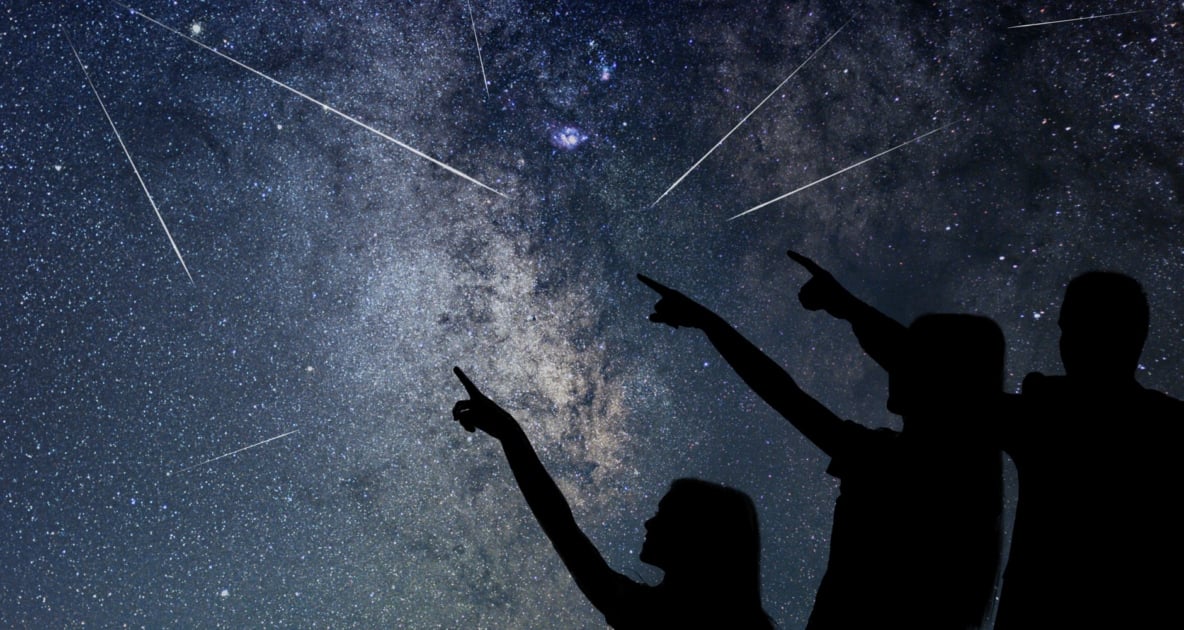
Quick Reference: Taurid Meteor Showers
- Two showers, one stream: Southern Taurids (Sep 10 to Nov 20, peak Nov 2-4) and Northern Taurids (Oct 20 to Dec 10, peak Nov 12-14).
- Parent body: Comet 2P/Encke. Encke is one of the oldest tracked comets, with the second known orbit after Halley’s.
- Rate at peak: 5 to 10 meteors per hour, but the Taurids deliver more fireballs (bright, slow, multicolor) than any other shower.
- Speed: 17 mi/sec, the slowest of any major annual shower. That is why fireballs linger and glow.
- Radiant: Taurus, easy to find under the V of the Hyades and the Pleiades.
- Best for 2026: the Moon’s phase is generally favorable for the early-November Southern peak; aim for the southern sky from Nov 5-12.
Curious when to catch a shooting star during the Taurid meteor shower? Here is everything you need to know. Have questions after reading? Ask us in the comments below. For an authoritative reference, see the EarthSky guide to the Taurids, and NASA’s page on comet Encke.
Three separate meteor showers occur during the month of November: the South Taurids, the North Taurids, and the Leonids.
What Are The Taurids?
The Taurids are named after Taurus because that is the constellation from which they appear to emanate (the “radiant”). The radiant point for the Southern Taurids, which last from about September 10 to November 20 and peak during the late evening and early morning hours of November 2-4, is found in southern Taurus, while the Northern Taurids, which last from about October 20 to December 10 and peak in the early morning hours of November 12-14, radiate from the northern part of the constellation.
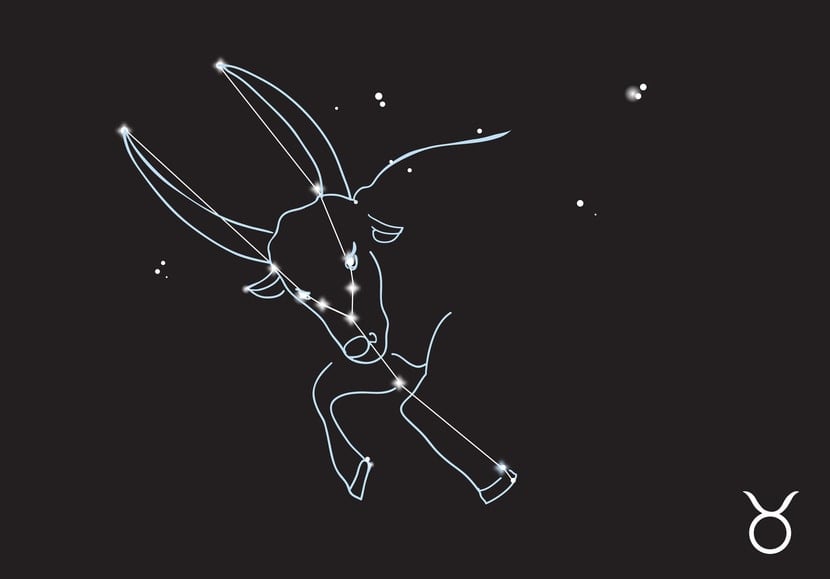
The Taurids are unusual in that many meteors may be seen in the evening, since the shower’s radiant (Taurus) is fairly high in the sky all night and crosses the meridian (high toward the southern part of the sky) about an hour before midnight.
They are the slowest of any of the major annual meteor showers, encountering the Earth at 17 miles per second. They are known to have many bright colors. The dominant color is yellow, but orange, green, red, and blue fireballs have been recorded. Taurid fireballs are big enough that some research groups (notably astronomer David Asher) have proposed a “Taurid Resonant Swarm” of larger debris embedded in the stream, with peaks of fireball activity every few years.
The Taurids are caused by the dust of the comet Encke (pronounced “EN-key”), credited to Johann Franz Encke, an 18th-century German astronomer.*
Details For The Taurid Meteor Showers
How can you catch a shooting star during the Taurid meteor showers? Look to the southern sky from November 5 to 12. The Moon’s phase is generally favorable for observing these meteors during the early-November Southern peak; check your local moonset and moonrise times before you set the alarm.
Observers can also take advantage of the unusually long duration of the shower. Earth takes at least two months to traverse the Taurid stream, believed to have become diffuse over the centuries because of its great age.
What Are Meteor Showers, Exactly?
To understand meteor showers a bit better, here is a simple explanation. As a comet travels through space, it releases a trail of dusty material, essentially a “river of rubble.” So even though the comet itself may be far from the Earth, every time the Earth sweeps across that comet orbit (which in the case of the Taurids, it does every November), it encounters that rubble river again. When those tiny bits ejected by the comet ram into our atmosphere, they create the “shooting star” effect.
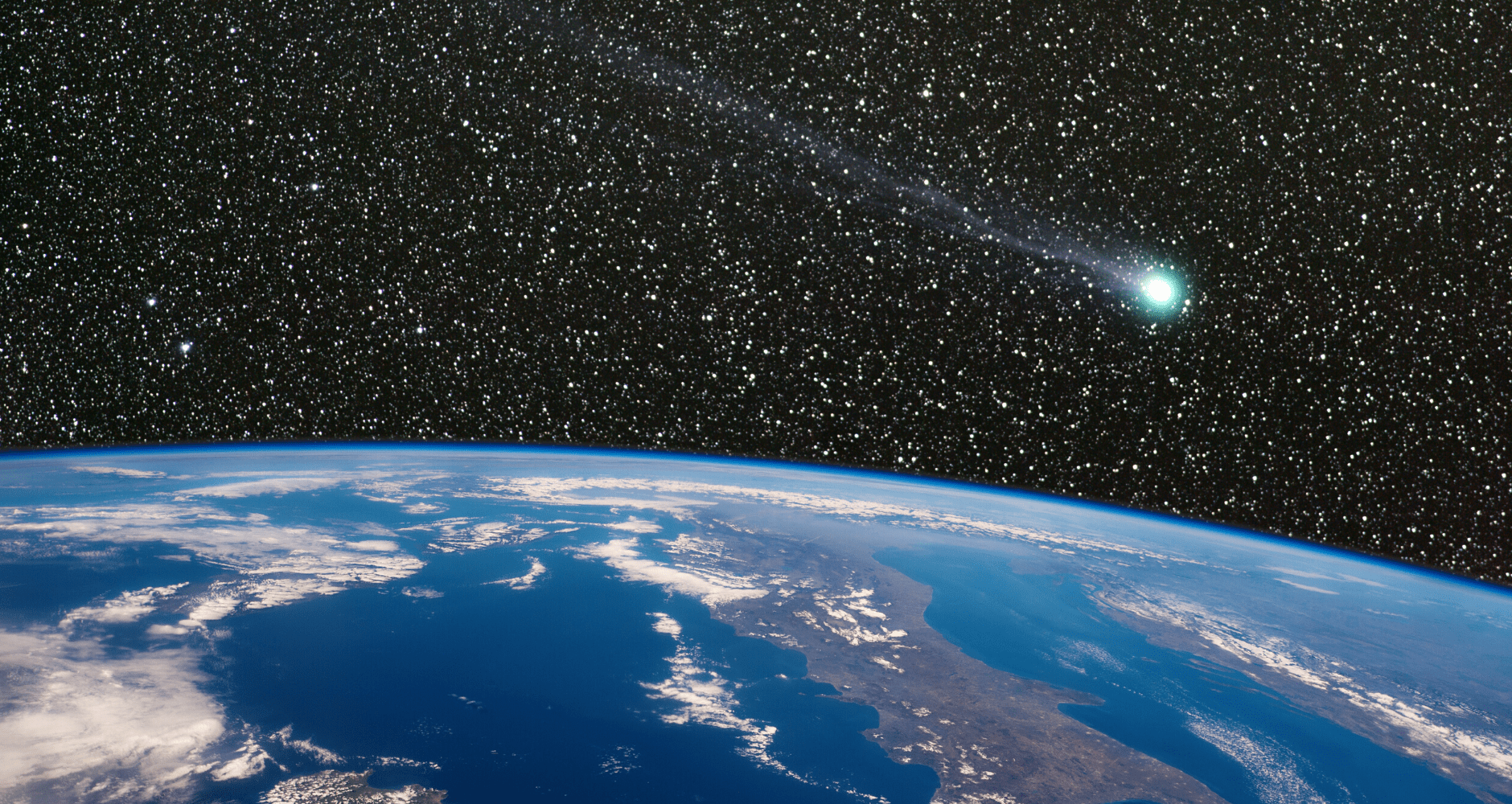
The “river of rubble,” which we know more familiarly as “meteors” or “shooting stars,” is made up of metallic or stony particles that become visible when they plunge through our atmosphere. Though 100 million or more strike our atmosphere every 24 hours, those particles larger than dust are usually vaporized long before they can ever get close to the Earth’s surface. The average meteor is estimated to weigh only 0.0005 ounces.
* Astronomer Joe Rao tells us, “Encke did not discover the comet; it was actually discovered several times by other observers, but Encke was able to ‘tie together’ those apparitions and prove that all those comets were actually one and the same. It was only the second comet to have its orbit accurately determined (the first was Halley’s), so to honor this achievement Encke was honored by having the comet named for him. Interestingly, however, Encke always referred to the comet as ‘Pons’ (one of the observers who previously discovered it). Encke spent about 40 years of his life checking and refining the orbit of his comet, yet up till the time he died, he never took the time to look at it through a telescope. A desk man to the end.”
Taurid Meteor Shower at a Glance

Taurid Meteor Shower FAQ
When is the Taurid meteor shower?
There are two: Southern Taurids active September 10 to November 20, peaking November 2-4, and Northern Taurids active October 20 to December 10, peaking November 12-14. The combined sweet spot is November 5 to 12.
How many meteors per hour can I expect?
5 to 7 per hour from each branch, so 10 to 12 per hour during the overlap window if you have dark sky. Suburban skies will cut that in half.
Why do the Taurids produce so many fireballs?
The Taurid stream contains larger-than-average debris embedded in the dust, possibly from past fragmentation of comet Encke. When those bigger chunks hit, they make a bright slow fireball that other showers rarely match.
Where do I look?
Anywhere in the sky. The “radiant” is in Taurus, but meteors can appear anywhere overhead. Aim southeast from late evening onward; midnight to 4 a.m. is usually the strongest stretch.
What is the parent comet?
Comet 2P/Encke, the second known periodic comet after Halley. Encke takes 3.3 years to orbit the Sun and has been leaving dust along its path for thousands of years.
Do I need a telescope?
No. The naked eye is the best tool. A reclining chair, a blanket, and dark-adapted vision (no phone screens) are all you really need.
Is there a “fireball swarm” year?
Astronomer David Asher’s model predicts elevated fireball years every few years (2005, 2015, 2022, and so on). Even off-peak years still get the occasional spectacular fireball. Set out and look up.
Join The Discussion
Have you ever seen a shooting star during the Taurid meteor showers? Share your experience (and photos) in the comments section below.
Related
Learn about November’s other meteor shower, the Leonids. For more sky reading, see our companion guides: Sirius, the Dog Star, why there are more stars in the winter sky, and understanding the phases of the moon.



This article was published by the Staff at FarmersAlmanac.com. Any questions? Contact us at [email protected].
- Farmers' Almanac Staff

- Farmers' Almanac Staff

- Farmers' Almanac Staff

- Farmers' Almanac Staff


We were fortunate to see the Leonids shower from Maui a few years ago while on vacation. We got up around 3am and saw close to 100 per minute falling above us. It was the most beautiful and fascinating thing I have ever witnessed.
I only ask because it says above that it’s active from the 5th through the 12th
I’m new to all of this, will there be meteors tonight to be seen if I go to the beach?
I think I saw one the other night kinda freaked me out a little at first
On 02 November, I saw a blue/white tailed shooting star. It’s duration being the longest & brightest I’ve ever beheld in my 45 years of dark sky reverence. I shared the sighting on my fb page & a fan commented “it must be one of the Taurids”. !!!! I found your post & shared it the next evening & then headed out with my dogs; sure enough, I saw another & of course was thrilled, as you said, to see this ” fireball”. It”s trajectory & coloring were similar. I made wishes each time. I just wanted to thank you for the “sharable” information. http://www.fb.com/healthycreatureswisdom Thanks & Loves The Old Farmer’s Almanac !!!
That’s so lovely made me smile 😊