

15 Fun Egg Facts For Egg Day (June 3)
June 3rd is Egg Day! Celebrate with these 15 egg-cellent facts you may not have known about one of nature's near-perfect foods!

Quick Reference: Egg Day (June 3)
- When: June 3 every year, an unofficial U.S. food holiday for one of nature’s most efficient packages of protein.
- Top producer: Iowa, with more than 14.8 billion eggs a year, followed by Ohio at 7.9 billion.
- How long to make one: a hen builds a single egg in 24 to 26 hours, then starts the next one within about 30 minutes.
- Shell color: set by hen breed, not by taste or nutrition. Brown, white, blue, and green are all the same egg inside.
- Cooked vs raw: only 51 percent of raw egg protein digests; cooking lifts that to 91 percent.
- Spin test: raw eggs wobble (liquid inside shifts), hardboiled eggs spin smooth. Quickest fridge sort there is.
Fry them, poach them, boil or bake them, any way you crack them, eggs are delicious and nutritious. They are considered nature’s most perfect food, packed with protein and amino acids. We rely on them for breakfast, lunch, dinner, and dessert, but there are plenty of egg facts that are not common knowledge. June 3 is unofficial Egg Day in the U.S. (the American Egg Board has marked it since the 1980s), so consider this our short field guide to the humble shell.
Eggs are not just a kitchen staple. They are a small marvel of biology and economics. One hen, one day, one near-perfect package of protein in a shell that fits a refrigerator door. The U.S. Department of Agriculture tracks egg production and pricing across all fifty states, and the U.S. Food and Drug Administration sets the safe-handling rules (see FDA egg safety). Enjoy some of these lesser-known tidbits about eggs.
15 Fun Facts About Eggs
- Chef hats traditionally have pleats equal to the number of ways that you can cook an egg.
- Harriet, a hen from the United Kingdom, laid the world’s largest egg in 2010. Her astonishing egg measured 9.1 inches in diameter.
- It takes a hen between 24 and 26 hours to develop an egg. Once she lays an egg, the development of a new egg normally starts within 30 minutes.
- Chickens don’t produce one egg at a time. Producing hens normally have several eggs in various stages of development at once.
- Eggshell colors have nothing to do with the flavor or nutritional value of the egg. Brown, white, and even blue and green eggshells are simply indicative of the breed of hen.
- The hen’s diet determines the color of the yolk. Some producers feed natural supplements like marigold petals so that their hens lay eggs with brighter yolks.
- There are several reasons we commonly eat chicken eggs instead of duck or turkey eggs. Chickens lay more eggs, need less nesting space, and do not have the strong mothering instincts of turkeys and ducks, which makes egg collection easier.
- White eggs are more popular among commercial producers because chickens that lay white eggs tend to be smaller than their brown-egg-laying cousins, therefore needing less food to produce the same number of eggs.
- Most of today’s egg-laying hens are White Leghorns (white eggs) or Rhode Island Reds and Barred Plymouth Rocks (brown eggs).
- Not all chickens lay eggs equally. Some breeds lay almost every day. Others lay every other day or once to twice per week.
- When it comes to the number of eggs laid each year, Iowa leads the nation with more than 14.8 billion eggs produced annually. Ohio is the next state in line, producing 7.9 billion eggs each year.
- Eating raw eggs will not help you build muscle. Only 51 percent of the proteins in raw eggs are digestible, while 91 percent of the proteins in cooked eggs are digestible.
- Can’t tell if that egg in the refrigerator is raw or hardboiled? Try spinning it. Raw eggs wobble as the liquid inside shifts, but hardboiled eggs spin smoothly.
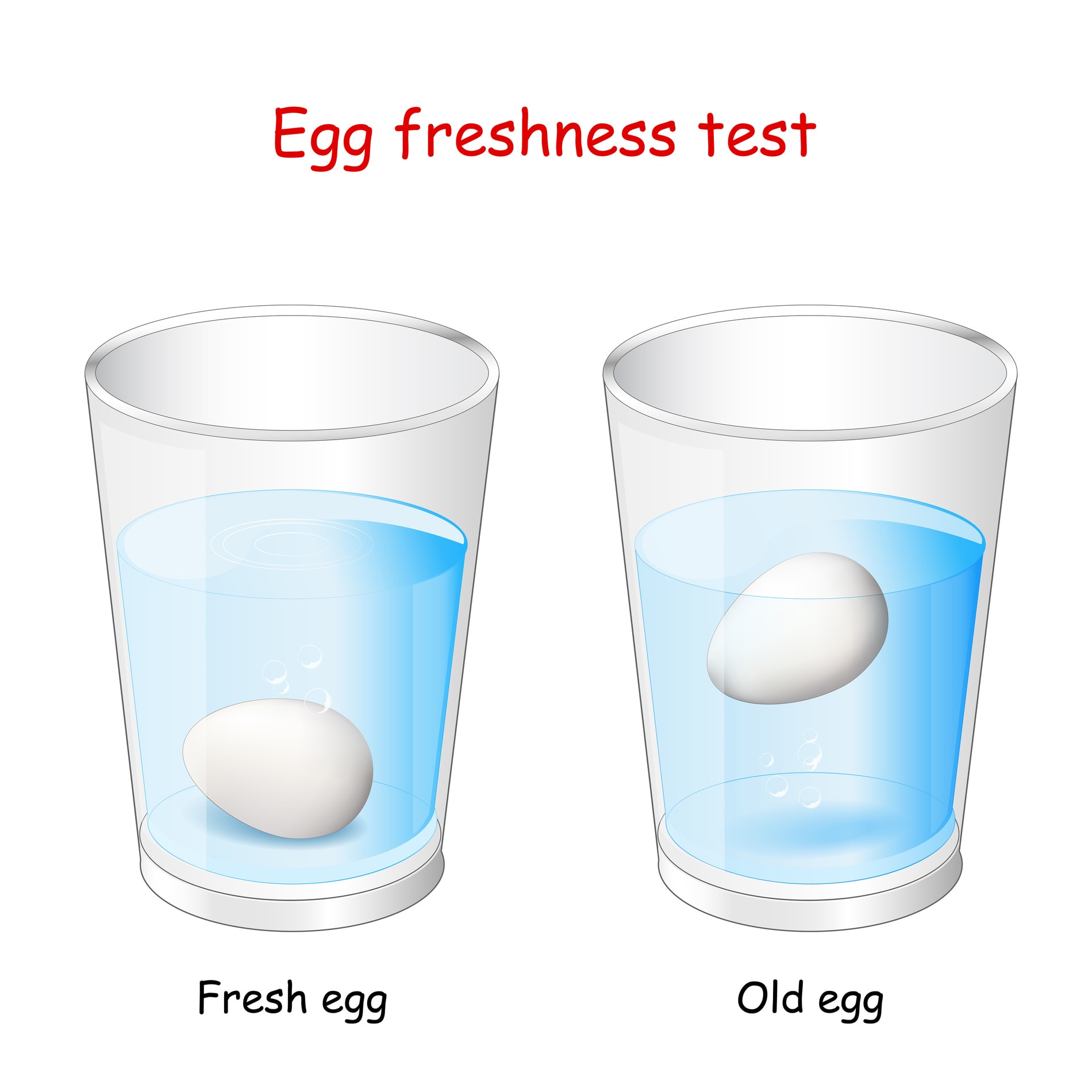
- Because older eggs have larger air cells, they are much easier to peel than fresh eggs.
- Cloudy egg whites mean the eggs are extremely fresh, while clear egg whites are an indicator of older eggs. Cloudiness of raw white is due to the natural presence of carbon dioxide that has not had time to escape through the shell. As eggs age, carbon dioxide escapes and the white becomes more transparent. Other colors in the egg white may be a sign of spoilage, so if it is not cloudy-white or clear, do not eat it. Read: How to tell if your supermarket eggs are fresh.
A Few More Bonus Facts for Egg Day
- Yolk color is a flag, not a grade. Pale yellow yolks come from corn-and-wheat diets, deep orange yolks come from greens, marigold petals, or pasture. Both can be nutritionally similar.
- One average chicken egg has about 70 calories, 6 grams of protein, and 5 grams of fat, most of it in the yolk along with vitamin D, choline, and lutein.
- An egg’s pointed end faces down inside the hen. Storing them point-down in the carton keeps the yolk centered and slows aging.
- The little chalky white strand in a fresh egg is called the chalaza. It anchors the yolk to the center of the white. It is edible, and a thick chalaza is a sign of freshness.
- One hen, one year, about 250 to 300 eggs. A productive Leghorn can top 320. A heritage breed often lands around 180.
U.S. Egg Production at a Glance

Egg Facts FAQ
When is Egg Day?
June 3 every year. It is an unofficial U.S. food holiday tied to the American egg industry, used by farms, cooking schools, and home cooks to mark one of the most efficient sources of protein around.
Are brown eggs healthier than white eggs?
No. Shell color is a breed trait. Brown eggs come from heavier hens that eat more feed, which is why they cost a little more. Inside the shell, the nutrition is essentially the same.
How do I tell if an egg is hardboiled without cracking it?
Spin it on the counter. A hardboiled egg spins smoothly. A raw egg wobbles because the liquid inside shifts as the shell rotates. Stop the egg with a finger and let go; the raw one will keep moving for a second.
Which state produces the most eggs in the United States?
Iowa, with more than 14.8 billion eggs per year. Ohio is second at about 7.9 billion, with Indiana, Pennsylvania, and Texas rounding out the top five.
Why are older eggs easier to peel?
As an egg ages, the air cell at the wide end grows, which gives the shell a little extra room to break away from the membrane during peeling. Eggs that are a week or two old are usually the easiest to peel after boiling.
Should I eat raw eggs for protein?
No. Only 51 percent of the protein in a raw egg is digestible, compared to 91 percent in a cooked egg. Raw eggs also carry a small Salmonella risk. Soft-scrambled, soft-boiled, or poached gets you almost all the benefit safely.
How long does it take a hen to lay one egg?
About 24 to 26 hours from start to laid. Within 30 minutes of laying, the hen normally begins building the next egg in the chain. A healthy hen will average 5 to 6 eggs a week during her best laying years.
Crack a few in honor of Egg Day, and if the freshness question keeps coming up, read our companion pieces: how to tell if supermarket eggs are fresh, 10 surprising uses for eggshells, and the Almanac guide to keeping backyard chickens.



Amber Kanuckel
Amber Kanuckel is a freelance writer from rural Ohio who loves all things outdoors. She specializes in home, garden, environmental, and green living topics.
- Amber Kanuckel

- Amber Kanuckel

- Amber Kanuckel
- Amber Kanuckel





Hay. Egg
Hahahhaha some of the comments are as good as the article….
I had lived on a poultry farm growing up with over 60,000 lays hen on site at a time. with several different breeds of chickens…all these were feed the same feed…and YES there is a difference in the taste of white to brown egg shelled chicken….the yolks of the brown eggs normally have a strong taste….I’ve proven it myself in a blind taate test several times. Yes chickens sometimes lay double yolk eggs…..this due to that chicken being under some sort of stress in the eggs developement….I have even seen chickens lay eggs without a hard shell..just in the eggs inner membrane
Egg-citing informations.
Very intresting artile.. Am happy that i sign up with farmers almanac. I learned some garden stuff i did not know. thank you i am going to try them in my garden.
hey victor put a ia at the end if your name and thats my name
Very helpful. Thank you
I found this article very useful.
I enjoyed this article and learned quite a bit from it. We eat a lot of eggs and plan on getting some chickens soon. My favorite eggs are the brown organic eggs, although my husband says he can’t tell the difference, but the yolks seem much richer. My favorite way to eat eggs is fried dippy style, scrambled with cream, coddled, and egg salad. 🙂
My five hens are pastured, in that they have half of my backyard to run around in. Their yolks are nice and yellow orange. The more access they have to bugs and greens, the darker the yolks. A few years ago, we had a grasshopper plague and their yolks were almost red from all the grasshoppers they managed to eat. They were happy hens!
The color of the eggshell is determined by the color of the hens earlobes. White feathers, white earlobes, white eggshells!