

What Is An Onion Snow?
Isn't winter over? What does this kind of snow have to do with spring? Find out!
Quick Reference
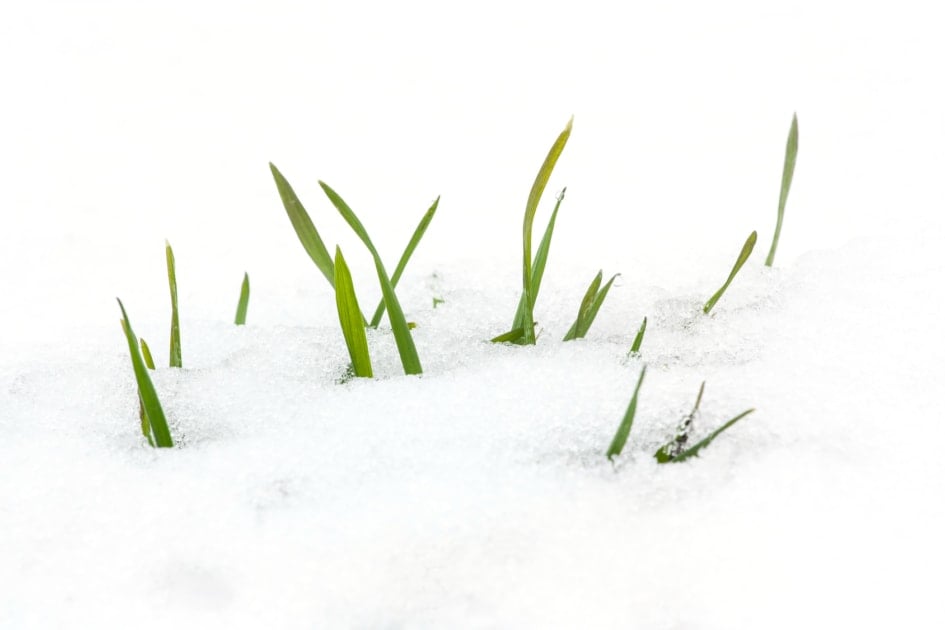
- What: A light, fast-melting snowfall that lands after spring onions are in the ground and just sprouting.
- Origin: Pennsylvania Dutch farming language. Also signals when to plant onions in some tellings.
- Companion term: “Sapling bender,” a heavier spring snow that bends new tree branches.
- When: Late spring, usually the final snowfall before warm weather settles in.
- Companion read: Our Three Ice Men and spring weather lore.
At the Farmers’ Almanac, we get a lot of questions about the weather, of course, but we also receive a lot of inquiries regarding weather folklore and weather terms that originate from different parts of the country.
One such term is “onion snow,” which, despite its name, actually has a lot to do with springtime.

What is an Onion Snow?
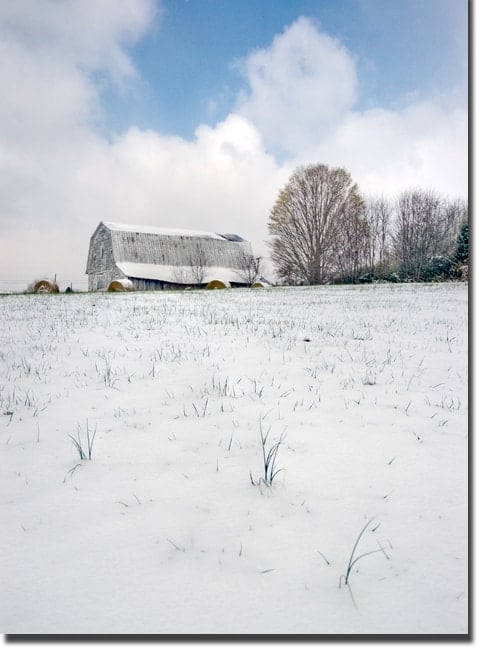
“Onion snow” is a term particular to the state of Pennsylvania originated by the Pennsylvania Dutch culture and language, and refers to a snowfall that occurs after the spring onions have been planted, and comes right as they are sprouting. Others say that this late spring snow is an indicator for when it is a good time to start planting onions. Either way, the snowfall is defined as light and melts quickly, and is usually the final snowfall before the end of the spring season.
With many parts of the country getting snow well into springtime, it makes perfect sense that specific regions would have their own colloquial terms for snows that hit around the time of planting crops.
Another late-spring snow term to originate from the Pennsylvania Dutch is a “sapling bender,” referring to when it snows heavily in the spring, bending the branches of the new saplings.
Other Late-Snow Names From Around the Country
Onion snow is one of many regional names American farmers used for the late snowfalls that come after the soil has thawed. Each is named for the plant or animal that was about to make its move when the snow showed up.
| Name | Region | Trigger |
|---|---|---|
| Onion snow | Pennsylvania Dutch country | Snow on sprouting spring onions |
| Sapling bender | Pennsylvania Dutch country | Heavy late-spring snow that bends new branches |
| Dogwood winter | Appalachia, Mid-Atlantic | Late cold snap when dogwoods bloom |
| Blackberry winter | Southern Appalachia | Cold snap when blackberries flower |
| Whippoorwill storm | Ozarks | Late freeze when whippoorwills return |
| Locust winter | Appalachia | Cold snap when locust trees leaf out |
The National Weather Service publishes last-frost probability tables for every U.S. station, which is the modern-day equivalent of the onion-snow rule.

Frequently Asked Questions
What is an onion snow?
A light, fast-melting late-spring snowfall that lands just after spring onions have been planted and are starting to sprout. The term originated in Pennsylvania Dutch farming language.
Where does the term come from?
From the Pennsylvania Dutch, the German-speaking farming communities of central and eastern Pennsylvania. The phrase reflects their habit of timing planting to natural cues rather than calendar dates.
Does an onion snow hurt the onions?
Usually not. Onion snow is light and melts quickly. Onions are cold-hardy and can handle a brief dusting once the bulbs are in the ground.
What is a sapling bender?
Another Pennsylvania Dutch term for a late-spring snow, but heavier than onion snow. The wet, sticky snow weighs down the new branches of saplings until they bend.
Are there other regional names for late-spring snow?
Yes. Dogwood winter and blackberry winter in the Appalachians, whippoorwill storm in the Ozarks, and locust winter when the locust trees leaf out. Each is timed to a specific natural marker rather than a calendar date.
When should I plant onions?
Onions are cool-season crops. Plant onion sets four to six weeks before the last expected frost in your area. Check your zone’s last-frost date and pair it with the moon-sign tradition in our Best Days Calendar.
When does an onion snow usually fall?
In Pennsylvania, late March through early April most years. The snowfall is usually the final one of the season before warm weather settles in.
Tell Us
Does your region have its own name for the last snow of spring? Tell us in the comments. For more late-frost lore, see our Three Ice Men and dogwood winter entries.

This article was published by the Staff at FarmersAlmanac.com. Any questions? Contact us at [email protected].
- Farmers' Almanac Staff

- Farmers' Almanac Staff

- Farmers' Almanac Staff

- Farmers' Almanac Staff

It’s snowing heavily on this May 9th day @1:50pm. I refuse to plant anything until it warms up. Brrr…come on please.
Yep, snowed half the day here in N Pa. My car still has a bunch on the windshield.
I’ve head the late snowfall being called ‘poor man’s fertilizer’
AH the Onion Snow. I grew in Bethlehem, Pa. at the edge of the Pennsylvania Dutch country had a Pennsylvania Dutch heritage myself. I always heard of the onion snow growing up. I went to Kutztown State College(now University) and had an anthropology course. The teacher, trying to illustrate how environment effects words told us that Eskimos had many, many words for different types of snow. He then asked how many words we could think of for snow. Blizzard, dusting, etc came up and I said Onion Snow. He replied there is no such thing as Onion Snow. Guess he wasn’t Pa Dutch, but he was in a college in the middle of the Dutch Country.Hopefully he heard of it later.
Here in Schuylkill County, Pennsylvania the term ‘onion snow’ is well-known.
Thank you. An 83-year-old neighbor called today’s snow “onion snow.” I said I thought that was the light dusting of snow, last snowfall of the season. She said I was wrong, that it can be heavy, deep snow (her mother told her so.)
I might print this out to show her; but, maybe I should just let it go, eh.
Last snow around the middle of May here
In our neck of the woods in NW Pa. There is the Easter snow..and the onion snow…and the peepers have to through ice 3 times before spring is really here
N PA here. My grandma used to say the peep frogs had to freeze three times before spring arrived.
Interesting! Thanks for sharing, Brad!
My step grandpa who was from PA originally always told me you had to have at least 3 “onion snows” after the first day of spring before it would get warm for the spring/summer. I’ve passed this along to my sons and we discuss it very year.
Wow so cool
‘Onion Snow’ here in the U.P. is snow on the newly sprouted Wild Leek leaves in the Spring.
I remember the onion snow. One thing I want to point out is that Pennsylvania Dutch is incorrect, it is actually Pennsylvania Deutsche, the settlers were German descendants and not from Holland or the Netherlands. I was born in PA and miss it very very much here in hot hot Texas.