

Apple Scrap Jelly: Zero-Waste Recipe That Uses the Peels and Cores
Waste not, want not, we always say. Save those cores and peels from fall apple pie-making and create a delicious apple scrap jelly. Get the recipe here!
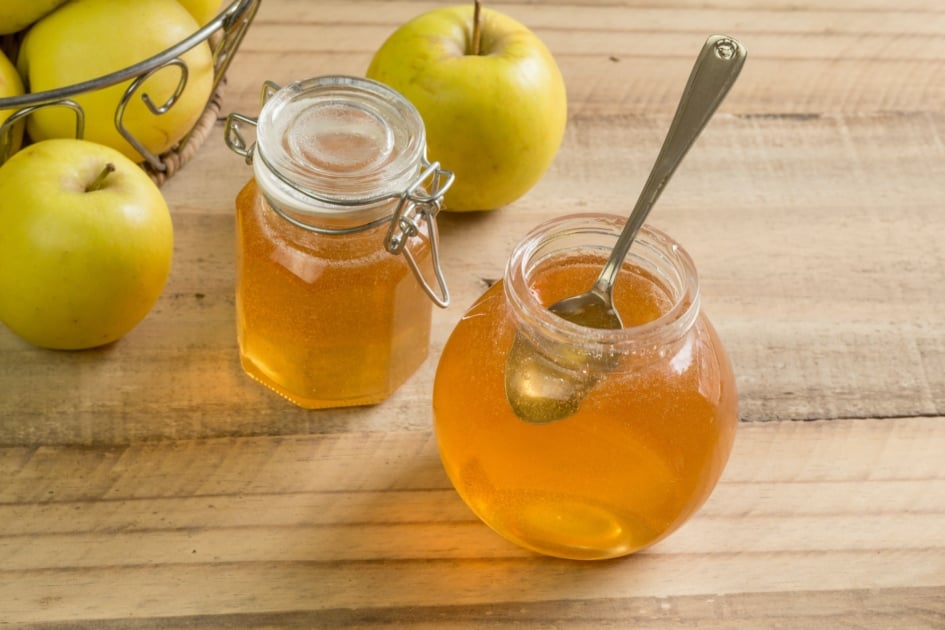
If you have ever peeled a bushel of apples for pies, sauce, or canning, you know how much fruit goes in the compost. The peels and cores are the most pectin-rich parts of the apple, and the old farmhouses knew it. Apple scrap jelly turns those scraps into a sparkling, rosy preserve with no commercial pectin and no waste. The recipe is so simple it barely needs writing down: apple scraps, water, sugar.
Quick Reference
- What it is: jelly made from the peels and cores left over after you have used the apple flesh elsewhere.
- Why it works: apple peels and cores hold most of the fruit’s natural pectin, which is what makes jelly set.
- Ingredients: apple scraps, water, sugar. No commercial pectin needed.
- Best apples: tart varieties (Granny Smith, Cortland, McIntosh, Northern Spy). Higher pectin and brighter flavor.
- Tradition: a classic farmhouse “use everything” technique from before refrigeration.
- Yield: one big pot of scraps gives 3-4 half-pint jars of jelly.
Why Apple Scraps Make the Best Jelly
Pectin is the natural carbohydrate in fruit that makes jam and jelly set. In apples, the highest concentration sits in the peel and the core, not the flesh. Throwing those out and reaching for store-bought pectin is the modern shortcut. Use the scraps and you get a cleaner, brighter, more apple-tasting jelly that gels with just sugar and time.
Tart, firm apple varieties make the best scrap jelly because they hold more pectin. Granny Smith, Cortland, McIntosh, Northern Spy, and Wealthy are excellent. Avoid Red Delicious; it is low-pectin and bland.
Apple Scrap Jelly Recipe
Ingredients:
- Apple scraps from about 8 to 10 apples (peels, cores, blossom ends; no stems or bruised parts)
- Water to cover (about 4 cups)
- Sugar (1 cup per cup of strained juice; usually 3 to 4 cups total)
- Optional: 1 tablespoon lemon juice for extra acidity and brightness
Instructions:
- Wash apple scraps thoroughly. Place in a large pot with enough water to just cover (about 4 cups).
- Bring to a boil, then reduce heat and simmer 30 to 45 minutes, until the scraps are soft and the water has turned pale pink-amber.
- Strain through a fine mesh sieve or cheesecloth-lined colander. Let the juice drip overnight for the clearest jelly; do not press the scraps (cloudy jelly results). You should have about 3 to 4 cups of juice.
- Measure the strained juice. Combine with 1 cup of sugar per cup of juice in a clean pot.
- Bring to a rolling boil. Cook 15 to 20 minutes, stirring often, until the jelly reaches the gel point. Test with a cold-plate method: drop a teaspoon onto a chilled plate. Tilt; if it stays in a soft mound rather than running, it is set.
- Ladle into sterilized half-pint jars, leaving ¼ inch of headspace. Wipe rims, seal, and water-bath process for 10 minutes.
- Cool jars on a towel for 24 hours. Check seals (the lid should not flex). Store in a cool, dark spot up to a year.
How to Use Apple Scrap Jelly
Spread on toast, biscuits, scones, or English muffins. Stir a tablespoon into oatmeal or yogurt. Glaze pork chops or roast pork tenderloin during the last 10 minutes of cooking. Spoon over baked brie or a cheese board with sharp cheddar and crackers. The light apple flavor is gentle enough to bridge sweet and savory uses.
Other Zero-Waste Kitchen Habits
Apple scrap jelly is one of the easiest entries into zero-waste cooking. Other classics worth learning: vegetable scrap stock from carrot tops, onion ends, and celery leaves; banana peel cake (the peels are sweet when ripe); citrus peel candy. The pattern is the same: the parts cooks usually discard often hold the most flavor and structure.
Keep Learning
Apple season is your best month for batch projects. Pair this with apple butter, applesauce, and a simple pie filling, and one Saturday in October can fill the pantry for the year.

Frequently Asked Questions
Do I need pectin for apple scrap jelly?
No. Apple peels and cores already contain enough natural pectin to set. Tart varieties (Granny Smith, Cortland, McIntosh) work best.
How long does apple scrap jelly keep?
Up to a year sealed in a cool, dark pantry. Once opened, refrigerate and use within 3 weeks.
Can I use apples that are slightly bruised?
Cut away bruised parts. The good portions of bruised apples are fine, but rotten spots can carry mold spores that survive the boil.
Why is my jelly cloudy?
Pressing the scraps during straining squeezes out cloudy pulp. For a clearer jelly, let the strained juice drip overnight without pressing.
Can I use cider instead of scraps?
Yes, but it makes apple cider jelly, not scrap jelly. Scrap jelly is its own thing, with the slightly tart, peel-forward flavor and rosy color you only get from peels and cores.


This article was published by the Staff at FarmersAlmanac.com. Any questions? Contact us at questions@farmersalmananac.com.
- Farmers' Almanac Staff

- Farmers' Almanac Staff
- Farmers' Almanac Staff
- Farmers' Almanac Staff




The second time I have tried apple scraps jelly. A year apart. The first time it did not work. However my sue chef was rushing it. No matter how I tried to explain you can’t….. This time it did jell. But just know it took forever. So long that I was questioning if it would. A thermometer helps. My only question is how far can we reduce the auger? Can we? It’s overpowering the apple. I did one substation this time. I added one cup 100% cherry juice. Probably one cup won’t do much.
Sous chef.
Unfortunately, this was a bust for me. Even with extra cores added. My mixture has boiled and boiled to the point where I may get one pint. I’ve stopped because the mixture is just too sweet now. I will attempt to dilute and make some juice. Better luck next time!
Update – Juice was flavorless sugar water. 🙁
We’re sorry to hear that! We hope that you have success if you try again!
Can I freeze my cores and peels to make jelly later?
Yes. Freezing actually helps break down the cells. Just don’t freeze for too many months in a frost free freezer.
Also, I am using 1/2 c. sugar and 1 tsp lemon juice per cup. Hopefully that’s adequate for flavor and acid. I can’t find the recipe I used before, but I like that this one is fairly straightforward.
I would check for chips in edges of jars before filling, and I assume it was typed after as a reminder.
Ok I made this yesterday. Feel like I followed the recipe as well as can be, waited for the liquid to “wrinkle” but it isn’t setting up. I made it yesterday afternoon. And no set up yet. All my jars sealed and all. Do I need to wait longer for them to set up? Just add pectin instead and redo them?
You probably will need to add pectin.
Did you use cores or just peels? You have to use cores to get pectin, and you want it to boil at medium heat for quite a while to reduce volume. Straining through a cheesecloth lined sieve also lets you bundle and squeeze gently to get as much juice without pulp as possible.
I have failed a time or two with apple jelly, but it’s worth learning how, especially when you’re using up scraps. 🙂
I was wondering why you can’t use fresh lemon juice? And also no pectin needed?
I’ve heard not to use fresh as it turns faster? Not sure! I just use the bottled.. ? As far as pectin goes, apples naturally have their own pectin.
I think you use bottled lemon juice so that the acid level is consistent. If you use fresh squeezed, you may not have the desired acidity for safety. Although, with all the sugar that’s added, seems like you wouldn’t have to use the lemon juice. Also, apples are naturally high in pectin, so that’s why it’s not needed to be added.
I have been cooking this mixture for an hour and testing it every 15 minutes. The mixture is not Turning “firm” what do you mean by “firm” when you put it in the water to test?! Literally is still liquid there is no firm anything to the consistency in the testing. I see wrinkle of the mixture in the water but again nothing as a “firm” consistency. Little frustrating.
Hi Crystal, we are sorry this recipe didn’t work for you. We have adjusted it so that it might be better to follow. I know that doesn’t help now, but just wanted to let you know we apologize for this and have adjusted the recipe.
Do you know about how many cups of scraps you ended up with? Sometimes my apples are teeny tiny, other times they’re huge!
It really depends on how many apples you start with. Hard to tell.
Good recipe. I’m somewhat new to jelly making.
I think I cooked mine down too much. It got pretty thick, but we can always heat it a little to get it out of the jar. Lol! I only got two half-pint jars.
In the ingredients there is no mention of sugar, but the instructions state sugar.
Can I use pint or 1.5 pint jars? No jar size is specified. Also do we discard two months after breaking seal??
Hi Joanie, you can use any size jar. Use just as you would any jelly. Keep it in the fridge if the seal is broken and use it up!
Usually when making jams and jellies you put it in a water bath for 10 minutes to seal. If you open one to use just refrigerated. You should be able to keep it for a while in the fridge or use it up whichever one comes first. ? Note: apples contain their own pectin so you do not need to add pectin. ?