

Is Good Friday Really the Best Day to Plant? The Folklore, the Tradition, and What Science Says
According to folklore, plants grow better and bear more fruit if planted on Good Friday. But is there any truth to this? Find out!
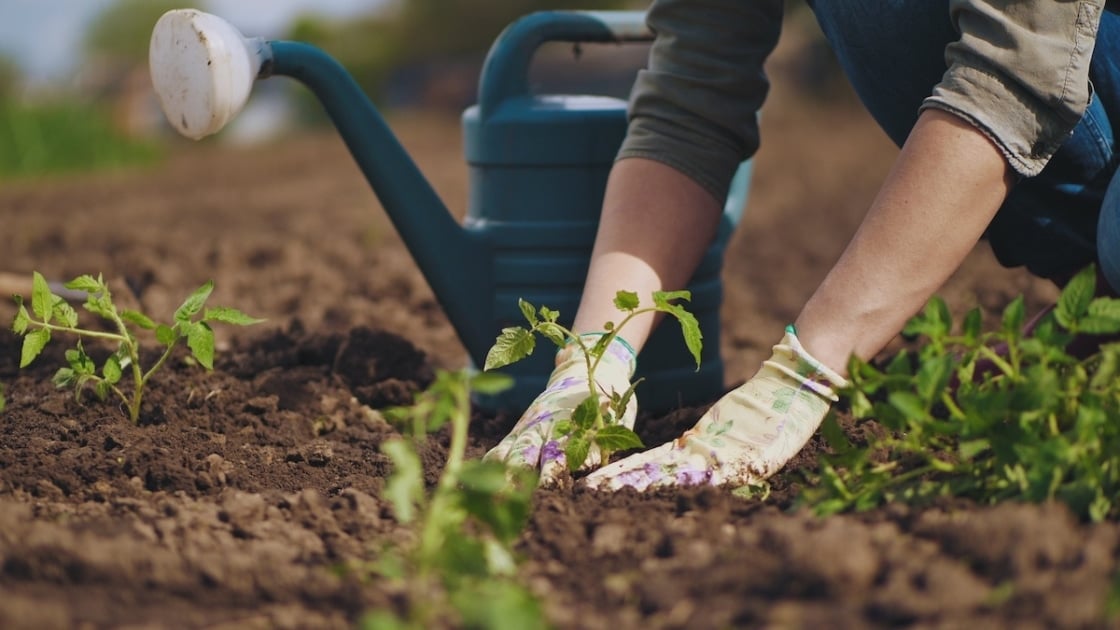
Quick Reference: Good Friday Planting
- The tradition. Many Christian communities (Catholic, Protestant, Appalachian) plant potatoes, peas, and root crops on Good Friday.
- Why it lasted: Easter calendar shifts with the spring moon and broadly aligns with soil reaching 45 to 50 F across much of the eastern US.
- Date range: Good Friday falls March 20 to April 23 depending on year. 2026: April 3.
- What works: peas, potatoes, onions, lettuce, brassicas. Cold-tolerant cool-season crops.
- Tool: the Almanac’s Best Days planting calendar.
On this page
The Good Friday planting tradition has been continuous across Christian agricultural communities for centuries. Plant potatoes, peas, and root crops on Good Friday for the best harvest. The tradition is rooted in two coincidences that make it work most years: the Easter calendar shifts with the spring moon, which broadly tracks soil temperature; and Good Friday falls within the cool-season planting window for most of the eastern US. This guide is the folk tradition, the science behind why it works most years, and the modern extension calendar that confirms it.
Why the Tradition Actually Works (Most Years)
Per UMN Extension’s cool-season vegetable guidance, two coincidences make Good Friday a reliable cool-season planting day across most of the Eastern US.
- Easter calendar tracks the spring moon. Easter falls the first Sunday after the first full moon on or after the spring equinox. So Good Friday is always between March 20 and April 23.
- That window matches cool-season planting. Soil temperatures across the eastern US typically reach 45 to 50 F (the minimum for pea, lettuce, and brassica germination) during this same window.
- Long-term continuity reinforces the tradition. Generations of successful Good Friday plantings created strong folk memory; failed plantings were forgotten.
- Calendar accuracy varies by region. Works best in USDA zones 5 to 7. Too early for zone 4 (snow may still cover ground); too late for zone 8 (warm-season crops should already be starting).
What to Plant on Good Friday (Cool-Season Cohort)
Per Almanac tradition and modern UMN Extension cool-season planting guidance.
- Potatoes. The signature Good Friday crop. Plant cut seed potato pieces 4 to 6 inches deep.
- Peas. Direct-sow shelling, snow, and sugar snap peas. Soak overnight to speed germination.
- Onions and shallots. Plant sets or transplants. They are cold-tolerant and benefit from long growing season.
- Lettuce, spinach, radish. Direct sow. Germinate in cool soil.
- Brassicas (broccoli, cabbage, cauliflower). Transplant out hardened seedlings.
- What NOT to plant Good Friday: warm-season crops (tomatoes, peppers, squash) need soil 60 to 65 F or higher.
Good Friday Garden Tradition + Folklore (Detail)
Below are the original detail sections on the Good Friday garden tradition, gardening by folklore and tradition, and whether there is truth to it.
Some Say “Don’t Do It.”
It is also interesting to note that among some cultures, Good Friday planting is not a good thing. The Creoles of Louisiana taught that you should never garden or work the soil on this day. According to their traditions, if one cuts open the ground on Good Friday, then Christ’s blood will flow into the tilled soil.

Good Friday Gardening FAQ
Why is Good Friday considered a good day to plant?
Centuries of agricultural folk tradition across Christian communities, reinforced by the calendar coincidence: Good Friday falls March 20 to April 23, the same window when eastern US soil temperatures typically reach 45 to 50 F (the minimum for cool-season crop germination). The tradition lasts because it works most years.
What should you plant on Good Friday?
Cool-season crops: potatoes (the signature Good Friday crop), peas, onions, lettuce, spinach, radish, and brassicas. Avoid warm-season crops (tomatoes, peppers, squash) which need soil at 60 to 65 F.
When is Good Friday in 2026?
April 3, 2026. Good Friday always falls March 20 to April 23 depending on the year, two days before Easter Sunday. The shift is set by the Easter calendar (first Sunday after the first full moon on or after the spring equinox).
Is the Good Friday planting tradition Catholic or Protestant?
Both, plus Eastern Orthodox and many Appalachian folk traditions. Per LOC Folklife agricultural-tradition records, Good Friday planting is one of the most widely-shared cross-denominational agricultural folk customs in the English-speaking world.
Does the moon phase matter for Good Friday planting?
Folklorically yes. Good Friday always follows a full moon (the Easter full moon, or paschal moon). Many planting traditions emphasize the waning moon (after full) for root crops. The Almanac’s Best Days calendar combines this lunar tradition with the date.


Amber Kanuckel
Amber Kanuckel is a freelance writer from rural Ohio who loves all things outdoors. She specializes in home, garden, environmental, and green living topics.
- Amber Kanuckel

- Amber Kanuckel

- Amber Kanuckel
- Amber Kanuckel




It’s a pretty interesting information. good article to refer to when growing plants!!!
My dad always plants on Good Friday and in four days we have green sprouts popping up. Our garden does better than most around us and ends up being plentiful every year.
Happy to hear that Good Friday planting leads to a good harvest for you! We hope he has another bountiful year this year!
No in southern ont Canada its after 24th mayweekend
My grandmother ( could grow an umbrella tree in a fruit jar ) warned grandpa to not plant his potatoes until there was a dark moon. Being a reasonable man, he planted a field of potatoes. Later on the field of potatoes were in full bloom. Grandpa admonished Grandma against using witchcraft and folklore in her gardening! At harvest time….not a single potato…Grandma got the last laugh. It would have been funny except that Grandpa had wasted all of that labor, field, and expense on a fruitless crop. After that experience he always asked Grandma for her advice on his planting dates.
As a Senior citizen, myself, my grandmother, born 1892, said if potatoes were not planted in the dark of the moon, one could not keep pototoes from sunburn, that you could not keep them under the soil. They continually came to the top and got burned.
Thank you for your information!
My Dad always planted his Tater’s on Good Friday and he always did very well with them. Really he planted all his crops by the moon phases, he was a better gardener than me but I’m doing OK.
My dad always said that he planted in the sun shine; not by the moon. I’m 78 and do not pay any attention to moon phases.
Have you tried it? You would find a huge difference.