

Constellations: Why They Don’t Look Like Their Names
Have you ever looked at a star formation and thought, "how'd they come up with that name?" Don't worry, you're not alone. Learn more.
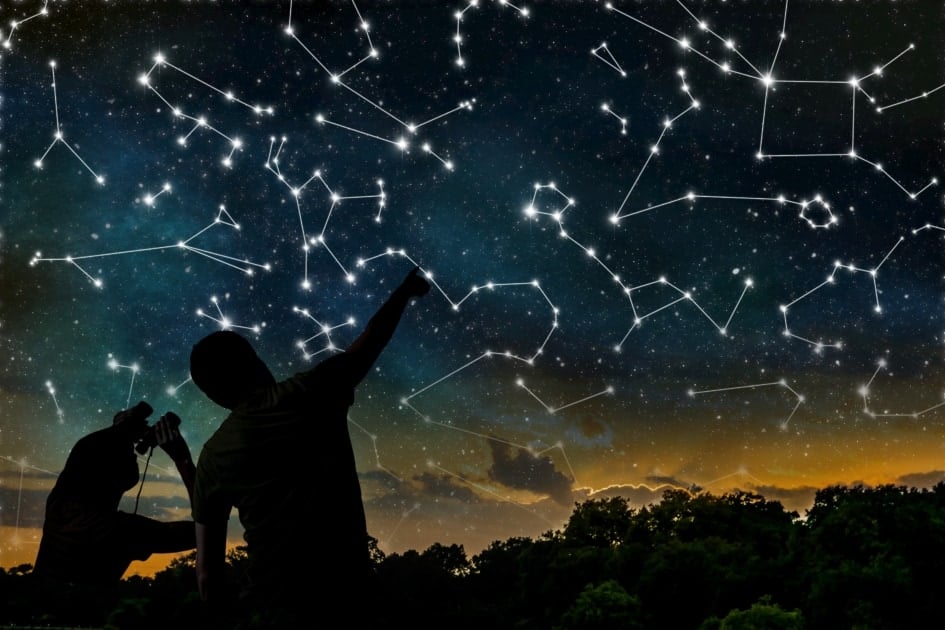
Quick Reference: Why Constellations Look Nothing Like Their Names
- The short answer: the names came from old stories, not from the shapes. Constellations are dot-to-dot star patterns, and the picture lives mostly in the imagination.
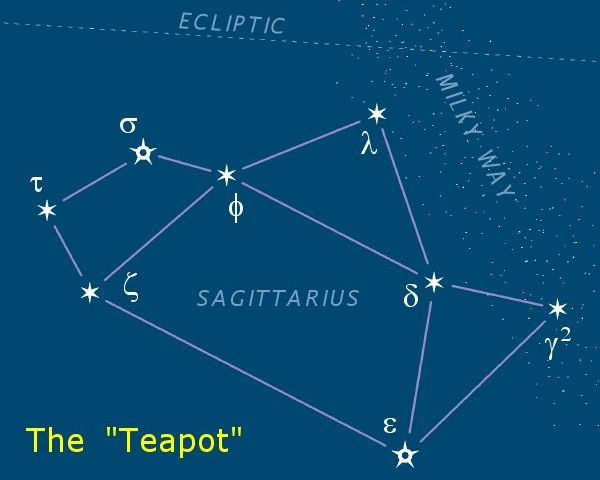
- Sagittarius: named for an archer, a centaur with a bow, but most star maps today show it as a teapot.
- Ursa Major: the Great Bear, whose seven brightest stars we call the Big Dipper, and folks in the United Kingdom call the plough.
- Canis Minor: the Little Dog, marked by Procyon, the eighth brightest star in the sky, six times as luminous as the Sun.
- Best time to look: a clear, dark, moonless night, well away from town lights.
Look at a star map in a book, a magazine, or here on the Farmers’ Almanac website, and sooner or later you ask the same question everybody asks: how did they come up with that name? You are not alone. The plain truth is that many constellations do not look anything like what they are named.
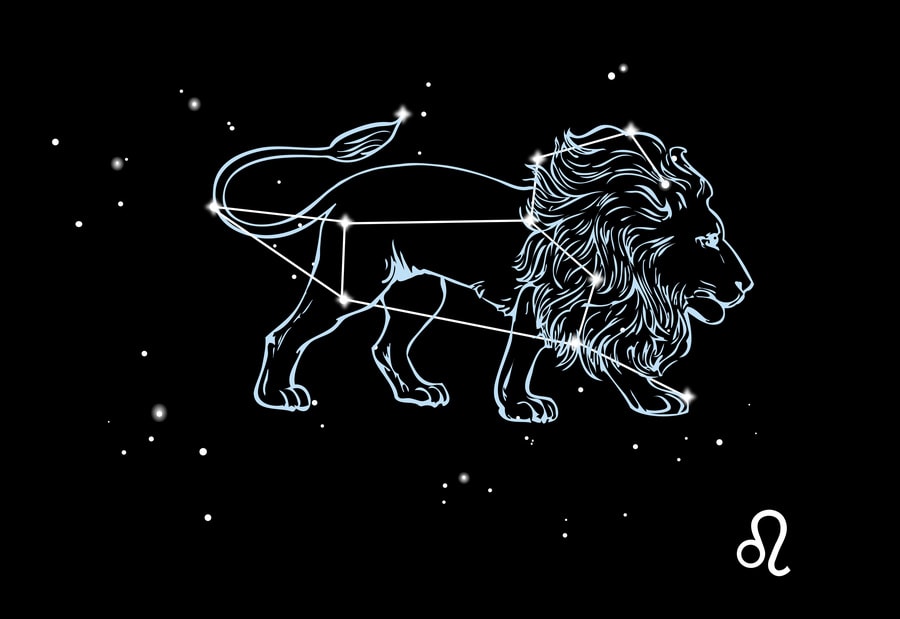
With names like those, you would expect to find a constellation shaped like a lion, an eagle, a bear, and the rest of the menagerie. But most of them look nothing like their namesake. Some are only loose geometrical shapes that, frankly, do not look like much of anything at all.
What Constellations Really Are
A constellation is simply a group of stars that people long ago decided to connect into a picture. The stars in any one pattern are rarely close together in space. They only appear to sit side by side because we see them flattened against the same patch of sky. NASA’s Space Place keeps a plain-English explainer on how constellations work and why their patterns shift over time if you want to go deeper than the night sky over your own yard.
Astronomers today recognize 88 official constellations that divide the whole sky into named regions. The pictures are old, but they still do the practical work of helping you find your way around the stars, the same job they did for sailors and shepherds thousands of years ago.
Ancient Imaginations
Remember that a few thousand years ago there was not much to entertain people once the Sun went down. Folks went outside under the cover of darkness, looked up at the stars, and wove stories about people, animals, and mythical beasts, using the patterns overhead as their illustrations. In many ways, the constellations may have been the first round of the children’s game we call “connect the dots.”
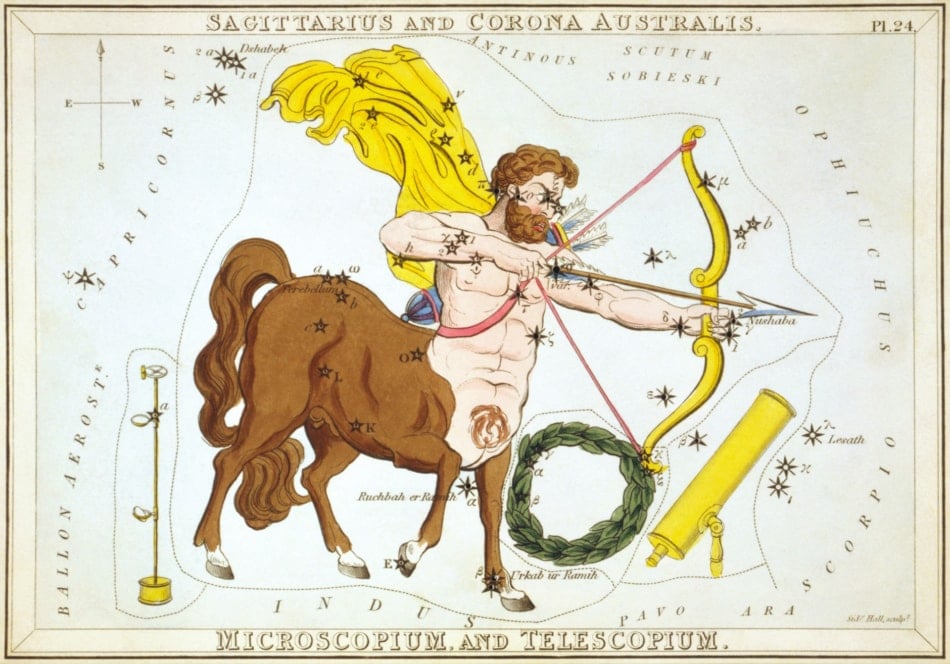
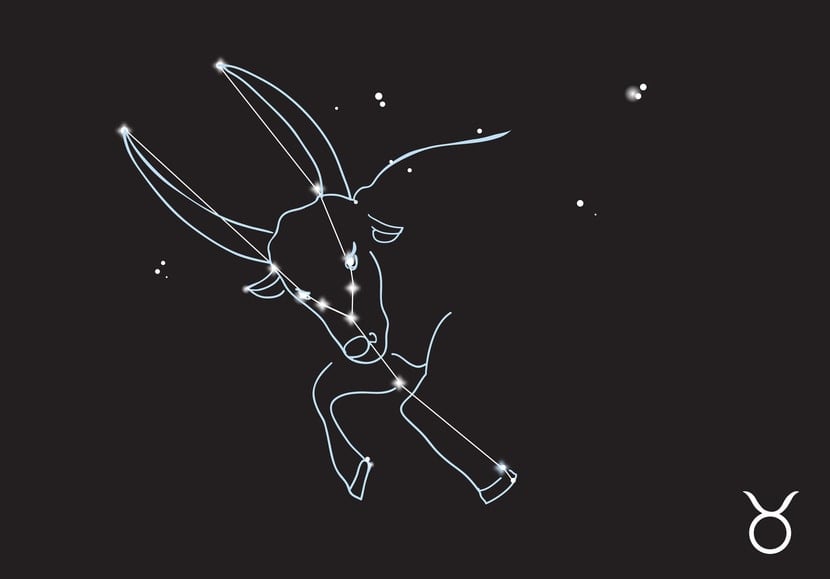
Take the constellation of Sagittarius. It is supposed to represent an archer who also happens to be a mythical half horse, half man creature known as a centaur. Yet most star maps today draw Sagittarius not as an archer at all, but as a teapot.
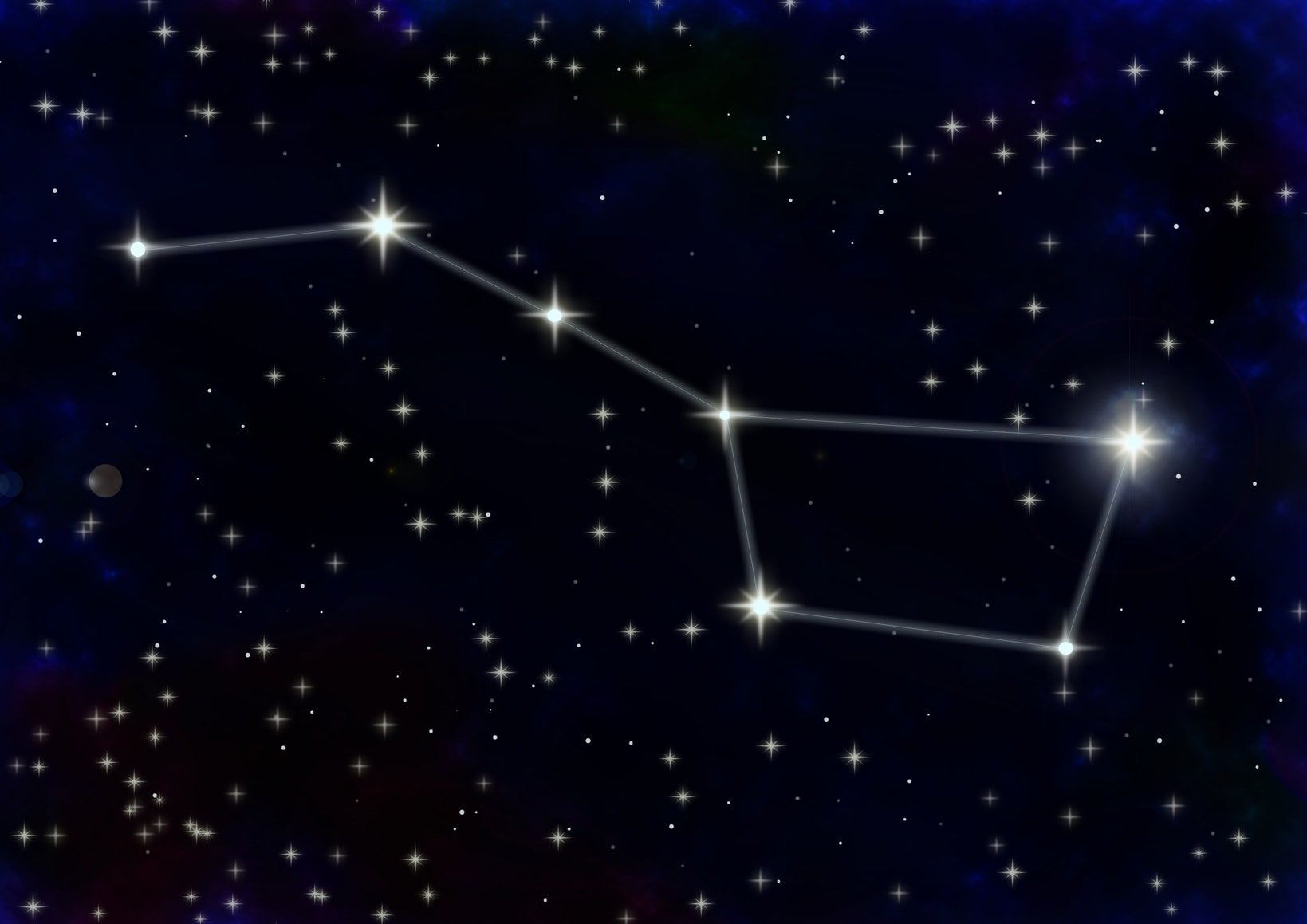
And the seven brightest stars of the Great Bear, Ursa Major, are better known today not as a big bear but as the Big Dipper. To muddy the water further, those living in the United Kingdom call the very same pattern a plough. One pattern, three different pictures, depending on who is doing the looking.
Asterisms: The Patterns Inside the Patterns
The Big Dipper and the Teapot are not really constellations at all. They are asterisms, which are smaller, easy-to-spot star patterns that sit inside a larger official constellation. The Big Dipper lives inside Ursa Major, and the Teapot is the heart of Sagittarius. Asterisms are the everyday shortcuts most of us actually use when we point at the sky, even if the formal name on the star chart is something grander.

Locate The Star Procyon
Then there is the antithesis of a complex sky pattern: Canis Minor, the Little Dog. Its brightest star is Procyon, the eighth brightest star in the sky. It is a yellow-white star, six times as luminous as the Sun. Go outside this week and look low to the eastern horizon at around 11 p.m. and you will readily see it. The name Procyon has been in use since the days of ancient Greece. It is the equivalent of the Latin word Antecanis, or “Before the Dog,” an allusion to the fact that Procyon rises immediately preceding Sirius and thus heralds the appearance of the great Dog Star.
So on any clear evening, when you head outside and look at the constellations, remember that many of their names were the result of ancient stargazers’ active imaginations. We can look up at the very same stars today and trace patterns of our own that would have made no sense to them at all.
How to Spot Constellations From Your Own Backyard
You do not need a telescope to start. The trick is mostly about timing and a little patience.
- Wait for a moonless night. A bright Moon washes out the fainter stars, so check the full Moon dates and times and aim for the dark nights between full Moons.
- Pick a clear night. Clouds end a star session fast, so check the long-range weather forecast for your region before you plan an evening out.
- Get away from the lights. Town and porch lights drown out all but the brightest stars. A field, a back pasture, or a dark stretch of road shows far more.
- Give your eyes time. It takes about 20 minutes for your eyes to fully adjust to the dark, so resist checking your phone.
- Start with what you know. Find the Big Dipper first, then use its pointer stars to hop to the North Star and work outward from there.
If your evenings out under the stars get you thinking about timing the rest of your week by the sky, our Gardening by the Moon Calendar follows the same Moon you are watching overhead.

Constellations: Frequently Asked Questions
Why don’t constellations look like what they are named?
The names came from old stories, not from the actual shapes. Ancient stargazers connected dots of light into pictures of people, animals, and mythical beasts and attached names to match the tale. The stars themselves are scattered, so most constellations look nothing like their namesake without a good deal of imagination.
What is the difference between a constellation and an asterism?
A constellation is one of the 88 official patterns that divide the whole sky into named regions. An asterism is a smaller, easy-to-spot pattern that sits inside a constellation. The Big Dipper is an asterism within Ursa Major, and the Teapot is an asterism within Sagittarius.
Why is the Big Dipper called a plough in the United Kingdom?
It is the same seven bright stars of Ursa Major, just a different picture. Americans see the bowl and handle of a dipper, while folks in the United Kingdom see the blade and beam of a plough. The pattern never changes, only the story people tell about it.
What is the star Procyon?
Procyon is the brightest star in Canis Minor, the Little Dog, and the eighth brightest star in the whole sky. It is a yellow-white star, six times as luminous as the Sun. The name dates to ancient Greece and means “Before the Dog,” because Procyon rises just ahead of Sirius, the great Dog Star.
When is the best time to see constellations?
Pick a clear, moonless night and get well away from town lights. Give your eyes about 20 minutes to adjust to the dark, then start with a pattern you know, like the Big Dipper, and work outward. Check the full Moon dates first so you can aim for the dark nights in between.
How many constellations are there?
Astronomers recognize 88 official constellations, which together cover the entire sky. Many of the patterns we point at most often, such as the Big Dipper and the Teapot, are asterisms inside those official 88 rather than constellations in their own right.


Joe Rao
Joe Rao is an esteemed astronomer who writes for Space.com, Sky & Telescope, and Natural History Magazine. Mr. Rao is a regular contributor to the Farmers' Almanacand serves as an associate lecturer for the Hayden Planetarium in New York City.
- Joe Rao

- Joe Rao
- Joe Rao
- Joe Rao




IMHO I think it’ ignorant to “Remember, of course, that a few thousand years ago there was not much to entertain people once the Sun went down.” How would one even begin to presume that? Secondly, we aren’t able to see many of the stars that our ancestors did due to the extreme light pollution put out by the people on this planet. Perpetuating the belief that we know now so much more than our ancestors did then is what’s keeping us disconnected from our past. We’ve forgotten where we come from. We’ve forgotten, or been kept from so much lost / hidden knowledge. Apparently they knew way more about the stars, planets and other planets that we do in our “advanced civilization” today when you just acknowledge the correlation of the Great Pyramids at Giza and Orion’s Belt.
Stop looking down into your precious little hand held devices and look up. I mean really.. look up.
How could they have known more about the planets with their naked eyes? Uranus and Neptune could only be discovered thanks to advancements in telescopes. And concluding with ‘phone bad’ was a nice touch.
They did know more back then. They didn’t waste their time like we do now. They were an advanced civilization. Don’t forget they taught us. We have been learning from them for ages.