

8 Spring Equinox Myths Debunked (and What’s True)
Balance a broom? Stand an egg on end? We separate fact from fiction when it comes to the moment that marks the spring season. How many of these do you believe?
Quick Reference: 5 Spring Equinox Myths
- Myth 1: Stand a raw egg on end only at the equinox. Verdict: false. An egg balances any day if you have a flat surface and patience.
- Myth 2: The equinox makes brooms (and everything) easier to balance. Verdict: false. The Sun’s gravity does not change between equinox and any other day.
- Myth 3: You won’t cast a noontime shadow. Verdict: technically true, but only at the equator at solar noon. Everywhere else, you still cast a shadow.
- Myth 4: The equinox lasts all day. Verdict: false. It is a single instant when the Sun crosses the celestial equator. In 2027, that moment is March 20 at 12:25 p.m. EDT.
- Myth 5: The equinox flips your mood like a switch. Verdict: mostly false. The moment itself does nothing. Seasonal light changes do affect mood across weeks, not in one instant.
- What is actually true: the Sun crosses the celestial equator heading north, day and night are roughly equal, and the calendar season of spring begins.
You can balance an egg on the spring equinox. You can also balance one on a random Tuesday in November. The equinox does not change the rules. It is a single instant when the Sun crosses the celestial equator, and around that instant a long list of folk beliefs have grown up, some charming, most wrong. We pulled the five most common spring equinox myths and checked each one against the astronomy.
Quick context for 2027, the next equinox after this article’s most recent refresh: the spring equinox arrives on Saturday, March 20, 2027, at 12:25 p.m. EDT (16:25 UTC). That is the moment the Sun’s center crosses the celestial equator moving north. Honest caveat on folklore: a few of these myths are not 100 percent wrong, they are just badly stated. We will flag those as we go.
The 5 Spring Equinox Myths, Checked Against the Astronomy
Myth 1: You Can Stand a Raw Egg on End (Only at the Equinox)
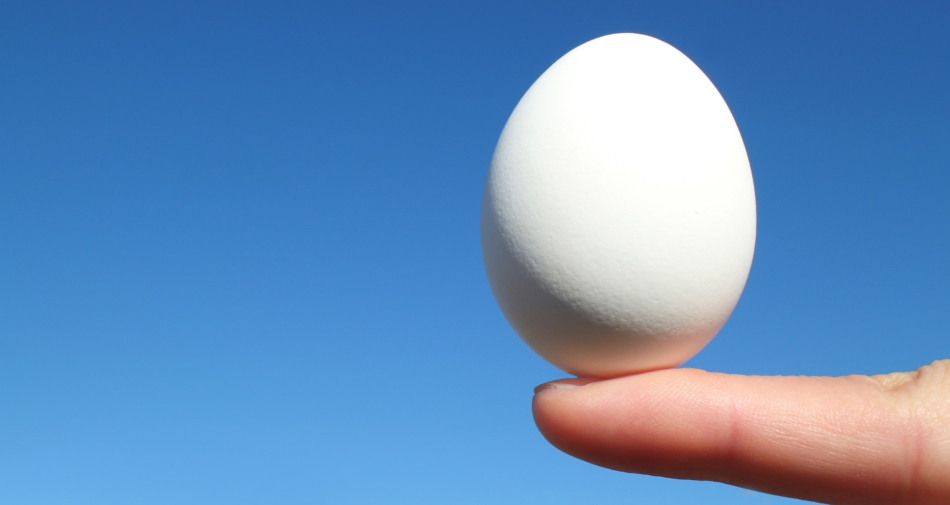
Verdict: false, but the trick is real. The story says the Sun’s gravitational pull lets you stand a raw egg upright at the exact moment of the vernal equinox. The astronomy does not back that up. The Sun’s gravity at the Earth’s surface is essentially constant and does not single out one minute of one day to help you balance breakfast.
Here is the part the myth gets right: an egg can be balanced on its wider end with a flat, slightly textured surface and several minutes of patience. Try it on the equinox if you like, then try it on the Fourth of July. The success rate is the same. Snopes ran the numbers years ago and reached the same conclusion.
Myth 2: The Vernal Equinox Makes It Easier to Balance Everything (Including Brooms)
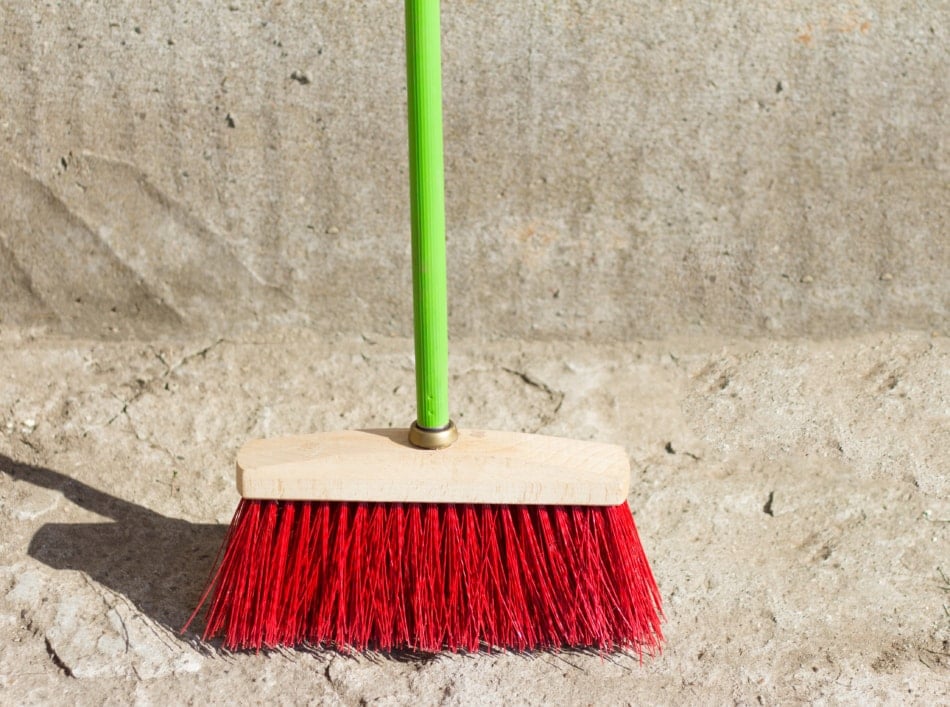
Verdict: false. This is the egg myth in a different costume. Some folks believe that the equinox tweaks the Sun’s gravitational pull on the Earth and makes objects, especially household brooms, easier to balance upright. The pull does not change from day to day in a way you would ever feel, and brooms do not know what day it is.
The broom-balancing trend went viral in February 2020 after a clip suggested NASA had endorsed the idea. NASA had not. A flat-bottomed, modern push broom will stand upright on its own bristles any day of the year because the bristles flex into a wide, stable base. Whether you are stacking a house of cards, standing a broom, or coaxing a raw egg, the difficulty is the same in March as it is in October.
Myth 3: You Won’t Cast a Noontime Shadow on the Equinox
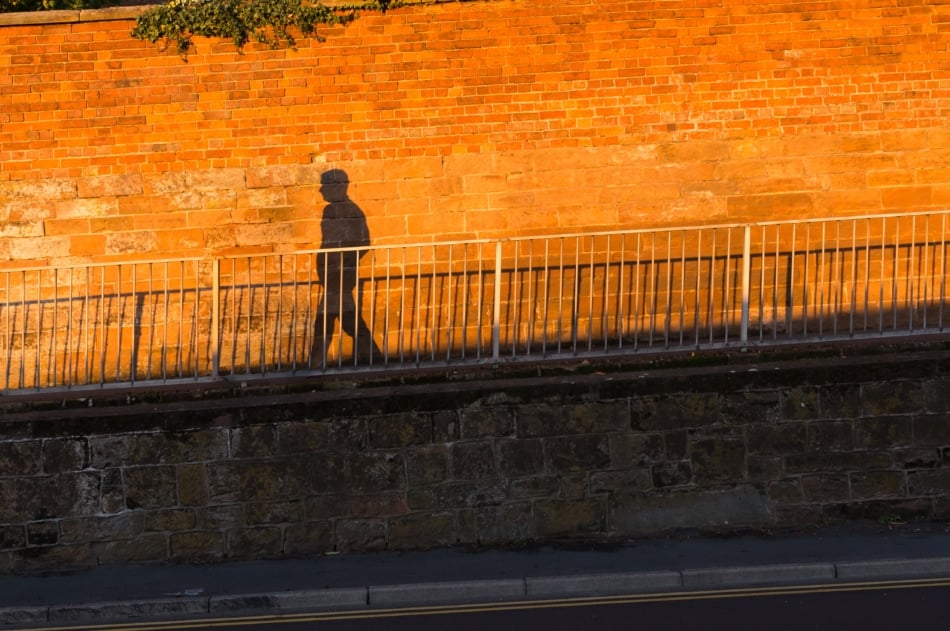
Verdict: technically true, in one narrow place. This myth has a kernel of real astronomy in it. The Sun sits directly over the equator at the moment of the equinox, which means a person standing on the equator at local solar noon will, briefly, see their shadow shrink to almost nothing under their feet.
Outside of that very specific spot, the rule falls apart. The Sun is always at an angle to a person standing well north or south of the equator. To erase your shadow you need the Sun directly overhead, and on the equinox that only happens between the Tropics, right on the equatorial line, at solar noon. In Bangor, Maine, or Lethbridge, Alberta, your noontime shadow on March 20 looks more or less like your noontime shadow on March 19, just a little shorter than it was in December.
Myth 4: The Equinox Is a Day-Long Event
Verdict: false. The equinox does not take all day. It is a moment, an exact instant when the Sun’s center crosses the celestial equator. Blink and you will miss it. For the March 20, 2027 equinox, that instant is 12:25 p.m. EDT (16:25 UTC). Anything you celebrate before or after that minute is celebration of the day, not the moment.
The reason the myth holds is practical. Calendars cannot display a single second. Almanacs print the date, schools mark the first day of spring, and the news anchors say “today is the equinox.” All of that is shorthand for “the equinox falls inside today.” The actual handoff between winter and astronomical spring is one tick of the clock, and the National Weather Service publishes the exact UTC time each year.
Myth 5: The Spring Equinox Can Alter Your Mood
Verdict: mostly false, partly true. The Sun’s center crossing the celestial equator does nothing to your brain chemistry. There is no equinox-day mood switch. If you feel different on March 20 than you did on March 19, it is not the astronomy doing the work.
Here is the partly-true piece. Seasonal change does affect mood, and the weeks before and after the spring equinox carry more daylight than the weeks before and after the winter solstice. People who deal with seasonal affective disorder (SAD, sometimes called SADD) often start to feel the lift in March, not because of one minute of astronomy, but because of accumulated daylight, milder afternoons, and the return of green outside the window. That is a real shift, just spread across weeks rather than triggered by the equinox instant.
Three More Equinox Myths Worth Knowing
The five myths above are the ones the Farmers’ Almanac inbox keeps getting. Three more come up almost as often, especially around science classrooms and viral social posts. Here they are, with the same honest verdict.
Myth 6: Day and Night Are Exactly 12 Hours Each
Verdict: not quite. The word “equinox” comes from Latin for “equal night,” and the assumption is that the equinox itself is the day of perfectly 12 and 12. Almost, but not on the day. Two effects nudge the numbers. The first is atmospheric refraction, which bends sunlight around the horizon and lets you see the Sun a few minutes before it has technically risen and a few minutes after it has technically set. The second is that “sunrise” and “sunset” are measured from the top edge of the solar disk, not its center, adding several more minutes of visible daylight.
The result is a day called the equilux, the actual day of equal light and dark, which falls a few days before the spring equinox in the Northern Hemisphere and a few days after in the Southern Hemisphere. In the United States and Canada, the equilux usually lands between March 16 and March 18.
Myth 7: The Sun Rises Due East Only on the Equinox
Verdict: nearly true, with a small asterisk. The equinox is the day the Sun rises closest to due east and sets closest to due west, for observers in both hemispheres. That is genuine astronomy and it is one of the easiest ways to use a sunrise to find true east without a compass.
The asterisk is the same refraction effect that complicates Myth 6. Light bending around the horizon shifts the apparent rise point a small amount, usually less than a degree. Close enough for a porch compass, not close enough for celestial navigation. If you want true east at home, watch the sunrise on the equinox, sight a fixed landmark, and use that as your reference for the rest of the year.
Myth 8: The Equinox Means Instant Spring Warm-Up
Verdict: false. The astronomical start of spring is not the climatic start of spring. The equinox is the date the Sun’s geometry catches up with the calendar, but the ground, the oceans, and the lower atmosphere are still cold from winter, and they take weeks to warm up. The lag from peak sunlight to peak surface temperature runs roughly four to six weeks across most of the United States and Canada, which is why the warmest days of summer arrive in late July rather than late June.
For spring, the same physics works in reverse. Days lengthen quickly through March and April, but the soil and water need time to catch up. That is why early-spring weather in the Northeast and the Prairies often feels indistinguishable from late winter, and why a March snowstorm is not unusual in the days after the equinox. For year-round planning, the Almanac’s Long-Range Forecast tracks the actual temperature trends, not the calendar season.
Why These Equinox Myths Persist
None of these myths are random. Each one starts from a real fact and then stretches it. The egg myth borrows the truth that the Earth has a special orientation at the equinox. The broom myth piggybacks on the egg myth. The shadow myth is true at one specific spot on the planet. The day-long-event myth uses calendar shorthand for what is really an instant. The mood myth grabs at the real seasonal effects of light on the brain.
Three forces keep them in circulation: folklore handed down from when the equinox was a key landmark, plausibility because each story sounds like it could be true if you do not know the physics, and social media. The 2020 broom-balancing video is the cleanest case study. A short clip, a confident voice, and a vaguely science-sounding claim can outlive a hundred corrections.
What Is Actually True About the Spring Equinox
The honest astronomy is short and worth knowing. The spring equinox, also called the vernal equinox or the March equinox, is the moment the Sun’s center crosses the celestial equator moving north. From that moment until the autumnal equinox in September, the Northern Hemisphere is tilted toward the Sun, and we get longer days, higher Sun angles, and the calendar season of spring.
- It marks the astronomical start of spring in the Northern Hemisphere and the astronomical start of fall in the Southern Hemisphere.
- It is one of two days a year when the Sun rises almost exactly due east and sets almost exactly due west, useful for finding direction without a compass.
- It is the cross-quarter midpoint between the winter solstice and the summer solstice. See our equinox and solstice guide for the full pattern.
- It is the trigger for Easter’s date. Easter falls on the first Sunday after the first full Moon following the spring equinox.
- It is the start of several spring new-year festivals around the world, including Nowruz in Iran and the wider Persian-speaking region.
Other Equinox Folklore Worth Knowing
Not all equinox traditions are myths to debunk. Some are observances, celebrations, and historical patterns that the calendar still carries.
- Nowruz, the Persian New Year, begins at the moment of the spring equinox. The 13-day celebration includes the Haft-sin table and the Chaharshanbe Suri fire jump.
- Chichen Itza, Mexico, draws thousands of visitors each March 20 to watch the late-afternoon sun cast a “descending serpent” shadow down the steps of the El Castillo pyramid, an effect Mayan builders engineered around the equinox.
- The Easter date is set by the Paschal Full Moon, the first full Moon after the spring equinox. See our explainer on when Easter falls each year for the math.
- Christian Lady Day, March 25, was the official New Year’s Day in England and the American colonies until 1752, anchored to the equinox week.
- Japanese Shunbun no Hi, a national holiday on or near March 20, blends Buddhist family-grave visits with the astronomical date.
The Science Caveat: Where Folklore Meets Fact
Honest caveat on folklore: the equinox is not all hogwash. The reason these myths keep landing is that they sit next to real astronomy, and several pieces of the story are accurate.
- Day and night are close to equal at the equinox, within several minutes of the perfect 12-and-12, depending on latitude and refraction. The exactly-equal day is the equilux, a few days earlier in the Northern Hemisphere.
- The Sun rises and sets very close to due east and west, which makes it the easiest day of the year to calibrate direction without instruments.
- It is a real astronomical event, calculable to the second by the U.S. Naval Observatory. It is not a tradition the calendar invented.
- The Sun is directly over the equator at that instant, which is the kernel of truth inside the shadow myth and the egg myth.
- Spring really does follow, even if the warm weather lags by several weeks.
Folklore is not always wrong. It is often a real observation wrapped in a memorable story. The job here is to keep the observation and let the story go.
The Practical Takeaway
If you want to mark the equinox at home, you do not need a stunt. Watch the Sun rise on the morning of March 20, 2027 and sight where it clears your horizon. That is true east, give or take a small refraction wobble, and you can use the sighting all year. After breakfast, you can absolutely try to balance an egg on the kitchen counter. It is harder than it looks, satisfying when you finally get it, and works on every other day of the calendar too.
While you are free to try to balance eggs and brooms on the equinox, just remember that the equinox’s real significance is the Sun’s position relative to the equator. It is the astronomical start of spring, which means longer days for those of us in the Northern Hemisphere and a steady warm-up that will arrive on its own schedule. For the months ahead, see when the summer solstice falls and how the Almanac tracks the season’s long-range weather.

Spring Equinox Myths: FAQ
Can you really only balance an egg on the spring equinox?
No. An egg balances any day of the year if you have a flat, slightly textured surface and a steady hand. The Sun’s gravitational pull on a kitchen counter does not change between the equinox and any other day. The trick is patience, not astronomy.
Are day and night exactly equal on the spring equinox?
Not quite. Day and night come within several minutes of equal on the equinox, but atmospheric refraction and the way sunrise is measured from the top of the Sun’s disk add extra daylight. The truly equal day, called the equilux, falls a few days before the equinox in the Northern Hemisphere, usually around March 16 to 18.
What time is the spring equinox in 2027?
The 2027 spring equinox is on Saturday, March 20, at 12:25 p.m. EDT, which is 16:25 UTC. That is the exact moment the Sun’s center crosses the celestial equator heading north. It is an instant, not a whole day.
Does the Sun rise exactly due east on the equinox?
Very close to it. The equinox is the day the Sun rises nearest to true east and sets nearest to true west for almost every spot on Earth. Atmospheric refraction shifts the apparent rise point by a small amount, usually less than a degree, but it is the best day of the year to use a sunrise to find direction without a compass.
Why does it stay cold for weeks after the spring equinox?
The equinox is the astronomical start of spring, not the climatic peak. The atmosphere, the soil, and the oceans hold winter cold and take roughly four to six weeks to warm up. That lag is also why the hottest days of summer come in late July rather than at the June solstice.
Did NASA really endorse the broom-balancing trend?
No. A viral February 2020 social media clip claimed NASA had said the equinox made brooms easier to balance. NASA had not. The trick works any day of the year because modern flat-bristled brooms flex into a wide, stable base. The Sun’s gravity does not give the equinox a balance bonus.
Does the spring equinox affect your mood?
Not the equinox instant itself. The moment the Sun crosses the celestial equator does nothing to your brain chemistry. The seasonal lengthening of daylight in the weeks before and after the equinox can lift mood for many people, especially those who deal with seasonal affective disorder. That is a multi-week effect, not a one-day switch.
Is the spring equinox the same as the first day of spring?
The spring equinox is the astronomical first day of spring. Meteorologists use a separate calendar that starts spring on March 1 to keep their seasonal records clean. Both definitions are valid. The Almanac uses the astronomical equinox throughout this site.


Amber Kanuckel
Amber Kanuckel is a freelance writer from rural Ohio who loves all things outdoors. She specializes in home, garden, environmental, and green living topics.
- Amber Kanuckel

- Amber Kanuckel

- Amber Kanuckel
- Amber Kanuckel





These are not myths. I would like to see videos of someone trying to stand an egg on its end on any given day without any effort
I recently heard about a myth that every 500 years on the spring equinox at exactly 12:00 am (midnight) the full moon will cause the ocean to be at the lowest (or highest depending) tide in 500 years to occur. The myth part says when this happens precious treasure will reveal itself LOL Does anyone have any insight to this equinox myth? I bet at least part of it is true or not but comment if you know ANYTHING in relation to this phenomenon. I have my research 😉
We haven’t heard that one – but what fantastic lore! Thank you for sharing and let us know what you find out!
The egg thing IS a myth. Put as much effort into getting it into standing on end on the summer solstice and it will stand then too. The very fact everyone is saying it stayed for multiple days proves it isn’t the equinox. IF it were the equinox it would only work at natural high noon and fall over soon after. The “balance” isn’t the earth’s gravitation (which has to do with the MOON) it’s the LOCATION of the earth around the sun and the earth isn’t actually a ball (it’wider around the equater… dont we all get bigger aound the middle as we age?) so it would also depend where on earth you lived IF it worked on top of all that earth has different gravity in different places (wild isn’t it?). So…. No. The egg thing isn’t real. Instead of trying it on the equinox try it some other day. Then impress your friends with your “magic trick” you can balance a raw a egg when it isn’t the equinox.
An egg will stand on its end, I did this at a call center I worked at and it stood for several hours until some bumped the table it was on.
This is NOT a myth and really does work. You must stand the egg on it’s end at the exact moment of the vernal equinox and support it with your hands. At the precise moment, you will feel the pull of the egg to stand tall and can then remove your hands. It will stand there on it’s own. It stood tall for about a minute for us and then fell on it’s side. I suggest taking photos for the “nay-sayers+. Younger people may not have the patience to persist, but if you take your time, it will work for you!
It is NOT a myth that you can stand an egg on its end at the premise moment of the equinox. I am 75, and have taught school practically all of my life. I have done this experiment many times with children, at school and at home. It works! In fact two years ago I was in a kindergarten class, when we tried and tried to get the egg to stay up. At that precise moment it stood, all alone. The kids were so impressed. Since the egg continued to stand, after five or six minutes the kids got up and returned to their seats. I took one of their child sized chairs and put it over the egg. We checked on it, frequently. When the parents came to get their children, they were given the egg tour. The next morning we were greeted by our egg, still standing tall. In fact it was the third morning when the custodian greeted us, telling us the egg was no longer standing. So if you are a bit patient…try it this evening.