

How to Grow Tomatoes: Soil, Spacing, Staking, and the 5 Best Cultivars for Home Gardens
Tomatoes can be found in nearly every vegetable garden across the country, and with good reason, as little else compares to the flavor of a home-grown tomato. See how easy they are to grow!
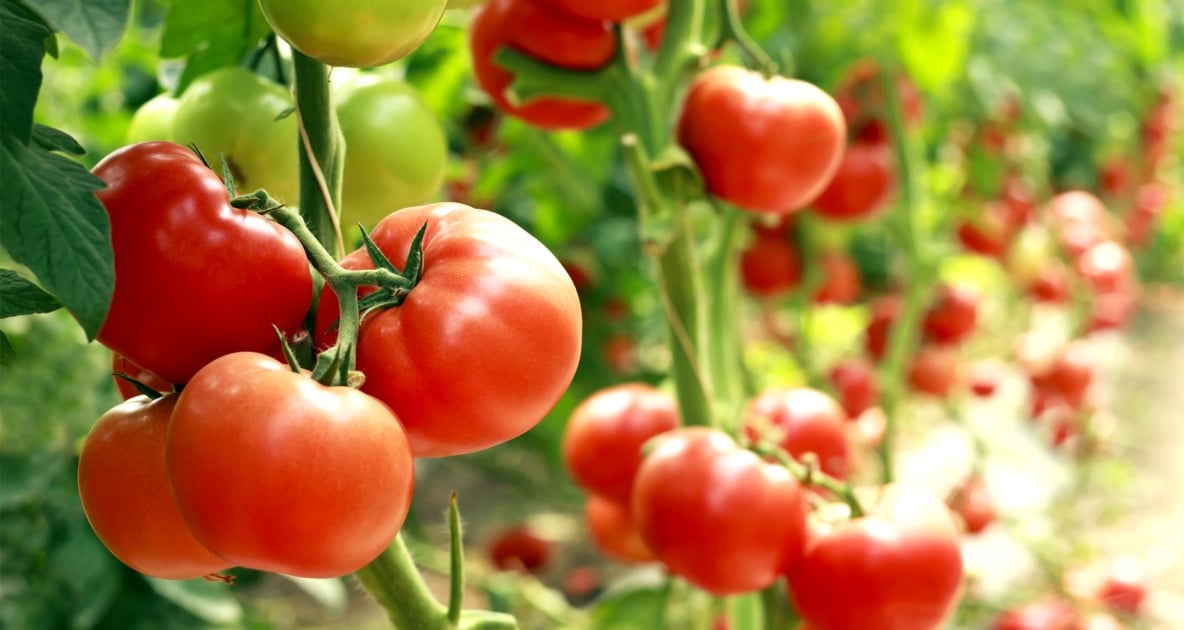
Quick Reference: Growing Tomatoes
- Start seed indoors: 6 to 8 weeks before last frost.
- Transplant after last frost when soil reaches 60 F.
- Plant deep: bury 2/3 of the stem. Roots form along the buried stem.
- Spacing: 24 to 36 inches for indeterminate (vining); 18 to 24 inches for determinate (bushy).
- Top mistakes: shallow planting, overhead watering, inconsistent moisture, planting too early.
On this page
Related Almanac guides
Sources cited in this guide
Tomatoes are the #1 home garden vegetable in the US. A properly planted indeterminate variety can produce 100+ fruits per plant from one seedling. The technique is well-established by extension research, but most home gardeners miss two critical steps that decide success: planting depth (bury 2/3 of the stem) and consistent watering (drip + mulch). This guide is the complete UMN and Penn State extension method plus the 5 best cultivars for North American home gardens.
Why You Bury 2/3 of the Stem (the Deep Planting Trick)
Per UMN Extension’s growing tomatoes guide.
- Unique trait. Tomato stems form adventitious roots along any portion buried in soil.
- What deep planting does. Bury 2/3 of the stem at transplant. The buried portion grows roots; the plant develops a much larger root system within 2 weeks.
- Result. Larger roots = better water uptake, better nutrient delivery, fewer problems with blossom end rot, stronger flowering.
- Alternative for very tall transplants: trench planting (dig a horizontal trench, lay the seedling sideways with just the top 4 inches above soil). Functionally the same effect.
- Strip lower leaves. Remove any leaves that would otherwise sit in the soil.
The 5 Best Cultivars for North American Home Gardens
Mix of extension-recommended and home-gardener favorites.
- Cherokee Purple (heirloom, indeterminate). Large dusky-purple beefsteak. Exceptional flavor. Most-loved heirloom in surveys.
- Sungold (hybrid cherry, indeterminate). Vivid orange cherries. Sweet and prolific. Top-rated cherry cultivar.
- Brandywine (heirloom, indeterminate). Pink beefsteak. Rich complex flavor. Classic.
- Roma (determinate, paste). Dense, low-water, ideal for sauce and canning. Compact plant.
- Better Boy (hybrid, indeterminate). Reliable mid-size slicing tomato. Disease resistant. Good for first-time growers.
How to Plant Tomatoes (Detail)
Below are the original detailed sections on tomato planting and helpful tomato resource links.
How To Plant Tomatoes
Start: Start tomatoes indoors 6-8 weeks before last frost. Use a quality seed starting mix and grow under grow lights or in a very sunny, warm window. Plant seeds ¼” deep and keep soil moist. Harden off seedlings in a sheltered outdoor place for one week. Transplant after danger of frost. Seedlings should be planted 30-48” apart in rows 3-4’ apart.
Transplant: Plant outdoors when nighttime lows reach 60°F or higher.
RELATED: Gardening by the Moon Calendar
Water: Tomatoes require plenty of water, 1-2” per week. Ensure watering is steady as tomatoes can crack and split if they receive a lot of water after a dry stretch.
Light: Full sun.
Soil: Plant in rich organic soil (pH 6.0-6.8).
Fertilize: An all-purpose, balanced fertilizer will do well for tomatoes. Use according to the manufacturer’s recommendations. If you find your tomatoes have very lush, green vegetation but are not setting fruit, switch to a fertilizer with little or no nitrogen.
Harvest: Harvest tomatoes when they are as ripe as possible, fully colored and firm. Make sure to pick regularly to avoid overloading the plant. At the end of the season when a frost is imminent, all remaining tomatoes can be picked and ripened in a paper bag or on a sunny window sill.
Note: Place stakes or cages at the time of planting to avoid damaging the plants’ roots.


How to Grow Tomatoes FAQ
When should I plant tomatoes?
Start seed indoors 6 to 8 weeks before your last frost date. Transplant outdoors after last frost when soil reaches 60 F. Planting too early stalls plants for weeks; cool soil delays growth more than waiting and planting in warm soil.
How deep should I plant a tomato?
Bury 2/3 of the stem. Strip lower leaves first. Tomatoes form roots along any buried stem portion, dramatically increasing root mass within 2 weeks. This is the single highest-impact planting technique.
How far apart should I plant tomatoes?
24 to 36 inches for indeterminate (vining) varieties. 18 to 24 inches for determinate (bushy) varieties. Closer spacing reduces airflow and increases disease risk; wider spacing is fine if you have room.
Do tomatoes need a cage or stake?
Indeterminate varieties: yes, mandatory. Cage at planting or stake to 6+ feet. Determinate varieties: optional; a short cage helps but is not required. Sprawling unsupported tomatoes are more disease-prone and harder to harvest.
What is the difference between determinate and indeterminate tomatoes?
Determinate: bushy, grow to a fixed height (3 to 4 ft), set all fruit in a single 4 to 6 week window, then decline. Best for canning and sauce production. Indeterminate: vining, keep growing all season, set fruit continuously until frost. Best for fresh eating.


This article was published by the Staff at FarmersAlmanac.com. Any questions? Contact us at [email protected].
- Farmers' Almanac Staff

- Farmers' Almanac Staff

- Farmers' Almanac Staff

- Farmers' Almanac Staff


I planted my tomatoes in containers using Miracle Grow potting soil. They’ve grown healthy leaves and buds that look like the beginning of tomatoes at the tops, but they never flowered. I’ve been told the soil had too much nitrogen and salt. They are a determinate breed. Is it too late to transplant them in better soil now or have I missed the opportunity because they already have “flowerless buds”?
Hi Cindy, this sounds like what they call “blossom drop.” We have some remedies here that will help: https://www.farmersalmanac.com/common-tomato-plant-problems-28544
After the tomatoes are done for the season how can we ammend the soil to grow other vegetables? What other vegetables can we grow in the same soil?
As a farmer it would benifit lot and also please send the new technique of tomato plantation
When is the best planting dates for June 2020 for tomatos ?
Have tomatoes plants in greenhouse under light til it warms up in estacada Oregon but a couple of my plants have white spots on leaves what does this mean bought plants from bi-mart
Best planting days
Hi Barbara, at the end of the article, we shared the Gardening by the Moon calendar, which lists best days to plant.